Connect with us

Feature/OPED

Niger Delta Region, NDDC and Sustainable Development

Published

on

Niger Delta Region NDDC

By Jerome-Mario Utomi

Reports have it that at Harvard Business School, United States of America (USA), the code of belief about entrepreneurship is simply this: it can be taught, and it can be learned.

Entrepreneurship is, to use HBS’s quasi-official definition, “the pursuit of opportunity without regard to resources currently controlled.”

It is not so much a set of skills as it is a process, a belief, and a commitment. It is a mode of thinking and acting – a war of observing the world, of figuring out how to change it (hopefully for the better), and, perhaps most importantly, of becoming the person who is capable of implementing the change.

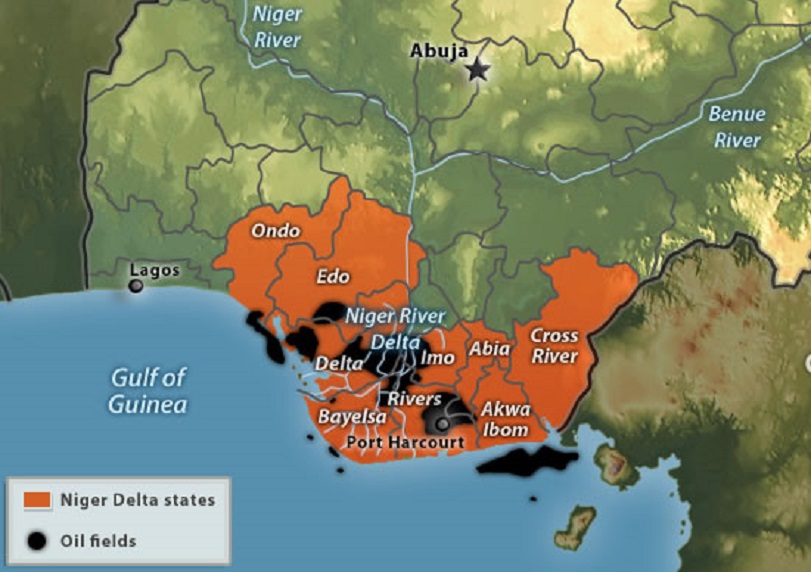
Likewise,  there is a veiled agreement among critical stakeholders that one of the outstanding boards in present-day Nigeria is visibly capped with skills, belief, commitment,  mode of thinking and in vigorous pursuit of opportunities to sustainably remove obstacles on the part of its targeted beneficiaries without regard to resources currently controlled, is the Barrister Chiedu Ebie-led governing board and management of the Niger Delta Development Commission (NDDC), a federal government agency created in the year 2000 by enabling Act, to offer a lasting solution to the socio-economic difficulties of the Niger Delta region and to facilitate the rapid and sustainable development of the Niger Delta into a region that is economically prosperous, socially stable, ecologically regenerative and politically peaceful.

Adding context to the discourse, ever since crude oil was discovered in the region more than 50 years ago, the people of the region could not have imagined that they would bear the brunt of the country’s main source of revenue. The people must have expected that the exploitation of the rich natural resources they have in their environment would have brought them development and prosperity. But alas, it has been a very painful experience for the people of the region.

Essentially, it is not as if past administrations in the country did not, at different times and places make efforts to address the region’s challenges. But noble as those efforts were, considering the level of underdevelopment in the region, such effort appeared too insignificant and short of what is required to care for the region’s development and more particularly, remains a far cry from what was needed to exorcise the ghost of youth unemployment in the region.

This ugly narrative persisted in the face of concerns raised by the global community who were chiefly not convinced that what now rested administrations were doing was the best way to solve the problem of the region.

Understandably, there is some truth in those concerns as expressed just as there is presently, a silver lining on the horizon. What we have today is the exact opposite! Niger Deltans of goodwill are equally of the view that what the region is experiencing this time around may no longer be the second half of a recurring circle, but rather the beginning of something new and different.

Aside from the fact that the new governing board and management have to their credit, a well-established healthy relationship with critical stakeholders within the region and beyond is also worth underlining and of course, a lesson other agencies and Commissions must imbibe is the frantic efforts to put the Niger Delta region in order via youth empowerment, human capital development and democratized infrastructural provisions.

A delectable account further indicates that the policy thrust and programmes coming from the new governing board and management of the agency amply qualify as development-based. This particular point partially explains why this piece is interested in the ongoing developmental strides in the region.

Prominent among these projects, programmes and initiatives include, namely; Building Partnerships, Lighting Up the Niger Delta region, Sustainable Livelihood, Improved Youth Capacity and Skills Base, Efficient and cost-effective projects, Project Hope for Renewed Hope, Carbon Emission Reduction, Stakeholder Engagement, Effective and Professional Workforce, Improved Peace and Security among others.

From what development professionals are saying, a programme is said to be development-based, when such a programme entails an all-encompassing improvement, a process that builds on itself and involves both individuals and social change. It requires growth and structural change, with some measures of distributive equity, modernization in social and cultural attitudes, a degree of political transformation and stability, an improvement in health and education so that population growth stabilizes, and an increase in urban living and employment.

Viewed broadly, it is public knowledge that throughout the early decades, the world paid little attention to what constitutes sustainable development. Such conversation, however, gained global prominence via the United Nations introduction, adoption and pursuit of the Millennium Development Goals (MDGs) which lasted between the years 2000 and 2015. It was among other intentions aimed at eradicating extreme poverty and hunger as well as achieving universal primary education, promoting gender equality, reducing child mortality, and improving maternal health, among others.

Without going into specific concepts or approaches contained in the performance index of the programme, it is factually supported that the majority of the countries including Nigeria performed below average. And, it was this reality and other related concerns that conjoined to bring about the 2030 sustainable agenda- a United Nations initiative and successor programme to the Millennium Development Goals (MDGs)- with a collection of 17 global goals formulated among other aims to promote and cater for people, peace, planet, and poverty.  And has at its centre; partnership and collaboration, ecosystem thinking, co-creation and alignment of various intervention efforts by the public and private sectors and civil societies.

Very remarkable is that all the NDDC’s projects/programmes were crafted in line with the above initiatives.

If in doubt, check out the agency’s scheme known as Holistic Opportunities, Projects and Engagement, (HOPE); It is primed to provide a platform to empower youths of the region on a sustainable basis, designed to create a comprehensive resources database of the youth population of the Niger Delta region to enable NDDC see clearly what the youths want in their strive for sustainability in conformity with international best practices and development.

The project HOPE’ initiative is positioned to create youth employment opportunities, especially in agriculture through support to small-holder farmers to ensure operational growth while shifting from traditional to mechanized farming methods. ‘’Because of the arable wetlands, rainfalls and other favourable ecological factors to plant various crops and vegetables at least four times within a farming season, the agency is proactively moving away from the oil economy to the agricultural sector which can accommodate our youths in large numbers is the agricultural sector.”

For me, NDDC’s solutions to youth unemployment and the development of a climate for a sustainable future and innovation will assist in promoting the critical thrust of governance and maximize the benefits citizens derive from governance.

For example, talking about youth unemployment in Nigeria, a report recently puts it this way: “We are in a dire state of strait because unemployment has diverse implications. Security-wise, a large unemployed youth population is a threat to the security of the few that are employed. Any transformation agenda that does not have job creation at the centre of its programme will take us nowhere”.

As we know, youth challenge cuts across, regions, religions, and tribes, and has in the past led to the proliferation of ethnic militia as well as youth restiveness across the country.

What the above information tells us as a nation is that the ongoing creative and transformative leadership at NDDC calls for collective support as well as should be used as both a model and template by all strata of government in the country, for correcting public leadership challenges via adoption of approaches that impose more leadership discipline than conventional, and less extractive but more innovative in operation.

It is in doing this that we can achieve sustainable development as a nation.

Jerome-Mario Utomi is the Programme Coordinator (Media and Public Policy) for Social and Economic Justice Advocacy (SEJA), a Lagos-based Non-Governmental Organization (NGO). He can be reached via Je*********@***oo.com or 08032725374

Click to comment

Leave a Reply

Your email address will not be published. Required fields are marked *

Feature/OPED

The Role of TV in Preserving African Stories and Identity

Published

on

Preserving African Stories

Scroll through social media today, and you will notice something interesting: everyone is either reacting to a series, quoting a movie line, or debating a character as though they personally know them. Beneath the memes and binge-watch culture, however, lies something deeper. Television remains one of the most powerful tools shaping how Africans see themselves, remember their history, and tell their own stories. In a continent as diverse and expressive as Africa, that matters more than ever.

TV as a Cultural Archive, Not Just Entertainment

Long before streaming algorithms began shaping our viewing habits, television was already preserving African identity. From Nollywood dramas that capture the rhythm of everyday Lagos life to documentaries exploring Maasai traditions and Ghanaian folklore, TV has served as a living archive of the continent’s stories.

It preserves more than entertainment; it preserves language, culture, humour, values, and shared experiences. Unlike fleeting social media content, television allows stories to unfold with depth, exploring the realities of family, tradition, ambition, and modern African life without reducing them to stereotypes. That is the power of TV: preserving not just stories, but perspective.

Why Representation on TV Still Matters

There is a subtle but important truth: if people do not see themselves on screen, they may begin to believe their stories are not worth telling. This is why African TV content is more than entertainment; it is affirmation.

Seeing a character who speaks like you, struggles like you, or celebrates like your community does something powerful. It validates identity and challenges outdated narratives that have historically defined Africa through external lenses.

This is where MultiChoice Group, through platforms such as DStv and GOtv, plays an important role. They do not simply broadcast content; they help distribute cultural memory at scale.

GOtv, DStv, and the Everyday African Viewer

Think about a typical evening in many African homes: the TV is on in the background, someone is laughing at a comedy show, another person is watching a local series, and someone else is catching up on the news. That shared viewing experience remains very real.

Through platforms such as DStv and GOtv, African households are exposed to a blend of local storytelling and global content. More importantly, they have helped amplify African-produced content by bringing Nollywood films, African reality shows, talk shows, and documentaries into mainstream rotation.

It is not just about access. It is about visibility.

A young filmmaker in Lagos today is more likely to believe their story matters because they have seen similar stories broadcast widely. A child in Accra grows up hearing familiar accents and seeing environments that look like their own on screen, not as exceptions, but as the norm.

TV Is Also Shaping Modern African Identity

African identity is not static; it is evolving. Television reflects that evolution in real time.

Today, audiences see:

  • Young Africans balancing tradition and modern dating culture

  • Stories tackling mental health in African households

  • Fashion and music influences spreading through TV series

  • Political satire shaping public conversation

Conversations that were once confined to homes are now being explored on screen, giving audiences the language to discuss issues that were previously unspoken.

In many ways, television is doing what oral tradition has always done: passing stories, values, humour, warnings, and history from one generation to the next. The difference is that today’s griots are writers, directors, and broadcasters.

The Future: From Watching to Owning Our Narratives

The next stage of African storytelling is not just about being seen; it is about ownership.

As more African creators produce content and platforms continue to invest in regional storytelling, television becomes more than a mirror. It becomes a tool for shaping how Africa is represented to itself and to the world.

While streaming continues to grow, television, particularly accessible platforms such as GOtv, remains one of the most effective ways to reach everyday audiences across different income levels and regions. After all, storytelling only matters if people can access it.

African stories are not new. They have always existed in families, on streets, in markets, in history books, and through oral traditions. What television has done, and continues to do, is give those stories a stage wide enough for millions to experience them at once.

The next time you watch a local series or documentary on DStv or GOtv, remember that you are not just being entertained. You are participating in the preservation of African identity itself.

Continue Reading

Feature/OPED

The Future of AI in Nigerian SMEs: Overcoming Barriers to Implementation

Published

on

Kehinde Ogundare 2025

By Kehinde Ogundare

Ask a tech entrepreneur in San Francisco what AI means for their business, and they are likely to talk about competitive advantage, product differentiation, and scale. Ask a small business owner in Kano or Onitsha the same question, and the conversation shifts entirely.

For many Nigerian SMEs, the priority is keeping the lights on, managing costs, and finding sustainable ways to grow in a challenging economic environment. This difference in perspective explains why the global AI conversation, often shaped by assumptions about stable infrastructure, deep capital, and abundant technical talent, frequently fails to address the realities facing Nigerian SMEs.

This matters because Nigerian SMEs are not a peripheral concern. In 2024 alone, MSMEs contributed 46.32% to Nigeria’s GDP, accounting for 96.9% of businesses and 87.9% of employment. These businesses are the backbone of the Nigerian economy, and if AI is going to mean anything for Nigeria’s development, it has to work for them in the daily conditions they actually operate in.

However, research drawing on empirical data from 144 Nigerian SMEs found that inadequate infrastructure, low digital literacy, skills shortages, and regulatory gaps are collectively preventing them from meaningfully engaging with AI. Awareness of AI is high and growing. What is missing is a clear and honest conversation about what adoption actually requires in this specific context. The barriers are real, but none of them are insurmountable. The question is whether the tools, pricing models, and support structures being offered to Nigerian SMEs are designed with those barriers in mind, or whether they have been built for another market entirely.

Subscription models making AI affordable for small businesses

When most small business owners hear “AI,” they imagine expensive software, specialist consultants, and a hefty upfront bill.

That assumption is not entirely wrong, but it describes a particular way of buying technology, not AI itself. The shift that makes AI genuinely accessible at the SME level is the move away from large, one-time capital purchases towards tools that charge a predictable monthly subscription. Businesses can pay for what they use, scale back when necessary, and avoid the debt that a major technology investment can create.

The deeper opportunity here is consolidation. Many SMEs are already spending money across multiple disconnected tools—one for invoicing, another for customer records, another for stock tracking—none of which talk to each other. An integrated platform that handles several of these functions together, with AI built in, can actually cost less than the sum of those separate subscriptions while giving business owners a clearer picture of their operations.

With margins already under pressure, any technology a business adopts needs to visibly show an increase in productivity or bottom line. Subscription-based, integrated platforms, priced transparently and honestly, are the model that best fits this reality.

Infrastructure challenges demand a mobile-first approach

No conversation about technology in Nigeria is complete without confronting the infrastructure problem, and AI is no exception. Nigeria continues to face major infrastructure barriers, including limited broadband access, unreliable power supply, and high data costs, all of which constrain deeper AI adoption. These are structural features of the operating environment that any sensible technology strategy must account for today.

The electricity situation alone is significant. The World Bank estimates that the lack of stable electricity costs Nigeria’s economy approximately $26.2 billion annually, equivalent to about 2% of GDP, forcing many businesses to run on expensive diesel generators. That cost ripples outward.

In practical terms, AI tools built for Nigeria cannot assume a stable broadband connection or a computer that is always powered on. The tools that will actually get used are the ones that work on a smartphone, consume minimal data, and can function offline when connectivity drops, syncing back up when it returns. The mobile phone is already how many Nigerian SME owners run their businesses. AI that meets them there, rather than demanding infrastructure they do not have, is AI that has a genuine future in this market.

The direction is clear: build capability from within, using tools that make that possible. Recent AI performance research reveals that 64% of African workers are already actively using AI at work, signalling massive grassroots readiness and driving forward-thinking organisations across Nigeria, Kenya, and South Africa to aggressively prioritise internal upskilling frameworks to bridge the talent gap.

As the policy groundwork is being laid, the commercial ecosystem is beginning to respond. What remains is a clear-eyed acceptance that AI tools built for this market need to look different from those built for markets with different realities. Low cost, low bandwidth, and usability for non-technical people are not modest ambitions; they are the actual requirements. Build for those realities, and AI has a real future in Nigeria’s SME economy.

Continue Reading

Feature/OPED

When Leaders THRIVE: Yetunde B. Oni’s Candid Counsel to Lateef Jakande Leadership Academy

Published

on

When Leaders THRIVE Yetunde B. Oni

Union Bank’s Managing Director and Chief Executive Officer sat with 30 of Nigeria’s most promising young leaders for a frank conversation on character, relationships and the discipline of growth.

Out of 25,000 applicants, only 30 earned a place. That single figure tells you how rare the room was when Yetunde B. Oni, Managing Director and Chief Executive Officer of Union Bank of Nigeria, recently sat down with a cohort of the Lateef Jakande Leadership Academy.

The Academy, a Lagos State Government initiative established in honour of Alhaji Lateef Kayode Jakande, the state’s first civilian governor, exists to raise a generation of ethical and capable young leaders. Its fellows are drawn from across professions, sectors and ethnicities, and shaped through a fellowship facilitated by the Africa Leadership Initiative, West Africa (ALI WA), whose work on values and principled leadership has become a quiet engine behind some of the country’s most thoughtful emerging talent.

It was into this gathering that Mrs Oni brought not a corporate address, but a conversation. Honest, personal and at times disarming, she spoke about the philosophies that have carried her through a career spanning more than three decades, the setbacks she has had to surmount, and the values that opened doors she never expected to walk through.

She gave them a framework to hold on to. She called it THRIVE.

The six principles

T — Take ownership of your relationships. Leadership, she argued, begins with the deliberate stewardship of the people around you. Relationships are not incidental to a career. They are infrastructure.

H — Honour God. She spoke openly about faith as a steadying force, an anchor that keeps ambition tethered to something larger than the self.

R — Recharge and refresh. Mental and physical health, she insisted, are not luxuries to be deferred until the work is done. Leaders who neglect their well-being eventually have less to give.

I — Invest in your growth. Continuous and heavy investment in personal development is, in her telling, the price of staying relevant. The learning never ends.

V — Value your work. She pressed the fellows on identity and brand. What do you stand for? Do you create value? Who, in truth, are you? The questions were not rhetorical.

E — Embrace setbacks. Failure, she said, is not the opposite of progress but a part of it. The leaders who endure are the ones who learn to metabolise disappointment rather than be defeated by it.

The people behind the leader

If one theme threaded the entire conversation, it was relationships. Mrs Oni was candid that she did not arrive at the top of Nigerian banking alone. She credited the steady support of family, her parents and her husband, alongside the mentors, friends, coaches and sponsors who shaped her at different stages.

She drew a sharp and useful distinction between a mentor and a coach, two roles often conflated and rarely understood, and she traced much of her progress back to a foundation of Nigerian cultural values: hard work, honesty and integrity, courtesy and respect. These, she told the fellows, are not relics. They are the very qualities that have earned her trust and opened doors throughout her journey.

“You need people,” was the message, delivered without sentiment. Relationships, she explained, must be managed and nurtured with the same seriousness one brings to any other discipline. Time must be managed with equal care.

On believing, and risking

Perhaps the most resonant moment came when Mrs Oni spoke about self-belief. She admitted that becoming the MD/CEO of Standard Chartered Bank, Sierra Leone, did not cross her mind – not because she was unqualified, but because she didn’t think she would get it. Encouraged by her husband, she applied anyway, and she got it!

That appointment would later see her make history as the first woman to lead a Standard Chartered Bank operation in her market.

The Union Bank of Nigeria appointment told a similar story. She had not even known the position existed after the CBN’s intervention. It came to her through relationships; through the quiet networks of people who knew her work and recommended her name while she was unaware in faraway Sierra Leone.

The lesson she left with the fellows was unambiguous. Believe in yourself. Take the risk. Put in for the thing you are not yet certain you deserve, because the opportunity you are waiting for may be one you cannot see, reaching you through someone you have not yet met.

Why this matters

Engagements of this kind are easy to underestimate. They produce no headlines about balance sheets and no immediate line on a financial statement. Yet they speak to something Union Bank has long understood: that institutions endure when they invest in people, and that leadership is built one honest conversation at a time.

Credit is due to the Africa Leadership Initiative, West Africa, whose facilitation of the Lateef Jakande Leadership Academy continues to shape young Nigerians of real promise, and to the Academy itself for the rigour of a process that turned 25,000 hopefuls into 30 fellows ready to lead.

For Yetunde B. Oni, the afternoon was less about what she had achieved than about what she was willing to give: her time, her story and her counsel, offered freely to those coming after her. It is, in the end, what the best leaders do. They light the path for the next generation, and they THRIVE.

Continue Reading

Trending