Connect with us

Economy

NOSDRA Investigates Aiteo Oil Leak in Bayelsa

Published

on

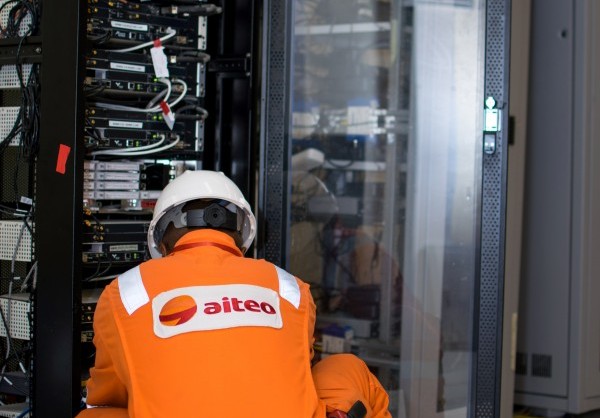
Aiteo Group

By Adedapo Adesanya

The National Oil Spills Detection and Response Agency (NOSDRA) is investigating an oil leak from the Nembe Oilfields operated by Aiteo Eastern Exploration and Production Limited at Nembe in Bayelsa State.

Mr Solomon Ukponevi, Head of NOSDRA’s field Office in Yenagoa, said that the oil firm reported the incident to the agency on Tuesday, explaining that the agency had deployed its officials to the spill site to ascertain the cause and volume of crude oil discharged to the environment.

On the extent of the pollution, Mr Ukponevi said that the Joint Investigative Visit (JIV) scheduled for Wednesday would determine the area among other details.

“I will not be able to provide details until staff deployed for the JIV return from the fields, but I can tell you that Aiteo has reported the spill and investigation is underway,” he said.

The leak occurred on Monday at a section of the 97-kilometer Nembe Creek Trunk line (NCTL) that fed the Bonny Oil Export Terminal in Rivers.

Following persistent vandalism on the oil export line with the capacity to evacuate 180,000 barrels of crude daily, Aiteo resorted to using barges to convey crude from the Nembe fields.

The barges transport crude from onshore oil wells to a Floating Production Storage and Offloading (FPSO) vessel from which Aiteo exports the Nembe Crude blend to crude tankers.

However, Business Post gathered that the Management of Aiteo is yet to respond to the incident.

Adedapo Adesanya is a journalist, polymath, and connoisseur of everything art. When he is not writing, he has his nose buried in one of the many books or articles he has bookmarked or simply listening to good music with a bottle of beer or wine. He supports the greatest club in the world, Manchester United F.C.

Economy

Secure Electronic Technology Suspends Share Reconstruction as Investors Pull Out

Published

on

Secure Electronic Technology

By Aduragbemi Omiyale

The proposed share reconstruction of a local gaming firm, Secure Electronic Technology (SET), has been suspended.

The Lagos-based company decided to shelve the exercise after negotiations with potential investors crumbled like a house of cards.

Secure Electronic Technology was earlier in talks with some foreign investors interested in the organisation.

Plans were underway to restructure the shares of the company, which are listed on the Nigerian Exchange (NGX) Limited.

However, things did not go as planned as the potential investors pulled out, leaving the board to consider others ways to move the firm forward.

Confirming this development, the company secretary, Ms Irene Attoe, in a statement, said the board would explore other means to keep the company running to deliver value to shareholders.

“This is to notify the NGX and the investing public that a meeting of the board of SET held on Tuesday, December 16, 2025, as scheduled, to consider the status of the proposed share reconstruction and recapitalisation as approved by the members at the Extraordinary General Meeting (EGM) held on April 16, 2025.

“After due deliberations, the board wishes to announce that the proposed share reconstruction will not take place as anticipated due to the inability of the parties to reach a convergence on the best and mutually viable terms.

“Thus, following an impasse in the negotiations, and the investors’ withdrawal from the transaction, the board has, in the interest of all members, decided to accept these outcomes and move ahead in the overall interest of the business.

“The board is committed to driving the strategic objectives of SEC and to seeking viable opportunities for sustainable growth of the company,” the disclosure stated.

Business Post reports that the share price of SET crashed by 3.85 per cent on Tuesday on Customs Street on Tuesday to 75 Kobo. Its 52-week high remains N1.33 and its one-year low is 45 Kobo. Today, investors transacted 39,331,958 units.

Continue Reading

Economy

Clea to Streamline Cross-Border Payments for African Importers

Published

on

Clea Payment platform

By Adedapo Adesanya

Clea, a blockchain-powered platform that allows African importers to pay international suppliers in USD while settling locally, has officially launched.

During its pilot phase, Clea processed more than $4 million in cross-border transactions, demonstrating strong early demand from businesses navigating the complexities of global trade.

Clea addresses persistent challenges that African importers have long struggled with, including limited FX access, unpredictable exchange rates, high bank charges, fraudulent intermediaries, and payment delays that slow or halt shipments. The continent also faces a trade-finance gap estimated at over $120 billion annually, limiting importers’ ability to access the FX and financial infrastructure needed for timely international payments by offering fast, transparent, and direct USD settlements, completed without intermediaries or banking bottlenecks.

Founded by Mr Sheriff Adedokun, Mr Iyiola Osuagwu, and Mr Sidney Egwuatu, Clea was created from the team’s own experiences dealing with unreliable international payments. The platform currently serves Nigerian importers trading with suppliers in the United States, China, and the UAE, with plans to expand into additional trade corridors.

The platform will allow local payments in Naira with instant access to Dollars as well as instant, same-day, or next-day settlement options and transparent, traceable transactions that reduce fraud risk.

Speaking on the launch, Mr Adedokun said, “Importers face unnecessary stress when payments are delayed or rejected. Clea eliminates that uncertainty by offering reliable, secure, and traceable payments completed in the importer’s own name, strengthening supplier confidence from day one.”

Mr Osuagwu, co-founder & CTO, added, “Our goal is to make global trade feel as seamless as a local transfer. By connecting local currencies to global transactions through blockchain technology, we are removing long-standing barriers that have limited African importers for years.”

According to a statement shared with Business Post, Clea is already working with shipping operators who refer merchants to the platform and is also engaging trade associations and logistics networks in key import hubs. The company remains fully bootstrapped but is open to strategic investors aligned with its mission to build a trusted global payment network for African businesses.

Continue Reading

Economy

NIN to Serve as Tax ID for Nigerians—FIRS

Published

on

NIN as Tax ID

By Adedapo Adesanya

The Federal Inland Revenue Service (FIRS) has declared that the National Identification Number (NIN) issued by the National Identity Management Commission (NIMC) has now automatically become a Tax ID for Nigerians.

The service announced this in a public awareness campaign on the new tax laws posted on X, formerly known as Twitter, on Monday.

The new tax laws go into effect in two weeks and to ease administration and collection of taxes, NIN, which was introduced as a way of identity, will now serve as Tax ID. This declaration comes amidst concerns over a provision of the tax laws mandating Tax ID for bank account ownership.

With this development, all Nigerians with NIN now automatically have a Tax ID and can be easily brought into the tax net, provided they receive taxable income. The new tax law has set N800,000 per annum earning as the cut-off annual income threshold which the Nigerian state will charge no personal income tax.

For registered businesses, the FIRS said their RC number issued by the Corporate Affairs Commission (CAC) automatically becomes their tax ID under the new tax system.

According to the FIRS, the Nigeria Tax Administration Act (NTAA) billed to come into force from January 2026, mandates the use of Tax ID for certain transactions.

It, however, noted that this requirement is not new, adding that it has existed since the Finance Act 2019 and has been strengthened under the NTAA.

“The Tax ID unifies all TINS previously issued by FIRS and states IRS into a single identifier.

“For individuals, your NIN automatically serves as your Tax ID, while for registered companies, your CAC RC number is used.

“You do not need a physical card, the Tax ID is a unique number linked directly into your identity,” the FIRS stated.

The FIRS added that the new tax ID systems simplify identification, reduce duplication, closes loophole for tax evasion and ensure fairness so that everyone who earns taxable income contributes their share.

Continue Reading

Trending