Economy
Oranto to Invest $500m in South Sudan Oil & Gas Sector

By Dipo Olowookere
On Monday, an exploration and production sharing agreement deal to develop South Sudan’s Block B3 was signed between the country’s government and Oranto Petroleum Company in Juba.
The deal will see Oranto Petroleum invest $500 million to immediately launch a comprehensive exploration campaign in the newest country in Africa.
The B3 area covers 25,150 square kilometres. Some aeromagnetic and seismic data have been acquired for the area but no wells have been drilled. The block is highly prospective, with productive parts of the Muglad Basin to the northwest and estimated reserves in place of more than 3 billion barrels of oil.
The block is categorized as low risk, high reward. Under the EPSA, Oranto will be the technical operator and 90 percent shareholder of the block, with Nilepet holding a 10 percent stake.
Speaking on the development, Minister of Petroleum, Mr Ezekiel Lol Gatkuoth, disclosed that, “We believe the petroleum resources of Block B3 are vast.
“To reach our target of more than double current oil production, we need committed new entrants like Oranto.”
“The government is working hard to reinvigorate the petroleum industry in South Sudan by creating an enabling environment for International oil and gas companies to invest and operate. It is up to the oil companies to come in, explore and produce,” he added.
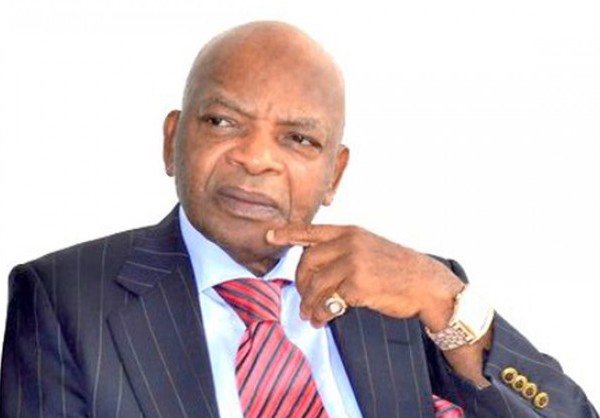
Also commenting, Founder and Chairman of Oranto Petroleum, Prince Arthur Eze, stated that, “It is an honour to formalize our entry into South Sudan with this EPSA.”
“Our company is at the vanguard of African firms exploring and developing African assets. This is the beginning of a long-term collaboration with Nilepet, the people of South Sudan and our partners to bring to light the immense potential of Block B3. Oranto is committed to an aggressive exploration work program that will benefit all stakeholders,” he added.
The 120,000-square kilometer Block B was split by the government into the B1, B2 and B3 blocks in 2012. In Block B3 Oranto will work alongside the B1 and B2 partners, which include Total.
During the first three-year exploration period Oranto will complete a further airborne geophysical survey; acquire and process 2D seismic; and assess existing data held by the government and former operators.
The EPSA contract was facilitated by pan-African law firm Centurion Law Group. South Sudan is an established, world-class petroleum producing region, whose territory includes a large part of the Cretaceous rift basin system that has proved petroliferous in Chad and Niger as well as Sudan.
Atlas Petroleum International and Oranto Petroleum, the sister companies of the Atlas Oranto Group, own and operate 20 oil and gas acreages in 10 African countries: Benin, Côte d’Ivoire, Equatorial Guinea, Ghana, Liberia, Namibia, Nigeria, São Tomé and Príncipe, Senegal and South Sudan.
Founded in Nigeria in 1991, the group is Africa’s largest indigenous explorer by acreage.
Economy
Nigeria in Talks with China to Expand Yuan–Naira Swap Deal to $10bn
By Adedapo Adesanya
The federal government is in advanced talks with China to expand its existing Yuan–Naira currency swap to as much as $10 billion, a move aimed at easing pressure on the US dollar and narrowing the trade imbalance that heavily favours the Asian country.
The director general and Global Liaison for the Nigeria–China Strategic Partnership (NSCP), Mr Joseph Tegbe, said in Abuja that the government was seeking to renew and scale up the current $2.5 billion swap arrangement to allow businesses transact directly in yuan, reducing reliance on the dollar for bilateral trade.
According to him, the existing swap line, though initially underutilised, is being renewed and expanded, with proposals to increase it to $10 billion.
Mr Tegbe said Nigeria was also fast-tracking export protocols to take full advantage of China’s zero-tariff policy for African countries, set to take effect in May 2026.
“Products like hides, skins, cashew, and aquatic products such as crabs and shrimps, which are often exported informally, will now enter China legally under zero duty,” he stated.
The DG highlighted that beyond trade, Nigeria is pursuing equity-based partnerships with Chinese firms. Notable initiatives. These include China Harbour Engineering Company’s $1 billion investment in the Lekki Deep Sea Port and large-scale developmental projects in agriculture, steel, and poultry.
Nigerian businesses to transact directly in Yuan, avoiding the current need to convert Naira to dollars and then to Yuan, which places additional strain on dollar demand.
“We are in discussions with China to establish a truly workable Yuan–Naira swap arrangement. We already have about a $2.5 billion swap line, and although progress slowed toward the end of last year, we are now looking to renew and expand it.
“What this means for the economy is simple: a Nigerian business should be able to pay in naira into his local bank account here and receive Yuan in China directly to do his/her business. Currently, traders convert Naira to Dollars, and then Dollars to Yuan, which increases demand for the US Dollar.
“But someone trading with China does not need Dollars — they need Yuan. If transactions move directly between naira and yuan, it will significantly reduce pressure on the Dollar–Naira exchange rate,” he said.
He noted that for the swap to be effective, Nigeria’s foreign exchange reserves must be at a comfortable level, a goal being addressed by the Central Bank of Nigeria (CBN) as part of broader efforts to stabilise the currency and facilitate smoother bilateral trade.
“Our foreign exchange reserves must also be at a comfortable level for the swap to function effectively. Without sufficient reserves, the arrangement cannot deliver its full benefits. That is why we are strengthening our FX position and renewing the agreement.
“Businesses have told us the current threshold is insufficient, so we are working to increase it to the equivalent of $10 billion,” Mr Tegbe said.
Economy
Spike in Demand for Salt, Seasoning Products Raise NASCON Revenue by 27%
By Aduragbemi Omiyale
One of the leading salt refiners in Nigeria, Nascon Allied Industries Plc, a subsidiary of Dangote Group, has recorded a 27 per cent spike in revenue for the 2025 financial year.
The financial statements of the company disclosed that earnings stood at N152.7 billion compared with the N120.4 billion achieved in 2024, driven by a robust demand for its salt and seasoning products and improved production stability.
This helped the firm to raise its gross profit by 33 per cent to N73.9 billion from N55.5 billion, as the profit after tax went up by 115 per cent to N33.5 billion from N15.6 billion, and the earnings per share grew by 115 per cent at N12.41, inspiring the board to jack up the dividend payout by 200 per cent at N6.00.
“It is a privilege to present the audited results of Nascon Allied Industries Plc for the year ended December 31, 2025,” the Managing Director, Mr Aderemi Saka, said.
“This year’s performance stands as a testament to our collective resilience and strategic discipline in navigating a demanding macroeconomic environment.
“Our commitment to operational excellence delivered the strongest bottom-line performance in our company’s recent history.
“Revenue grew by 27 per cent to N152.7 billion, reinforced by a robust demand for our salt and seasoning products and improved production stability, while gross profit rose by 33 per cent to N73.9 billion.
“Profit After Tax surged by 115 per cent to N33.5 billion, and this exceptional earnings growth translated into a 115 per cent increase in Earnings Per Share, now at N12.41.
“Reflecting this solid performance, the board is pleased to propose a dividend of N6.00 per share, representing a 200 per cent increase,” he added.
Mr Saka attributed the success of last year to “the 72 per cent expansion of our asset base to N135.3 billion, enabled largely by our strategic investment in new Compressed Natural Gas (CNG) trucks.
“This transition serves a dual purpose: protecting our operations from the volatility of diesel prices while significantly reducing our carbon footprint.
“By strengthening our logistics capabilities, we have enhanced operational independence and secured greater supply chain control, deepening the sustainability of our business model.”
“We concluded the year with a strong liquidity position, as cash and cash equivalents rose by 69 per cent to N41.6 billion, supported by operating cash flows of N43.9 billion.
“This financial strength gives us the capacity to continue investing in technology, infrastructure, and operational efficiency initiatives that will reinforce our market leadership,” he further stated.
“As we look ahead, we remain focused on increasing our market presence, strengthening operational resilience, and executing the long-term strategic initiatives that support sustainable growth.
“With a solid balance sheet and a committed workforce, we are well-positioned to continue delivering value to our shareholders and all stakeholders.
“I extend my sincere appreciation to our shareholders, customers, and employees for their unwavering support. As we move forward, I am optimistic about carrying this momentum into 2026 and beyond,” the MD disclosed.
Economy
Tinubu Picks Taiwo Oyedele as Minister of State for Finance
By Adedapo Adesanya
President Tinubu has nominated Mr Taiwo Oyedele as the new Minister of State for Finance, taking over the position from Mrs Doris Uzoka-Anite.
In a statement on Tuesday, it was announced that Mrs Uzoka-Anite will now move to the Ministry of Budget and National Planning as the Minister of State, marking her third portfolio in the administration, after she was earlier stripped of the role of Minister of Trade, Industry, and Investment and replaced by Mrs Jumoke Oduwole.
President Tinubu conveyed Mr Oyedele’s nomination to the Senate for confirmation in a letter to the Senate President, Mr Godswill Akpabio, on Tuesday.
Until his nomination, Mr Oyedele, from Ikaram, Akoko, Ondo State, served as the Chairman of the Presidential Committee on Fiscal Policy and Tax Reforms, which overhauled Nigeria’s tax system.
The 50-year-old PricewaterhouseCoopers (PwC) alumnus is an economist, accountant, and public policy expert.
He attended Yaba College of Technology, where he obtained a Higher National Diploma (HND) in Accountancy and Finance. He also attended Oxford Brookes University, earning a BSc in Applied Accounting.
He has completed executive education programs at the London School of Economics, Yale University, the Gordon Institute of Business Science, and the Harvard Kennedy School.
Mr Oyedele spent 22 years of his working career at PwC, joining in 2001 and rising to become Fiscal Policy Partner and Africa Tax Leader.
He is also a professor at Babcock University in Ogun State and a visiting scholar at the Lagos Business School (LBS).
-
Feature/OPED6 years agoDavos was Different this year
-
Travel/Tourism10 years ago
Lagos Seals Western Lodge Hotel In Ikorodu
-
Showbiz3 years agoEstranged Lover Releases Videos of Empress Njamah Bathing
-
Banking8 years agoSort Codes of GTBank Branches in Nigeria
-
Economy3 years agoSubsidy Removal: CNG at N130 Per Litre Cheaper Than Petrol—IPMAN
-
Banking3 years agoSort Codes of UBA Branches in Nigeria
-
Banking3 years agoFirst Bank Announces Planned Downtime
-
Sports3 years agoHighest Paid Nigerian Footballer – How Much Do Nigerian Footballers Earn