Economy
600m Children Risk Water Shortage by 2040—UNICEF

By Dipo Olowookere
Some 600 million children – or 1 in 4 children worldwide – will be living in areas with extremely limited water resources by 2040, a report by the UNICEF on World Water Day has revealed.
The report, Thirsting for a Future: Water and children in a changing climate, looks at the threats to children’s lives and wellbeing caused by depleted sources of safe water and the ways climate change will intensify these risks in coming years.
“Water is elemental; without it, nothing can grow. But around the world, millions of children lack access to safe water — endangering their lives, undermining their health, and jeopardizing their futures. This crisis will only grow unless we take collective action now,” said UNICEF Executive Director Anthony Lake.
According to the report, 36 countries are currently facing extremely high levels of water stress, which occurs when demand for water far exceeds the renewable supply available. Warmer temperatures, rising sea levels, increased floods, droughts and melting ice affect the quality and availability of water as well as sanitation systems.
Population growth, increased water consumption, and higher demand for water largely due to industrialization and urbanization are draining water resources worldwide. Conflicts in many parts of the world also threaten children’s access to safe water.
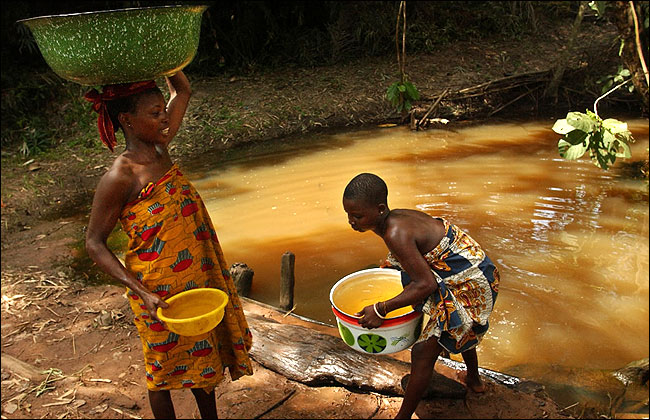
All of these factors force children to use unsafe water, which exposes them to potentially deadly diseases like cholera and diarrhoea. Many children in drought-affected areas spend hours every day collecting water, missing out on a chance to go to school. Girls are especially vulnerable to attack during these times.
South Africa too, despite recent rains in many parts of the country, regularly faces water shortages. According to statistics provided by the national Department of Health and UNICEF, unsafe or lack of water supply, sanitation services and hygiene is ranked 11th on the list of risk factors causing death in South Africa. In addition, approximately 11 per cent of South African households still lack adequate sanitation and at least 26 per cent of households within formal areas are equipped with sub-standard sanitation services. Diarrhoeal diseases account for 3.4 per cent of total deaths and are the 8th largest cause of death in South Africa.
Globally, the poorest and most vulnerable children will be most impacted by an increase in water stress, the report says, as millions of them already live in areas with low access to safe water and sanitation.
The report also notes that up to 663 million people globally do not have access to adequate water sources and 946 million people practice open defecation; over 800 children under the age of five die every day from diarrhoea linked to inadequate water, sanitation and hygiene; globally, women and girls spend 200 million hours collecting water every day.
The impact of climate change on water sources is not inevitable, UNICEF says. The report concludes with a series of recommendations that can help curb the impact of climate change on the lives of children.
Such measures include for governments to plan for changes in water availability and demand in the coming years; Above all, it means prioritizing the most vulnerable children’s access to safe water above other water needs to maximize social and health outcomes; climate risks should be integrated into all water and sanitation-related policies and services, and investments should to target high-risk populations; businesses need to work with communities to prevent contamination and depletion of safe water sources; communities themselves should explore ways to diversify water sources and to increase their capacity to store water safely.
“In a changing climate, we must change the way we work to reach those who are most vulnerable. One of the most effective ways we can do that is safeguarding their access to safe water,” Lake said.
Economy
SEC Postpones Q2 2026 Pre-registration Training, Examination for CMOs
By Aduragbemi Omiyale
The pre-registration training and examination for capital market operators (CMOs) for the second quarter of 2026 has been postponed.
Business Post gathered that the new date for the exercise is now Monday, June 15, 2026.
This information was disclosed by the Securities and Exchange Commission (SEC) through a circular on Monday, June 8, 2026.
The Nigerian capital market regulator stated that this postponement has also resulted in the extension of the deadline for registration to Friday, June 12, 2026.
In the notice today, the SEC expressed its regret for the inconvenience this action may cause operators, who had prepared for the initial date of the training and examination.
“Further to the recent circular on Q2 2026 Pre-registration Training and Examination, the Securities and Exchange Commission (SEC) hereby informs all eligible applicants for the Q2 2026 Pre-registration Training and Examination that the commencement date has been postponed to Monday, June 15, 2026.
“Registration on the designated portal has also been extended to Friday, June 12, 2026. All other conditions contained in the circular remain unchanged.
“The commission regrets any inconvenience this postponement may cause and appreciates the understanding of all applicants,” the disclosure noted.
Economy
Fidson Lists Additional 600 million Shares on Stock Exchange
By Aduragbemi Omiyale
One of the leading healthcare firms in Nigeria, Fidson Healthcare Plc, has listed additional shares on the Nigerian Exchange (NGX) Limited.
The new stocks absorbed into the stock market were 600 million units, raising the total issued and fully paid-up shares of Fidson to 3,000,000,000 ordinary shares of 50 Kobo each from 2,400,000,000 ordinary shares of 50 Kobo each.
The fresh equities came from the company’s rights issue of 600,000,000 ordinary shares of 50 Kobo each at N35.00 per share.
They were issued to existing investors on the basis of one new ordinary share for every existing four ordinary shares held as of the close of business on Wednesday, November 12, 2025.
Confirming the development, the regulator in a notice said, “Trading licence holders are hereby notified that an additional 600,000,000 ordinary shares of 50 Kobo each of Fidson Healthcare Plc were on Tuesday, June 2, 2026, listed on the daily official list of Nigerian Exchange Limited.
“The additional shares arose from the company’s rights issue of 600,000,000 ordinary shares of 50 Kobo each at N35.00 per share on the basis of one new ordinary share for every existing four ordinary shares held as at the close of business on Wednesday, November 12, 2025.
“With the listing of the additional 600,000,000 ordinary shares, the total issued and fully paid-up shares of Fidson Healthcare Plc have now increased from 2,400,000,000 to 3,000,000,000 ordinary shares of 50 Kobo each.”
Economy
FG Approves Payments to 1,240 Contractors to Ease Liquidity Pressure
By Modupe Gbadeyanka
This news will surely excite local contractors with verified claims of N100 million or less, as the federal government has approved their payments.
This approval for the disbursement was given by the Minister of Finance and Coordinating Minister of the Economy, Mr Taiwo Oyedele.
This followed a verification and reconciliation exercise designed to ensure only validated claims qualify for payment.
The beneficiaries cover contractors across multiple ministries, departments and agencies. The release of the funds is expected to enable contractors to return to project sites, pay workers, settle suppliers and meet outstanding financial commitments.
In an announcement on Monday, the Federal Ministry of Finance also said this latest batch of payments would ease liquidity pressure on small businesses and accelerate economic activity nationwide.
It was noted that the payments for verified claims of N100 million below were strategically done to spread economic impact broadly rather than concentrate disbursements among a handful of large firms.
The payments form part of a broader push to clear inherited contractor obligations, with over N700 billion verified in recent months.
“For many beneficiaries, the release of funds represents more than a financial transaction. It provides the certainty needed to sustain operations, preserve jobs, complete ongoing projects, and contribute to economic recovery and growth,” the ministry said in a statement.
-
Feature/OPED6 years agoDavos was Different this year
-
Travel/Tourism10 years ago
Lagos Seals Western Lodge Hotel In Ikorodu
-
Showbiz3 years agoEstranged Lover Releases Videos of Empress Njamah Bathing
-
Banking8 years agoSort Codes of GTBank Branches in Nigeria
-
Economy3 years agoSubsidy Removal: CNG at N130 Per Litre Cheaper Than Petrol—IPMAN
-
Banking3 years agoSort Codes of UBA Branches in Nigeria
-
Banking3 years agoFirst Bank Announces Planned Downtime
-
Sports3 years agoHighest Paid Nigerian Footballer – How Much Do Nigerian Footballers Earn