World
Dubai BRICS Forum Will Help Develop Small and Medium Businesses
By Kestér Kenn Klomegâh
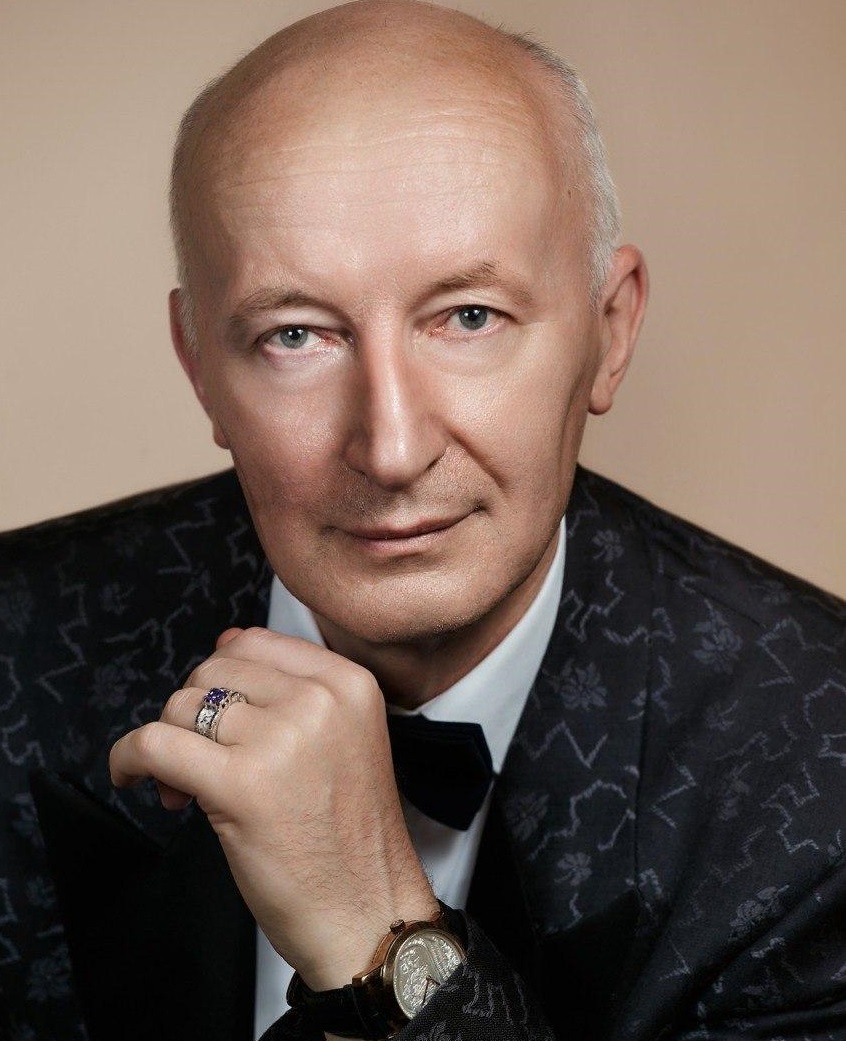
In this insightful conversation, the Chairman of the Organizing Committee of the Dubai BRICS Investment Forum, academician Konstantin Klimenko-Bogdanov, highlights the primary importance of the forthcoming corporate business forum within the context of the geopolitical situation and offers a distinctive roadmap for economic collaboration of the BRICS countries. Here are the interview excerpts:
What does the upcoming BRICS Investment Forum in Dubai mean, especially in the context of geopolitical rivalry and competitive struggle?
In theory, competitive struggle should contribute to the development of the economy. After all, competition does not allow for the establishment of a monopoly, the dominance of only an exclusive minority of market participants. But on the condition that this is fair competition. But we are witnessing uncivilized methods of dividing spheres of influence in the market, cynical exploitation of natural resources in Africa and Asia by Western transnational corporations, and monopolization of entire industries in developing countries.
For example, the telecommunications sector, and the banking sector in Africa practically do not belong to Africans. Sometimes the name of a bank can have the word “Africa”. The real owners of banking capital are in Paris, London, and New York.
The income from the national wealth of African and Asian countries is distributed amazingly cynically. For example, coffee is purchased in Africa for a price of 1 dollar per kilogram, and sold in Europe for 4 dollars!
Unfair competition is supplemented by geopolitical rivalry in the form of escalating international tensions, declaring trade wars, and sanctions, and creating artificial military conflicts. Again, the goal of conflicts and military operations is only one – to seize resources. For example, in Iraq, and Syria, the Americans brazenly pump oil, without losing money on its purchase. And the US President does not hesitate to take away the Panama Canal or seize the island of Greenland.
Therefore, the goal of holding the Dubai BRICS Investment Forum is to find ways to facilitate civilized international economic cooperation in the conditions of trade wars, military conflicts, and sanctions. It is necessary to make an honest analysis and develop a roadmap for the joint economic development of the BRICS countries and friendly states.
Can you point to the prospects for its preservation (the forum) as an extraordinary annual platform for stimulating bilateral and multilateral transactions, and investments and, possibly, establishing a flow of corporate transactions between BRICS+ members and partner countries?
The Dubai BRICS Investment Forum is definitely not a one-off event. It is the basis for creating a global BRICS business community, which will operate on an ongoing basis. It will consist of the BRICS International Club, the BRICS House International Network, the Alliance of Small and Medium Enterprises, the Tourism Alliance, the Women’s Business Association and a number of other organizations. A digital platform, BRICS INFO, will be created.
The task of these structures is to establish a flow of trade, concentrate investment resources, and create a flow of corporate transactions.
Special attention will be paid to small and medium businesses. We intend to connect about 10,000 small and medium businesses into one ecosystem. The total turnover of this ecosystem in 2025 alone will amount to about US$700 billion.
We will also have social investment projects. The BRICS Student Card project is being created for students. With this card, students will receive various forms of social support in the form of discounts on air tickets, train tickets, purchases of goods in supermarkets, and so on. The most talented students will receive incentive scholarships.
It is planned to create a network of BRICS campuses through joint investments of BRICS businessmen. The campuses will house a university, college, and lyceum. The network will operate in 10 countries.
What priority investment projects will the forum promote?
Our priority is the Small Energy project. Half of the African continent and part of Asia have no electricity at all! This is unacceptable for the 21st century! We plan to create hundreds of small power plants on solar panels, wind turbines, and diesel generators through joint investments.
We have very interesting joint investment projects planned in the real estate sector. New housing complexes under the BRICS House brand will be built in many countries. In essence, these will be “cities of the future.” The main priority in the concept of these cities is “human ecology.” For example, these cities will not have any gasoline-powered vehicles at all. Only electric vehicles. But there will also be restrictions on cellular repeaters that emit harmful electromagnetic radiation. The goal of the project is to create areas that are as favourable as possible for human life. Many investors are already ready to invest in these projects.
By the way, why are you holding this important BRICS event in Dubai, United Arab Emirates? Are there any distinctive advantages that it offers to potential business participants, including women and young entrepreneurs?
The choice of Dubai as a permanent venue for our forum is based on expert opinion. We are confident that the most comfortable infrastructure and conditions for holding large-scale summits and creating business development centres have been created here. The UAE has a balanced tax system, thoughtful economic policy, and a tolerant atmosphere. And Dubai is a city of dreams, a bright future. Therefore, our forum will be held here annually and the residences of the BRICS House, BRICS Club, and the Alliance of Small and Medium Business will operate here permanently.
Based on the above reasoning, can we perhaps see the difference between the World Economic Forum in Davos and the BRICS Investment Forum in Dubai in the current situation of ongoing global transformations and development?
The difference in key approaches. At the Davos Forum, the agenda is set by Western transnational corporations. They initiate discussions of globalization plans. Our forum is intended for small and medium-sized businesses in Eurasia and Africa. We intend to discuss not globalization, but how to develop national economies and establish active cooperation between them.
At the Davos Forum, trends are created by politicians. Many participants go to this forum to listen to heads of state and high-ranking government officials. There will also be officials and parliamentarians at the Dubai Investment Forum. But they are not the main participants here. They will listen more than they speak. It will be entrepreneurs and taxpayers who support officials with their taxes who will speak more often. Because this is a platform for business, not a tribune for politicians.
World
Africa Takes Centre Stage as Addis Ababa Hosts the World Public Summit
By Kestér Kenn Klomegâh
For the first time in its history, the World Public Summit will be held on the African continent. On 29–30 July 2026, Addis Ababa, the capital of Ethiopia, will host the World Public Summit. Africa — “A New World: Africa in Shaping a Shared Future.”
The Summit is organised by the World Peoples Assembly in cooperation with African partner organisations. It will bring together leaders of public diplomacy, representatives of international intergovernmental and non-governmental organisations, academics, experts, representatives of the education and cultural sectors, youth leaders, socially responsible businesses, media professionals, and civil society institutions from across Africa and other regions of the world.
The World Public Summit. Africa continues the work initiated during the First World Public Assembly “A New World of Conscious Unity,” held in Moscow in September 2025, and serves as one of the key milestones in preparation for the Second World Public Assembly “A New World: Values That Unite,” which will take place in Moscow on 18–19 September 2026.
Today, Africa is emerging as one of the principal centres of global development. Rapid demographic growth, expanding entrepreneurship, strengthening regional integration, rich cultural heritage, and the growing role of civil society institutions make the continent an increasingly important contributor to the future architecture of international cooperation.
The Summit will focus on issues of genuine sovereignty and sustainable development, public diplomacy, preservation of cultural and historical heritage, international cooperation in education and science, youth engagement, innovation-driven development, creative industries, and the formation of new partnerships among countries and peoples.
The main business programme of the Summit will take place on 30 July 2026 at the headquarters of the United Nations Economic Commission for Africa (UNECA) in Addis Ababa. Holding the Summit at UNECA highlights its pan-African dimension and creates opportunities for broad international dialogue on humanitarian cooperation and public diplomacy.
The programme will include plenary sessions, strategic dialogues, and expert panels dedicated to values-based development, education, culture, youth leadership, innovation, and international cooperation.
Participation has already been confirmed by Professor Saidou Madougou, Director of the Department of Education, Science, Technology and Innovation of the African Union; Rita Bissoonauth, Director of the UNESCO Liaison Office to the African Union and UNECA in Addis Ababa; Zuzana Schwidrowski, Director of the Macroeconomics, Finance and Governance Division of UNECA, as well as ministers, leaders of public organisations, and representatives of the business community from a number of African countries.
On the same day, the ADWA Victory Memorial Museum—Ethiopia’s national memorial complex dedicated to the Victory of Adwa and an important centre for preserving the historical memory of the Ethiopian people—will host the award ceremony of the regional stage of the V International Competition “Leader of Public Diplomacy”, followed by a large-scale cultural programme.
One of the key outcomes of the Summit will be the adoption of the African Communiqué, reflecting proposals and recommendations aimed at strengthening humanitarian, educational, cultural, and public cooperation between African countries and other regions of the world.
The outcomes, initiatives, and recommendations were developed during the World Public Summit. Africa will be presented at the Second World Public Assembly “A New World: Values That Unite”, to be held in Moscow on 18–19 September 2026.
According to Andrey Belyaninov, General Secretary of the World Peoples Assembly, “the Addis Ababa Summit is an important step toward building a new world founded on mutual respect, cultural diversity, dialogue and sustainable development.”
World
UK Set for Seventh Prime Minister in 10 Years as Keir Starmer Resigns
By Adedapo Adesanya
The United Kingdom will get its seventh Prime Minister in 10 years as Mr Keir Starmer announced his resignation on Monday.
The Minister said he is stepping down as leader of the governing Labour Party and will leave office within weeks, scarcely two years after being elected in a landslide.
Mr Starmer says he will remain caretaker prime minister until a new Labour leader is chosen by the party.
Mr Starmer made the announcement after facing growing pressure to hand over to a new leader who can try to revive the government’s flagging fortunes.
He led Labour to a landslide election victory in July 2024, but since then, his popularity and that of the party have plummeted.
His departure was triggered by the victory of Mr Andy Burnham in a special election last week. The popular ex-mayor of Greater Manchester planned to challenge the existing PM for the Labour leadership.
Mr Starmer made the announcement outside the prime minister’s 10 Downing St. residence with a brief statement on Monday.
“The question my party is asking now is whether I am best placed to lead us into the next general election,” Mr Starmer said. “I have heard the answer of my parliamentary party to that question, and I accept that answer with good grace.
Mr Starmer is the sixth prime minister in a decade to stand outside 10 Downing Street and announce a premature departure.
It comes the day before Britain marks the 10th anniversary of its vote to leave the European Union, a decision that still affects the country’s economy and politics.
Over the past decade, 10 Downing Street has had six occupants, including Mr David Cameron, who left office in 2016 after the Brexit referendum and was succeeded by Ms Theresa May. She was followed by Mr Boris Johnson, whose tenure covered Brexit and the COVID-19 pandemic. After Mr Johnson came Ms Liz Truss, whose 49-day premiership was the shortest in British history. Mr Rishi Sunak then took office before being succeeded by Mr Starmer, the outgoing occupant of Number 10.
World
AXIAN Energy Secures $60m for Expansion Across Africa
By Aduragbemi Omiyale
A financing facility of up to $60 million has been secured by AXIAN Energy, the energy division of the AXIAN Group.
The funding package was provided by MCB, one of the leading financial institutions in the Indian Ocean region.
It comprises a $40 million revolving credit facility with a three-year tenor and extension option, and $20 million in unfunded instruments, providing AXIAN Energy with enhanced financial flexibility, enabling the company to rapidly mobilise resources and seize development opportunities across its target markets.
The energy firm is expected to use the capital to deliver large-scale energy infrastructure projects across Africa.
Over the past two years, AXIAN Energy has significantly accelerated its growth by expanding its renewable energy project pipeline, with solar projects currently under development in Senegal, Benin, Zambia, Côte d’Ivoire, Madagascar, and Burkina Faso.
Building on this momentum, AXIAN Energy now operates a portfolio comprising 350 MW of installed renewable energy capacity, supported by 77 MWh of energy storage capacity, positioning the AXIAN Group as a major contributor to Africa’s energy transition.
The chief executive of AXIAN Energy, Mr Benjamin Memmi, said, “This transaction marks a key milestone in AXIAN Energy’s growth trajectory. It provides us with the financial capacity to sustain the momentum we have built over the past two years, further strengthening our renewable energy portfolio and expanding our presence across new African markets.”
Also commenting, the Global Head of Structured Finance at MCB, Mr Mathieu Delteil, said, “We are proud to support AXIAN Energy in structuring this facility, reaffirming our commitment to enabling transformative projects across Africa.
“By leveraging our sector expertise and deep understanding of regional markets, we have delivered a tailored financing solution that aligns with AXIAN’s long-term renewable energy ambitions.
“This partnership highlights our role as a strategic financial partner, mobilising capital towards investments that drive sustainable growth and accelerate the energy transition across the continent.”
The financing agreement between the two organisations strengthens their long-standing relationship because it is driven by a shared commitment to supporting infrastructure development and economic growth across Africa.
-
Feature/OPED6 years agoDavos was Different this year
-
Travel/Tourism10 years ago
Lagos Seals Western Lodge Hotel In Ikorodu
-
Showbiz3 years agoEstranged Lover Releases Videos of Empress Njamah Bathing
-
Banking8 years agoSort Codes of GTBank Branches in Nigeria
-
Economy3 years agoSubsidy Removal: CNG at N130 Per Litre Cheaper Than Petrol—IPMAN
-
Banking3 years agoSort Codes of UBA Branches in Nigeria
-
Banking3 years agoFirst Bank Announces Planned Downtime
-
Sports3 years agoHighest Paid Nigerian Footballer – How Much Do Nigerian Footballers Earn