Media OutReach
Small Chinese city reaps global success with sunflowers
The title reflects not only his passion for the crunchy snack but also his remarkable achievement in transforming locally grown sunflower kernels into a global commodity, with markets spanning the Republic of Korea, Egypt and Germany.
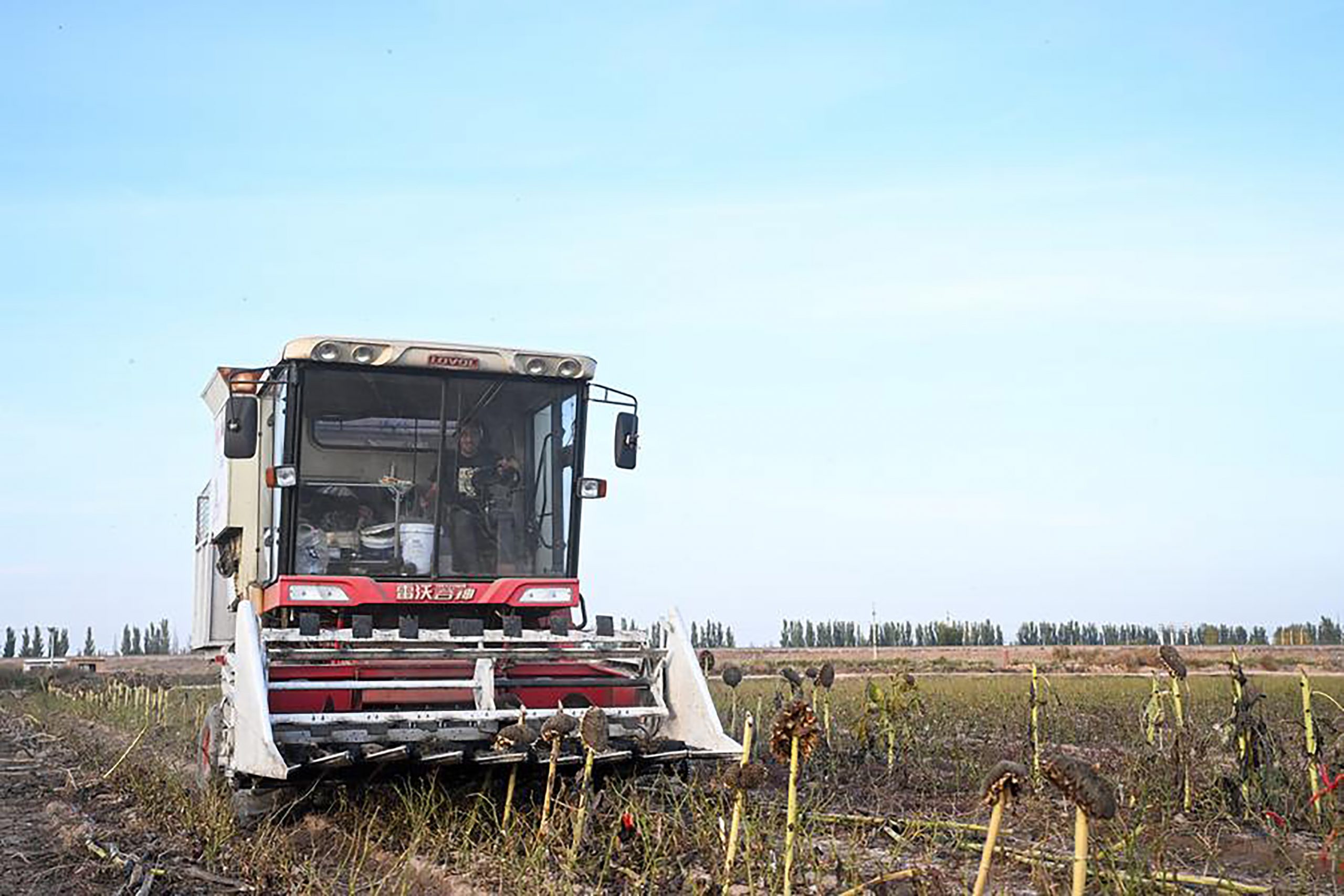
If you enjoy eating sunflower seeds, there’s a good chance they originated from the saline-alkali fields of Bayannur – China’s largest base for edible sunflower production. In 2024 alone, the region produced more than 940,000 tonnes of sunflowers, with exports spanning over 40 countries and regions.
Wang is one of the local farmers who have leveraged the booming sunflower industry to become a successful entrepreneur.
BOOMING INDUSTRY, CHALLENGING LAND
Located in the Inner Mongolia Autonomous Region, Bayannur was once burdened by nearly 4.8 million mu (320,000 hectares) of saline-alkali land, where traditional crops like wheat and corn struggled to grow.
The introduction of sunflowers in the 1970s marked a turning point for the city with a permanent population of 1.5 million.
With its distinct seasons, abundant sunshine, vast plains and ample water resources, Bayannur offered an environment strikingly similar to the sunflower’s native habitat in North America, making it an ideal setting for this resilient crop, according to Zhang Ruhong, vice mayor of Bayannur.
In the 1980s, Wang began cultivating sunflowers on his family’s saline-alkali land. “They are resistant to salt and alkali, drought-tolerant and easy to grow,” he said.
By 2024, Bayannur had expanded its sunflower planting area to 4.4 million mu, nearly half of the country’s total. The city’s sunflower industry has flourished into a comprehensive value chain, encompassing seed sales, cultivation, processing, exports, e-commerce logistics and even tourism.
Sunflowers are the world’s fourth-largest oilseed crop, following soybeans, rapeseed and peanuts, said Zhang Haiyang, an oilseed industry expert.
He noted that sunflowers have gained prominence as a key specialty oilseed crop in China, particularly in northern regions, thanks to their high nutritional and aesthetic value.
The sunflower seed market was valued at 32.3 billion U.S. dollars in 2023 and is projected to grow at a compound annual growth rate of around 9.4 percent between 2024 and 2032, according to Global Market Insights, a market research and management consulting firm.
To take Bayannur’s sunflower industry to new heights, local agricultural scientists have successfully introduced high-quality seed varieties, including SH361 and SH363, as well as a resistant strain specially designed to combat broomrape, a parasitic plant that has long plagued sunflower production globally.
TINY SEEDS, BIG JOURNEY
In the run-up to the Spring Festival, the factories of Bayannur buzzed with activity as machines roared and workers hustled to sort sunflower seeds for export.
“We were extremely busy before the holiday, as we wanted to complete and ship all orders abroad,” said Zhao Lei, general manager of Bayannur Rong Da Co., Ltd. “Our sunflower seeds have seen strong overseas demand last year, with exports reaching 35,000 tonnes.”
Across China, many regions have cultivated industries tailored to their unique local conditions. For instance, oranges from Ganzhou in Jiangxi Province and strawberries from Dandong in Liaoning Province have become key drivers of social and economic development.
Bayannur has also leveraged its local strengths, establishing 120 leading sunflower processing enterprises to seize market opportunities.
Wang Fei, who began trading sunflower seeds domestically in 1987, ventured into the international market in 2012. Last year, his company, Mintai Agricultural Trading Co., Ltd., recorded operating revenues exceeding 700 million yuan (about 97.63 million U.S. dollars), with exports making up the bulk.
“In China, people love eating sunflower seeds during festivals. Foreigners share this habit as well. Holidays like Christmas mark our peak export seasons,” Wang said, adding that the holiday economy strongly stimulates consumption.
Bayannur’s sunflower seeds and kernel products now reach over 40 countries and regions in the Middle East, Southeast Asia and Europe, generating an annual export value of 4.2 billion yuan — 64 percent of the city’s total agricultural exports.
These achievements are underpinned by strong policy support. Over the past two years, Bayannur has implemented innovative strategies to promote exports, such as fostering leading companies to establish overseas warehouses, advancing cross-border e-commerce, and streamlining customs clearance processes.
Challenges like rising shipping costs, exacerbated by the Red Sea crisis, have also driven adaptability. Last year, Wang began shifting some shipments from sea to land transport, exporting sunflower seeds to Europe via China-Europe freight trains, significantly reducing costs.
“My goal this year is to expand my sunflower seed exports into the Spanish market,” he said with a smile.
Hashtag: #Bayannur
The issuer is solely responsible for the content of this announcement.
Media OutReach
Egret Island Gathers Hometown Sentiments, Integration Opens a New Chapter — The 18th Straits Forum Grandly Opens in Xiamen
Unchanged Original Aspiration for 18 Years, Non-governmental Exchange Remains Vibrant
Themed “Expanding Non-governmental Exchanges, Deepening Integrated Development,” this forum continues its consistent characteristics of being people-driven, grassroots-oriented, and broad-based. It has planned four major sectors: grassroots exchanges, youth exchanges, cultural exchanges, and economic exchanges, totaling 58 series of activities. Approximately 7,000 participants from various sectors in Taiwan are expected to attend, covering diverse fields such as people’s livelihoods, industry, youth, culture, and sports. Among these, 12 events are hosted by Xiamen.
Since its inception in 2009, the Straits Forum has weathered 18 years of challenges, always adhering to the core concept that “people on both sides of the strait are one family.” Regardless of changes in the cross-strait situation, the forum has always remained rooted at the grassroots level and close to people’s hearts, becoming the most important non-governmental platform for compatriots on both sides to eliminate estrangement, enhance friendship, and move towards each other. With the continuous acceleration of the construction of the Cross-Strait Integrated Development Demonstration Zone in Fujian, this forum is even more closely aligned with policy dividends, making the achievements of cross-strait integration more tangible, more beneficial, and closer to the lives of grassroots people.
Speeches from High-level Officials Convey Goodwill and Draw a New Blueprint for Cross-Strait Integration
During the speech session of the conference, Wang Huning precisely elaborated on the current tone and future direction of cross-strait relations, with a firm stance, warm language, and a focus on public sentiment.
He stated that the important high-level interactions on cross-strait relations in April this year charted the course and injected momentum into the peaceful development and deepening of exchanges and cooperation across the strait. Both sides of the strait belong to one China and share a common destiny. It is essential to uphold the core belief in the indivisibility of our territory, nation, and civilization, firmly adhere to the “1992 Consensus,” resolutely oppose “Taiwan independence” separatist forces and external interference, and jointly safeguard the common homeland of the Chinese nation.
Chinese mainland continues to uphold the principles of closeness, sincerity, benefit, and tolerance in its approach to Taiwan, fully implementing equal treatment for Taiwanese compatriots and enterprises. It opens its vast market and abundant opportunities, welcoming people from all walks of life in Taiwan, young friends, and small and medium-sized enterprises to seize the opportunities presented by Chinese mainland’s high-quality development, pursue their dreams, and take root. Looking ahead to the “15th Five-Year Plan” development blueprint, Chinese mainland will continue to expand the space for cross-strait cooperation. It hopes that young people on both sides will deepen their recognition of Chinese culture, embody the confidence and self-reliance of the Chinese people, and jointly embark on the new journey of national rejuvenation. Before the opening ceremony, Wang Huning also warmly met with representatives of Taiwanese guests, fully conveying Chinese mainland’s sincerity and goodwill in cherishing non-governmental cross-strait exchanges.
Resonant Voices from Taiwanese Compatriots, Shared Roots and Hearts Safeguard Peace Across the Strait
The deepest emotional tone of this forum lies in the blood ties and heart-to-heart connection between people on both sides of the strait. Chang Jung-kung, Vice Chairman of the Chinese Kuomintang Party, expressed sincerely in his speech that people who are authentically from Taiwan are also dignified and upright Chinese people. Compatriots on both sides share the same origin, bloodline, and common interests.
He pointed out that peace across the strait is the greatest well-being for people on both sides. He hopes for the continuous expansion of non-governmental exchanges, deepening of industrial integration, and enhancement of livelihood interactions across the strait. He advocated resolving differences through exchanges, creating mutual benefits through cooperation, jointly safeguarding the stability of the Taiwan Strait, and working together to achieve the great cause of national rejuvenation. Subsequently, representatives from various sectors in Taiwan spoke one after another, unanimously agreeing that only through more exchanges, more interactions, and more heart-to-heart communication can cross-strait relations move forward steadily and far.
Diverse and Bright Highlights of Activities, Youth and Grassroots Become the Main Protagonists
The biggest feature of this forum is its focus shifting downward and empowering youth, leaving the stage to the grassroots and opportunities to the youth.
The series of activities focus on grassroots governance, folk beliefs, social welfare, agricultural and fishery cooperation, rural revitalization, and other issues related to people’s livelihoods, promoting normalized interactions between neighboring communities, clan kinship connections, and non-governmental friendship across the strait. At the same time, 15 youth-specific events are specially planned, covering new and trendy formats such as the Cross-Strait Youth Forum, audio-visual creation competitions, new media exchanges, and cross-strait “Village BA” basketball games, providing comprehensive services for Taiwanese youth in internships, employment, entrepreneurship, and rooting themselves on Chinese mainland.
It is worth noting that the proportion of first-time visitors and Taiwanese youth participants in this forum has reached a new high in recent years. The recent popularity of certain TV dramas and the cultural craze for cross-strait family letters have once again resonated with netizens on both sides regarding the common folklore, language, and family traditions of Fujian and Taiwan, proving the shared cultural lineage and enduring family ties across the strait. Many supporting activities of the forum have already been successfully held, with nearly a thousand Taiwanese compatriots crossing the strait to participate, igniting the exchange fervor of this forum ahead of time.
The Direction of Public Sentiment Becomes a Major Trend, Cross-Strait Integration Moves to a New Level
Tides surge on both sides of the strait, following the direction of public sentiment; integrated development is the irresistible trend. The reason the Straits Forum has remained prosperous for so long is that it fundamentally aligns with the mainstream aspirations of people on both sides for peace, development, exchanges, and cooperation. It also highlights the undeniable tide of non-governmental exchanges and the irreversible trend of integrated development.
The warmth of the people, the vitality of the youth, the roots of culture, and the mutual benefits of industry together form the most solid foundation for cross-strait integration. In the future, as the construction of the Cross-Strait Integrated Development Demonstration Zone continues to deepen, it is believed that non-governmental exchanges across the strait will become smoother, cooperation deeper, and bonds closer.
Hashtag: #CrossStraitsForum
The issuer is solely responsible for the content of this announcement.
Media OutReach
Connecting South and Southeast Asia, Linking Trade Worldwide: The 10th China–South Asia Expo Series of Activities and the 4th Junfa-New Luosiwan International Procurement Festival Open in Kunming
By building platforms for open cooperation, trade exchange, industrial collaboration, cultural connectivity, and consumption promotion, the event aims to further strengthen Yunnan’s role as a gateway linking China with South and Southeast Asia while creating new opportunities for regional economic growth and international cooperation.
The opening ceremony was attended by representatives from government agencies, business associations, enterprises, buyers, and media organizations. Delegations from South and Southeast Asian countries, representatives of the Myanmar Trade Center, members of chambers of commerce, merchants, and influencer alliances gathered alongside nearly 40 national, provincial, and municipal media outlets.
Guo Huaiguang, Party Secretary of the Kunming Municipal Bureau of Commerce, stated that this year’s Procurement Festival builds upon the achievements of previous editions while delivering three key upgrades: stronger open-platform capabilities, deeper integration of emerging trade models, and closer coordination between economic and cultural exchange. He noted that New Luosiwan has successfully leveraged the combined advantages of market procurement trade, the China–Laos Railway, and multimodal transportation networks, significantly reducing logistics costs and customs clearance times while becoming an important export platform for Kunming’s small commodities and specialty agricultural products.
Shi Fei, Vice Mayor of the Guandu District People’s Government, emphasized that New Luosiwan International Trade City has developed into one of Southwest China’s leading commercial and trade complexes. He highlighted its important role in stimulating consumption, expanding foreign trade, and supporting employment, noting that this year’s Procurement Festival creates value through trade promotion, domestic demand stimulation, and enhanced market participation.
At the opening ceremony, You Jian, Vice President of Junfa Group, unveiled the development blueprint for Junfa-New Luosiwan during China’s 15th Five-Year Plan period. Guided by the vision of “Everything You Imagine Can Be Found at New Luosiwan,” the strategy aims to build a trillion-yuan integrated trade platform serving South and Southeast Asia through the combination of physical commerce, digital innovation, wholesale-retail integration, and online-offline collaboration.
Advancing Regional Trade Cooperation Through Strategic Connectivity
The Procurement Festival serves not only as a commercial event but also as a practical demonstration of Yunnan’s participation in the Belt and Road Initiative and the implementation of the Regional Comprehensive Economic Partnership (RCEP).
As an important supporting event of the China–South Asia Expo, the festival leverages the strengths of Junfa-New Luosiwan International Trade City to promote a development model in which logistics drives trade, trade drives industry, and industry drives regional economic growth. The initiative seeks to further establish Yunnan as a key commercial hub connecting China with South and Southeast Asia.
Integrating Trade and Logistics to Strengthen Cross-Border Connectivity
One of the major highlights of this year’s festival is the strategic partnership between Junfa-New Luosiwan and SF International. Together, the two parties have launched an integrated digital trade and logistics platform serving South Asia, Southeast Asia, and extending into Central Asia.
Leveraging the China–Laos Railway, often referred to as a “golden corridor” for regional trade, the platform combines market procurement trade, railway transportation, and multimodal logistics solutions. It also pioneers the regularized mixed transportation of “1039 market procurement goods” and the Lancang-Mekong Express service, helping reduce transportation costs and improve customs clearance efficiency.
Drawing on New Luosiwan’s extensive product ecosystem and incorporating logistics services, cross-border payment solutions, and AI-powered technologies, the platform provides merchants with a comprehensive pathway covering customs clearance, logistics, and settlement services for international expansion.
Accelerating Digital Transformation and Integrated Commerce
Digital transformation was another major focus of this year’s event. LuoLe Technology officially unveiled its Future Development Strategy, introducing five core business segments centered on a B2B cross-border digital trade platform and a consumer-focused digital commerce ecosystem.
Built around the OneID membership system, the platform connects online and offline experiences through the LuoleGO experiential marketplace, the Luole Private Domain Mall, and LuosuDa instant retail services. Together, these initiatives create an integrated digital commerce ecosystem that combines offline engagement, online transactions, fulfillment services, and data-driven operations.
The festival also launched a dual-channel consumption model integrating digital procurement and large-scale retail experiences. Through online subsidy programs and participation from more than 10,000 merchants, traditional commerce is being revitalized through digital innovation and enhanced consumer engagement.
Supporting Global Expansion of Yunnan Brands
During the opening ceremony, organizers officially launched the Merchant Global Expansion Program and Brand Internationalization Initiative.
The program establishes a four-pillar service system consisting of digital commerce platforms, overseas warehouses, international showrooms, and localized overseas operations. The initiative aims to help merchants transition from traditional export-oriented supply models toward global brand development.
More than 1,100 core merchants from the New Luosiwan Chamber of Commerce are participating in the program, transforming individual export efforts into coordinated international expansion strategies. Strategic partnerships have also been established with Vietnam, Thailand, Laos, Cambodia, and Myanmar through reciprocal product exhibition and promotion zones.
Supported by the international visibility of the China–South Asia Expo and the presence of overseas buyers, the Procurement Festival provides direct business matchmaking opportunities between regional merchants and international purchasers while offering comprehensive foreign trade services to facilitate transactions and export growth.
Creating New Consumer Experiences Through Wholesale-Retail Integration
The festival also explores innovative consumption scenarios by integrating wholesale and retail operations into one of China’s leading “experience plus retail” marketplaces.
A key focus is the development of Yunnan’s original fashion industry through designer showcases, runway presentations, and pop-up stores featuring local brands including Jinlinrong, VVFUSHI, T-Stage Jues, Jianpai, Lexiannu, NV Hanzi, and HK.
At the same time, the event incorporates youth-oriented lifestyle elements such as live music, street dance, DJs, fashion performances, and influencer engagement activities. By combining daytime trend experiences with evening entertainment, the festival creates a vibrant atmosphere that injects new energy into traditional commerce.
Promoting Cultural Exchange Through Trade
Beyond business and commerce, the Procurement Festival also serves as a platform for cultural exchange and people-to-people connectivity.The event showcases imported products from South and Southeast Asia alongside Yunnan specialties, including premium coffee, cultural and creative products, jewelry, jade crafts, tie-dye textiles, and other intangible cultural heritage items. By bringing together diverse products and traditions, the festival promotes mutual understanding and cultural appreciation across the region.
Through collaboration with international influencers, content creators, and overseas students, the event further expands its global reach and strengthens cultural ties between China and countries across South and Southeast Asia.
The Procurement Festival will continue through June 16.As Junfa-New Luosiwan advances its development strategy for the 15th Five-Year Plan period and accelerates its digital commerce transformation, it is positioning itself as a more open, innovative, and globally connected trade hub. From Kunming to South and Southeast Asia and beyond, the platform aims to strengthen regional economic connectivity and contribute to a new chapter of international trade cooperation.
Website: https://www.jfxlsw.com
Hashtag: #JunfaNewLuosiwan
The issuer is solely responsible for the content of this announcement.

Media OutReach
ACE ROBOTICS’ Kairos World Model Leads Multiple Global Embodied-Intelligence Benchmarks
Embodied intelligence faces a fundamental challenge: generalization. A robot must operate reliably in environments it has never seen, adapting to new lighting, layouts, objects, embodiments and noisy real-world conditions. While VLA models have become a prevailing approach by directly mapping perception and language inputs to robot actions, ACE ROBOTICS believes world models offer a more scalable path by explicitly learning the underlying dynamics of the physical world and predicting how environments evolve. Kairos is designed to validate that approach.
Leading scene-level generalization on LIBERO-Plus
One of Kairos’ most significant results comes from LIBERO-Plus, a scene-level generalization benchmark proposed by the Shanghai Innovation Institute with Fudan University, Tongji University and the National University of Singapore. It evaluates robustness under seven real-world variables: camera angle, robot embodiment, language instruction, lighting, background, sensor noise and spatial layout.
Kairos achieved an overall score of 89.0, ranking first among all evaluated world models and VLA systems. It surpassed leading VLA models including ACoT-VLA (88.0), Pi 0.5 (85.7) and ProGAL-VLA (85.5), as well as the Being-H0.7 world model (84.8). It also showed strong environmental robustness, with near-ceiling performance on lighting (97.7), noise (96.8) and background (95.8), and ranked highly on camera angle and language instruction.
According to ACE ROBOTICS, this marks the first time a world-model approach has outperformed leading VLA systems on LIBERO-Plus for scene-level generalization, pointing to a path where robots adapt to homes, factories, retail spaces and other environments with far less environment-specific retraining.
A compact model with strong physical modeling efficiency
On WorldModelBench Robot, a physical-modeling benchmark proposed by researchers from UC Berkeley, UC San Diego, NVIDIA and MIT, Kairos-4B achieved an overall score of 9.30, ranking first on the benchmark. With only 4 billion parameters, it outperformed larger systems including 28-billion-parameter Lingbot, 16-billion-parameter Cosmos 3, 14-billion-parameter Abot-PhysWorld and 5-billion-parameter Wan 2.2, setting a new record for parameter efficiency in embodied world models.
Kairos matched the top instruction-following score (2.36) of the 16-billion-parameter Cosmos 3 with about one quarter of the parameters, a fourfold efficiency gain. It scored 4.96 on physics adherence, with perfect marks on Newtonian mechanics and gravity, and a perfect score on temporal quality, reflecting strong temporal consistency and visual continuity over long horizons.
A unified architecture, not a modular pipeline
ACE ROBOTICS attributes Kairos’ performance to its native unified “multi-modal understanding-generation-prediction” architecture. Unlike modular approaches that stitch together separate components for world understanding, generation and prediction, Kairos integrates these within a single backbone that shares one global world state, reducing the information loss and coordination latency between modules for more consistent physical modeling, stronger long-horizon prediction and more reliable action planning.
ACE ROBOTICS first introduced this architecture in December 2025, and the broader industry is now converging on a similar path: NVIDIA’s Cosmos 3.0, introduced in 2026, adopts a comparable single-system design that brings vision reasoning, world generation and action prediction into one architecture. Built on this foundation, Kairos-4B is, in ACE ROBOTICS’ description, the first embodied world model able to drive a physical robot directly on-device, closing the perception-to-action loop without intermediate translation latency.
Leading on synthetic data transfer and complex robot manipulation
Kairos also ranked first on DreamGen Bench, a benchmark led by NVIDIA with the University of Washington, UC Berkeley and UCLA that measures how well synthetic data generated by world models transfers to unseen objects, behaviors and environments, a key predictor of downstream robot-training value. Kairos ranked first on both average physics adherence (AVG_PA 0.538) and overall average score (AVG_Score 0.618), and led globally on new-behavior execution and new-environment adaptation.
On RoboTwin 2.0, a demanding dual-arm manipulation benchmark proposed by Shanghai Jiao Tong University and the University of Hong Kong with Shanghai AI Laboratory, Kairos scored 96.1% — a state-of-the-art result on the benchmark’s public leaderboard as of 12 June 2026. Across the benchmark’s 50 complex two-arm tasks it scored 96.9% in clean scenarios and 95.2% in randomized scenarios, ahead of VLA models such as G0.5 (93.2) and starVLA (88.3) and world models including AIM (93.1), Fast-WAM (91.8) and MotuBrain (96.0).
From benchmark leadership to commercial deployment
Together, these results validate Kairos’ technical direction across the core dimensions of embodied intelligence, from physical-rule understanding and zero-shot generalization to environmental robustness and fine-grained dual-arm manipulation, supporting ACE ROBOTICS’ aim to move robots beyond task imitation toward physical-world understanding, long-horizon reasoning and real-world execution.
The results come as ACE ROBOTICS accelerates commercialization. The company says it has raised several hundred million U.S. dollars across financing rounds in the first half of 2026, including a recent Angel+ round backed by investors such as Geely Capital, Dachen Caizhi, Shenzhen Capital Group and the Shanghai Sci-Tech Innovation Fund, with existing shareholder SenseTime’s Guoxiang Capital increasing its stake. The proceeds will support continued world-model research and integrated hardware-software solutions for sectors including smart retail, security and inspection, tourism and hospitality.
“Embodied intelligence is the next era of AI, and a world model is the key to unlocking it,” said Wang Xiaogang, Chairman of ACE ROBOTICS. “Our mission is to give every robot a capable brain.”
Kairos is openly available on GitHub, Hugging Face and ModelScope:
https://github.com/kairos-agi/kairos-sensenova
https://huggingface.co/kairos-agi
https://modelscope.cn/collections/kairos-team/kairos30
Hashtag: #ACEROBOTICS
https://www.linkedin.com/company/acerobotics/posts/?feedView=all&viewAsMember=true%EF%BD%9C
https://x.com/ace_robotics
The issuer is solely responsible for the content of this announcement.

About ACE ROBOTICS – Equipping robots with intelligent “brains” and engaging “souls”
ACE ROBOTICS is a pioneering robotics company dedicated to advancing the field of embodied intelligence. Through breakthrough technological innovations and deep insights into embodied intelligence scenarios, we aim to empower robots with the ability to autonomously understand and explore the physical world, thereby accelerating their commercial implementation.
The company pioneered the ACE R&D paradigm and built a vision-based “environmental data engine, real-world cognition, embodied interaction generalization” technology chain. Using full spatiotemporal and multi-perspective environmental capture as its engine, along with Kairos 3.0 – China’s first open-source and commercially applicable world model – plus the Embodied Foundation Model as its technical backbone, ACE ROBOTICS addresses core industry challenges such as data scarcity, common sense gaps, poor generalization, and limited versatility. Simultaneously, the company unveiled its flagship A1 Embodied Super Brain Module, accelerating the large-scale commercial deployment of embodied intelligence across diverse scenarios.
ACE ROBOTICS is both a technology pioneer and an ecosystem builder. Through strategic cooperation with top hardware manufacturers, cloud service providers, and vertical scenario partners, we have broken through the “model-hardware-scenario” industrial deadlock, providing standardized and customized solutions that are driving the development of China’s embodied intelligence industry.
-
Feature/OPED6 years agoDavos was Different this year
-
Travel/Tourism10 years ago
Lagos Seals Western Lodge Hotel In Ikorodu
-
Showbiz3 years agoEstranged Lover Releases Videos of Empress Njamah Bathing
-
Banking8 years agoSort Codes of GTBank Branches in Nigeria
-
Economy3 years agoSubsidy Removal: CNG at N130 Per Litre Cheaper Than Petrol—IPMAN
-
Banking3 years agoSort Codes of UBA Branches in Nigeria
-
Banking3 years agoFirst Bank Announces Planned Downtime
-
Sports3 years agoHighest Paid Nigerian Footballer – How Much Do Nigerian Footballers Earn