Connect with us

Feature/OPED

Sen Babangida @61: A Catalyst of Northwest Sustainable Development

Published

on

Babangida Hussaini

By Ahmadu Dansardauna

Giant strides made by man are usually relieved with pomp and pageantry .While some roll out the milestone amidst glass clinging. Some play the breakthrough low but all in praise and in anticipation of a better future ahead.

In this momentous instance, the success story always overshadows the nauseating hurdles and barricades accompanying such feats. Naturally some people excel in various ways of life, they stand out in anything they venture into, they are shining light, and they shape their environment and their world.

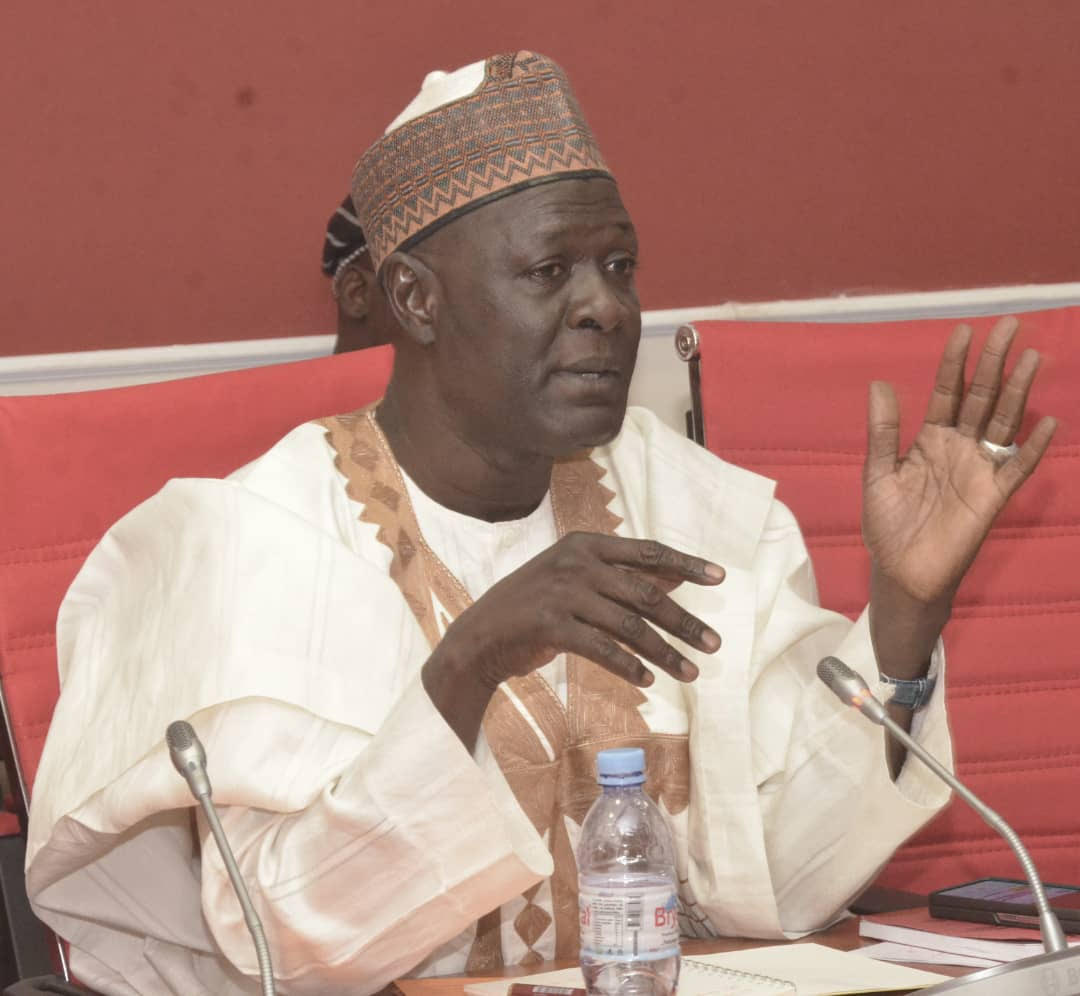
Such individuals of unique poise are celebrated everywhere, an action which encourages them to reach their peak .thereby, serving as an impetus to the younger generation. How else can one describe a super public administrator and dynamic legislator  of no mean repute , Senator Babangida Hussaini(Jigawa Northwest), newly appointed Chairman Senate Committee on North West Development Commission as he clocks the age of 61.

Sen Babangida Hussaini is a leader with an impressive background in administrative affairs, educational planning and community development service delivery. His expertise spans various domains, including public administrative affairs, policies, strategic matters, human resources development and educational administration. Over the years, he has made significant contributions to the nation’s development through his work with administrative and educational consultants, donor-funded organizations, NGOs/CBOs and international/national bodies.

Babangida Hussaini who was born on February 6, 1964 in Kazaure, Jigawa State, holds a BSC and MSC degrees in Public Administration from Ahmadu Bello University Zaria and the Nigerian Defence Academy, Kaduna, respectively.

He began his public Service career in 1987 with the Kano State Government in 1991. In 2011 he transferred his service to the Federal Civil Service and rose to the position of a Permanent Secretary in 2020. He assumed office as the Permanent Secretary, Federal Ministry of Defence in September, 2020 before his redeployment to Federal Ministry of Works and Housing as the Permanent Secretary in December, 2020.

Babangida Hussaini played a pivotal role in various national assignments, showcasing his dedication to public service and knack for excellence. He is currently serving as the senator representing Jigawa North West, where he contributes to legislative duties of making laws, committee duties, oversight on the executive and ensuring accountability.

As permanent secretary of Federal Ministry of Works and Housing from Dec 2020-Feb 2022 as chief accounting and administrative officer he has facilitated policy implementation ,financial management and planning .He was earlier at the Ministry of Defence as Permanent Secretary  where he provided policy direction and support to the defence Minister from September 2020-December 2020.

Mr Babangida’s foray into the volatile political terrain after the serene confines of his public service has set a new research trend on the professionals in politics as his actions and utterances have redefined politics from the pejorative sense of the word.

He has completely rubbished the beautiful and well researched theory of the English philosopher and social analyst, New Clive, who claimed that “What politicians lack is not shortage of towering promises; what they appear to have in abundance is a congenital capacity to default on their promises”.

In his success story, few people erroneously tend to view it as if he employed underhand tactics to achieve them and in the process underestimate his Midas touch. The fact remains that he attained his present height through dint of hard work and unparalleled exhibition of moral discipline.

Senator Babangida perfectly described the words of Ralph Waldo Emerson, when he postulated (to be yourself in the world that is trying to make you something else is the greatest accomplishment). A man who is tall, his accomplishments are taller than him. A man of lofty ideals, humility and generosity; he paradoxically has a simple philosophy of life and corresponding approach to challenges.

In recognition of his hard work, philanthropic activities and community engagement, Senator Babangida was conferred with the traditional title of Wali Kazaure by the Kazaure emirate council.

When the Senate Leadership began searching for the name of the Senator to Chair the important committee on Northwest Development Commission, one name kept ringing that is Dist Senator Babangida Hussaini (Walin Kazaure).

In his acceptance of the role he noted that role presents a significant responsibility to drive sustainable development, enhance infrastructure, and address key socio-economic challenges affecting the region.

“As we embark on this crucial task, I am committed to ensuring that the Commission fulfils its mandate efficiently and transparently, fostering inclusive growth and improving the livelihoods of our people.

“Through strategic policies, legislative oversight, and collaborative efforts, we will work towards unlocking the full potential of the North West region.

“I look forward to engaging with stakeholders at all levels to advance initiatives that will have a lasting impact. Together, we will insha Allah build a stronger, flourishing and more advancing North West which will contribute to a progressive Nigeria,” Senator Babangida posited.

His legislative priorities are education, health, good roads, and water. Also accredited to him are the following: sponsorship of students scholarships, infrastructural development which includes: solar street lights, hand pump and motorized boreholes, renovation of primary healthcare centres, building of skills acquisition centres, lobbying for the construction of roads and renovation of secondary and primary schools.

He is an advocate for Youth Empowerment and poverty alleviation. He has achieved these through: issuing of grants to the Youths and providing welfare packages to the less privileged long before his election for political office.

Walin Kazaure commands a lot of respect from his colleagues, largely due to the way he articulates his ideas and thoughts each time he speaks on the floor of the house as his colleagues listen with rapt attention whenever he contributes to any debate or table a motion which comes in regularly. His calmness and maturity has earned him the nickname “the stabilizer”, amongst friends and colleagues, many of whom consult him for advice which has come in handy more than a few times.

As a parliamentarian, Dr Babangida Hussaini (Walin Kazaure) has brought new meaning to representation by positively impacting on lives of the people he swore to serve diligently and honestly. His love for the people is expressed in the most outstanding unique people-centred legislation and selfless service.To borrow from the Greek writer Homer,” he is both a speaker of words and doer of deeds .benevolent and highly spirited.”

The story of the red chambers’ point man is that of triumph of human vicissitude. His life is proof that with strong will to succeed in life and divine nod to one’s actions, one can turn all obstacles to blessings. The journey through life is often one that carries with it a very strong desire for self-fulfillment, fulfillment of one’s dreams, desires, aspirations or even goals. Sometimes, this manifest celebration over accomplishments or bowed heads over dashed hopes. The visionary parliamentarian should be celebrated by all and sundry as he clocks 61 years of valuable contribution to humanity, constituency, Jigawa, Northwest region and Nigeria as a whole.

Dan Sardauna wrote in from Abuja

Click to comment

Leave a Reply

Your email address will not be published. Required fields are marked *

Feature/OPED

Building 234 Solutions: A Response to Everyday Workforce Challenges

Published

on

Owoloye Emmanuel 234 Solutions

By Owoloye Emmanuel

Every business starts with a problem. For us, that problem was hiding in plain sight.

Across organisations, we kept seeing HR professionals, payroll teams, and business leaders spend significant time navigating processes that should be simpler. Employee records sat across multiple systems, payroll processes required manual intervention, and routine workforce tasks often became more complicated than they needed to be.

As businesses grow, workforce operations naturally become more complex. Yet many organisations still rely on disconnected tools and workflows that create unnecessary friction for both employers and employees.

The consequence is more than operational inefficiency. HR teams spend valuable time managing systems instead of supporting people. Business leaders struggle to access timely workforce insights, while employees experience delays in processes that should be seamless.

These weren’t isolated challenges. They were recurring realities across workplaces, regardless of industry or size.

That observation led us to a simple question: what if workforce management could be easier?

What if HR, payroll, and workforce operations could work together within a single, connected experience?

That question became the foundation for 234 Solutions.

We are building 234 Solutions with a clear belief that workplace technology should reduce complexity, not add to it. Our goal is to help organisations spend less time navigating processes and more time focusing on productivity, growth, and people.

As we prepare for launch, our focus remains simple: building practical solutions for real workplace challenges and helping organisations create better experiences for the people who power them every day.

Owoloye Emmanuel is the founder of 234 Solutions

Continue Reading

Feature/OPED

The Role of TV in Preserving African Stories and Identity

Published

on

Preserving African Stories

Scroll through social media today, and you will notice something interesting: everyone is either reacting to a series, quoting a movie line, or debating a character as though they personally know them. Beneath the memes and binge-watch culture, however, lies something deeper. Television remains one of the most powerful tools shaping how Africans see themselves, remember their history, and tell their own stories. In a continent as diverse and expressive as Africa, that matters more than ever.

TV as a Cultural Archive, Not Just Entertainment

Long before streaming algorithms began shaping our viewing habits, television was already preserving African identity. From Nollywood dramas that capture the rhythm of everyday Lagos life to documentaries exploring Maasai traditions and Ghanaian folklore, TV has served as a living archive of the continent’s stories.

It preserves more than entertainment; it preserves language, culture, humour, values, and shared experiences. Unlike fleeting social media content, television allows stories to unfold with depth, exploring the realities of family, tradition, ambition, and modern African life without reducing them to stereotypes. That is the power of TV: preserving not just stories, but perspective.

Why Representation on TV Still Matters

There is a subtle but important truth: if people do not see themselves on screen, they may begin to believe their stories are not worth telling. This is why African TV content is more than entertainment; it is affirmation.

Seeing a character who speaks like you, struggles like you, or celebrates like your community does something powerful. It validates identity and challenges outdated narratives that have historically defined Africa through external lenses.

This is where MultiChoice Group, through platforms such as DStv and GOtv, plays an important role. They do not simply broadcast content; they help distribute cultural memory at scale.

GOtv, DStv, and the Everyday African Viewer

Think about a typical evening in many African homes: the TV is on in the background, someone is laughing at a comedy show, another person is watching a local series, and someone else is catching up on the news. That shared viewing experience remains very real.

Through platforms such as DStv and GOtv, African households are exposed to a blend of local storytelling and global content. More importantly, they have helped amplify African-produced content by bringing Nollywood films, African reality shows, talk shows, and documentaries into mainstream rotation.

It is not just about access. It is about visibility.

A young filmmaker in Lagos today is more likely to believe their story matters because they have seen similar stories broadcast widely. A child in Accra grows up hearing familiar accents and seeing environments that look like their own on screen, not as exceptions, but as the norm.

TV Is Also Shaping Modern African Identity

African identity is not static; it is evolving. Television reflects that evolution in real time.

Today, audiences see:

  • Young Africans balancing tradition and modern dating culture

  • Stories tackling mental health in African households

  • Fashion and music influences spreading through TV series

  • Political satire shaping public conversation

Conversations that were once confined to homes are now being explored on screen, giving audiences the language to discuss issues that were previously unspoken.

In many ways, television is doing what oral tradition has always done: passing stories, values, humour, warnings, and history from one generation to the next. The difference is that today’s griots are writers, directors, and broadcasters.

The Future: From Watching to Owning Our Narratives

The next stage of African storytelling is not just about being seen; it is about ownership.

As more African creators produce content and platforms continue to invest in regional storytelling, television becomes more than a mirror. It becomes a tool for shaping how Africa is represented to itself and to the world.

While streaming continues to grow, television, particularly accessible platforms such as GOtv, remains one of the most effective ways to reach everyday audiences across different income levels and regions. After all, storytelling only matters if people can access it.

African stories are not new. They have always existed in families, on streets, in markets, in history books, and through oral traditions. What television has done, and continues to do, is give those stories a stage wide enough for millions to experience them at once.

The next time you watch a local series or documentary on DStv or GOtv, remember that you are not just being entertained. You are participating in the preservation of African identity itself.

Continue Reading

Feature/OPED

The Future of AI in Nigerian SMEs: Overcoming Barriers to Implementation

Published

on

Kehinde Ogundare 2025

By Kehinde Ogundare

Ask a tech entrepreneur in San Francisco what AI means for their business, and they are likely to talk about competitive advantage, product differentiation, and scale. Ask a small business owner in Kano or Onitsha the same question, and the conversation shifts entirely.

For many Nigerian SMEs, the priority is keeping the lights on, managing costs, and finding sustainable ways to grow in a challenging economic environment. This difference in perspective explains why the global AI conversation, often shaped by assumptions about stable infrastructure, deep capital, and abundant technical talent, frequently fails to address the realities facing Nigerian SMEs.

This matters because Nigerian SMEs are not a peripheral concern. In 2024 alone, MSMEs contributed 46.32% to Nigeria’s GDP, accounting for 96.9% of businesses and 87.9% of employment. These businesses are the backbone of the Nigerian economy, and if AI is going to mean anything for Nigeria’s development, it has to work for them in the daily conditions they actually operate in.

However, research drawing on empirical data from 144 Nigerian SMEs found that inadequate infrastructure, low digital literacy, skills shortages, and regulatory gaps are collectively preventing them from meaningfully engaging with AI. Awareness of AI is high and growing. What is missing is a clear and honest conversation about what adoption actually requires in this specific context. The barriers are real, but none of them are insurmountable. The question is whether the tools, pricing models, and support structures being offered to Nigerian SMEs are designed with those barriers in mind, or whether they have been built for another market entirely.

Subscription models making AI affordable for small businesses

When most small business owners hear “AI,” they imagine expensive software, specialist consultants, and a hefty upfront bill.

That assumption is not entirely wrong, but it describes a particular way of buying technology, not AI itself. The shift that makes AI genuinely accessible at the SME level is the move away from large, one-time capital purchases towards tools that charge a predictable monthly subscription. Businesses can pay for what they use, scale back when necessary, and avoid the debt that a major technology investment can create.

The deeper opportunity here is consolidation. Many SMEs are already spending money across multiple disconnected tools—one for invoicing, another for customer records, another for stock tracking—none of which talk to each other. An integrated platform that handles several of these functions together, with AI built in, can actually cost less than the sum of those separate subscriptions while giving business owners a clearer picture of their operations.

With margins already under pressure, any technology a business adopts needs to visibly show an increase in productivity or bottom line. Subscription-based, integrated platforms, priced transparently and honestly, are the model that best fits this reality.

Infrastructure challenges demand a mobile-first approach

No conversation about technology in Nigeria is complete without confronting the infrastructure problem, and AI is no exception. Nigeria continues to face major infrastructure barriers, including limited broadband access, unreliable power supply, and high data costs, all of which constrain deeper AI adoption. These are structural features of the operating environment that any sensible technology strategy must account for today.

The electricity situation alone is significant. The World Bank estimates that the lack of stable electricity costs Nigeria’s economy approximately $26.2 billion annually, equivalent to about 2% of GDP, forcing many businesses to run on expensive diesel generators. That cost ripples outward.

In practical terms, AI tools built for Nigeria cannot assume a stable broadband connection or a computer that is always powered on. The tools that will actually get used are the ones that work on a smartphone, consume minimal data, and can function offline when connectivity drops, syncing back up when it returns. The mobile phone is already how many Nigerian SME owners run their businesses. AI that meets them there, rather than demanding infrastructure they do not have, is AI that has a genuine future in this market.

The direction is clear: build capability from within, using tools that make that possible. Recent AI performance research reveals that 64% of African workers are already actively using AI at work, signalling massive grassroots readiness and driving forward-thinking organisations across Nigeria, Kenya, and South Africa to aggressively prioritise internal upskilling frameworks to bridge the talent gap.

As the policy groundwork is being laid, the commercial ecosystem is beginning to respond. What remains is a clear-eyed acceptance that AI tools built for this market need to look different from those built for markets with different realities. Low cost, low bandwidth, and usability for non-technical people are not modest ambitions; they are the actual requirements. Build for those realities, and AI has a real future in Nigeria’s SME economy.

Continue Reading

Trending