Feature/OPED
If Data is the New Oil, Where is the Refinery?
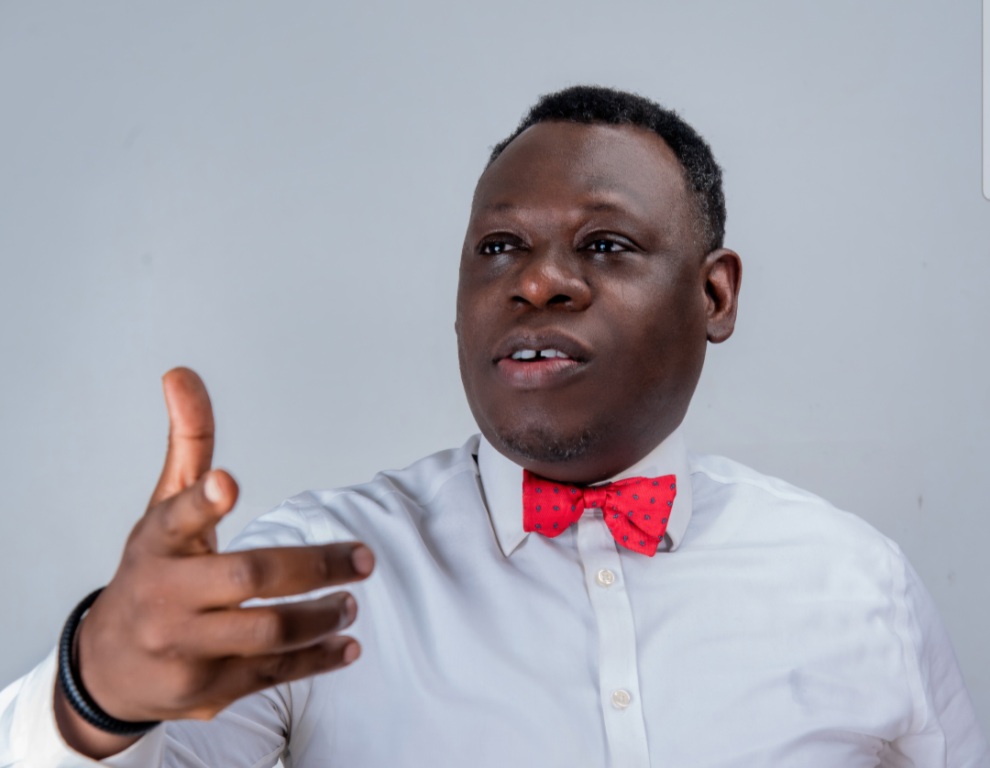
By Timi Olubiyi, PhD
Internet users are growing at an unprecedented rate, and in Nigeria, for instance, internet users have expressed concerns and frustration over the data price increase in recent times, with many feeling its negative impact on their budgets and mobile smartphone usage.
Major networks such as MTN, Airtel, and Glo have seen a close to 50 per cent increase in Nigerian mobile data prices, with no known alternative available. This shows the significance of data and internet usage, highlighting its role in the digital age and the rapid growth of data and content creation across Africa.
From mobile phone data and e-commerce activities to social media interactions and government services, vast amounts of information are being created daily, which is accessible through internet usage.
The economic and technological landscape of Africa has been undergoing significant evolution recently. The continent is inhabited by over 1.4 billion individuals, and a larger portion of them create, use, and feed on data— which is a digital transformation.
The convergence of rising mobile phone usage, enhanced internet accessibility, and a youthful, technologically adept demographic has positioned Africa at the forefront of global discussions around technology innovation and data generation.
Recently, the phrase “data is the new oil” has gained significant traction in discussions related to technology, business, and the digital economy. But it is public knowledge that when it comes to oil, its availability is limited to certain areas of the world.
On the other hand, tech giants like Google, Facebook, Netflix, Amazon, Microsoft, and Apple control most of the world’s data.
According to a study by Sandvine in 2021, these companies are responsible for about 57 per cent of global data flow, and they have all commodified data. The huge amount of data controlled by these mega-companies is bigger than most small businesses and corporations. But, anyway, this would be another story piece for another time.
In the view of the author, if we want to know if data is really the “new oil”, we need to first look at how it builds value. Data by itself is not useful, just like in the case of oil. Raw data, without any processing or analysis, is merely a collection of information that requires interpretation.
For instance, an online store might keep track of what customers do, like what links they click on, how long they stay on product pages, and what they bought in the past.
However, this data remains mostly useless until it undergoes processing, analysis, and transformation into actionable ideas. Business managers in Africa should follow this path and should adhere to a mindset of ‘facts superiority over opinion’.
As businesses expand, an increasing number of individuals express ideas regarding the actions to be undertaken. However, it is beneficial to employ a data-insight mentality. All company metrics can be tested, measured and improved upon.
It is important to note that business owners/managers must have real-time access to the most important data in their business. Understanding which Key Performance Indicators (KPIs) affect revenue and profit is significantly more crucial than the revenue and profit figures themselves.
When data is cleaned up and analysed, it becomes really useful. Similar to refining oil to produce petrol, diesel, and other products, processing data yields beneficial outcomes. This is where Google and Facebook shine. They have put a lot of money into technologies like machine learning and big data analytics that can turn huge amounts of raw data into personalised ads, recommendation engines, and models that can predict the future. In this way, they make money for both their users and their owners.
In Africa, the idea of “data as the new oil” is particularly appealing because it could help the continent skip ahead in the normal stages of economic growth. Mobile phones let African countries get around the need for landline infrastructure.
Similarly, data technologies could help African economies get past older, resource-heavy ways of growing, leading to new ideas and long-term growth in fresh ways. In agriculture, for instance, data analytics and satellite imaging can help farmers figure out how the weather will behave, get the most out of their crops, and make harvest supply lines work better. Data-driven solutions in healthcare, like electronic health records (EHRs) and predictive analytics, can help find diseases, control outbreaks, and make healthcare better.
In the same way, data-driven education platforms can give students personalised learning experiences and give teachers and managers useful information about how students are doing and what they need. More so, businesses could be data-driven by setting up special internal research units on data, where insights can be generated to improve on decision-making.
Looking ahead, there are evident similarities between data and oil; much like crude oil, data is valuable. Data is not a naturally occurring resource like oil; it is a by-product of human activity. Oil is a limited resource, whereas data is plentiful and perpetually increasing. Raw data must be processed and analysed to derive significant insights and facilitate informed decision-making.
This is where artificial intelligence (AI) is relevant. AI acts as the ultimate data refinery, enabling the conversion of extensive information into meaningful insights. In contrast to oil, which is extracted and processed by a limited number of firms, data is more extensively disseminated, including various stakeholders in its collection, analysis, and utilisation.
Anticipating the future, data will probably witness ongoing advancements in many domains because it is a strategic asset for business and economic growth. With it, people, organisations, and governments can make better decisions. Good luck!
How may you obtain advice or further information on the article?
Dr Timi Olubiyi is an entrepreneurship and business management expert with a PhD in Business Administration from Babcock University, Nigeria. He is a prolific investment coach, author, seasoned scholar, chartered member of the Chartered Institute for Securities and Investment (CISI), and a Securities and Exchange Commission (SEC)-registered capital market operator. He can be reached on the Twitter handle @drtimiolubiyi and via email: dr***********@***il.com, for any questions, reactions, and comments.
The opinions expressed in this article are those of the author, Dr Timi Olubiyi, and do not necessarily reflect the opinions of others.
Feature/OPED
Democracy and Problems; Made in Nigeria
By Prince Charles Dickson (PhD), and Dorcas Bawa
Nigeria’s democratic question is often wrongly framed as if democracy is a foreign garment that we must keep adjusting until it fits our body. We speak of Westminster, Washington, Athens, Paris and every borrowed vocabulary of governance, yet the wound before us is neither Greek nor British nor American. It is Nigerian. Our hunger is Nigerian. Our insecurity is Nigerian. Our broken families are Nigerian. Our abandoned children are Nigerian. Our vote-buying, ethno-religious suspicion, weak local institutions, elite impunity and democratic impatience are Nigerian. Therefore, any democracy that will heal us must be made in Nigeria.
This is not a call for isolation. It is a call for ownership. Democracy cannot survive as imported furniture placed in a burning house. It must grow from our values, culture, history and realities. It must be owned by the people, shaped by our communities, and driven by our collective aspirations for justice, equity and peace. It must answer the question of the farmer in Bassa, the displaced woman in Barkin Ladi, the market woman in Jos, the young person in Mangu, the traditional ruler trying to hold a fractured community together, the child who no longer trusts the home, and the citizen who has voted many times but has not yet felt government as care.
Since 1999, Nigeria has travelled a long and uneven democratic road. The return to civil rule after years of military dictatorship was not a small achievement. It restored constitutional government, reopened civic space, revived political parties, strengthened the press, expanded civil society engagement, and gave citizens the language with which to question power. We have had repeated elections, transitions between administrations, legislative contests, judicial interventions, public protests, investigative journalism and a growing generation of young Nigerians who no longer kneel before authority simply because it wears a title.
These are gains. They must not be dismissed.
But democracy is not merely the presence of elections. It is the presence of dignity. It is not only the counting of votes. It is the counting of lives. It is not complete because politicians campaign, courts sit, governors are sworn in, and budgets are read. Democracy becomes real when the weakest person in the community can say: “This country sees me. This system protects me. This government serves me.”
That is where our democratic journey remains painfully unfinished.
From 1999 to date, Nigeria has built the rituals of democracy faster than the culture of democracy. We have mastered rallies, slogans, posters, primaries, manifestoes, defections and inauguration ceremonies, but we have not sufficiently mastered accountability, inclusion, local ownership, civic discipline and justice. Too much power remains concentrated at the centre. Too many local governments exist more as salary points than as engines of grassroots development. Too many communities are remembered only during elections, condolences or conflict assessment visits. Too many citizens are mobilised as voters but abandoned as human beings.
Democracy made in Nigeria must therefore begin with the people at the centre. Government exists to serve the people, not the other way around. A system that treats citizens as spectators between election cycles is not a democracy. It is a political theatre with ballot boxes. A homegrown democracy insists that the woman, the youth, the person with disability, the displaced, the farmer, the trader, the child, the minority voice and the forgotten community are not footnotes in the national story. They are the story.
To be homegrown, democracy must also be rooted in culture, but not in the abusive misuse of culture. It must respect our languages, traditions, communal memory and ways of life, while refusing every cultural excuse for injustice. Culture should be a bridge, not a cage. It should protect the vulnerable, not silence them. It should teach respect for elders, but also responsibility by elders. It should honour family, but never hide violence inside family walls. It should value community, but never allow community loyalty to bury truth.
The crisis of Nigerian democracy is not only in Abuja. It is also in the home. It is in the family meeting where girls are denied inheritance. It is in the compound where abuse is covered because the offender is related. It is in marriage where responsibility is abandoned. It is in the neighbourhood where everyone knows a child is suffering but waits for the “government” to arrive. It is in the community where young people are recruited into dangerous labour because poverty has become an employer. It is in the silence that violence teaches how to grow teeth.
A recent week in the Plateau State Gender and Equal Opportunities Commission, particularly the Public Complaints and Mediation Department, tells a disturbing story. In one case, a sixteen-year-old schoolgirl became pregnant after alleged abuse within her own home. In another case, an eight-year-old girl from Tudun Wada was brought before the Commission after an alleged sexual assault by a neighbour. Her story was already layered with tragedy: displacement, loss of parents to violence, and dependence on an aged grandmother. Another ten-year-old child had to be reunited with her family in Enugu Agidi after two years of maltreatment while living with a distant relative in Jos. She required psychosocial support before returning home.
In the same week, an illegal commercial motor park around Anguldi in Jos South Local Government Area was reported. The Police were swiftly deployed, and arrests were made. Twelve young people, including three young women, were brought to the Commission. Early interrogation suggested a troubling pattern: the park operated weekly, moving young teenagers from Jos to Ibadan.
These are not isolated moral accidents. They are democratic alarms. But the entire team somehow collectively succeed because they understand the terrain.
Conflict does not end when gunfire stops. It enters homes. It alters parenting. It displaces children. It weakens supervision. It breaks livelihoods. It creates fear, dependency, resentment and desperation. A society that does not heal its conflict will eventually watch that conflict migrate into marriage, childhood, education, labour, politics and faith. The family becomes the first casualty, and later, the polling unit becomes only a mirror of the wounded home.
This is why democracy cannot be discussed only in constitutional language. It must be discussed in human language. When family values erode, democracy suffers. When parental responsibility collapses, democracy suffers. When the culture of respect for human dignity becomes almost non-existent, democracy suffers. When children are unsafe, women are overburdened, fathers disappear from responsibility, mothers are left unsupported, and communities outsource morality to government agencies, democracy becomes a tree without roots.
The problems holding us back are therefore clear. We continue to operate systems that often ignore local realities. We suffer from the concentration of power and the lack of accountability. Our local institutions are weak. Our democratic culture is poor. Tribalism, ethnicity and religious intolerance are too easily weaponised. Many citizens are apathetic because they have been disappointed too often. Others are active only when their group interest is touched. But a person who participates decides their destiny. A person who watches politics from the balcony should not be shocked when decisions are taken in rooms where they are absent.
Homegrown democracy must be community-driven. Decisions must be shaped at the local level through dialogue, consensus and trust. Nigeria cannot continue to pretend that Abuja can understand every stream, shrine, church, mosque, market, grazing route, school, boundary dispute and family wound better than the people who live with them daily. Local problems require local intelligence. But local intelligence must be connected to justice, not captured by local power brokers.
This is why traditional rulers, community heads, women leaders, youth groups, faith leaders, civil society organisations, government agencies, schools, security institutions and families must become democratic actors, not passive observers. Democracy is not INEC alone. It is not the National Assembly alone. It is not the courts alone. Democracy is the mother who protects her child, the father who carries responsibility with honour, the neighbour who reports abuse, the teacher who notices distress, the police officer who acts promptly, the mediator who listens carefully, the traditional ruler who refuses to hide wrongdoing, the pastor and imam who preach dignity, and the citizen who refuses to sell tomorrow for a small envelope today.
Finally, we must rebuild the moral architecture of the family. Mothers, fathers, guardians, relatives and neighbours must rise to nip these issues in the bud. The home is not outside democracy. The home is where citizenship first learns either care or cruelty. If the child learns silence in the face of abuse, she may become an adult who fears power. If the child learns dignity, he may become a citizen who demands justice.
Our country. Our democracy. Our future—May Nigeria win.
Feature/OPED
A Gallows Called Northern Nigeria
By Sani Abdulrazak, PhD
Believe whatever you want, but this government was not, is not, and sadly will not be serious about securing the lives and properties of Nigerians, which is its core and fundamental responsibility, unless citizens demand accountability and consequences for failure. Whatever they say is far from the reality on the ground. More troubling is the apparent complacency of many northern elites who seem to believe they are insulated from the insecurity consuming the region. Oh, how mistaken they are. It will surely reach their doorstep if they don’t do something about it; make no mistake about it.
Across Northern Nigeria, insecurity has evolved from a periodic challenge into a defining feature of daily life. Despite rising security expenditures and repeated assurances from those in authority, banditry, insurgency, kidnappings, cattle rustling, and communal conflicts continue to devastate communities. Thousands have lost their lives, countless others have been displaced, and many farming communities have either been abandoned or are operating under constant threat. While political and administrative centres often enjoy relative security, ordinary citizens in rural areas continue to bear the heaviest burden of the crisis. This growing disconnect has reinforced the perception that those in power are detached from the realities confronting the people they govern.
And then came the painful news of General Rabe Abubakar’s death; a tragedy that lays bare the helplessness consuming our region. For nearly two weeks, a retired General and his wife vanished into the shadows of Northern Nigeria, yet the vast security architecture of the state could neither locate nor rescue them. One cannot help but imagine the long, agonising days they endured: waiting, hoping, praying that help was on its way. But help never came. A man who once dedicated his life to defending this nation met his end in captivity, while his loved ones and an anxious public waited for a miracle that never arrived. If a General could disappear for days with no rescue in sight, what hope remains for the ordinary farmer, trader, teacher, or student whose name will never make the headlines? His death is not merely a personal tragedy; it is a haunting symbol of a North where even those who once stood at the pinnacle of the security establishment are no longer beyond the reach of the monster that has been allowed to grow unchecked.
The North has become a giant gallows; If you are residing in Northern Nigeria today, you are just waiting to be killed, somehow, someday…until we radically and collectively take this monster head-on by addressing the issue of out-of-school children, scrapping completely the almajiri system, reviving parental and societal values and responsibilities, enforcing birth control, and creating jobs for our teeming youths via agriculture and by reviving our comatose industries, we will not come out of this madness masked as insurgency, banditry, and kidnappings.
The roots of this crisis run much deeper than the activities of armed groups. Northern Nigeria carries the largest burden of out-of-school children in the country, leaving millions of young people without the education, skills, and opportunities necessary to build productive lives. The Almajiri system, once a respected institution for Islamic learning, has in many places deteriorated into a mechanism that exposes children to neglect, poverty, and exploitation. Thousands of young boys roam the streets without adequate parental care, formal education, or vocational training, making them vulnerable to recruitment by criminal and extremist networks.
Demographic pressure further compounds the problem. Many northern states continue to record high fertility rates while struggling to provide sufficient schools, healthcare services, and employment opportunities. The result is a rapidly expanding youth population confronted by limited prospects and widespread unemployment. In such circumstances, criminal gangs and insurgent groups find a steady pool of recruits. Breaking this cycle requires a comprehensive approach that combines educational expansion, meaningful almajiri reform, responsible family planning, youth empowerment, agricultural development, industrial revival, and targeted vocational training programmes. Security operations may suppress violence temporarily, but only social and economic transformation can remove the conditions that sustain it.
A Gallows Called Arewa
But just like the government, the masses are so not ready; they feign oblivion to the reality facing us. They instead channel their energy and time to ‘trending’ celebrity topics and await the next celebrity nude videos/pictures and chats to aimlessly talk about. The celebrities are only after immorality or waiting to endorse the politicians with the highest bid; the traditional rulers are either afraid or consumed by the menace.
This collective distraction has weakened society’s ability to confront its most pressing challenges. While communities suffer from poverty, violence, and underdevelopment, public discourse is often dominated by trivial controversies. Yet the North has repeatedly demonstrated that communities can mobilise when properly organised. Faith-based groups, youth associations, community leaders, and local organisations have played important roles in peacebuilding and conflict resolution in several areas. Reawakening civic consciousness and redirecting public attention toward education, security, and development must therefore become a priority.
The crisis also demands courage from those traditionally entrusted with providing moral, intellectual, and cultural leadership. At critical moments in our history, influential voices helped shape public opinion, challenge injustice, and mobilise communities toward collective action. Today, however, many of those voices appear either absent, intimidated, or resigned to the status quo, creating a leadership vacuum at a time when Northern Nigeria desperately needs guidance.
Our intellectuals have gone back to their shells, and rightly so. Our elders have done their part and are giving up on us. The most painful part is that our religious leaders, who spent time and energy convincing us that this government would usher in a golden age reminiscent of the Ottoman Empire, have disturbingly gone mute; no Al-Qunuts or warnings to the government anymore, since it is not the government of the fisherman from the creek. It makes one wonder if we are normal in Arewa. The northern elites despise their followers like the Israelis despise the Palestinians. Posterity will surely judge us all, and history will tell how we played our parts in the destruction of our beloved Northern Nigeria.
Religious leaders, elders and intellectuals historically provided mediation, moral authority and local governance where the state was weak. Their retreat may stem from fear, co-optation or the erosion of moral credibility. Re-engagement requires rebuilding trust and protecting civic space: establish formal consultative roles for elders and clerics in security and development planning, fund independent intellectual forums, and create interfaith platforms that can speak to social issues without intimidation. When clerics and scholars mobilise—on health, education or peace—public behaviour and policy often follow; restoring their voice is therefore strategic and urgent.
If you want to see all the ingredients of a doomed people, look no further than Northern Nigeria at the moment. Deepening poverty, educational failure, demographic pressure, weak governance, economic stagnation, and persistent insecurity have combined to create a dangerous reality for the region. Yet history shows that decline is not irreversible. Societies facing similar challenges have transformed themselves through long-term investments in education, economic opportunity, accountable governance, and community-led development. Northern Nigeria can do the same if its leaders and people are willing to confront uncomfortable truths and commit themselves to meaningful reform.
The time for lamentation alone has passed. Northern Nigeria requires a deliberate and measurable programme of recovery that places education, economic empowerment, and community security at its centre. Governments must become more transparent and accountable, traditional and religious leaders must reclaim their moral voice, intellectuals must re-enter public discourse, and citizens must demand better leadership. Only through a collective effort that addresses both the symptoms and the root causes of insecurity can the North begin to reverse its decline and build a future worthy of its people.
Sani Abdulrazak, PhD, is a researcher, writer, and public commentator based in Kaduna State
Feature/OPED
3 Infrastructure Gaps Nigerian Lenders Can’t Afford to Ignore
By Winston Osuchukwu
Digital transformation has modernised the front end of the credit process in Nigeria, streamlining customer journeys and shortening the path from application to disbursement. However, this progress has not reached the core of the credit process. While digital application flows are now standard, the underlying risk infrastructure remains underdeveloped. Following the withdrawal of the Central Bank of Nigeria’s forbearance measures, the sector’s non-performing loan (NPL) ratio climbed to 8.03% – well above the 5% regulatory limit.
The deeper, structural flaw is that banks still run on legacy risk models and backwards-looking data: an approach that leaves existing portfolios exposed while shutting out the vast retail market. To scale retail and SME credit safely, forward-looking institutions must close three critical gaps in their core credit infrastructure.
1. The Bureau and Data Blind Spot
Many institutions rely on a fragmented view of borrower risk. Internal transaction data offers a deep but narrow view of a borrower’s behaviour within one institution, while periodic credit bureau reports provide a broad but shallow, “negative-only” history across other lenders. Because credit bureau coverage in Nigeria remains relatively low and data sharing is often inconsistent, neither source effectively captures how a borrower actually earns, spends, and repays. Resolving this requires unifying the data architecture, integrating internal behavioural signals with diverse external streams such as payroll, utility, and alternative financial data, to build a continuous, real-time picture of cash flow and true repayment capacity.
2. Static Risk Acceptance Criteria
To assess a borrower’s credit eligibility, banks apply internal risk acceptance criteria that are often static. In a volatile macroeconomic environment marked by shifting interest rates and inflation, a borrower’s financial reality changes rapidly, rendering these rigid, point-in-time benchmarks obsolete. Furthermore, out of caution, these inflexible thresholds often default to conservative rejections for unfamiliar applicants, such as new salaried employees or thin-file borrowers – those with little or no formal credit history for a bureau or bank to draw on – leaving profitable loans on the table. Transitioning to a predictive model changes risk management into a continuous, data-driven cycle. By ingesting high-frequency behavioural data, risk systems can dynamically govern their acceptance criteria in real-time, allowing them to adjust parameters, optimise pricing, and deploy interventions well before a default occurs.
3. The Collections Disconnect
In many institutions, collections teams operate in silos downstream of the credit department, meaning critical recovery performance data rarely gets fed back to front-end risk models. Consequently, underwriting systems fail to learn from actual repayment behaviours – repeating the same structural pricing mistakes. Integrating these functions via a direct data pipeline creates a self-learning loop, routing recovery outcomes back into the origination engine. This empowers the risk engine to dynamically update models, continuously refining underwriting criteria based on real-world results to prevent future defaults and capture lost basis points.
The Bottom Line
Closing these gaps requires intentionality: moving away from ‘set-and-forget’ tools to systems that actively manage risk. It means moving beyond fragmented data toward an integrated intelligence layer that learns from borrower behaviour to govern automated decisions with precision. The lenders that lead over the next year will be those that treat credit not as an isolated transaction, but as a continuous, dynamic process. At Mathesis, we have spent years building the engine that makes this possible, powering over eight million loans for two million Nigerians. The future of credit belongs to those who adopt this predictive approach – and we have the proven tools and expertise to help you get there.
Winston Osuchukwu is the Founder and Chief Executive of Mathesis, a Nigerian credit intelligence company
-
Feature/OPED6 years agoDavos was Different this year
-
Travel/Tourism10 years ago
Lagos Seals Western Lodge Hotel In Ikorodu
-
Showbiz3 years agoEstranged Lover Releases Videos of Empress Njamah Bathing
-
Banking8 years agoSort Codes of GTBank Branches in Nigeria
-
Economy3 years agoSubsidy Removal: CNG at N130 Per Litre Cheaper Than Petrol—IPMAN
-
Banking3 years agoSort Codes of UBA Branches in Nigeria
-
Banking3 years agoFirst Bank Announces Planned Downtime
-
Sports3 years agoHighest Paid Nigerian Footballer – How Much Do Nigerian Footballers Earn