Connect with us

Economy

NEITI Begs FG, NASS to Probe $15.8b NLNG Dividends

Published

on

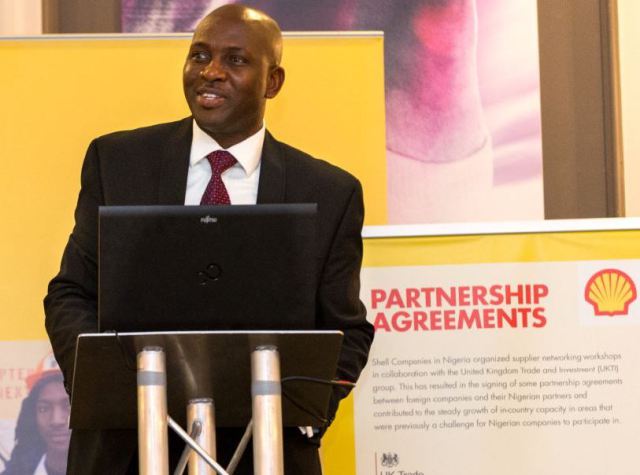
NLNG MD, Mr Tony Attah

By Dipo Olowookere

The Federal Government and the National Assembly have been urged to investigate the dividends and loan repayments made by the Nigeria Liquefied Natural Gas (NLNG) to the Nigerian National Petroleum Corporation (NNPC) between 2000 and 2014.

This appeal was made by the Executive Secretary of the Nigeria Extractive Industries Transparency Initiative (NEITI), Mr Waziri Adio, on Thursday in Abuja.

Mr Adio wants both the FG and the National Assembly to determine the current status of all dividends and loan repayments by the NLNG and also where the funds were or what they were used for.

He said audits have revealed that dividends were paid annually, but were not being remitted to the federation account as and when due.

Federal Government has 49 percent equity in the NLNG and it is held through the NNPC.

According to him, “Total outstanding dividends and loan repayments by NLNG to NNPC not remitted to the Federation Account between 2000 and 2014 stands at over $15.8 billion.

The agency scribe noted that its independent auditors had traced these payments to NNPC accounts without a corresponding evidence NNPC remitted same to the Federation Account as required by sections 80(1) & 162 (1) of the Nigerian constitution.

He gave details of the outstanding unremitted funds as $211.34 million in 2000; $322.08 million in 2001; $226.6 million in 2002; $436.3 million in 2003; $280.1 million in 2004; $2073 million in 2005; $333 million in 2006 and $843 million in 2007.

Equally, $2.6 billion was paid in 2008; $879.84 million in 2009; $1.43 billion in 2010; $2.54 billion in 2011; $2.8 billion in 2012; $1.3 billion in 2013 and $1.42 billion in 2014.

This is the second time in 48 hours NEITI is calling for the probe of public finances.

On Tuesday, the agency advised the Federal Government to recover $21.8 billion and N316.1 billion from the NNPC.

It explained that the amount was not remitted from the divestment of some federation asset by some multi-national joint venture oil and gas companies to its upstream subsidiary, the National Petroleum Development Company (NPDC).


Dipo Olowookere is a journalist based in Nigeria that has passion for reporting business news stories. At his leisure time, he watches football and supports 3SC of Ibadan. Mr Olowookere can be reached via [email protected]

Advertisement
Click to comment

Leave a Reply

Your email address will not be published. Required fields are marked *

Economy

Growth in Nigeria’s Private Sector Slows as Fuel Costs Raise Prices

Published

on

nigeria's private sector

By Aduragbemi Omiyale

The Nigerian private sector witnessed a contraction in growth in March 2026, as higher fuel costs triggered by the war in Iran, instigated by the United States and Israel, led to a steep intensification of inflationary pressures.

According to the Stanbic IBTC Purchasing Managers’ Index (PMI) for the month, it stood at 51.9 points compared with 53.2 points recorded in February 2026.

In the period under review, output growth was only modest, but underlying demand reportedly remained resilient, leading to a further sharp rise in new orders. In turn, firms continued to expand their employment and purchasing activity.

The PMI numbers in the first quarter of this year have been consistent with an estimated 3.99 per cent y/y GDP growth for the quarter, after also accounting for the crude oil sector’s performance.

The Nigerian economy is now growing by 4.22 per cent y/y in 2026, from 3.87 per cent y/y in 2025, with the oil sector growth slowing to 3.01 per cent y/y from 8.50 per cent y/y in the preceding year. The non-oil sector’s growth is expected at 4.24 per cent y/y in 2026, from 3.71 per cent y/y in 2025, likely driven primarily by services, which we see growing by 5.64 per cent y/y in 2026 versus 4.14 per cent y/y in 2025.

“While higher fuel costs and power supply issues contributed to a slowdown in the growth of Nigeria’s private sector activity, underlying demand remains strong. This is reflected in an increase in customer demand and the associated impact of new product launches, both of which supported an improvement in new orders.

“Businesses also remained optimistic about increases in future output amid their plans to invest in business expansions and boost promotional efforts. Nonetheless, input prices rose markedly at the sharpest pace since January 2025, with all four monitored sectors seeing sharper rates of inflation,” the Head of Equity Research West Africa at Stanbic IBTC Bank, Muyiwa Oni, commented.

Continue Reading

Economy

Illicit Flows Cost Africa $88bn Yearly—Edun

Published

on

Illicit Money Flows

By Adedapo Adesanya

The Minister of Finance and Coordinating Minister of the Economy, Mr Wale Edun, has raised concern over Africa’s mounting revenue losses, warning that the continent forfeits an estimated $88 billion annually to illicit financial flows (IFFs), a development he described as a critical threat to sustainable growth.

Speaking at the 5th Session of the Sub-Committee on Tax and Illicit Financial Flows of the African Union on Tuesday in Abuja, Mr Edun said the persistent outflows continue to deprive African countries of vital resources required for infrastructure, healthcare, and overall economic development.

The high-level meeting, held at Transcorp Hilton Abuja, brought together policymakers, tax administrators, and development partners to examine strategies for strengthening fiscal systems amid evolving global economic uncertainties.

Mr Edun stressed the need for African countries to reduce reliance on external financing sources such as debt, aid, and foreign investment, noting that these options are becoming increasingly unpredictable. He maintained that domestic resource mobilisation must serve as the foundation for long-term economic sustainability.

“Our ambition is to finance up to 90 per cent of Africa’s development needs from domestic resources,” he said, referencing the continent’s Agenda 2063 development framework.

He identified structural challenges, including tax evasion, weak institutional capacity, and limited economic diversification, as key impediments, while emphasising that curbing illicit financial flows remains central to unlocking Africa’s fiscal potential.

Highlighting ongoing reforms under President Bola Tinubu, Mr Edun noted that measures such as tax system reforms, fuel subsidy removal, and exchange rate unification are beginning to improve revenue performance and boost investor confidence.

He added that initiatives like the National Single Window are helping to reduce trade-related leakages, while enhanced international tax cooperation is supporting efforts to recover lost revenues. He also cited Executive Order 9 as a key policy aimed at strengthening transparency in the oil and gas sector.

Calling for broader continental action, Mr Edun urged African nations to expand their tax base, strengthen public financial management systems, and deepen financial inclusion. He listed institutional strengthening, digital infrastructure investment, and cross-border collaboration as critical reform priorities.

“The question is no longer whether we must reform, but how urgently and how boldly we act,” he said, warning that failure to act could leave African economies exposed to external shocks.

On his part, the Executive Chairman of the Nigeria Revenue Service, Mr Zacch Adedeji, called for urgent steps to safeguard domestic resources and address widening financing gaps across the continent.

Mr Adedeji noted that illicit financial flows ranging from tax evasion and trade mispricing to aggressive tax avoidance continue to weaken Africa’s capacity to fund critical sectors such as infrastructure, healthcare, and education.

“Every year, billions meant for development are lost through illegal financial transfers. These are lost hospitals, lost schools, and lost opportunities,” he said.

He stressed that the cross-border nature of illicit flows requires coordinated responses at both national and continental levels, adding that Nigeria is pursuing reforms to modernise revenue administration through expanded tax coverage, improved compliance, and digital innovation.

According to him, efficient and transparent tax systems are essential not only for revenue generation but also for strengthening public trust in government institutions.

Continue Reading

Economy

NMDPRA Increases Gas Prices for GenCos to $2.18/MMBTU

Published

on

Nigeria’s Gas Sector

By Adedapo Adesanya

The Nigerian Midstream and Downstream Petroleum Regulatory Authority (NMDPRA) has raised the natural gas price for power generation companies (GenCos) to $2.18 per million metric British thermal units (MMBTU).

This marks a $0.05/MMBTU hike from the earlier rate of $2.13 per MMBTU.

In a circular released on Tuesday, the regulator outlined the updated domestic base price (DBP) and wholesale natural gas prices for 2025.

The DBP represents the lowest price at which natural gas can be offered in the domestic market.

The document states that the adjustment will begin today (April 1, 2026).

“Taking into account the Petroleum Industry Act (PIA) provisions, current market conditions, and the official Gas Pricing and Domestic Demand Regulations, the NMDPRA sets the new Domestic Base Price at USD 2.18/MMBtu, along with wholesale prices for the strategic sector, starting April 1, 2026,” the circular stated.

In the directive signed by NMDPRA CEO, Mr Saidu Mohammed, the regulator also indicates that commercial buyers will now pay $2.68 per MMBTU, up from $2.63 per MMBTU previously.

Additionally, the authority fixed prices for gas-based industries (such as ammonia, urea, methanol, and low-sulphur diesel) at a floor of $0.90 per MMBTU and a ceiling of $2.18 per MMBTU.

NMDPRA explained that the domestic base price at the marketable gas delivery point—per section 167(1) of the PIA—follows regulations based on key principles:

“a) A rate sufficient to encourage upstream producers to voluntarily supply enough gas to the domestic market.

“b) No higher than the average natural gas prices in major emerging producer nations.

“c) Based on the lowest supply costs under a three-tier framework.

“d) Aligned with market rates and international benchmarks.”

This change could affect the country’s power sector, already strained by massive debt and a lack of gas supply.

Last month, the Association of Power Generation Companies (APGC), an umbrella body for power generation companies, warned that gas suppliers might halt deliveries to thermal plants due to debt of around N6.5 trillion.

The federal government disclosed plans in December to raise N1.23 trillion by the first quarter (Q1) of 2026 to settle verified arrears owed to generation companies and gas suppliers. On January 27, the government said it had successfully issued a N501 billion inaugural bond under the presidential power sector debt reduction programme (PPSDRP).

However, the APGC has said that this is inadequate, comparing the debt to “garri soaked in water.”

Continue Reading

Trending