Connect with us

Economy

How to Make Millions Producing Garri in Commercial Quantity

Published

on

By Darlinton Omeh

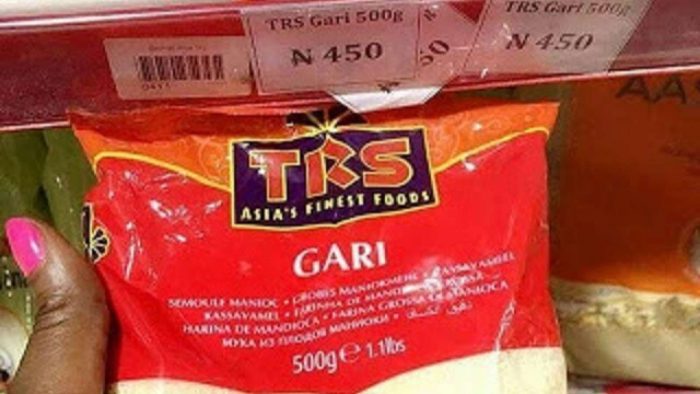
Garri production is a very big business that is churning out millions of Naira for those doing just the ways it should be done.

The investors with the right machinery are making real money producing this essential commodity in some great quantity to serve the market that is far from being saturated as the demands of it continues to increase.

It is a viable business because it is one of the most widely consumed food in Africa and beyond. As the population of Africa continues to grow along with its economy, likewise the demands of staple foods like garri continue to match up with it.

In Nigeria today, there are both big and small scale garri producers that are making fortunes with the business and are living the comfortable lives of their choice. They are not looking at the business as anything that could dwindle any time soon because the rate of interests in larger quantity production of it is not threatened at all.

So in this post, we will be providing you some step by step guides on how you too could have your share of the millions that are already being made by those into the business.

We have to do this because with the right kind of knowledge on how to produce garri in greater quantities, a serious investor stands the chance of raking in millions and could exceed his greatest imaginations base on is possible with garri business.

Starting A Garri Production Business

To start with, Garri is a product of cassava which thrives in African soil due to good tropical climate. Even when other farm produce fails, cassava is very sure to live up to expectations in bringing good harvest to the farmers.

There are so many ways to convert the produce of cassava into different foods in Africa which garri happens to be the most among the list and its accepted throughout Nigeria as a common food for all. Put simple, garri is a common man’s food.

Sometimes and no matter how intense the economy is or how hard other food commodities may be to obtain in the market, the common question from caring relatives or others are usually, ‘Hope you are eating garri or ebba?’as its otherwise called. Just to show you how sure and affordable garri is.

Garri is very common and that has affected its prices for a long time now and making it to be stable. At least, close to 80 percent of cassava produce are processed into garri just to show you how high the demands of garri is around within the country not to talk of having it exported to other countries which those who met the stringent exports requirements are doing.

You may not have to concern yourself over that because you can still make it big producing and selling it locally and even contact those exporting it to be buying from you if are sure of enough quantities and best processed products.

If you have interest in garri production, here are some tips to guide you into making it a reality as you are sure to have your millions to show for it.

For any serious entrepreneur to go into garri production, he may have to invest in cassava production which in its own is a profitable farming in Nigeria.

But if you are sure of having a steady supply of cheap and fresh cassava tubers, then you can still make it without your own farm.

Another important thing to keep in mind is that cassava is a perishable item and if left for a long time it may get spoiled and that would affect your end product; because of that, always have the time frame in mind whenever you are placing order for a fresh supply or going to the market to buy yourself.

You also need to understand that there are varieties available in the markets and so make yours to be in line with what is preferred locally and in various demands too in case you have different markets with different taste traditions in mind.

For instance, if you taste a Yoruba made garri and Igbo version, you are bound to notice some major and minor differences just like you would of a Togo and Ghana garri.

The guideline is to know what appeals to your market, if not one may end up with the right product in the wrong market.

In Nigeria, one may have the options of producing garri with varying methods and have it taken to the market for sale but among these various methods of productions, manually produced garri usually last longer than quickly made ones which contains moisture and starts getting bad as soon as it’s bagged, but the downside of this methods of production is that it doesn’t pass the international standards and are not fit for exportation.

If you want garri to last for months without any form of degenerating, then take time to prepare yours by making sure that there is no moisture contents in the finished products which can be achieved using machine production.

Instead of just going the markets and buying finished products for sale which may not meet the preferred standards, if one could spare the time and effort in having it produced properly even if it costs higher, you will be assured of having regular buyers that prefers good and well processed garri for distribution to markets of interest.

For those that could afford it, investing in cassava processing machinery could go a long way in having quality end products in market and that gives the person peace of mind while selling it because those who are dealing with quickly processed ones are usually in a hurry to have theirs sold off before it begins to spoil in their hands, but if you are known to be having good quality of well processed garri in the market, that has the capabilities of positioning you well even before the exporters to the foreign markets.

Since every other things are going technological, garri processing is not left behind. Before now and still, there are those who are still using the old and crude methods of processing garri, which many say is economical, but in terms of hygiene, it scores zero.

There are now some machines in the Western parts of Nigeria which takes up the process of cassava tubers on the arrival at the plant and have them turned into hygienically ready to eat end product of garri.

One stands better chances of having this done perfectly, if one is into the farming himself, which is not all that hard as explained here.

Go for this modern tech in garri productions as it is sure to take off manual labour and give you the best of what you want. Garri production is a serious discussion on the internet and offline because people are just waking up to the realities of what are achievable with good production of well processed garri in the market.

Farming has been discovered to be the number one investment that many people can be in and still not be able to satisfy the market demands. Garri is such that no matter how much you are able produce it, once it’s of some high qualities of internationally acceptably standards, you are sure to be shaken hands with full time exporters that are into millions themselves and which you would become by having business dealing with them.


https://www.wealthresult.com/manufacturing/how-to-produce-garri-in-commercial-quantity-and-make-million

Modupe Gbadeyanka is a fast-rising journalist with Business Post Nigeria. Her passion for journalism is amazing. She is willing to learn more with a view to becoming one of the best pen-pushers in Nigeria. Her role models are the duo of CNN's Richard Quest and Christiane Amanpour.

Advertisement
1 Comment

1 Comment

Leave a Reply

Your email address will not be published. Required fields are marked *

Economy

LCCI Raises Eyebrow Over N15.52trn Debt Servicing Plan in 2026 Budget

Published

on

domestic debt servicing

By Adedapo Adesanya

The Lagos Chamber of Commerce and Industry (LCCI) has noted that the N15.52 trillion allocation to debt servicing in the 2026 budget remains a significant fiscal burden.

LCCI Director-General, Mrs Chinyere Almona, said this on Tuesday in Lagos via a statement in reaction to the nation’s 2026 budget of N58.18 trillion, hinging the success of the 2026 budget on execution discipline, capital efficiency, and sustained support for productive sectors.

She noted that the budget was a timely shift from macroeconomic stabilisation to growth acceleration, reflecting growing confidence in the economy.

She lauded its emphasis on production-oriented spending, with capital expenditure of N26.08 trillion, representing 45 per cent of total outlays, and significantly outweighing non-debt recurrent expenditure of N15.25 trillion.

According to Mrs Almona, this composition supports infrastructure development, industrial expansion, and productivity growth.

However, she explained that the N15.52 trillion allocation to debt servicing underscored the need for stricter borrowing discipline, enhanced revenue efficiency, and expanded public-private partnerships to safeguard investments that promote growth.

She added that a further review of the 2026 budget revealed relatively optimistic macroeconomic assumptions that may pose fiscal risks.

“The oil price benchmark of $64.85 per barrel, although lower than the $75.00 benchmark in the 2025 budget, appears optimistic when compared with the 2025 average price of about $69.60 per barrel and current prices around $60 per barrel.

“This raises downside risks to oil revenue, especially since 35.6 per cent of the total projected revenue is expected to come from oil receipts.

“Similarly, the oil production benchmark of 1.84 million barrels per day is significantly higher than the current level of approximately 1.49 million barrels per day.

“Achieving this may be challenging without substantial improvements in security, infrastructure integrity, and sector investment,” she said.

Mrs Almona said the exchange rate assumption of N1,512 to the Dollar, compared with N1,500 in the 2025 budget and about N1,446 per Dollar at the end of November, suggests expectations of a mild depreciation.

She said while this may support Naira-denominated revenue, it also increases the cost of imports, debt servicing, and inflation management, with broader macroeconomic implications.

The LCCI DG added that the inflation projection of 16.5 per cent in 2026, up from 15.8 per cent in the 2025 budget and a current rate of about 14.45 per cent, appeared optimistic, particularly in a pre-election year.

She also expressed concern about Nigeria’s historically weak budget implementation capacity, likely to be further strained by the combined operation of multiple budget cycles within a single year.

Looking ahead, Mrs Almona identified agriculture and agro-processing, manufacturing, infrastructure, energy, and human capital development as key drivers of growth in 2026.

She said that unlocking these sectors would require decisive execution—scaling irrigation and agro-value chains, reducing power and logistics costs for manufacturers, and aligning education and skills development with private-sector needs.

The LCCI head stressed the need to resolve issues surrounding the Naira for crude, increase the supply of oil to local refineries to boost local refining capacity and conserve the substantial foreign exchange used for fuel imports.

“Overall, the 2026 Budget presents a credible opportunity for Nigeria to transition from recovery to expansion.

“Its success will depend less on the size of allocations and more on execution discipline, capital efficiency, and sustained support for productive sectors.

Continue Reading

Economy

Customs Street Chalks up 0.12% on Santa Claus Rally

Published

on

Customs Street Nigerian Stock Exchange

By Dipo Olowookere

The Nigerian Exchange (NGX) Limited witnessed Santa Claus rally on Wednesday after it closed higher by 0.12 per cent.

Strong demand for Nigerian stocks lifted the All-Share Index (ASI) by 185.70 points during the pre-Christmas trading session to 153,539.83 points from 153,354.13 points.

In the same vein, the market capitalisation expanded at midweek by N118 billion to N97.890 trillion from the preceding day’s N97.772 trillion.

Investor sentiment on Customs Street remained bullish after closing with 36 appreciating equities and 22 depreciating equities, indicating a positive market breadth index.

Guinness Nigeria chalked up 9.98 per cent to trade at N318.60, Austin Laz improved by 9.97 per cent to N3.20, International Breweries expanded by 9.85 per cent to N14.50, Transcorp Hotels rose by 9.83 per cent to N170.90, and Aluminium Extrusion grew by 9.73 per cent to N16.35.

On the flip side, Legend Internet lost 9.26 per cent to close at N4.90, AXA Mansard shrank by 7.14 per cent to N13.00, Jaiz Bank declined by 5.45 per cent to N4.51, MTN Nigeria weakened by 5.21 per cent to N504.00, and NEM Insurance crashed by 4.74 per cent to N24.10.

Yesterday, a total of 1.8 billion shares valued at N30.1 billion exchanged hands in 19,372 deals versus the 677.4 billion shares worth N20.8 billion traded in 27,589 deals in the previous session, implying a slump in the number of deals by 29.78 per cent, and a surge in the trading volume and value by 165.72 per cent and 44.71 per cent apiece.

Abbey Mortgage Bank was the most active equity for the day after it sold 1.1 billion units worth N7.1 billion, Sterling Holdings traded 127.1 million units valued at N895.9 million, Custodian Investment exchanged 115.0 million units for N4.5 billion, First Holdco transacted 40.9 million units valued at N2.2 billion, and Access Holdings traded 38.2 million units worth N783.3 million.

Continue Reading

Economy

Yuletide: Rite Foods Reiterates Commitment to Quality, Innovation

Published

on

Rite foods stamp black

By Adedapo Adesanya

Nigerian food and beverage company, Rite Foods Limited, has extended warm Yuletide greetings to Nigerians as families and communities worldwide come together to celebrate the Christmas season and usher in a new year filled with hope and renewed possibilities.

In a statement, Rite Foods encouraged consumers to savour these special occasions with its wide range of quality brands, including the 13 variants of Bigi Carbonated Soft Drinks, premium Bigi Table Water, Sosa Fruit Drink in its refreshing flavours, the Fearless Energy Drink, and its tasty sausage rolls — all produced in a world-class facility with modern technology and global best practices.

Speaking on the season, the Managing Director of Rite Foods Limited, Mr Seleem Adegunwa, said the company remains deeply committed to enriching the lives of consumers beyond refreshment. According to him, the Yuletide period underscores the values of generosity, unity, and gratitude, which resonate strongly with the company’s philosophy.

“Christmas is a season that reminds us of the importance of giving, togetherness, and gratitude. At Rite Foods, we are thankful for the continued trust of Nigerians in our brands. This season strengthens our resolve to consistently deliver quality products that bring joy to everyday moments while contributing positively to society,” Mr Adegunwa stated.

He noted that the company’s steady progress in brand acceptance, operational excellence, and responsible business practices reflects a culture of continuous improvement, innovation, and responsiveness to consumer needs. These efforts, he said, have further strengthened Rite Foods’ position as a proudly Nigerian brand with growing relevance and impact across the country.

Mr Adegunwa reaffirmed that Rite Foods will continue to invest in research and development, efficient production processes, and initiatives that support communities, while maintaining quality standards across its product portfolio.

“As the year comes to a close, Rite Foods Limited wishes Nigerians a joyful Christmas celebration and a prosperous New Year filled with peace, progress, and shared success.”

Continue Reading

Trending