Media OutReach
Revolutionizing AI: How FLock.io Is Expanding Global Decentralized Solutions
AI adoption in healthcare, fintech, and smart manufacturing is booming, with the global market reaching $154 billion in 2023 and projected to exceed $300 billion by 2027, according to IDC. Despite this growth, data privacy concerns and frequent breaches remain significant obstacles. Industries like healthcare and fintech rely heavily on sensitive data, making privacy protection essential.
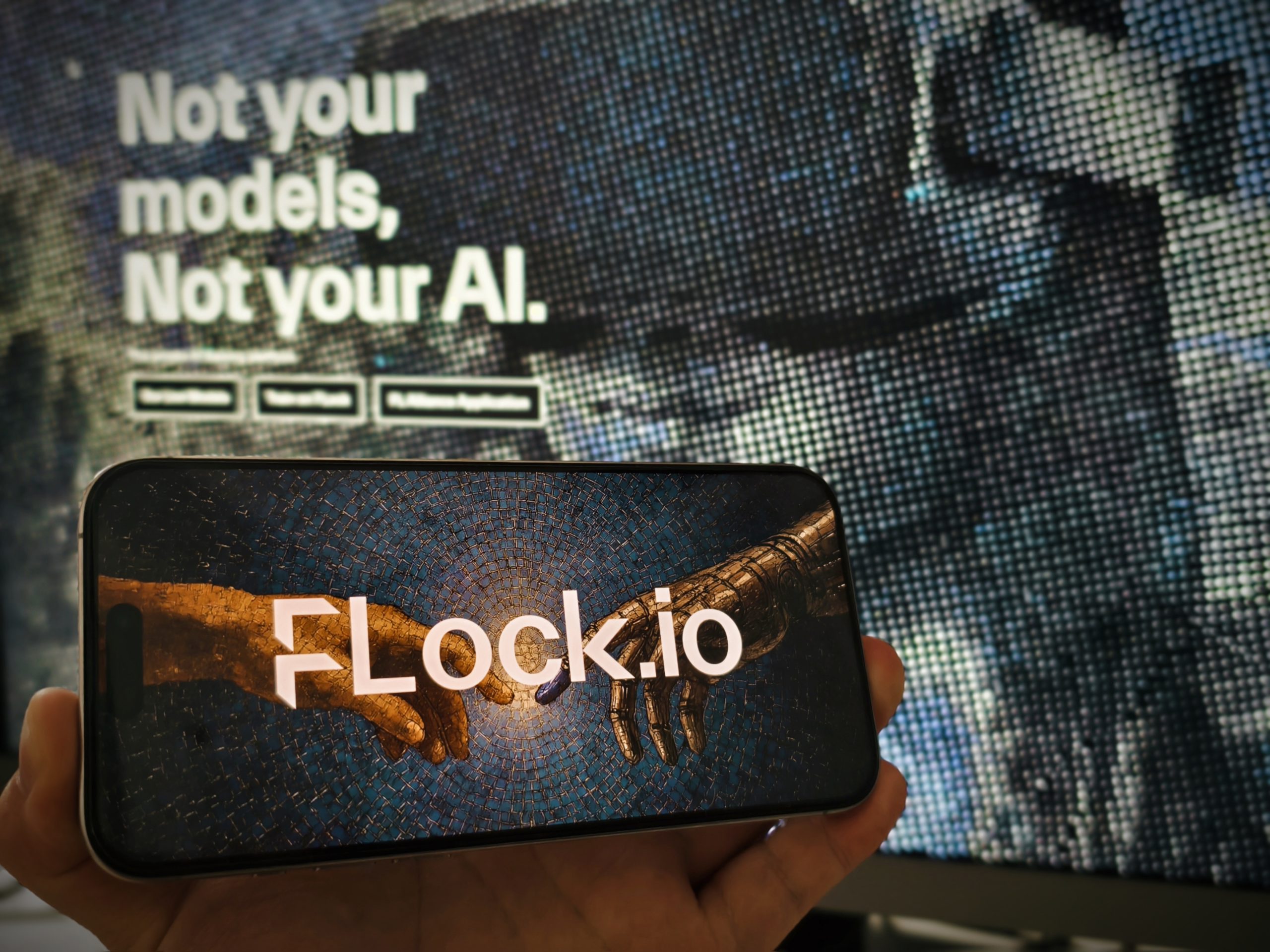
Decentralized AI technologies, like FLock.io’s solutions, are addressing these challenges. By integrating federated learning and blockchain, FLock.io sets new benchmarks in data security, offering intelligent, privacy-focused innovations tailored to critical industries.
The social significance of decentralized AI
Decentralized AI revolutionizes technology by distributing data storage and computation across multiple parties, enabling collaborative model training without sharing sensitive data. This approach is ideal for privacy-critical applications such as medical diagnostics and financial risk management. Federated learning, a key element of decentralized AI, allows participants to train machine learning models locally, preserving privacy while maintaining data integrity.
Founded in 2020, FLock.io has emerged as a leader in decentralized AI, driven by years of innovation and market exploration. CEO Jiahao Sun, an Oxford University alumnus and former AI Director at the Royal Bank of Canada, brings extensive expertise to the company. Sun’s decentralized AI research and developments at FLock.io earned him a spot on the Forbes China 100 Most Influential Chinese 2024 list. Sun emphasizes, “Through innovative technology and collaboration, AI can truly benefit humanity.”
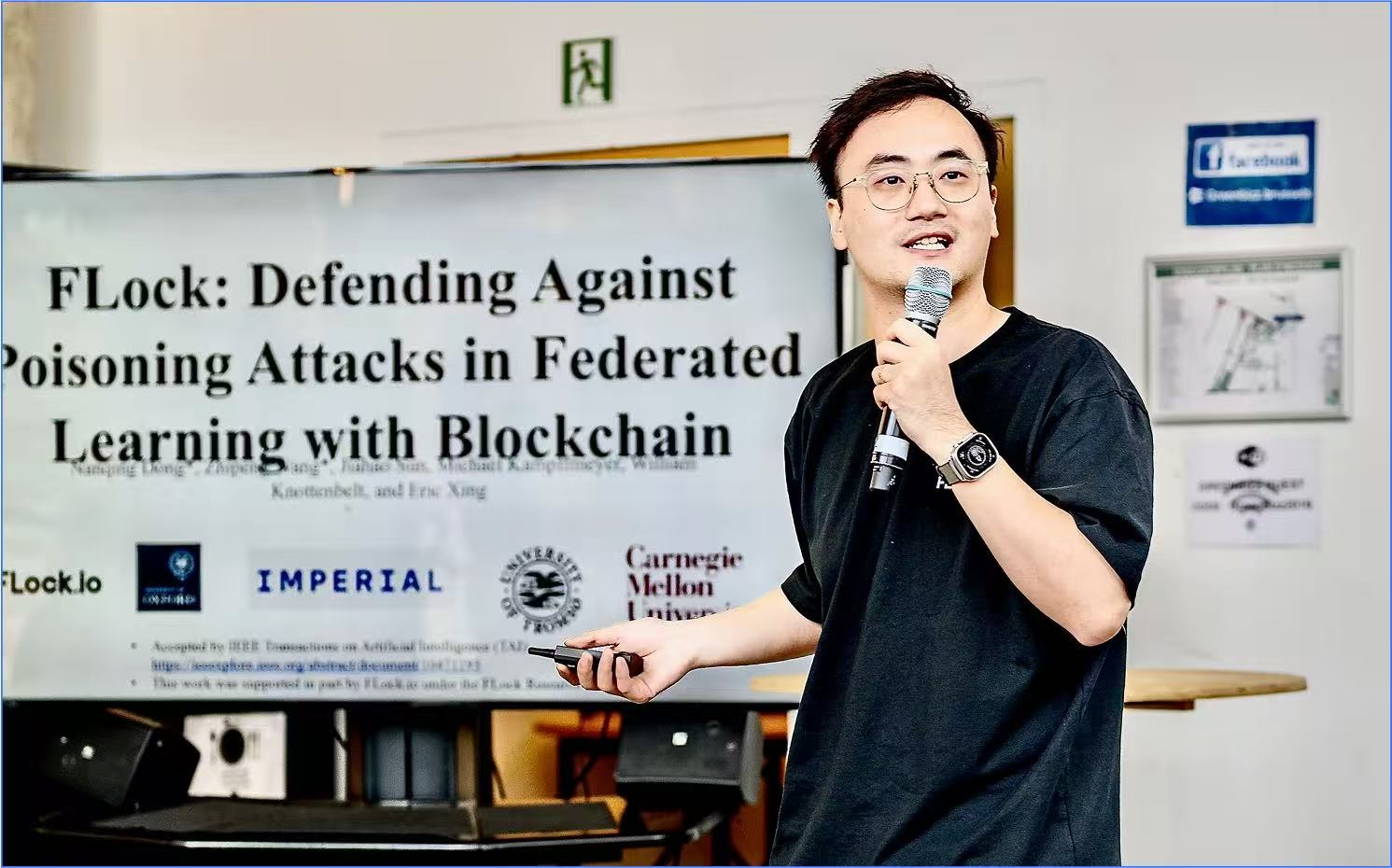
FLock.io Academic paper in lEEE
By 2024, FLock.io secured strategic partnerships with institutions like London’s Moorfields Eye Hospital, top crypto trading firm GSR, and blockchain giant Animoca Brands, expanding real-world applications of decentralized AI. Notable advancements include a multivariate predictive model for managing blood glucose levels in diabetic patients and privacy-preserving algorithms improving ophthalmology diagnostics worldwide. These achievements underscore FLock.io’s commitment to harnessing decentralized AI for impactful solutions in healthcare and beyond.
Global Market Innovation
In March 2024, FLock.io secured $6 million in seed funding led by Lightspeed Faction, fueling collaborations with Moorfields Eye Hospital and Request Network. By the end of the year, the company completed a strategic funding round led by DCG, enabling further expansion.
Leveraging federated learning technology and tailored AI solutions, FLock.io has established a strong presence in Europe and US through deep partnerships with global allies, solidifying its role as a leader in decentralized AI. CEO Jiahao Sun stated, “Our goal is to expand FLock solutions to both enterprise and retail AI market, driven by continuous product optimization and international collaborations.”
Despite its promise, decentralized AI faces hurdles such as scalability and interoperability. Larger networks can slow performance, while seamless cross-platform communication remains a challenge. Sun identifies blockchain technologies and standardized protocols as critical to improving efficiency. Additionally, navigating regulations like GDPR and HIPAA is essential for building trust and driving adoption. To address these challenges, FLock.io plans to increase R&D investments, focusing on technical bottlenecks and compliance. The company also aims to enhance collaborations with global institutions to promote the standardization and scalability of decentralized AI applications, paving the way for widespread industry adoption.
Hashtag: #FLock.io
The issuer is solely responsible for the content of this announcement.
Media OutReach
Woodfibre LNG Marks 2025 as a Year of Construction Progress, Environmental Stewardship and Community Partnership
Over the past year, the project advanced from planning into visible, on-the-ground execution. Major construction milestones included the pouring of foundations for key modules, continued progress on marine piling, and further implementation of modular construction techniques designed to reduce on-site footprint while accelerating delivery timelines.
These advancements were achieved through close collaboration with project partners, suppliers and contractors, and in partnership with the Sḵwx̱wú7mesh Úxwumixw (Squamish Nation).
In 2025, Woodfibre LNG, a member of the RGE group of companies founded by Sukanto Tanoto, continued to operate its floatel workforce accommodation solution, designed to minimise pressure on local housing and community services. As of November, two floatels were in active operation, providing high-quality, safe and comfortable living conditions for the project workforce while supporting construction efficiency.
Environmental protection remained a central focus throughout the year. The project’s Marine Mammal Monitoring Programme, which includes hydroacoustic monitoring, exclusion zones and shore-based observation posts, delivered measurable outcomes by enabling real-time operational decisions, including pauses to marine activities when marine mammals entered exclusion areas.
In parallel, remediation of legacy materials from the former pulp mill site continued, with hundreds of thousands of tonnes of historical waste removed. These efforts have contributed to improving site conditions for both local communities and marine and terrestrial ecosystems in Howe Sound.
Woodfibre LNG’s Operator Training Programme, delivered in partnership with the Squamish Nation Training and Trades Centre and the British Columbia Institute of Technology (BCIT), progressed throughout the year. The programme’s first cohort of graduates transitioned into full-time roles, supporting the development of long-term, skilled local employment opportunities linked to the project.
Through its Community Partnership Programme (CPP), Woodfibre LNG continued to invest in local communities across the Sea-to-Sky corridor. In 2025, the programme surpassed $1 million in total grants since its inception, supporting initiatives in sports, healthcare, emergency services, arts and culture, and youth development.
Luke Schauerte, CEO of Woodfibre LNG, said, “2025 has been a year of significant progress for Woodfibre LNG. We are proud of what our team and partners have accomplished together and look forward to building on this momentum in the year ahead.”
With more than half of the project’s development now complete, Woodfibre LNG remains focused on advancing construction safely and responsibly, while maintaining strong partnerships with Indigenous communities, local stakeholders and regulators.
As the project looks ahead to 2026, Woodfibre LNG continues its work toward delivering lower-carbon, responsibly produced Canadian energy to international markets.
Hashtag: #RGE #PacificEnergy #PacificCanbriamEnergy #WoodfibreLNG #LNG #environment #partnerships #LNG #liquefiednaturalgas #energy #sustainability
The issuer is solely responsible for the content of this announcement.
About Woodfibre LNG
The Woodfibre LNG Project is owned by Woodfibre LNG Limited Partnership, owned 70 per cent by Pacific Energy Corporation (Canada) Limited and 30 per cent by Enbridge Inc. The Woodfibre LNG facility is being built on the site of the former Woodfibre pulp mill site, which is located about seven kilometres southwest of Squamish, B.C. Woodfibre LNG will source its natural gas from Pacific Canbriam Energy, a Canadian company with operations in Northeastern British Columbia. Pacific Canbriam is an industry leader in sustainable natural gas production. Woodfibre LNG and Pacific Canbriam Energy are subsidiaries of Pacific Energy Corporation Limited. Woodfibre LNG is the first industrial project in Canada to recognise a non-treaty Indigenous government, Sḵwx̱wú7mesh Úxwumixw (Squamish Nation), as a full environmental regulator.
Media OutReach
New Opportunities in Southeast Asia’s Digital Shift: Thailand Emerges as the New ASEAN’s AI Hub
The expansion of AI and data centers (DCs) in Thailand is driving several transformative trends:
- Changing data traffic patterns. As DCs multiply in Bangkok, Chonburi, and beyond, Thailand is evolving from a traditional data “transit point” into a regional “convergence hub.” East-west digital traffic is accelerating, with Thai DC clusters increasingly meeting the computing demands of Southeast Asia and the broader Asia-Pacific.
- Optimized data routing. Data flows that once relied on submarine cables via Hong Kong and Singapore are gradually shifting to land-based digital corridors linking China, Laos, and Thailand. This route reduces data transmission latency from southwestern China to Southeast Asia.
- Elevated business expectations. Demand is shifting beyond “sufficient bandwidth” toward “high-quality experience.” Thailand sits in a “latency sweet spot” for key Asia-Pacific markets, with latencies to Singapore, Vietnam, and Malaysia falling within an optimal range—a crucial advantage for latency-sensitive sectors like autonomous driving, telemedicine, and fintech.
New opportunities inevitably bring new challenges, and Thailand also addresses the following three challenges:
1. Massive traffic impacting existing networks: Compared with mature hubs like Singapore, Thailand has insufficient international submarine cables. A large volume of cross-border data still needs to be transmitted through detours. Meanwhile, as DC investments continue to accelerate, traffic will keep rising. Analysis shows that by 2029, Thailand’s DC capacity may reach 2000 MW, with cross-region traffic surging to 630 Tbps. The current network architecture is no longer capable of supporting such heavy traffic.
2. Latency advantages not fully realized: Despite its geographic advantages, Thailand’s network latency performance has yet to reach its full potential. Routes to key markets, like China, still require third-party transit. What’s more, traditional network scheduling lacks intelligent route selection capabilities, making it difficult to provide deterministic assurance for latency-sensitive services like financial transactions and real-time AI interactions.
3. Potential risks in network reliability: Thailand’s network reliability faces structural challenges. Single points of failure have previously caused hours-long interruptions to critical services, directly undermining enterprise users’ confidence.
To overcome these challenges, Thailand can take a systematic approach to upgrading its digital infrastructure, aiming to build next-generation AI-ready networks.
1. Building ultra-high-bandwidth “sea-land” connectivity. By actively introducing new submarine cables, Thailand can significantly enhance its connectivity with the Asia-Pacific region and the world. Meanwhile, accelerating the construction and expansion of key terrestrial cable routes—such as China-Laos-Thailand and Thailand-Malaysia-Singapore—will transform Thailand’s geographic advantage into a tangible connectivity advantage.
2. Optimizing network routes to create a regional low-latency core. Strengthening the Kunming-Laos-Thailand terrestrial cable route will continuously reduce transmission latency between China and Thailand, meeting the needs of real-time applications. In addition, the introduction of autonomous networks will enable automatic selection of the optimal, shortest route, shifting from “best effort” to “deterministic low latency.”
3. Designing a “never-interrupted” high-resilience architecture. Deploying active-active DC networks with millisecond-level switchover capabilities ensures the continuity of core services. Meanwhile, AI-driven intelligent O&M can reduce fault detection and diagnosis from hours to minutes.
Thailand’s booming AI and DC industries are driving rapid growth in regional and cross-border business demand. In this trend, network infrastructure construction centered on DCs is the core engine that drives AI transformation, propelling Thailand toward its vision of becoming the new AI hub for ASEAN.
Hashtag: #huawei
The issuer is solely responsible for the content of this announcement.

Media OutReach
MyRepublic Launches Card Sub, Singapore’s First Subscription Service for Trading Card Game Fans

Hashtag: #CardSub, #MyRepublic #MyRepublicCardSub #CardSubSG #TCG #GeeksUseUs
https://myrepublic.net/sg/
https://www.linkedin.com/company/myrepublic
https://x.com/myrepublic
https://www.facebook.com/MyRepublicSG/
https://www.instagram.com/myrepublicsg/
The issuer is solely responsible for the content of this announcement.

MyRepublic
-
Feature/OPED6 years agoDavos was Different this year
-
Travel/Tourism9 years ago
Lagos Seals Western Lodge Hotel In Ikorodu
-
Showbiz3 years agoEstranged Lover Releases Videos of Empress Njamah Bathing
-
Banking8 years agoSort Codes of GTBank Branches in Nigeria
-
Economy3 years agoSubsidy Removal: CNG at N130 Per Litre Cheaper Than Petrol—IPMAN
-
Banking3 years agoFirst Bank Announces Planned Downtime
-
Banking3 years agoSort Codes of UBA Branches in Nigeria
-
Sports3 years agoHighest Paid Nigerian Footballer – How Much Do Nigerian Footballers Earn