

Connect with us

Media OutReach

Teen Innovators Win Top Prize for Plastic Alternative in Hang Seng x HKFYG’s Seek Our Ways Social Ideation Programme

Published

on

HONG KONG SAR – Media OutReach Newswire – 23 May 2025 – A team of four Form Three students from Good Hope School has developed a revolutionary plastic alternative, earning them the Junior Division Grand Award in the inaugural Seek Our Ways Social Ideation Programme. Their invention, the “Fully Biodegradable Gel”, offers an edible, dissolvable and eco-friendly solution to single-use plastic.

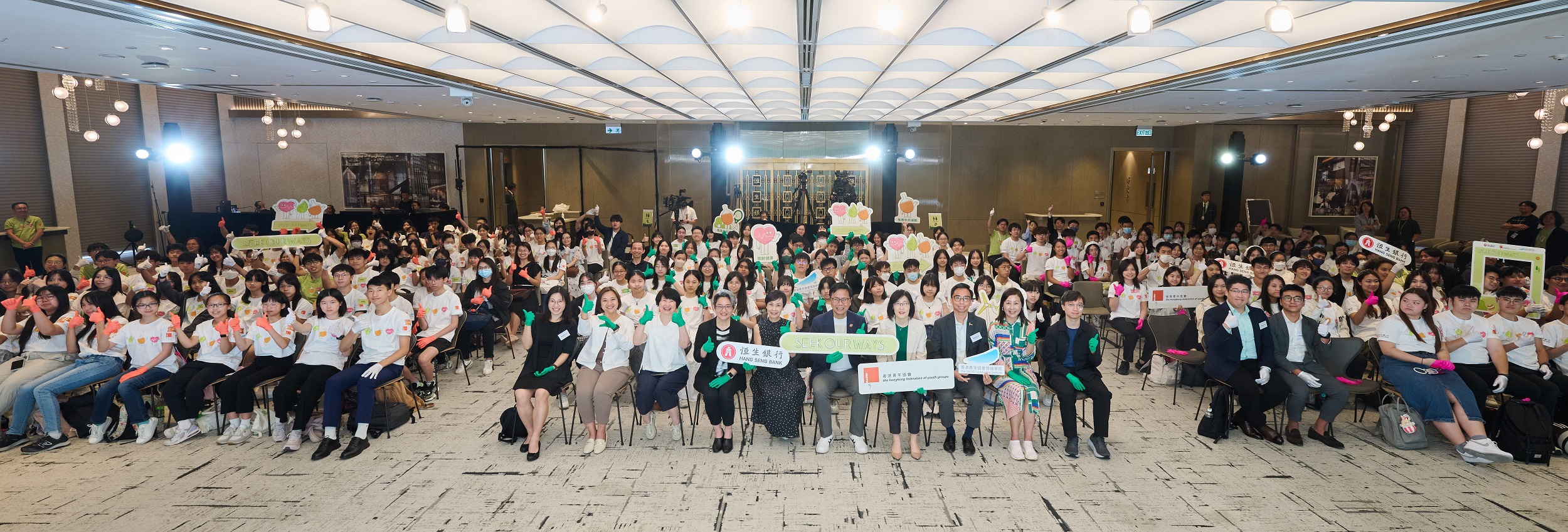
Eric Chan Sui-wai, Commissioner for Youth officiates at the Seek Our Ways Ideation Programme Awards Presentation Ceremony, alongside Diana Cesar, Executive Director and Chief Executive of Hang Seng Bank, Hsu Siu-man, Executive Director of the HKFYG, Grace Chan Man-yee, Chief Executive of the Hong Kong Council of Social Service, distinguished guests and over 400 students.

Supported by Hang Seng Bank and organised by The Hong Kong Federation of Youth Groups (HKFYG) Leadership Institute, the Programme themed “Future Exploration is in the Hands of Youths”, focused on three key social areas: “Environment and Sustainable Development,” “Promoting Sports for All,” and “Elderly and Wellness.” It encourages young people to tackle social issues through creative solutions. The debut edition attracted an overwhelming response, receiving nearly 1,000 applications from students. After over 10,000 hours of diverse learning and mentorship over six months, more than 400 participants developed nearly 90 innovative solutions to drive social progress.

Following rigorous rounds of competition, nine teams advanced to the finals held recently, where they presented their ideas to a panel of judges. Three winning teams were selected based on their solutions’ effectiveness, innovation, scalability and their presentation skills.

The Final Pitching Competition and Award Presentation Ceremony took place at Hang Seng Headquarters, with Eric Chan Sui-wai, Commissioner for Youth officiating as the Guest of Honor. He was joined by Diana Cesar, Executive Director and Chief Executive of Hang Seng Bank, Hsu Siu-man, Executive Director of the HKFYG and Grace Chan Man-yee, Chief Executive of the Hong Kong Council of Social Service. The event also brought together school representatives, mentors and over 400 students to witness the emergence of winning teams.

Diana Cesar, Executive Director and Chief Executive of Hang Seng Bank, said, “As Hong Kong’s largest local bank, Hang Seng Bank is very pleased to leverage our connections and the expertise of our colleagues to empower youth in driving social innovation through this Programme, alongside our financial support. We hope this Programme encourages young people to engage with societal issues, broaden their horizons and ignite their interests in social innovation.”

Hsu Siu-man, Executive Director of the HKFYG, remarked, “Social innovation requires keen insight and the courage to change; every change begins with attention to issues and imagination for the future. I am delighted to see participants actively engage in the Programme, injecting new hope and possibility into society.” She also expressed her gratitude to Hang Seng Bank and other partnering organisations for their support in nurturing future leaders.”

Fifteen-year-old students Ho Lok Ting, Law Hau Wing, Lo Sin Sum and Tsang Lok Yu, the Grand Award winners in the Junior Secondary Division, designed their “Fully Biodegradable Gel” after learning about sea turtles harmed by plastic waste. The material, made from gelatin and agar, can package dry foods or even serve as shopping bags while decomposing harmlessly.” Law Hau Wing said, “Traditional plastic linger for centuries as it is non-biodegradable and harmful to the environment. Our ‘Fully Biodegradable Gel’ disappears without a trace. We hope to collaborate with food manufacturers to bring the product to market.”

The Senior Secondary Division Grand Award went to Fanling Kau Yan College, where five Form Four and Form Five students, Chen Tin Oi, Lee Yan Ue, Liang Ka Ki, Ng Ka Yin and Zou Tsz Ham designed a “One School, One Elderly Centre” proposal to pair schools with elderly centres, fostering mutual learning and companionship. Inspired by an initiative in their sister school in Mainland China, the team developed a sustainable model including curricula, activities, and a B2B framework to scale the project in Hong Kong.

A cross-university team from the Hong Kong University of Science and Technology, the University of Hong Kong, the Chinese University of Hong Kong, and the Hong Kong College of Technology, won the Tertiary Division Grand Award for “Fruitful”, a project repurposing apple pulp into leather-like material. Over the past six months, team members Cheng Hoi Kei, Ho Ka Hei, Lai In Ha, Wong Ngai Fung and Yau Ho Lun conducted in-depth research on this technology and overcame technical challenges. They aim to produce wallets, coasters and other accessories, reducing reliance on synthetic fabrics to promote sustainable development in Hong Kong.

Each winning team will receive HK$20,000 and an opportunity for valuable career immersion experience at Hang Seng Bank. Audience-voted “My Favourite Team” Awards were also presented, with each winning team receiving HK$5,000. For further details about the winning teams, please refer to the appendix. The second edition of the Programme will open for applications by the end of this year, encouraging more youngsters to drive social progress.

Winning teams of Grand Award

Grand Award – Junior Secondary Division
School and
Name of Students
Good Hope School
Lo Sin Sum, Ho Lok Ting, Law Hau Wing, and Tsang Lok Yu
Theme Environment and Sustainable Development
Proposal Byebye Traditional Plastic
Description “Fully Biodegradable Gel” is a new material designed to support heavy items, similar to conventional plastic. It is available in two types:

  • Type 1: Crafted from gelatin, this variant offers a firmer texture, making it ideal for packaging noodles and dry foods. It comes in red, green, orange, and transparent colours, dyed using vegetable and plant powders.

  • Type 2: Made from agar powder, this type provides a softer, a more flexible texture with strong water resistance. Distinguished by its blue colour, its texture is similar to traditional plastic, making it ideal for shopping bags.

Teen Innovators Win Top Prize for Plastic Alternative in Hang Seng x HKFYG’s Seek Our Ways Social Ideation Programme / Page 7

Grand Award – Senior Secondary Division
School and
Name of
Students
Fanling Kau Yan College
Chen Tin Oi, Lee Yan Ue, Zou Tsz Ham, Liang Ka Ki and Ng Ka Yin

Theme Elderly and Wellness
Proposal One School, One Elderly Centre
Description Through interviews with frontline elderly service social workers, elderly policy researchers and secondary school management, the team discovered that current intergenerational integration programmes are often one-time services lacking continuity and depth, failing to fully address the needs of the elderly and wasting school resources. The “One School, One Elderly Centre” initiative aims to:

1. Match elderly centres with secondary schools

2. Equip members of elderly centre and secondary school students with knowledge

3. Facilitate communication between the two groups

4. Document their interactions for improved communication

The programme offers sustained, face-to-face exchange activities over one year, along with matching support, lesson plans, teaching materials and suggested activities for participating organisations through an online platform to facilitate collaboration between schools and elderly centres.

Grand Award – Tertiary Division
School and
Name of
Students
The Hong Kong University of Science and Technology, the University of Hong Kong, the Chinese University of Hong Kong, and Hong Kong College of Technology
Lai In Ha, Cheng Hoi Kei, Wong Ngai Fung, Yau Ho Lun and Ho Ka Hei

Theme Environment and Sustainable Development
Proposal Fruitful
Description The team proposed an innovative biomaterial solution that converts waste pulp from the juice industry into high-performance eco-friendly materials. This technology can increase the bio-based content of the pulp to over 85%, reducing carbon emissions by 95% compared to traditional materials. Additionally, it boasts excellent physical properties, effectively addressing the challenges posed by limited food waste recycling facilities.

Winning teams of “My Favourite Team” Award voted by the event’s audience

Divison Theme School Name of
Students
Proposal
Junior Secondary Environment and Sustainable Development Good Hope School Ho Lok Ting, Law Hau Wing, Lo Sin Sum and Tsang Lok Yu Byebye Traditional Plastic
Senior Secondary Promoting Sports for All St. Paul’s Convent School Chan Hoi Yau, Jiang Ka Yi, Kwok Hiu Ching, Tai Cheuk Wing and Yung Chi Kay

City of Maze Runners
Tertiary Environment and Sustainable Development The Hong Kong University of Science and Technology, the University of Hong Kong, the Chinese University of Hong Kong, and Hong Kong College of Technology Cheng Hoi Kei, Ho Ka Hei, Lai In Ha, Wong Ngai Fung and Yau Ho Lun

Fruitful

Hashtag: #TheHongKongFederationofYouthGroups

The issuer is solely responsible for the content of this announcement.

Advertisement

Media OutReach

St. George’s University Prepares Future South Korean Physicians for the Growing Global Cancer Care Challenge

Published

on

SEOUL, SOUTH KOREA – Media OutReach Newswire – 4 February 2026 – Rising global cancer incidence is straining healthcare systems, which already face workforce shortages. In East Asia, the number of trained physicians in cancer care, spanning diagnosis, treatment coordination, and long-term management—has not met the increasing demand. According to the Global Cancer Observatory, South Korea reported over 230,000 new cancer cases and more than 97,000 fatalities in 2022. A recent original academic research by Myongji College and The Catholic University of Korea warned that simply increasing medical school enrollments alone does not fix shortages in key specialties and underserved regions where medical demand is rising fastest.

Source: St. George’s University

Recognizing the importance of addressing workforce shortage in South Korea, St. George’s University (SGU) School of Medicine in Grenada, West Indies, highlights how its medical education approach supports the development of clinical competencies relevant to cancer care across healthcare settings.

These challenges reflect broader global trends, where cancer care increasingly depends on multidisciplinary teams rather than specialty expansion alone. SGU’s curriculum is designed to build a strong foundation in clinical diagnosis, patient communication and multidisciplinary care, which are essential skills for effective oncology and cancer-related care. Through anatomy labs, simulation-based learning, and integrated digital tools, students develop foundational clinical skills in structured, supervised environments designed to reflect real-world medical practice.

The curriculum also integrates traditional cadaveric dissection with modern 3D anatomical modeling. This blend helps students visualize the human body in a holistic way while reinforcing knowledge through their hands-on interaction. SGU’s simulation lab also enables medical students to have their first direct interaction with ill patients in a safe, simulated learning environment.

On top of core medical training, SGU offers early exposure to prevention, diagnosis and patient-centered care to prepare graduates to tackle complex health issues. SGU has developed long-standing relationships with more than 75 established hospitals and clinical centers in the US and UK. These clinical placements provide exposure to diverse patient populations and care environments, including settings where cancer diagnosis and management are part of routine clinical practice.

South Korean SGU alumni are contributing to healthcare systems through roles that intersect with cancer diagnosis, treatment coordination, and long-term patient care. For example, Dr. Julia Hweyryoung Cho, MD 2022 is practicing internal medicine, which plays a crucial role in cancer care. Internal medicine physicians are often involved in the initial diagnosis of cancer, managing complex medical conditions that may arise during treatment and providing long-term comprehensive care and survivorship planning for patients with a history of cancer.

In observance of World Cancer Day 2026, SGU encourages all medical professionals and organizations to collaboratively address global cancer care challenges. This includes recognizing and meeting the cancer healthcare needs of individuals and communities in South Korea.

For more information on the programs and tracks available through SGU School of Medicine, visit SGU’s website.Hashtag: #St.George’sUniversity

The issuer is solely responsible for the content of this announcement.

Continue Reading

Media OutReach

Finalists and Semifinalists for $1 Million Seeding The Future Global Food System Challenge Announced

Published

on

BONN, GERMANY – Newsaktuell – 3 February 2026 – The Seed Grant Finalists and Growth Grant and Seeding the Future Grand Prize Semifinalists of the 5th annual Seeding The Future Global Food System Challenge (GFSC) have been announced, marking a key milestone in the USD 1 million global Challenge supporting impactful and innovative solutions to transform food systems.

Created and funded by Seeding The Future Foundation and, for the first time, hosted by Welthungerhilfe (WHH), the Challenge attracted a record 1,600+ applications from innovator teams in 112 countries, underscoring growing global momentum for food systems transformation.

Following a multi-stage, rigorous international review process, 36 teams have advanced across three award levels. These include 16 Seed Grant Finalists (competing for 8 awards of USD 25,000), 12 Growth Grant Semifinalists (competing for 3 awards of USD 100,000), and 8 Seeding The Future Grand Prize Semifinalists (competing for 2 awards of USD 250,000).

“Hosting the GFSC reflects Welthungerhilfe’s commitment to accelerating bold, scalable innovations where they are needed most. This year’s diversity of solutions underscores the complexity of food system challenges and the creativity of innovators worldwide.” said Jan Kever, Head of Innovation at Welthungerhilfe

The submitted innovations span diverse themes and approaches, including climate-smart production, nutrient-dense foods, food loss reduction, and inclusive market models, reflecting the complexity and interconnected nature of today’s food systems challenges.

“The Seeding The Future Global Food System Challenge exists to catalyze impactful, bold, and scalable innovations that advance food systems transformation. We are excited to work alongside Welthungerhilfe as a trusted partner and host of the Challenge and are encouraged by the quality and diversity of innovations emerging from this first year of collaboration.” said Bernhard van Lengerich, Founder and CEO of Seeding The Future Foundation

While the number of awards is limited, all semifinalists and finalist applicants plus all applicants with any prior recognition of other innovation competitions can join the STF Global Food System Innovation Database and Network—currently in beta testing with the Food and Agriculture Organization of the United Nations—vastly expanding their visibility and reach across a global audience.

List of 2025 GFSC Seed Grant Finalists, Growth Grant and Seeding The Future Grand Prize Semifinalists

Find details here: welthungerhilfe.org/gfsc-finalists

Seeding The Future Grand Prize Semi-Finalists

Growth Grant Semi-Finalists

Seed Grant Finalists

Hashtag: #TheFutureGlobalFoodSystemChallenge

The issuer is solely responsible for the content of this announcement.

About Seeding The Future Foundation

STF is a private nonprofit dedicated to ensuring equitable access to safe, nutritious, affordable, and trusted food. It supports innovations that transform food systems and benefit both people and planet. More at .

About Welthungerhilfe
WHH is one of Germany’s largest private aid organizations, striving for a world without hunger since 1962. More at:

Continue Reading

Media OutReach

PolyU develops novel antibody targeting fat cell protein, offering new approach to treating metabolism-related liver cancer

Published

on

HONG KONG SAR – Media OutReach Newswire – 3 February 2026 – Liver cancer is one of the three deadliest cancers worldwide, and metabolic dysfunction-related cases have become increasingly common in recent years. A research team from The Hong Kong Polytechnic University (PolyU) has identified a protein secreted by fat cells that promotes cancer growth and has successfully developed a novel antibody that neutralises this protein, marking a significant breakthrough in impeding the progression of liver cancer. The research findings have been published in the Journal of Clinical Investigation.

Prof. Terence Lee, Associate Head and Professor of the PolyU Department of Applied Biology and Chemical Technology, and his research team have developed a novel antibody targeting the adipocyte-derived protein FABP4, offering a new approach to treating metabolism-related liver cancer.

Metabolic dysfunction-associated steatotic liver disease (MASLD), commonly known as fatty liver disease, currently affects around a quarter of the global population and is an important risk factor for liver cancer. In affected individuals, fat cells induce insulin resistance and chronic inflammation, leading to excessive fat accumulation in the liver. This ultimately impairs liver function and may progress to liver cancer. Treatment options for MASLD-induced liver cancer remain limited and the effectiveness of current immunotherapies is suboptimal.

A breakthrough study led by Prof. Terence LEE, Associate Head and Professor of the PolyU Department of Applied Biology and Chemical Technology, and his research team has revealed that an adipocyte-derived protein, known as fatty acid-binding protein 4 (FABP4) is a key driver that accelerates tumour growth. Through mass spectrometry, the team confirmed that patients with MASLD-induced liver cancer had markedly elevated FABP4 levels in their serum. Further investigations showed that FABP4 activates a series of pro-proliferative signalling pathways within cells, causing cancer cells to multiply and grow more rapidly.

Prof. Lee’s team has successfully developed a monoclonal antibody that neutralises FABP4. This antibody not only inhibits the growth and proliferation of FABP4-driven cancer stem cells, but also enhances the ability of immune cells to combat cancer.

Prof. Lee said, “This neutralising antibody against FABP4 demonstrates significant potential in inhibiting tumour growth and activating immune cells, providing a complementary approach to current immunotherapy strategies. Our findings highlight that targeting adipocyte-derived FABP4 holds promise for treating MASLD-induced liver cancer.”

Prof. Lee added that gaining deeper insights into how adipocyte-derived FABP4 affects liver cancer cells helps to explicate the disease mechanisms of liver cancer, particularly in obese individuals. Intervening in the relevant signalling pathways could provide effective methods to combat this aggressive malignancy.

Prof. Lee believes that, as this adipocyte-targeted immunotherapy continues to mature, it will bring more treatment options to MASLD patients. He remarked, “If its efficacy can be proven in clinical trials, it could offer new hope to many affected individuals.”

The research is supported by the Innovation and Technology Fund of the Innovation and Technology Commission of the Government of the Hong Kong Special Administrative Region of the People’s Republic of China. PolyU has filed a non-provisional patent for the developed antibody and is continuing to optimise its binding affinity to facilitate future clinical applications.
Hashtag: #PolyU #FattyLiver #Cancer #LiverCancer #理大 #香港理工大学 #肝癌 #癌症 #脂肪肝

The issuer is solely responsible for the content of this announcement.

Continue Reading

Trending