Connect with us

Economy

Foreign Capital Follows Local Commitment—Popoola

Published

on

ETDs Market temi popoola

By Aduragbemi Omiyale

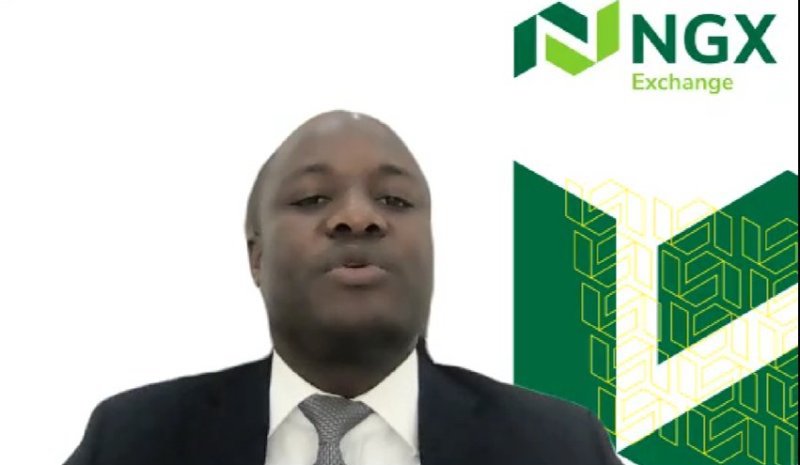
The chief executive of the Nigerian Exchange (NGX) Group Plc, Mr Temi Popoola, has tasked policymakers and development stakeholders in Africa to rethink the continent’s growth model, stressing the need to look inwards and stop crying for help.

He charged African leaders and financial actors to boost cross-border collaboration to accelerate the integration of African capital markets.

Referencing the African Exchanges Linkage Project (AELP), an initiative backed by the African Development Bank (AfDB), he described it as a model for regional capital connectivity while cautioning that regulatory silos and uneven infrastructure remain barriers.

“Africa must stop waiting for rescue. Our capital, our ideas, and our partnerships are the keys to unlocking sustainable development from within,” he declared at the 2025 Annual Meetings of AfDB in Abidjan, noting that, “Foreign capital follows local commitment.”

“When African institutions lead with clarity and confidence, others follow. But we must first trust and invest in ourselves,” Mr Popoola submitted, advising public and private institutions alike to “speak the language of capital” by designing frameworks that align with the realities and expectations of local investors.

He stressed that financial sovereignty and economic resilience must be built on deliberate domestic capital mobilization and scalable, tech-driven solutions.

“When foreign capital dried up and domestic capital stepped in to fill the void, it revealed something powerful: the capital we often seek abroad already exists within our borders. What are needed now are intentionality and a clear plan to mobilise and deploy it effectively,” the NGX Group chief reflected on lessons from the COVID-19 pandemic.

Drawing on his leadership of one of Africa’s premier financial market infrastructure institutions, Mr Popoola outlined three foundational pillars for Africa’s financial future: intentionality, financial literacy, and technology-driven inclusion.

The 2025 meetings marked the final one under the leadership of Mr Akinwumi Adesina, whose decade-long tenure as AfDB president saw the lender’s capital base grow from $93 billion to $318 billion and more than 500 million lives impacted.

“The incoming AfDB leadership and all of us across the public and private sectors must build on this momentum to deliver African-led growth,” Mr Popoola stated.


Economy

Naira Appreciates to N1,396 Per Dollar at Official FX Market

Published

on

FX Market Segments

By Adedapo Adesanya

The Naira appreciated further on the Dollar in the the Nigerian Autonomous Foreign Exchange Market (NAFEX) on Thursday, January 29 by N3.49 or 0.25 per cent to N1,396.99/$1 from the previous session’s N1,400.48/$1.

This was supported by foreign portfolio inflows from a recent bond auction and relatively subdued Dollar demand.

Year old reforms in the FX market as well as structural reforms in the oil sector have eased fears and buoyed investments, boosting foreign capital inflows and stronger diaspora remittances.

Also, the weakening of the Dollar has lent support as the American currency hit a four-year low triggered by tariff uncertainty, policy volatility including threats to US Federal Reserve independence, and rising fiscal deficits.

It also improved its value against the Euro in the official FX market yesterday by N3.75 to quote at N1,671.78/€1 versus midweek’s rate of N1,675.53/€1, but lost N2.05 against the Pound Sterling to trade at N1,932.04/£1 versus Wednesday’s closing rate of N1,929.99/£1.

In the parallel market, it gained N10 against the US Dollar to settle at N1,470/$1 compared with the previous session’s exchange rate of N1,480/$1 but remained unchanged at N1,426/$1 at the GTBank forex desk.

Market traders expect the Naira to remain fairly stable and could strengthen further with a bond auction in the coming week.

Meanwhile, the cryptocurrency market was weaker as traders reacted to reports that US President Donald Trump would nominate former Federal Reserve Board member, Mr Kevin Warsh, to replace current Federal Reserve Chair, Mr Jerome Powell. It is believed that Mr Warsh is bearish on crypto.

President Trump said late Thursday he would name his nominee on Friday morning, a day after lambasting Mr Powell and the US central bank for not choosing to reduce rates. The US Federal Reserve left interest rates unchanged at its meeting on Wednesday.

Cardano (ADA) fell by 8.1 per cent to $0.3225, Ethereum (ETH) declined by 7.9 per cent to $2,718.16, Solana (SOL) slipped by 7.6 per cent to $113.90, Ripple (XRP) crashed by 7.3 per cent to $1.74, Litecoin (LTC) went down by 6.8 per cent to $63.55, Bitcoin (BTC) depreciated by 6.7 per cent to $82,292.42, Binance Coin (BNB) decreased by 6.6 per cent to $839.47, and Dogecoin (DOGE) retreated by 7.1 per cent to $0.1131, while the US Dollar Tether (USDT) and the US Dollar Coin (USDC) closed flat at $1.00 each.

Continue Reading

Economy

Oil Surges to $70 on Heightened Worries US Could Attack Iran

Published

on

Oil Licensing Round

By Adedapo Adesanya

The price of surged by 3 per cent to a five-month high on Thursday on rising concerns that global supplies could be disrupted if the US attacks Iran, one of biggest crude ​producers in the Organisation of the Petroleum Exporting Countries (OPEC).

Specifically, the Brent futures rose by $2.31 or 3.4 per cent to $70.71 a barrel, while US West Texas Intermediate (WTI) crude futures gained $2.21 or 3.5 per cent to settle at $65.42 per barrel.

US President Donald Trump is weighing options against Iran that include targeted strikes on security forces and leaders to inspire protesters. It was reported that the American President wanted to create conditions for “regime change” after a crackdown crushed ‌a nationwide protest movement earlier this month, killing thousands of people.

There is a possibility that delay is coming as Israel and Arab officials said air power alone would not topple Iran’s clerical rulers.

Earlier this week, he warned Iran that a “massive armada” of US Navy ships is headed to the Persian Gulf.

Reuters reported that in Iran, plainclothes security forces have rounded up thousands of people in a campaign of mass arrests and intimidation to deter further protests.

Iran, for its part, said that its army is ready to “immediately and powerfully” respond to any possible attack by the US.

Oil stakeholders will be weighing the consequences that a war could lead to. Market analysts say Iran may close the Strait of Hormuz shutting out around 20 million barrels per day of oil that navigates it.  Iran was the third-biggest crude producer in OPEC behind Saudi Arabia and Iraq in 2025.

European Union foreign ‍ministers adopted new sanctions on Iran on Thursday targeting individuals and entities involved in a violent crackdown on protesters. Separately, the EU designated Iran’s Revolutionary Guard as a terrorist organisation.

Russia on Thursday reiterated its invitation for Ukrainian President Volodymyr Zelenskiy to come to Moscow for peace ⁠talks as US-led efforts to reach a deal to end the nearly four-year war in Ukraine intensify.

Any peace deal that would allow Russia to export more oil should increase ‍global supplies and decrease energy prices. Russia is the third-biggest crude producer in the world after the US and Saudi Arabia.

In the US, crude production continued to recover on Thursday after a winter storm ravaged production and losses peaked at 2 million barrels per day over the weekend.

The Dollar fell to its lowest since February 2022 against a basket of other currencies on uncertainty over US economic policies. A weaker greenback can boost oil prices by making dollar-priced oil less expensive for many global ‍buyers.

Continue Reading

Economy

Russia’s Lukoil Agrees to Sell International Assets in Nigeria, Others to Carlyle

Published

on

Russias Lukoil

By Adedapo Adesanya

US sanctioned Russian oil giant Lukoil, will sell its foreign assets, including those in Nigeria and five other countries, to the US investment firm, The Carlyle Group.

According to an announcement on Thursday, Lukoil reached an agreement with the US investment firm on the sale of Lukoil International GmbH, the holding company that owns the group’s non-Russian international assets.

These foreign assets include shares in oil fields and refineries across the globe, including in Iraq, Azerbaijan, Egypt, the United Arab Emirates (UAE), Nigeria, and Mexico.

The sale follows the US sanctions on Lukoil and Rosneft, “as a result of Russia’s lack of serious commitment to a peace process to end the war in Ukraine.”

The Donald Trump administration in October 2025 had carried out the decision to put pressure on Russia’s state finances, adding the country’s two largest oil producers, Lukoil and Rosneft, to its blacklist of sanctioned entities. The US had initially given the oil firm one month to sell the holdings before gradually extending it as negotiations dragged on.

Lukoil had announced that same month that it would sell all of its international assets, initiating a formal process to receive bids from potential buyers.

After months of negotiations with potential buyers and one preliminary agreement with Gunvor blocked by the US Treasury, which described the trading group as “the Kremlin’s puppet”, it has now signed an agreement to sell Lukoil International GmbH to Carlyle.

Companies working with the sanctioned firms risk secondary sanctions that would deny them access to US banks, traders, transporters, and insurers.

The agreement is not exclusive and is subject to conditions such as the procurement of necessary regulatory approvals, including permission from the US Department of the Treasury’s Office of Foreign Assets Control (OFAC) for the transaction with Carlyle.

Carlyle said that the agreement “has been structured to be fully compliant” with US Treasury policies and that it was “conditional upon Carlyle’s due diligence and regulatory approvals”.

Prior to the Carlyle news, other US oil and gas supermajors Chevron and ExxonMobil, and International Holding Company (IHC) of Abu Dhabi  expressed interest to the US Treasury to potentially acquire Lukoil’s international assets.

The sale would further dent Russian economy which has been struggling because of its war in Ukraine and Western sanctions have increased inflation and slowed economic growth. In 2025, the country’s oil and gas revenues, which make up about a quarter of government income and help fund the war, fell to their lowest level in five years.

Continue Reading

Trending