Economy
FG, Agro Dealers Quarrel over N66b Debt

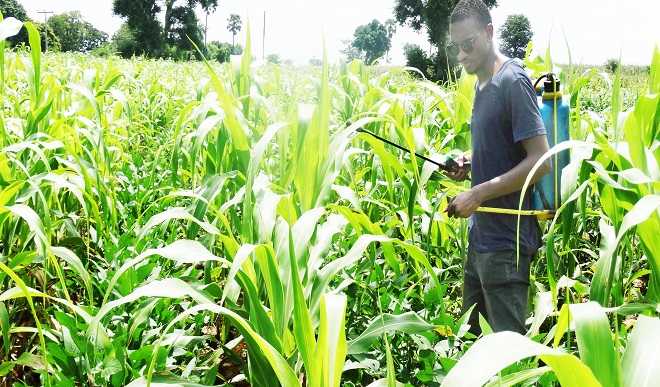
There is a misunderstanding between the Federal Government and agro dealers and suppliers that participated in the Growth Enhancement Scheme (GES).
This is because the Ministry of Agriculture claimed it has paid over N20 billion of the N66 billion debt to the agro dealers and suppliers.
However, the Nigeria Renascent Group, representing the agro dealers, disagreed with the government, saying it has refused to pay what is owed the suppliers and agro dealers, resulting in progressive collapse of their businesses and death of some participants of the GES Programme.
Speaking with Sunday Telegraph in a telephone interview, the Director of Agribusiness, Ministry of Agriculture and Rural Development, Engineer Ohiari Badmus Jatto, said that all the documents and information relating to the non-payment of the outstanding debt owed to the agro dealers have been made available to the Federal Ministry of Finance, and they have made part payment to the suppliers. He also added that there are plans to settle the balance soon.
The debt was accumulated through GES programme, as part of the Agricultural Transformation Agenda, which encouraged firms to supply fertilizers and seeds to agro dealers for delivery to farmers.
Coordinator of Nigeria Renascent Group, Mr Abdulrasaq Lawal, some participants in the scheme have lost their lives due to the non-payment of their money by the Federal Government, even as many can no longer pay their children’s school fees.
“Participants are dying by the day. Instances will be given. Musa Baba, the Managing Director/Chief Executive Officer of Diamond Fertilizer based in Kano, died in December 2016 from complications not unrelated to his inability to meet his obligation to creditors,” he claimed.
Preliminary investigation revealed that the federal government is owing his company over N1 billion. “Also the story of Gali Gali in Kaduna is not different from that of Musa Baba. ‘Gali Gali’ as he is fondly referred to by all, was a well-known force in the fertilizer market. His company, Gali Global, was at the forefront in championing the GES cause; he took it personal as a way to get his people to enjoy direct interventions from government.
“He went all out to mobilize farmers to register. His personal input and resources were put in ensuring the GES was a success.
“The result, over N1 billion, the chunk of which is a bank loan, is trapped. He died in the late 2015 of heart and blood related issues,” he said.
He urged the Federal Government to pay the debt to the participants in order to bring an end to the death of participants of the GES programme and ensure that all hands will be on deck in ensuring that there is food for all and eradicate famine in the country, which according to him, is imminent with the present situation of things.
Also speaking recently, a participant who pleaded anonymity, said that he has closed his company because banks were after him, adding that he is hiding in shame because he cannot face the people who had assisted him financially to make supplies to the Ministry of Agriculture.
On the claim by the Ministry that it has made part payment to the suppliers, he urged the Ministry to desist from playing politics with the debt owed agro dealers in the country.
He lamented that the Minister of Agriculture and Rural Development, Mr Audu Ogbeh, has been silent over the debt, saying that this is the worst situation they have ever experienced with any government in the country.
He urged the Minister to make public who got the purported N20 billion part payment from the N66 billion accumulated debt.
He further urged the Presidency, senators and House of Representatives members to intervene in the situation, adding that some of them collected loan from banks when the United States American dollars was lower than what is obtainable now.
“That is another challenge we will face in repaying the loan to the banks whenever the Federal Government decides to settle the debt,” he said.
Director of a Non-governmental organisation, Agricultural Development Watch Initiative, Dr Mark Adebisi, lamented that a situation where people will make financial commitment to support a government project and they are then treated as if they are no longer important is a bad omen.
He lamented that efforts by the group to get the Chairman, Senate Committee on Agriculture, Mr Abdullahi Adamu; Minister of Finance, Mrs Kemi Adeosun and Minister of State for Agriculture and Rural Development, Mr Heineken Lokpobiri, to assist them ensure that the suppliers are paid their money did not bear fruit.
A highly placed official of the Agriculture and Rural Development Ministry, who spoke with Sunday Telegraph on condition of anonymity, said there are a lot about the debts which Nigerians don’t know about.
According to him, the debt was not N66 billion but N47 billion. He added that the agro dealers over inflated the money owed them by the Ministry, thinking that it would be easy for them to get the money from government.
https://newtelegraphonline.com/business/fg-agro-dealers-bicker-n66bn-debt/
Economy
Naira Weakens to N1,371/$1 at Official Market
By Adedapo Adesanya
The last trading session of the week at the Nigerian Autonomous Foreign Exchange Market (NAFEX) ended on a negative note for the Naira on Friday, May 15, as it lost N15 Kobo or 0.1 per cent against the Dollar to trade at N1,371.04/$1 compared with the previous day’s N1,370.89/$1.
However, it further appreciated against the Pound Sterling in the same market segment yesterday by N20.77 to close at N1,830.61/£1 versus Thursday’s value of N1,851.38/£1, and gained N7.91 against the Euro to settle at N1,595.07/€1 versus N1,602.98/€1.
At the GTBank FX desk, the Naira lost N2 against the US Dollar during the session to sell at N1,383/$1 compared with the preceding session’s N1,381/$1, and at the black market, it remained unchanged at N1,385/$1.
The Naira is forecast to be broadly stable, supported by Dollar sales by the Central Bank of Nigeria (CBN) amid steady, higher oil receipts, with the market settling into a balance.
Policy direction is also expected to give the market some boost as the CBN said the new edition of the FX market guidelines will deepen liquidity, improve transparency and strengthen confidence in the country’s foreign exchange market.
According to the Governor of the CBN, Mr Yemi Cardoso, the update is due to changing global economic realities, domestic reforms and the need for a more coherent and forward-looking regulatory framework. According to him, the last edition of the FX manual was issued in 2018, making the latest review both timely and necessary.
Meanwhile, the cryptocurrency market plunged into the red zone as rising bond yields hit risk assets across markets, while traders are increasingly betting the Federal Reserve may need to raise rates again. Rising energy prices and resurging inflation could force central banks back into tightening mode.
Cardano (ADA) shrank by 4.4 per cent to $0.2557, Dogecoin (DOGE) slid by 3.7 per cent to $0.1104, Ripple (XRP) depreciated by 3.5 per cent to $1.41, Solana (SOL) crashed by 3.5 per cent to $87.81, and Binance Coin (BNB) slumped by 3.4 per cent to $659.64.
Further, Bitcoin (BTC) declined by 2.6 per cent to $78,547.49, Ethereum (ETH) lost 2.1 per cent to quote at $2,209.19, and TRON (TRX) tumbled by 0.7 per cent to $0.3509, while the US Dollar Tether (USDT) and the US Dollar Coin (USDC) traded flat at $1.00 each.
Economy
Oil Prices Jump 3% as Trump, Iran FM’s Comments Raise Tensions
By Adedapo Adesanya
Oil prices gained more than 3 per cent on Friday, after comments by US President Donald Trump and Iran’s foreign minister further dented hopes of a deal.
Brent crude settled at $109.26 a barrel after chalking up $3.54 or 3.35 per cent, and the US West Texas Intermediate (WTI) finished at $105.42 a barrel, up $4.25 or 4.2 per cent. Over the week, Brent has climbed 7.84 per cent and WTI 10.48 per cent on uncertainty over the shaky ceasefire in the Iran war.
President Trump said he was running out of patience with Iran and has agreed with Chinese President Xi Jinping that the Middle East nation cannot be allowed to have a nuclear weapon and must reopen the Strait of Hormuz, which is the waterway where about a fifth of the world’s oil and liquefied natural gas normally passes.
On his part, Iran’s Foreign Minister Abbas Araqchi said on Friday that it does not trust the US and is interested in negotiating only if the US is serious, adding that Iran is prepared to go back to fighting but also prepared for diplomatic solutions.
On the US-China front, while the Chinese President did not directly make a comment on Iran, a statement from the foreign ministry spoke out against the conflict.
Among the deals the market was looking for from the US-China summit, President Trump said China wants to buy oil from the US, also saying he could lift sanctions on Chinese companies that buy Iranian oil.
Iran’s Revolutionary Guards said 30 vessels had crossed the strait between Wednesday evening and Thursday, far from 140 a day that was typical before the war. Two of the 30 vessels that reportedly cleared the Strait of Hormuz earlier this week were tankers, one en route to Japan and the other headed to China.
A prolonged closure of the Strait of Hormuz points toward tighter physical markets, potential refined product shortages, and upward pressure on prices in the coming weeks and months.
Even though the Organisation of the Petroleum Exporting Countries and its allies (OPEC+) announced production increases in recent weeks, traders saw little immediate benefit because many barrels still cannot move efficiently through the Gulf region.
Economy
S&P Upgrades Nigeria’s Credit Rating First Time Since 2012
By Adedapo Adesanya
Nigeria received its first credit rating upgrade since 2012 from S&P Global Ratings, driven by improved oil market conditions and the country’s growing ability to refine and export crude locally.
The credit ratings agency upgraded the country’s rating by one notch to B, five levels below investment grade, according to a statement on Friday.
It raised its long-term foreign and local currency sovereign credit ratings on Nigeria to ‘B’ from ‘B-‘ and affirmed its ‘B’ short-term ratings. It also raised its long- and short-term Nigeria national scale ratings on the sovereign to ‘ngA+/ngA-1’ from ‘ngBBB+/ngA-2’.
S&P also cited Nigeria’s decision to liberalise the exchange rate as crucial to the development, and changed the outlook to stable.
The decision also comes as the federal government ruled out the reintroduction of subsidies on refined petroleum products, in order to avoid a return to larger budgetary deficits and drains on foreign currency (FX) liquidity.
S&P projected the general government deficit will widen to over 4 per cent of GDP on average during 2026 and 2027, a year of a general election.
It added that the implementation of reforms to broaden the tax base from very narrow levels is underpinning a steady decline in Nigeria’s debt-to-revenue ratio to 338 per cent in 2026 versus 500 per cent in 2023.
The agency said it could raise ratings over the next two years if fiscal outcomes improve significantly, either due to fiscal consolidation or structurally higher revenue, resulting in lower debt service costs.
It, however, warned that it could also lower the ratings if the implementation of Nigeria’s reform programme, particularly the series of critical steps taken to liberalise the exchange rate in 2023, reverses.
On the oil production forecast, S&P expects 2026 production to average approximately 1.66 million barrels per day, including condensates.
-
Feature/OPED6 years agoDavos was Different this year
-
Travel/Tourism10 years ago
Lagos Seals Western Lodge Hotel In Ikorodu
-
Showbiz3 years agoEstranged Lover Releases Videos of Empress Njamah Bathing
-
Banking8 years agoSort Codes of GTBank Branches in Nigeria
-
Economy3 years agoSubsidy Removal: CNG at N130 Per Litre Cheaper Than Petrol—IPMAN
-
Banking3 years agoSort Codes of UBA Branches in Nigeria
-
Banking3 years agoFirst Bank Announces Planned Downtime
-
Sports3 years agoHighest Paid Nigerian Footballer – How Much Do Nigerian Footballers Earn