Connect with us

Media OutReach

Australia’s ‘solar godfather’: Vietnam leads Southeast Asia’s clean energy transition

Published

on

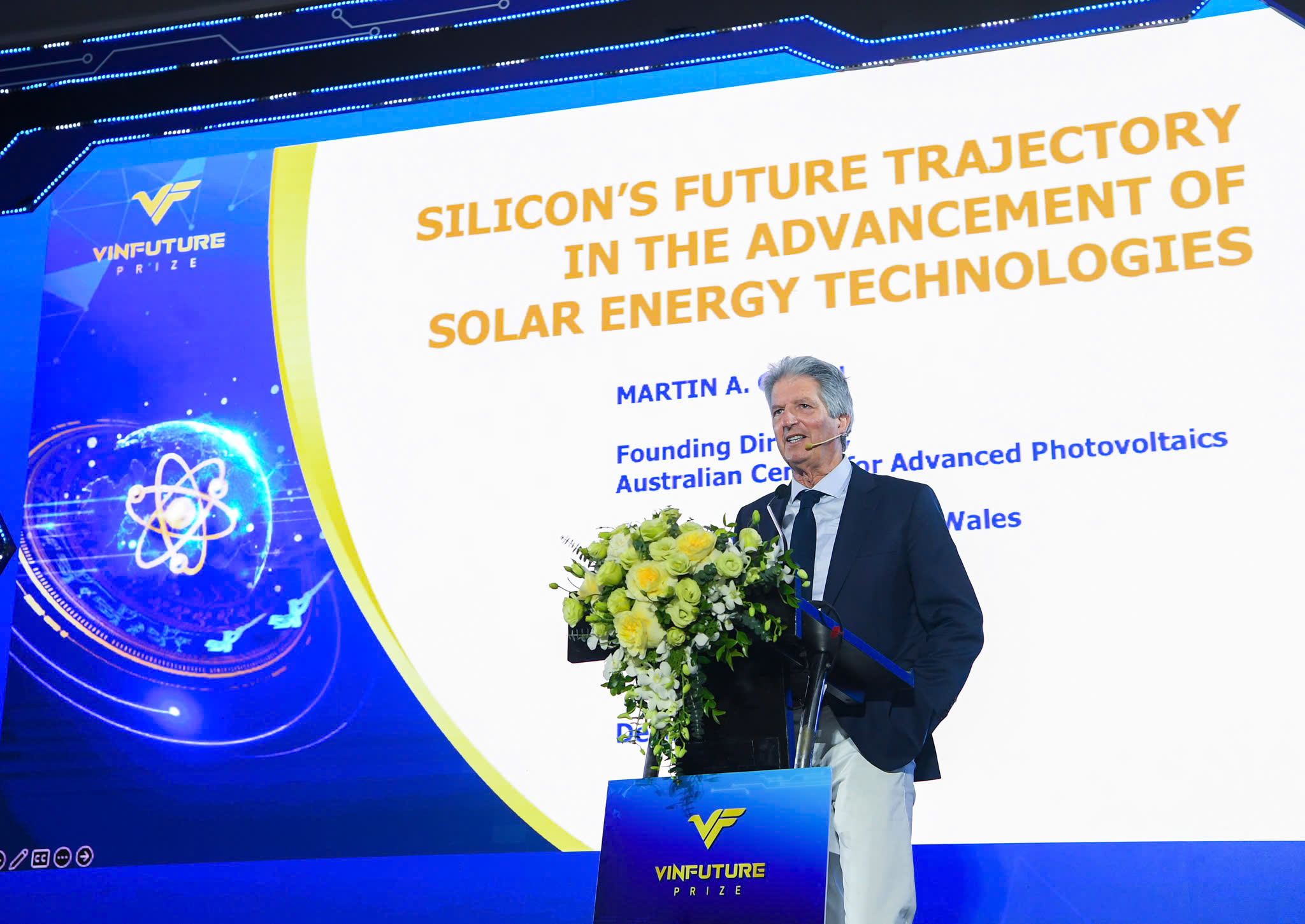
HANOI, VIETNAM – Media OutReach Newswire – 23 June 2025 – With the invention of solar cells using Passivated Emitter and Rear Contact (PERC) technology, Prof. Martin Andrew Green from the University of New South Wales (Australia) and his team made a groundbreaking contribution to green energy production. Two years after receiving the 2023 VinFuture Grand Prize, he continues to push the boundaries of solar innovation, working to improve efficiency and help pave the way for a future of productive renewable energy harvest.

Prof. Martin Green, 2023 VinFuture Prize Laureate and Member of the VinFuture Prize Council, commended VinFuture and Vingroup’s efforts in accelerating Vietnam’s leading position in the global race to renewable energy.

Nurturing the energy revolution

Renowned as the “godfather of solar,” Prof. Martin Green has spent over five decades advancing solar energy technologies. In 2023, Prof. Green’s revolutionary development of Passivated Emitter and Rear Contact (PERC) technology, now used in over 90% of solar panels worldwide, earned him the VinFuture Grand Prize. Through the VinFuture Prize, Prof. Green has also had a unique perspective on Vietnam’s progress toward global sustainability, as he continues to become a member of the VinFuture Prize Council.

One of the most immediate outcomes was the opportunity to establish new collaborations in Vietnam. I have gained much greater insight into the progress being made in Vietnam’s clean energy sector than I knew before,” he shared.

Prof. Green also expressed deep appreciation for the VinFuture Prize, noting that winning such a significant award had undoubtedly enhanced his research group’s ability to attract the necessary resources to develop new ideas.

Earlier this year, his pioneering work was honored with a clean-energy ferry named after him in Australia. While he felt “fortunate to be selected,” Prof. Green emphasized that this recognition propelled him toward a broader movement for a global solar energy revolution.

We need to move faster,” he urged, pointing to the stark evidence already unfolding in Australia, including massive bushfires followed by widespread flooding that falls well outside the norm. “It is a bit of a sign of what lies in the future. We’re beginning to feel the initial effects of climate change, which will only intensify unless we take urgent action,” Prof. Green warned.

The “godfather of solar” also shared that the path forward hinges on international collaboration and government leadership. The global exchange of knowledge and talent has allowed innovations from his lab to influence commercial solar production in China, which in turn benefits countries like Australia that import these cost-effective solar technologies.

Much of that progress, Prof. Green added, has been made possible by falling prices driven by technologies like PERC, as well as support from international organizations such as the United Nations (UN). One of the UN’s key Sustainable Development Goals is to ensure universal access to energy by 2030 and solar offers the most viable path to get there.

Pushing solar frontiers

In recent years, Prof. Martin Green and his team have continuously challenged the boundaries of what photovoltaic technology can achieve. One of the most compelling directions in his current research revisits a landmark theoretical paper he wrote about 40 years ago, regarding the limits on the energy conversion efficiency of silicon cells.

At the time, most people believed that the efficiency limits lay just over 20% energy conversion efficiency. However, in my paper, I calculated the theoretical limit to be between 29% and 30%, significantly higher than what was commonly accepted,” he said, suggesting that 25% efficiency was a feasible target.

This insight became a key motivation for his team to explore greater efficiency gains. They set a practical goal of 25% efficiency, which they ultimately reached around the turn of the century. Today, many commercial solar cells already operate at this level of efficiency, getting closer to the 29-30% limit he proposed years ago.

The second area of focus involves stacking cells made from different materials on top of each other to capture more energy from sunlight. Sunlight can be regarded as a stream of particles called photons. Silicon cells respond to photons of all colors in sunlight, from blue to red and even to the lower-energy infrared ones that our eyes can’t see. However, blue photons contain much more energy than needed, and in standard silicon cells, that excess energy is wasted.

This is the key reasons behind the limits on the energy conversion efficiency of silicon cells.

One material showing strong potential in lab settings is a special kind of perovskite, made with heavy elements like lead and iodine. Still, there is no guarantee that perovskites will meet the stability standards required for widespread commercial use, which is why researchers are also investigating alternative materials. Though these alternatives don’t currently match perovskites in performance, they may offer better long-term reliability.

These approaches, aiming to increase efficiency, have opened a door for the large-scale deployment of the solar revolution.

According to Prof. Green, it has been a key driver in the dramatic cost reductions in photovoltaics over the past few decades. “If we can transition to one of these stacked tandem cells, like perovskite on silicon, it could revolutionize not only performance but also system-wide cost dynamics. Not so much in the cost of making the cell, but by leveraging those efficiency gains to reduce the broader costs of solar deployment,” he emphasized.

Bringing down the cost of cell production will be a key to expanding the interest in using them. According to the International Energy Agency, solar power delivers some of the cheapest electricity in history.

The exciting thing is that the cost of solar is still coming down despite the massive decreases we have seen over the last 15 years. It continues to fall week by week,” he said. “We witnessed the agricultural revolution and then the industrial revolution. Now, many believe we are entering an energy revolution, where it becomes so affordable and accessible that new applications open up.”

However, one of the biggest near-term challenges is finding a cell that can be used in these stacks. Silicon is an ideal material for photovoltaics as it is abundant, non-toxic, and stable. What’s missing is a complementary material that matches these qualities while offering additional performance benefits.

In this search, artificial intelligence can provide a much wider scanning of possibilities than traditional methods permit. The whole material system will be canvassed, and perhaps some new materials will be identified.

The potential of Vietnam

As the global race to renewable energy and net-zero emissions accelerates, Vietnam is not standing on the sidelines. In terms of photovoltaics, he cited the data suggesting that over 10% of Vietnam’s electricity has been generated from solar in recent years.

As the adoption scales up, the uptake needs to match the electricity network’s ability to absorb solar power. This requires parallel investment in battery storage systems and other stabilizing technologies, and Prof. Green believed Vietnam is progressing well on this front.

So I think Vietnam would be one of Southeast Asia’s leaders in terms of photovoltaics,” he remarked, Vietnam is probably already leading Southeast Asia in the clean energy transition.”

In Southeast Asia, where two-wheeled vehicles dominate urban transportation, the shift toward electric scooters is also crucial. Drawing parallels with China, where the replacement of fossil-fueled bikes with electric versions has reduced pollution and CO₂ emissions, he believed that Southeast Asian nations could see similar environmental benefits by following this path.

On this front, Prof. Green was impressed by VinFast’s electric vehicles when visiting Vietnam in 2023.

The quality of the cars seemed like genuinely competitive products. I also like the electric buses that VinBus has developed in Vietnam,” he stated. “In this context, Vingroup seems to be leading the way in developing vehicles that can meet this potential demand,” he noted.

The VinFuture Prize has also enabled Prof. Green to build valuable connections with experts in clean technology and beyond. “I shared the 2023 VinFuture Grand Prize with Prof. Rachid Yazami, Prof. Akira Yoshino and Prof. Stanley Whittingham, whose pioneering work is in lithium-ion batteries. Meeting those people and getting to understand their contributions better has been really important to me as well“, he said.

Reflecting on the diversity of fields represented, he noted:”The VinFuture Prize is not limited to clean energy; it is designed to honor innovations with global impact across a wide range of disciplines.”

Hashtag: #VinFuture

The issuer is solely responsible for the content of this announcement.

VinFuture

The VinFuture Foundation, established on International Human Solidarity Day on December 20th, 2020, is a non-profit organization co-founded by billionaire Mr. Pham Nhat Vuong and his wife, Madam Pham Thu Huong. The Foundation’s core activity is awarding the annual VinFuture Prize, which recognizes transformative scientific and technological innovations capable of making significant positive changes in the lives of millions of people worldwide.

The VinFuture Prize is now accepting nominations for the 2026 VinFuture Prize. Submit your nominations here: https://vinfutureprize.org/vinfuture-prize-nomination/. Outstanding nominators will be honored through the VinFuture Nominator Recognition Program.

The VinFuture Prize consists of four prestigious awards presented each year. The most esteemed is the VinFuture Grand Prize, valued at US$3 million, making it one of the largest annual prizes globally. Additionally, there are three Special Prizes, each valued at US$500,000, specifically dedicated to honoring Women Innovators, Innovators from Developing Countries, and Innovators with Outstanding Achievements in Emerging Fields.

Advertisement

Media OutReach

MIMO: The AI-Native Storage Species Enables Desktop Scale AI Clusters With NVIDIA DGX Spark

Published

on

  • Engineered for the AI era, MIMO delivers breakthrough metrics: 400 GB/s bandwidth, 54 million IOPS, and 40–90 μs latency—all within a form factor comparable to a large suitcase.
  • MIMO serves as both a high-performance data hub for large-scale GPU clusters and a flexible edge deployment platform, extending seamlessly to desktop environments where it orchestrates workflows with various DGX Spark units based on NVIDIA’s GB10 Grace Blackwell superchip.
  • This architecture enables independent AI clusters supporting up to 16 computing nodes within constrained environments, managing the complete workflow from large-scale pre-training and fine-tuning to production inference—effectively democratizing enterprise-grade AI capabilities for labs, edge sites, and distributed teams.

SINGAPORE –

Professor Zhang Sheng from Tsinghua University Shenzhen International Graduate School expressed a more pragmatic view: “With this solution, we finally no longer have to rely on the university’s data center. Our current annual budget alone is enough to deploy an AI cluster within our lab that better fits our needs—this will significantly boost our research efficiency both technically and operationally. It’s truly fantastic news.”

Asia Debut Marks Industry Inflection Point

Earlier at the 8th China International Import Expo (CIIE), the solution’s core—the world’s first AI-native storage system MIMO—made its strategic Asian debut. Engineered for the AI era, MIMO delivers breakthrough metrics: 400 GB/s bandwidth, 54 million IOPS, and 40–90 μs latency—all within a form factor comparable to a large suitcase.

The platform’s defining Fast-Light-Edge proposition, delivered through its breakthrough architecture, cut through the exhibition noise, generating immediate and widespread attention. MIMO earned exclusive features in top-tier media including Hong Kong Ta Kung Pao and China Securities Journal, while its product demonstration videos gained rapid traction across leading digital channels.

Addressing Foundational Challenges: Technical Dialogues That Matter

During the exhibitions, technical leaders from the United States, Spain, Singapore, Colombia, the UAE (Dubai), India, Pakistan, and Hong Kong SAR engaged in substantive dialogues with Ridger’s Asia team, raising questions that revealed systemic industry gaps:

Architectural Transformation & Strategic Positioning
“Can MIMO fundamentally replace legacy storage architectures—traditional NAS, unified, distributed, and parallel file systems—to deliver accelerated parallel training and high-concurrency inference?”
“With such exceptional performance, would deploying MIMO for traditional enterprise applications represent strategic overinvestment or forward-looking infrastructure?”

Mobile Deployment & Borderless Operations
“MIMO’s suitcase-sized footprint suggests unprecedented mobility. Can it truly accompany research teams globally like standard equipment? How does it maintain operational continuity across jurisdictions? What’s the customs protocol for such ‘technical luggage’?”

Seamless Integration & Global Accessibility
“In scenarios with unnetworked AI servers, can MIMO rapidly establish dedicated training environments with true plug-and-play functionality?”
“Does MIMO integrate transparently with existing AI infrastructure and software stacks without requiring modifications?”
“Beyond Asia-Pacific, what’s the procurement pathway for MIMO? Which currencies and payment methods are accommodated?”

Architectural Breakthrough: Redefining What’s Possible

Addressing these operational realities, Ridger demonstrated MIMO’s system-level value—transcending its role as a storage device to become an architectural cornerstone. MIMO serves as both a high-performance data hub for large-scale GPU clusters and a flexible edge deployment platform, extending seamlessly to desktop environments where it orchestrates workflows with various DGX Spark units based on NVIDIA’s GB10 Grace Blackwell superchip.

Notably, eight global OEM partners—including Dell, HPE, Lenovo, xFusion, H3C, MSI, GIGABYTE, and Acer—have concurrently launched Spark versions based on NVIDIA’s GB10 Grace Blackwell superchip, creating a robust compatibility foundation for MIMO’s ecosystem integration.

This architecture enables independent AI clusters supporting up to 16 computing nodes within constrained environments, managing the complete workflow from large-scale pre-training and fine-tuning to production inference—effectively democratizing enterprise-grade AI capabilities for labs, edge sites, and distributed teams.

As Zhu Ting, an industry observer from Beijing, noted: “This represents the ‘IBM PC moment’ for AI infrastructure—transforming specialized capability into accessible utility.”

Market Validation Through Early Adoption

Market response has been decisive. Following the exhibitions, pioneering organizations across pathological image foundation model development, legal-tech innovation, industrial visual inspection, and naked-eye 3D content production have joined Ridger’s Early Access program, validating the architecture’s transformative potential in real-world operational contexts.

Global Rollout: Accelerating Accessibility

Responding to accelerating global demand, Ridger confirmed the imminent launch of the complete MIMO portfolio and optimized solution bundles for specific DGX Spark configurations through the Ridger Official Global Store. Designed as a frictionless procurement channel, the platform will support diverse payment options including multiple fiat currencies and cryptocurrencies—streamlining access to advanced AI infrastructure.

Organizations seeking deeper understanding of MIMO and its integrated lightweight AI solution with DGX Spark are invited to connect with Ridger team or its strategic partner, NVIDIA Elite Solution Partner SinoInfo.
Hashtag: #Technology #ESG #AI #GPU #Enterprise #Finance #Storage #Flash #Compute #DGX-Spark #NVIDIA #AI-Lab #GDS #NAS #AI-Native


The issuer is solely responsible for the content of this announcement.

Ridger

Ridger is a global technology pioneer building next-generation computing & storage infrastructure for the AI era. Born in the East and operating worldwide, Ridger challenges conventional paths to create new technological paradigms.

The team unites seasoned experts from global storage leaders with visionary AI architects, all driven by a shared mission to democratize cutting-edge technology, rejects incremental improvements and hollow prestige, focusing exclusively on foundational breakthroughs that deliver tangible value and sustainable impact.

From architecture to implementation and from service to empowerment, Ridger provides end-to-end solutions that help clients worldwide ascend to their highest summits.

Continue Reading

Media OutReach

Johnson & Johnson and Asia Pacific Patient Advocacy Group Leaders Unite to Strengthen Shared Decision-Making in Lung Cancer Care

Published

on

Patient survey finds that those engaged in shared decision-making were 11 times more likely to report higher satisfaction with their treatments, with 90% of lung cancer patients in Japan wanting to play an active role in their treatment decisions[1]

J&J deepens its commitment to patient empowerment in Asia Pacific by launching J&J withMe, a new patient portal offering tailored patient resources, and co-driving market-specific initiatives with patient advocacy groups

SINGAPORE – Media OutReach Newswire – 11 December 2025 – Johnson & Johnson announced the next phase of The 3rd Opinion campaign across Asia Pacific, focused on championing shared decision-making between lung cancer patients and healthcare professionals through events and stakeholder engagements at ESMO Asia 2025 in Singapore.

At a Patient Reception on 6th December 2025, 20 leaders from 17 patient advocacy groups from across Asia Pacific, Europe and the United States shared their support for the need to strengthen shared decision-making. On December 7, 2025, the ESMO Asia 2025 Symposium, ‘Advancing EGFRm NSCLC Treatment Through Shared Decision-Making’ highlighted the role of healthcare professionals not only in making sense of the data but also in helping patients and their families navigate complex decision-making.

“High prevalence in Asia of certain NSCLC mutations makes the choice of first-line therapy absolutely critical. Treatment decisions must balance clinical objectives with patient values — weighing disease biology, survival prospects, durable disease control and the tradeoffs of side effects. That’s why shared decision-making is essential: clinicians should present all appropriate treatment options, so the final choice is collaborative and aligned with each patient’s goals,” said Professor Zhu Zhengfei, Director of the Radiation Oncology Department, Fudan University Shanghai Cancer Center.

“When lung cancer patients are empowered to speak up and understand their options, they are more likely to continue the treatment and their dignity is preserved. Initiatives like ‘The 3rd Opinion’ are vital for fostering truly patient-centered partnerships between people living with cancer and their healthcare teams,” noted Ms. Liu Yiting, Marketing & Branding Director, China MeetHealth Mi-Jian Patient Community.

“The shared commitment validates what many people living with lung cancer have long expressed: shared decision making is essential. From our experience supporting patients, meaningful conversations with clinicians help acknowledge patients’ experiences, address their concerns, and preserving their hopes,” added Mr. Jung-Il Cho, Chairman of Korea Lung Cancer Patients Association.

Our commitment comes off the back of a recent patient survey revealing that 90% of Japanese lung cancer patients want to play an active role in their treatment decisions. The survey also found that shared decision-making, where physicians and patients jointly compare treatment options and decide together, is the strongest driver of treatment satisfaction.1

Patient survey finds that those engaged in shared decision-making were 11 times more likely to report higher satisfaction with their treatments, with 90% of lung cancer patients in Japan wanting to play an active role in their treatment decisions. This finding underscores the importance of shared decision-making and patient-centered care.1

To bridge the gap between patients’ desire to engage in shared decision making and their lack of practical support, J&J has launched “J&J withMe”, an online hub that equips lung cancer patients and caregivers with tailored toolkits and conversation guides to prepare for consultations and make informed, personalized treatment decisions.

Anthony Elgamal, Vice President of Oncology, Johnson & Johnson Innovative Medicine Asia Pacific said, The 3rd Opinion truly puts patients at the center of care. As part of our deep commitment to address patients’ unmet needs, we will continue partnering with patient advocacy groups and healthcare professionals to help patients to find their voice and the moment when medical advice meets what truly matters to patients.”

图像 (3)

In recognition of diverse cultural and clinical norms across Asia Pacific, J&J has also rolled out tailored market activations in collaboration with local patient advocacy groups:

  • Provision of patient resources such as the “Lung Cancer Book of Answers” in China, ‘Value of Time’ video for patients in Japan, and educational assets in India and Australia/New Zealand;
  • Digital and social media engagement featuring patients and creators discussing the importance of shared decision-making across Singapore, Malaysia, Philippines, Thailand, and Vietnam;
  • Event engagement via the establishment of a patient advisory board in India;
  • Corporate Social Responsibility program with a lung cancer patient group in Korea, bringing employees and patients together to better understand the disease burden of patients and strengthen emotional support for the patient community.

###

About the 3rd Opinion

“The 3rd Opinion”, the patient’s own opinion, is a new term that sparks a social movement in the lung cancer treatment journey – designed to elevate the patient voice and empower individuals to take an active role in shaping their treatment plan. By prioritizing shared decision-making between patients and healthcare professionals, this collaborative approach ensures that treatment choices are aligned to each patient’s goals, preferences and circumstances. This results in more informed decisions, greater patient satisfaction, and the best possible outcomes.

About Non-Small Cell Lung Cancer

Worldwide, lung cancer is one of the most common cancers, with NSCLC making up 80 to 85 percent of all lung cancer cases.[1], [2] The main subtypes of NSCLC are adenocarcinoma, squamous cell carcinoma, and large cell carcinoma.[3] Among the most common driver mutations in NSCLC are alterations in EGFR, which is a receptor tyrosine kinase controlling cell growth and division.[4] EGFR mutations are present in 10 to 15 percent of Western patients with NSCLC with adenocarcinoma histology and occur in 40 to 50 percent of Asian patients.[5], [6],[7],[8],[9],[10] EGFR ex19del or EGFR L858R mutations are the most common EGFR mutations.[11] The five-year survival rate for all people with advanced NSCLC and EGFR mutations treated with EGFR tyrosine kinase inhibitors (TKIs) is less than 20 percent.[12],[13] EGFR exon 20 insertion mutations are the third most prevalent activating EGFR mutation.[14] Patients with EGFR exon 20 insertion mutations have a real-world five-year overall survival (OS) of eight percent in the frontline setting, which is worse than patients with EGFR ex19del or L858R mutations, who have a real-world five-year OS of 19 percent.[15]By comparison, other common cancers, such as breast and prostate cancer have a 5-year real world OS of 90% and 97% respectively[16].


[1] Johnson & Johnson lung cancer patient quantitative survey conducted in Japan, 2025

[2] The World Health Organization. Cancer. https://www.who.int/news-room/fact-sheets/detail/cancer. Accessed March 2025.

[3] American Cancer Society. What is Lung Cancer? https://www.cancer.org/content/cancer/en/cancer/lung-cancer/about/what-is.html. Accessed March 2025.

[4] Oxnard JR, et al. Natural history and molecular characteristics of lung cancers harboring EGFR exon 20 insertions. J Thorac Oncol. 2013 Feb;8(2):179-84. doi: 10.1097/JTO.0b013e3182779d18.

[5] Bauml JM, et al. Underdiagnosis of EGFR Exon 20 Insertion Mutation Variants: Estimates from NGS-based Real World Datasets. Abstract presented at: World Conference on Lung Cancer Annual Meeting; January 29, 2021; Singapore.

[6] The World Health Organization. Cancer. https://www.who.int/news-room/fact-sheets/detail/cancer. Accessed March 2025.

[7] American Cancer Society. What is Lung Cancer? https://www.cancer.org/content/cancer/en/cancer/lung-cancer/about/what-is.html. Accessed March 2025.

[8] Pennell NA, et al. A phase II trial of adjuvant erlotinib in patients with resected epidermal growth factor receptor-mutant non-small cell lung cancer. J Clin Oncol. 37:97-104.

[9] Burnett H, et al. Epidemiological and clinical burden of EGFR exon 20 insertion in advanced non-small cell lung cancer: a systematic literature review. Abstract presented at: World Conference on Lung Cancer Annual Meeting; January 29, 2021; Singapore.

[10] Zhang YL, et al. The prevalence of EGFR mutation in patients with non-small cell lung cancer: a systematic review and meta-analysis. Oncotarget. 2016;7(48):78985-78993.

[11] Midha A, et al. EGFR mutation incidence in non-small-cell lung cancer of adenocarcinoma histology: a systematic review and global map by ethnicity. Am J Cancer Res. 2015;5(9):2892-2911.

[12] American Lung Association. EGFR and Lung Cancer. https://www.lung.org/lung-health-diseases/lung-disease-lookup/lung-cancer/symptoms-diagnosis/biomarker-testing/egfr. Accessed March 2025.

[13] Howlader N, et al. SEER Cancer Statistics Review, 1975-2016, National Cancer Institute. Bethesda, MD, https://seer.cancer.gov/csr/1975_2016/, based on November 2018 SEER data submission, posted to the SEER web site.

[14] Lin JJ, et al. Five-Year Survival in EGFR-Mutant Metastatic Lung Adenocarcinoma Treated with EGFR-TKIs. J Thorac Oncol. 2016 Apr;11(4):556-65

[15] Arcila, M. et al. EGFR exon 20 insertion mutations in lung adenocarcinomas: prevalence, molecular heterogeneity, and clinicopathologic characteristics. Mol Cancer Ther. 2013 Feb; 12(2):220-9.

[16] Girard N, et al. Comparative clinical outcomes for patients with NSCLC harboring EGFR exon 20 insertion mutations and common EGFR mutations. Abstract presented at: World Conference on Lung Cancer Annual Meeting; January 29, 2021; Singapore.

[17] Surveillance, Epidemiology, and End Results (SEER) Program, National Cancer Institute, 2024.

Hashtag: #Johnson&Johnson

The issuer is solely responsible for the content of this announcement.

About Johnson & Johnson

At Johnson & Johnson, we believe health is everything. Our strength in healthcare innovation empowers us to build a world where complex diseases are prevented, treated, and cured, where treatments are smarter and less invasive, and solutions are personal. Through our expertise in Innovative Medicine and MedTech, we are uniquely positioned to innovate across the full spectrum of healthcare solutions today to deliver the breakthroughs of tomorrow, and profoundly impact health for humanity.

Learn more at or at . Follow us at .

Johnson & Johnson Innovative Medicine Asia Pacific, a division of Johnson & Johnson International (Singapore) Pte. Ltd is a Johnson & Johnson company.

© Johnson & Johnson International (Singapore) Pte. Ltd. [2025] All rights reserved.

Continue Reading

Media OutReach

Skychakra Global Capital Strategy Upgrade: Advancing Cross-Border Listings and RWA Ecosystem

Published

on

HONG KONG SAR – Media OutReach Newswire – 11 December 2025 – Skychakra Group recently held a grand inauguration ceremony at the Hong Kong International Center, announcing the official acceleration of its globalization strategy. With a mission to “enhance individual energy, empower enterprise growth, and promote asset capitalization,” Skychakra simultaneously launched three major international initiatives: a cross-border listing incubation system, an RWA (Real World Assets) technology ecosystem, and the international upgrade of mind-body energy science, building a new economic ecosystem that spans technology, industry, and capital.

As a global hub for innovation and capital, Hong Kong serves as a significant gateway for the activation of Skychakra’s global strategy. This inauguration not only symbolizes the completion of the facility but also marks the comprehensive rollout of Skychakra’s international layout.

Official Launch of Cross-Border Listing Incubation Center

During the inauguration, Skychakra announced the establishment of a cross-border listing incubation center, led by a professional team qualified with SEC, PCAOB, and FINRA credentials, boasting over a hundred projects in cross-border listings. The service scope includes U.S. stocks, Hong Kong stocks, and SPACs. Unlike traditional investment banks and financial advisors, Skychakra offers a “full-link” service for enterprise capitalization, encompassing red-chip structure setup, financial and audit compliance, SEC and Hong Kong Stock Exchange filing guidance, dual-path IPO/SPAC design, market value management, enterprise internationalization guidance, and digital upgrades.

Originally planning to sign contracts for four companies at the conference, Skychakra exceeded expectations by signing 12, demonstrating its strong appeal and industry influence in cross-border listings and capital operations.

RWA Technology Ecosystem: Making Enterprise Assets Visible to the Financial System

Real World Assets (RWA) are becoming the core of global financial transformation. From BlackRock’s launch of tokenized funds to Hong Kong and Singapore incorporating RWA into financial infrastructure, RWAs are transitioning from concept to large-scale implementation. Skychakra emphasizes that small and medium-sized enterprises face common challenges such as lack of recognition for their assets within the financial system, difficulties in cross-border financing, and a lack of transparency in asset value.

The Skychakra RWA ecosystem will provide enterprises with: tokenizable asset identification, asset structuring and entitlement, on-chain mapping and minting, cross-border compliance design, global issuance and liquidity channels, and on-chain risk control and transparent tracking. The core value of RWA lies in reducing friction for enterprises in connecting to global capital, enhancing asset liquidity and valuation potential.

A Holistic Growth Model: “From People to Enterprises, From Enterprises to Capital”

Skychakra’s differentiated advantage stems from its foundational logic of “starting with people.” The Skychakra energy courses utilize scientific equipment to measure energy fields, emotional frequencies, and meridian states, assisting individuals in enhancing stability, insight, and decision-making abilities.

Based on this foundation, Skychakra constructs three major systems:

1. Enterprise Growth System: Enhancing organizational capabilities, introducing international business, and providing capital operation guidance.

2. Capitalization System: Building global financing capabilities through listings and RWA structures.

3. Asset Digitalization System: Making enterprise value quantifiable, verifiable, and tradable.

These three systems dynamically interact in a spiral structure, forming Skychakra’s unique full-link growth ecosystem.

Conclusion: Global Layout for Greater International Influence

The inauguration of Skychakra’s Hong Kong International Center signifies the official implementation of the group’s globalization strategy. Looking forward, the focus will be on Hong Kong as the core, with Asia as the main axis, while establishing deep collaborations with the North American and Middle Eastern markets. Through this global layout, Skychakra is creating a new organizational model that transcends regions, industries, and capital, enabling enterprises to achieve value flow in the global market and allowing more Asian companies to gain a stronger voice on the international stage.

Hashtag: #Skychakra

The issuer is solely responsible for the content of this announcement.

Continue Reading

Trending