Connect with us

Economy

Senate Extends Capital Component of 2024 Budget to December 2025

Published

on

2024 Budget Presentation Speech

By Modupe Gbadeyanka

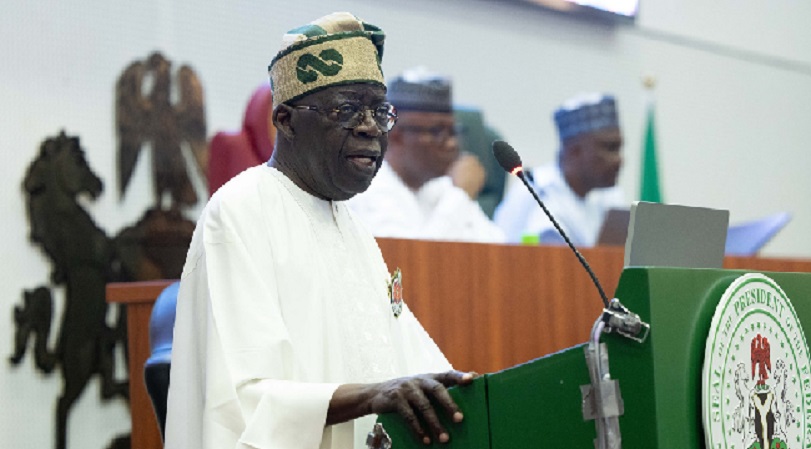
The capital component of the 2024 budget has again been extended by the Senate to December 31, 2025, from June 30, 2025.

This action was taken by the upper chamber of the National Assembly at its plenary on Tuesday, meaning the country is running two appropriation acts at the same time, as the 2025 budget is currently effective.

The Chairman of the Senate Committee on Appropriations, Mr Solomon Olamilekan Adeola, while presenting a bill titled A Bill for an Act to Amend the 2024 Appropriation Act to further extend the Capital Components of the Act from 30th June 2025 to 31st December 2025″ (SB. 854) today, asked his colleagues to extend the implementation of the previous year’s budget to allow sufficient time for procurement processes, disbursements, and actual project execution.

In his contribution, the Senate Chief Whip, Mr Mohammed Tahir Monguno, backed the extension but called for a review of the Finance Ministry’s “bottom-to-top” disbursement policy, arguing that it had introduced bureaucratic bottlenecks and red tape that stall effective budget execution.

On his part, Mr Abdul Ningi decried the repetitive nature of the problem, calling for a formal investigation by the Appropriations Committee to explain continued implementation failures.

A former Senate Leader, Mr Senator Yahaya Abdullahi, accused the Ministry of Finance and the Office of the Accountant-General of bottlenecking payments and stalling project execution even for contractors who had completed work.

“The credibility of this Government is getting very very down. Workers whose salaries have been increased, say we have given them 35 thousand Naira additional money and we have created a new minimum wage of N70,000 but nobody has seen anything.

“I think for the purpose of its own credibility this Government has to come and explain to Nigerians what is happening because now we are being taken for a ride,” he said, cautioning that continued mismanagement not only risks government credibility but also raises doubts over the federal government’s ability to fulfil its budgetary promises.

“The credibility of this government is getting down, he lamented. This budget should have been implemented and done by December 31, 2024, but right now, the activities of the Government are stalled. The system adopted for payment has woefully failed,” he said.

The Deputy Senate President, Mr Barau Jibrin, who presided over the plenary, confirmed that the Committees on Finance and Appropriations had engaged the Finance Minister and other stakeholders but hinted that the matter may now warrant direct engagement with President Bola Tinubu.

He, however, informed his colleagues that, “If the budget is not extended, projects will be abandoned. But we’re nearing the point where we may have to escalate this to the President himself.”

The bill passed through first, second, and third readings in a single session today under a suspended rule procedure. The lawmakers passed it unanimously by voice vote after clause-by-clause consideration.


Modupe Gbadeyanka is a fast-rising journalist with Business Post Nigeria. Her passion for journalism is amazing. She is willing to learn more with a view to becoming one of the best pen-pushers in Nigeria. Her role models are the duo of CNN's Richard Quest and Christiane Amanpour.

Click to comment

Leave a Reply

Your email address will not be published. Required fields are marked *

Economy

Nigeria Launches EMERGE to Unlock $750bn Mineral Wealth

Published

on

map of nigeria

By Adedapo Adesanya

Nigeria has launched the Early-Stage Mineral Exploration and Research Grant Endowment Program (EMERGE), a new initiative aimed at accelerating early-stage mineral exploration, strengthening geological research and advancing local value addition.

The programme is part of moves to unlock Nigeria’s $750 billion worth of untapped mineral deposits under broader efforts to diversify its economy beyond oil.

Nigeria has outlined plans to expand mineral exploration and production, identifying 44 strategic mineral deposits and is seeking developers with the requisite capital and technological expertise to invest.

The government has also sought to increase mining’s contribution to GDP to 10 per cent in 2026. However, unlocking these opportunities will require stronger geological data, greater technical capacity and increased investment in early-stage exploration.

The introduction of the EMERGE initiative aims to address these gaps. The programme is centred around three areas of focus: science-backed exploration, critical minerals development and research and development.

The exploration stream targets early-stage geological insights to generate reliable mineral data, the critical minerals stream targets minerals required for the energy transition, while the research and development stream integrates science and innovation across the value chain.

Driven by the Solid Minerals Development Fund, the programme is designed to position Nigeria as a major player in the global minerals value chain. It also builds on a rising wave of international partnerships aimed at modernising Nigeria’s exploration infrastructure through digitisation and enhanced capacity building.

Nigeria and Turkey formalised a partnership agreement in May 2026, aimed at strengthening cooperation in mining technology, exploration and investment.

Nigeria has also entered geological mapping and exploration cooperation agreements with South Sudan and South Africa, aimed at advancing geological and technical expertise while facilitating greater investment flows across the exploration sector.

Recent mineral ambitions are being backed by global finance. In March 2026, Nigeria secured $1.3 billion from the Africa Finance Corporation (AFC) to fund its mineral exploration programs as well as the construction of an alumina refinery, advancing its national mineral production and domestic beneficiation strategy.

Also, late last year, the federal government allocated over $600 million for geoscientific exploration and nationwide mapping, highlighting Nigeria’s commitment to de-risk the sector through access to modern geological data and accelerated exploration activities.

Continue Reading

Economy

Ellah Lakes Gets Equipment for Palm Kernel Oil Mill, Plans Cold Chain Facility for Piggery

Published

on

ellah lakes

By Aduragbemi Omiyale

To strengthen its integrated agribusiness platform, Ellah Lakes Plc has acquired the first set of expellers and presses for its Palm Kernel Oil (PKO) mill.

The company also plans to proceed with the installation of its abattoir and cold chain facility to support its longer-term strategy of scaling its piggery operations, improving processing capacity and enhancing market access for livestock products.

At the moment, Ellah Lakes has surpassed 1,000 pigs on its farm, reflecting continued progress in the scaling of its livestock operations, positioning the organisation as one of the leading piggery operators in Edo State and reinforcing livestock as an important vertical within its integrated agribusiness model, which supports revenue diversification and near-to-medium-term cash flow generation as the firm’s plantation assets continue to mature.

In a statement, the leading indigenous agribusiness organisation disclosed that the installation of the expellers and presses for its PKO mill should be completed by the end of Q3 2026, ahead of the commencement of the production of Palm Kernel Oil and Palm Kernel Cake (PKC).

It was noted that the addition of PKO and PKC production will enable Ellah Lakes to capture further value from its oil palm operations, expand its product base and deepen its participation across the agricultural value chain.

“These milestones reflect the continued execution of our strategy to build Ellah Lakes into a more integrated and commercially resilient agribusiness platform.

“The acquisition of equipment for our PKO Mill advances our move into higher-value processing, while the growth of our piggery operations strengthens an important cash-generating vertical within our business model,” the chief executive of Ellah Lakes, Mr Chuka Mordi, stated.

“As our plantation assets continue to mature, we are focused on expanding operating verticals that broaden our revenue base, improve value capture and support more consistent cash flow.

“Our priority is to complete key installations, scale production efficiently and build the infrastructure required to support sustainable long-term growth,” Mr Mordi added.

Continue Reading

Economy

Shrinking Access to Credit Worries MAN as Bank Lending Drops N1.92trn

Published

on

Local Meter Manufacturers

By Adedapo Adesanya

The Manufacturers of Nigeria (MAN) has warned that manufacturers are facing a disparity in access to structured credit, which is affecting the sector’s productivity.

In his analysis, the Director General of MAN, Mr Segun Ajayi-Kadir, explained that commercial bank credit to manufacturers declined by N1.92 trillion between December 2024 and December 2025 to N6.61 trillion from N8.53 trillion.

The figure, he said, represents a year-on-year contraction of 22.5 per cent, placing manufacturing among the sectors with the highest decline in credit access.

Mr Ajayi-Kadir said the development was troubling at a time when Nigeria requires increased investment in productive sectors to strengthen local production, reduce import dependence and create employment opportunities.

“Declining access to affordable finance is threatening factory expansion, employment and economic diversification, and government and regulators need to urgently reform industrial financing,” he said.

He noted that while manufacturing credit suffered a major decline, other sectors such as oil and gas and financial services continued to attract higher levels of bank financing, raising concerns about the allocation of capital towards productive activities.

The MAN DG blamed the worsening situation on a combination of high borrowing costs, restrictive monetary conditions, commercial banks’ risk-averse lending approach and delays in implementing targeted industrial support programmes.

He highlighted high interest rates as one of the biggest obstacles confronting businesses, noting that borrowing costs remain too expensive for long-term investments in factories, machinery upgrades and production expansion.

MAN stated that with lending rates reportedly above 30 per cent in many cases, manufacturers are finding it increasingly difficult to finance operations, maintain competitiveness and expand capacity.

The association also identified the high Cash Reserve Requirement (CRR) maintained by the Central Bank of Nigeria as another factor limiting the amount of funds available for lending to businesses.

According to MAN, commercial banks have become more cautious in extending credit because they bear the risks associated with intervention funds, leaving manufacturers unable to meet collateral and equity requirements demanded by lenders.

The association also cautioned that weakening domestic production could deepen inflationary pressures by increasing dependence on imported goods and putting additional pressure on foreign exchange reserves.

To reverse the trend, the MAN boss called for urgent measures, including the introduction of government-backed credit guarantees for small and medium-scale manufacturers.

Mr Ajayi-Kadir also urged the government to ensure the immediate implementation of the Manufacturing Stabilisation Fund and create a more direct financing structure capable of delivering single-digit interest loans to genuine manufacturers.

He said Nigeria’s industrial ambitions could only be achieved when manufacturers have access to affordable and sustainable financing.

The MAN boss warned that without a functional credit system supporting production, Nigeria’s goal of becoming a competitive manufacturing economy would remain difficult to achieve.

Continue Reading

Trending