Connect with us

Media OutReach

KGI: 2025 Mid-Year Market Outlook

Published

on

Navigating the New Normal

HONG KONG SAR – Media OutReach Newswire – 24 June 2025 – Today, KGI has released its 2025 Mid-Year Market Outlook.

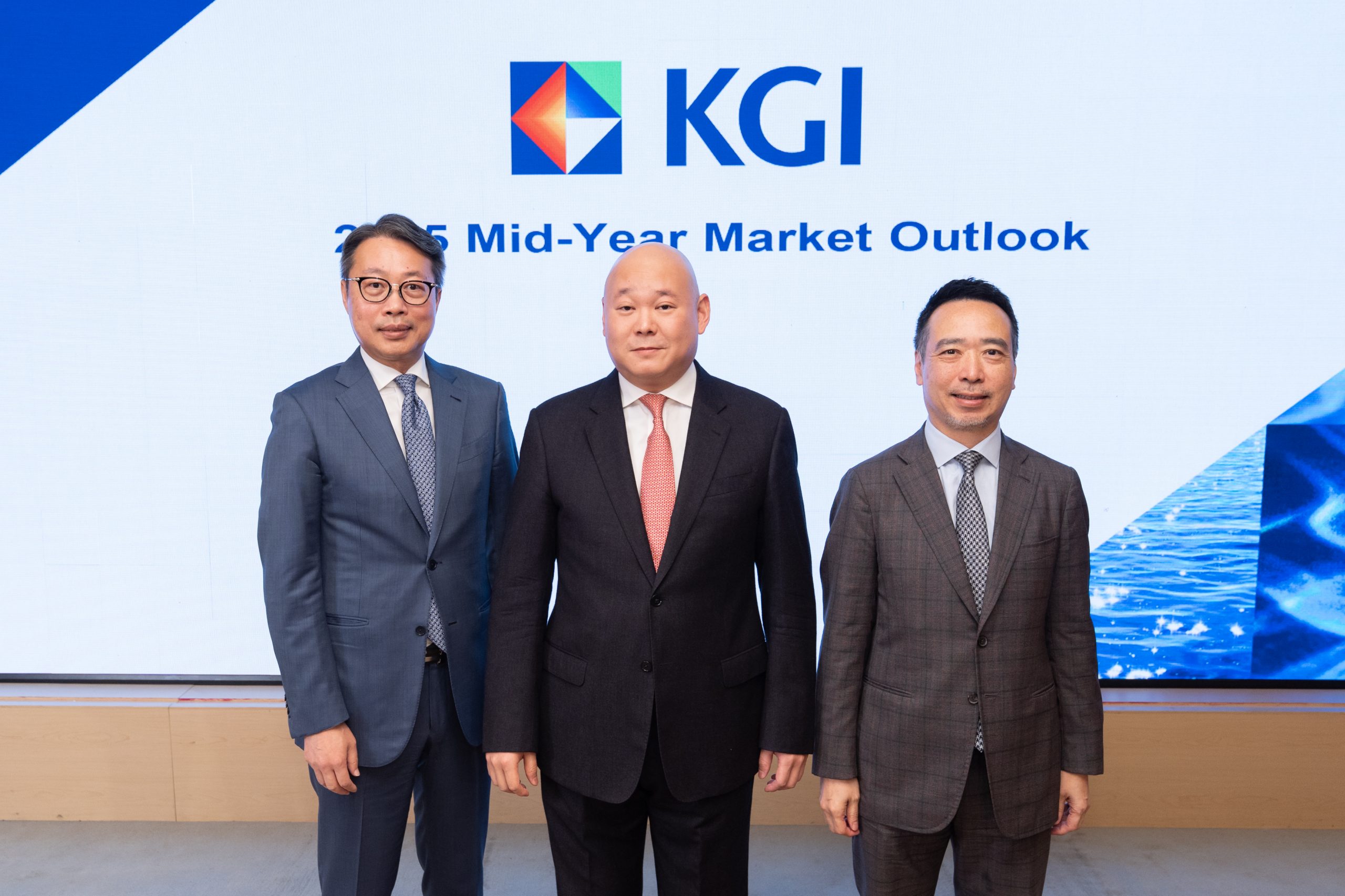
(From left) James Chu, Chairman at KGI Securities Investment Advisory; James Wey, Head of International Wealth Management at KGI; Cusson Leung, Chief Investment Officer at KGI

Looking back over the first half of the year, Trump officially took office as President of the United States and started a trade war. At one point, he even threatened to levy tariffs on China of more than 100%, triggering massive market fluctuations. Since then, many countries have entered negotiations with the U.S., and positive signals have emerged. How will the ongoing tariff war affect global economic development? How will the economic uncertainty created by Trump’s policies influence interest rate trends? How will China respond to the increasingly tense trade relationship? And how will China achieve economic growth targets amid external economic instability?

Under this backdrop, for the second half of the year, we maintain the “ACE” strategy:

  1. Alternatives: Gold and other alternative assets are expected to be inflation-resistant and have lower correlation with traditional stocks and bonds.
  2. Credit Selection: Maintain a preference for high-grade bonds, as the market still presents opportunities to lock in yields.
  3. Elite Stocks: Diversify investment in quality stocks, balancing the allocation between cyclical and defensive stocks.


Cusson Leung, Chief Investment Officer at KGI,
says: “In terms of asset allocation, considering the economic and political developments in the second half of the year, investors can continue to follow the ACE strategy: A is Alternatives. The fiscal conditions of multiple governments have sparked controversy, coupled with central banks diversifying asset allocations and geopolitical instability, which will be favorable to gold prices. C is Credit Selection. We expect downside risks to the economy, thus maintaining a preference for quality bonds. Corporate bonds will provide opportunities to lock in yields. E is Elite Stock. Tariff expectations are anticipated to impact corporate earnings; cyclical stocks and defensive stocks can be balanced in the allocation. Outside the United States, focus on countries with minimal tariff impact or those that have already reached agreements.”

Macro & U.S. Markets
In 2H2025, the global economy will enter a slowdown mode, particularly in emerging markets, with the slowdown being most pronounced in the United States among mature markets. In the first half of the year, U.S. companies stockpiled goods in anticipation of tariff wars, resulting in decent economic performance. However, this situation will not continue into the second half, with GDP growth rates potentially falling below 1%, averaging around 1.35% for the year. The slowdown in the Eurozone and the UK will be less pronounced than in the U.S., but the negative impacts of the trade war cannot be underestimated. The economic outlook for Japan and China is also bleak.

In the first half of the year, the U.S. economy shone due to strong demand, but this demand is expected to wane in the second half, leading to weaker economic data. The uncertainty of Trump’s policies affects consumer confidence and corporate orders, with labor market data showing a downward trend, further impacting wages and consumption.

The Fed may cut interest rates by 25 basis points in the fourth quarter of 2025 and continue to lower rates by 50 to 75 basis points in 2026. As for U.S. stocks, the likelihood of entering a bear market this year is low, but a decline is possible in the third quarter, with annual profit estimates dropping from 14.1% to below 9%. Investors are advised to focus on defensive and high-quality stocks to weather the economic downturn.

In terms of bond investments, the weakening U.S. economy is expected to drive bond yields lower, with Treasury yields projected to fall to 4.0%-4.3% from the latter half of the third quarter to the fourth quarter. It is recommended to invest in higher-quality investment-grade corporate bonds and consider transitioning to non-investment-grade corporate bonds when the economy hits bottom.

James Chu, Chairman at KGI Securities Investment Advisory, says: “The easing of the trade war has reduced the risk of a U.S. economic recession, but its uncertainty has already affected economic confidence and will put pressure on hard data in the future. The recent rise in the stock market has brought valuations back to high levels. Investors need to be aware of the expiration of the tariff suspension and the subsequent economic and corporate earnings revisions that could bring volatility.”

Mainland China and Hong Kong Markets
Since early 2025, China’s economy has shown marginal improvement amid multiple internal and external factors. In the trade sector, after reaching a 90-day short-term tariff exemption agreement with the United States, market expectations for the full-year GDP growth rate have risen from the initially announced “Liberation Day” figure of 4.2% to 4.5% following the preliminary agreement; on the other hand, although exports to the U.S. continue to shrink, exports to ASEAN and India have increased significantly, with exporters actively expanding multilateral markets to mitigate external shocks, and the proportion of China’s exports to the U.S. continues to decline. Against this backdrop of external challenges, the Chinese government’s four economic priorities include: (1) maintaining liquidity in the banking system, (2) boosting consumer confidence, (3) supporting innovation and technology to drive high value-added production strategies, and (4) expanding trade alliances beyond the U.S.

China-U.S. relations will continue to play out in a “periodic tension and relaxation” new normal. Facing U.S. escalating high-tech export controls, China is accelerating the strengthening of domestic supply chains, diversified trade strategies, and independent R&D to promote core technology autonomy and control. The continued growth of gold reserves highlights the value of this safe-haven asset in uncertain environments. Regarding the Hong Kong stock market, the Hang Seng Index has performed strongly since the beginning of the year, reflecting sustained overseas capital allocation to Chinese assets and rising risk appetite. Overall, in the second half of 2025, China’s economy will continue to recover driven by policy support, domestic demand rebound, and manufacturing transformation and upgrading. However, attention should remain on uncertainties such as China-U.S. friction, geopolitical issues, and international demand fluctuations.

Hang Seng Index target price in the second half of 2025 is 25,500 points
We previously set a target of 23,200 points for the first half of 2025, when the biggest downside risk was Trump’s tariff policies. Considering the above factors, we believe the Hong Kong stock market will reflect more positive factors in the second half, which is also reflected in the market’s upward revision of earnings per share estimates for the Hang Seng Index. We raise this year’s Hang Seng Index target price to 25,500 points, corresponding to an estimated price-earnings ratio of about 11 times, with potential growth of 6.3% in the second half (as of June 17, 2025), and a total annual increase of 27.5%. In terms of sectors, we are optimistic on industry, Internet, raw materials, telecommunications, healthcare and utilities, including 13 selected stocks.

Cusson Leung, Chief Investment Officer at KGI, says: “Overall, in the second half of 2025, China’s economy will continue to recover driven by policy support, domestic demand rebound, and manufacturing transformation and upgrading. However, attention should remain on uncertainties such as China-U.S. friction, geopolitical issues, and international demand fluctuations. The Hang Seng Index year end target is at 25,500 points, with a positive outlook on 6 sectors and 13 stock picks.”

Taiwan Market
Trump’s erratic tariff policies have caused significant volatility in the Taiwan stock market during the first half of the year. However, with the recent easing of the trade war and stable short-term AI demand, the Taiwan stock market has seen some recovery. Looking ahead, we believe the negative impact of the trade war will gradually become evident, potentially leading to downward adjustments in the Taiwan stock market before the third quarter. Nonetheless, a moderate correction could help stabilize the market in the fourth quarter. Despite the temporary agreement between the U.S. and China, high tariffs continue to affect economic growth and inflation pressures. Given the close economic ties between Taiwan and the U.S., tariff impacts could lower Taiwan stock market profits. If adverse factors can be absorbed in the third quarter, the market is likely to stabilize in the fourth quarter, with AI demand remaining a crucial support for the Taiwan stock market.

James Chu, Chairman at KGI Securities Investment Advisory, says: “The demand for AI in the short term remains stable, supporting a continued rebound in the stock market. However, the trade war and exchange rate impacts have increased the uncertainty of corporate earnings. Early stockpiling has made the normally slow season in the first half of the year less sluggish for the Taiwanese stock market, but it may lead to a less prosperous peak season in the second half of the year.”

Singapore Market
In 2H25, Singapore’s economy is expected to experience cautious growth due to global trade uncertainties and a challenging external environment. While sectors like wholesale trade, manufacturing, finance, and insurance provide some support, geopolitical tensions and protectionism weigh on sentiment. Inflation remains manageable, but the labor market shows signs of strain. Trade activity, boosted recently by tariff suspensions, is expected to moderate.

Looking ahead, growth is influenced by external factors such as U.S. trade policies and China’s recovery. The government has revised growth expectations downward, but strengths in electronics and financial services persist. Strategic investments in AI, digitalization, and green technologies aim to future-proof the economy. Risks remain from potential trade conflicts and weakening global demand. Domestic measures to boost innovation and stabilize the property market are anticipated to support growth, though challenges for businesses and households may arise. Overall, Singapore’s economy is positioned to remain steady with limited near-term upside.

Chen Guangzhi, Head of Research at KGI Singapore, says: “Amid increasing global macroeconomic uncertainties, Singapore will further underscore its strengths in political and economic stability. Therefore, we remain cautiously upbeat about the outlook in 2H25.”

Hashtag: #KGI #MarketOutlook


Wechat: KGI 凯基

The issuer is solely responsible for the content of this announcement.

About KGI

KGI*has been a leading financial institution in Asia since 1997. Our scope of business encompasses wealth management, brokerage, fixed income, and asset management. We are committed to offering a comprehensive range of financial products and services to corporate, institutional, and individual clients throughout Asia. Backed by KGI Financial Group, we have a robust footprint in Asia, covering Taiwan, Hong Kong, Singapore, Indonesia, and Thailand^.

*KGI refers to KGI Asia Limited and its affiliates.
^an investee enterprise of KGI Securities, not a subsidiary.

Advertisement

Media OutReach

MIMO: The AI-Native Storage Species Enables Desktop Scale AI Clusters With NVIDIA DGX Spark

Published

on

  • Engineered for the AI era, MIMO delivers breakthrough metrics: 400 GB/s bandwidth, 54 million IOPS, and 40–90 μs latency—all within a form factor comparable to a large suitcase.
  • MIMO serves as both a high-performance data hub for large-scale GPU clusters and a flexible edge deployment platform, extending seamlessly to desktop environments where it orchestrates workflows with various DGX Spark units based on NVIDIA’s GB10 Grace Blackwell superchip.
  • This architecture enables independent AI clusters supporting up to 16 computing nodes within constrained environments, managing the complete workflow from large-scale pre-training and fine-tuning to production inference—effectively democratizing enterprise-grade AI capabilities for labs, edge sites, and distributed teams.

SINGAPORE –

Professor Zhang Sheng from Tsinghua University Shenzhen International Graduate School expressed a more pragmatic view: “With this solution, we finally no longer have to rely on the university’s data center. Our current annual budget alone is enough to deploy an AI cluster within our lab that better fits our needs—this will significantly boost our research efficiency both technically and operationally. It’s truly fantastic news.”

Asia Debut Marks Industry Inflection Point

Earlier at the 8th China International Import Expo (CIIE), the solution’s core—the world’s first AI-native storage system MIMO—made its strategic Asian debut. Engineered for the AI era, MIMO delivers breakthrough metrics: 400 GB/s bandwidth, 54 million IOPS, and 40–90 μs latency—all within a form factor comparable to a large suitcase.

The platform’s defining Fast-Light-Edge proposition, delivered through its breakthrough architecture, cut through the exhibition noise, generating immediate and widespread attention. MIMO earned exclusive features in top-tier media including Hong Kong Ta Kung Pao and China Securities Journal, while its product demonstration videos gained rapid traction across leading digital channels.

Addressing Foundational Challenges: Technical Dialogues That Matter

During the exhibitions, technical leaders from the United States, Spain, Singapore, Colombia, the UAE (Dubai), India, Pakistan, and Hong Kong SAR engaged in substantive dialogues with Ridger’s Asia team, raising questions that revealed systemic industry gaps:

Architectural Transformation & Strategic Positioning
“Can MIMO fundamentally replace legacy storage architectures—traditional NAS, unified, distributed, and parallel file systems—to deliver accelerated parallel training and high-concurrency inference?”
“With such exceptional performance, would deploying MIMO for traditional enterprise applications represent strategic overinvestment or forward-looking infrastructure?”

Mobile Deployment & Borderless Operations
“MIMO’s suitcase-sized footprint suggests unprecedented mobility. Can it truly accompany research teams globally like standard equipment? How does it maintain operational continuity across jurisdictions? What’s the customs protocol for such ‘technical luggage’?”

Seamless Integration & Global Accessibility
“In scenarios with unnetworked AI servers, can MIMO rapidly establish dedicated training environments with true plug-and-play functionality?”
“Does MIMO integrate transparently with existing AI infrastructure and software stacks without requiring modifications?”
“Beyond Asia-Pacific, what’s the procurement pathway for MIMO? Which currencies and payment methods are accommodated?”

Architectural Breakthrough: Redefining What’s Possible

Addressing these operational realities, Ridger demonstrated MIMO’s system-level value—transcending its role as a storage device to become an architectural cornerstone. MIMO serves as both a high-performance data hub for large-scale GPU clusters and a flexible edge deployment platform, extending seamlessly to desktop environments where it orchestrates workflows with various DGX Spark units based on NVIDIA’s GB10 Grace Blackwell superchip.

Notably, eight global OEM partners—including Dell, HPE, Lenovo, xFusion, H3C, MSI, GIGABYTE, and Acer—have concurrently launched Spark versions based on NVIDIA’s GB10 Grace Blackwell superchip, creating a robust compatibility foundation for MIMO’s ecosystem integration.

This architecture enables independent AI clusters supporting up to 16 computing nodes within constrained environments, managing the complete workflow from large-scale pre-training and fine-tuning to production inference—effectively democratizing enterprise-grade AI capabilities for labs, edge sites, and distributed teams.

As Zhu Ting, an industry observer from Beijing, noted: “This represents the ‘IBM PC moment’ for AI infrastructure—transforming specialized capability into accessible utility.”

Market Validation Through Early Adoption

Market response has been decisive. Following the exhibitions, pioneering organizations across pathological image foundation model development, legal-tech innovation, industrial visual inspection, and naked-eye 3D content production have joined Ridger’s Early Access program, validating the architecture’s transformative potential in real-world operational contexts.

Global Rollout: Accelerating Accessibility

Responding to accelerating global demand, Ridger confirmed the imminent launch of the complete MIMO portfolio and optimized solution bundles for specific DGX Spark configurations through the Ridger Official Global Store. Designed as a frictionless procurement channel, the platform will support diverse payment options including multiple fiat currencies and cryptocurrencies—streamlining access to advanced AI infrastructure.

Organizations seeking deeper understanding of MIMO and its integrated lightweight AI solution with DGX Spark are invited to connect with Ridger team or its strategic partner, NVIDIA Elite Solution Partner SinoInfo.
Hashtag: #Technology #ESG #AI #GPU #Enterprise #Finance #Storage #Flash #Compute #DGX-Spark #NVIDIA #AI-Lab #GDS #NAS #AI-Native


The issuer is solely responsible for the content of this announcement.

Ridger

Ridger is a global technology pioneer building next-generation computing & storage infrastructure for the AI era. Born in the East and operating worldwide, Ridger challenges conventional paths to create new technological paradigms.

The team unites seasoned experts from global storage leaders with visionary AI architects, all driven by a shared mission to democratize cutting-edge technology, rejects incremental improvements and hollow prestige, focusing exclusively on foundational breakthroughs that deliver tangible value and sustainable impact.

From architecture to implementation and from service to empowerment, Ridger provides end-to-end solutions that help clients worldwide ascend to their highest summits.

Continue Reading

Media OutReach

Johnson & Johnson and Asia Pacific Patient Advocacy Group Leaders Unite to Strengthen Shared Decision-Making in Lung Cancer Care

Published

on

Patient survey finds that those engaged in shared decision-making were 11 times more likely to report higher satisfaction with their treatments, with 90% of lung cancer patients in Japan wanting to play an active role in their treatment decisions[1]

J&J deepens its commitment to patient empowerment in Asia Pacific by launching J&J withMe, a new patient portal offering tailored patient resources, and co-driving market-specific initiatives with patient advocacy groups

SINGAPORE – Media OutReach Newswire – 11 December 2025 – Johnson & Johnson announced the next phase of The 3rd Opinion campaign across Asia Pacific, focused on championing shared decision-making between lung cancer patients and healthcare professionals through events and stakeholder engagements at ESMO Asia 2025 in Singapore.

At a Patient Reception on 6th December 2025, 20 leaders from 17 patient advocacy groups from across Asia Pacific, Europe and the United States shared their support for the need to strengthen shared decision-making. On December 7, 2025, the ESMO Asia 2025 Symposium, ‘Advancing EGFRm NSCLC Treatment Through Shared Decision-Making’ highlighted the role of healthcare professionals not only in making sense of the data but also in helping patients and their families navigate complex decision-making.

“High prevalence in Asia of certain NSCLC mutations makes the choice of first-line therapy absolutely critical. Treatment decisions must balance clinical objectives with patient values — weighing disease biology, survival prospects, durable disease control and the tradeoffs of side effects. That’s why shared decision-making is essential: clinicians should present all appropriate treatment options, so the final choice is collaborative and aligned with each patient’s goals,” said Professor Zhu Zhengfei, Director of the Radiation Oncology Department, Fudan University Shanghai Cancer Center.

“When lung cancer patients are empowered to speak up and understand their options, they are more likely to continue the treatment and their dignity is preserved. Initiatives like ‘The 3rd Opinion’ are vital for fostering truly patient-centered partnerships between people living with cancer and their healthcare teams,” noted Ms. Liu Yiting, Marketing & Branding Director, China MeetHealth Mi-Jian Patient Community.

“The shared commitment validates what many people living with lung cancer have long expressed: shared decision making is essential. From our experience supporting patients, meaningful conversations with clinicians help acknowledge patients’ experiences, address their concerns, and preserving their hopes,” added Mr. Jung-Il Cho, Chairman of Korea Lung Cancer Patients Association.

Our commitment comes off the back of a recent patient survey revealing that 90% of Japanese lung cancer patients want to play an active role in their treatment decisions. The survey also found that shared decision-making, where physicians and patients jointly compare treatment options and decide together, is the strongest driver of treatment satisfaction.1

Patient survey finds that those engaged in shared decision-making were 11 times more likely to report higher satisfaction with their treatments, with 90% of lung cancer patients in Japan wanting to play an active role in their treatment decisions. This finding underscores the importance of shared decision-making and patient-centered care.1

To bridge the gap between patients’ desire to engage in shared decision making and their lack of practical support, J&J has launched “J&J withMe”, an online hub that equips lung cancer patients and caregivers with tailored toolkits and conversation guides to prepare for consultations and make informed, personalized treatment decisions.

Anthony Elgamal, Vice President of Oncology, Johnson & Johnson Innovative Medicine Asia Pacific said, The 3rd Opinion truly puts patients at the center of care. As part of our deep commitment to address patients’ unmet needs, we will continue partnering with patient advocacy groups and healthcare professionals to help patients to find their voice and the moment when medical advice meets what truly matters to patients.”

图像 (3)

In recognition of diverse cultural and clinical norms across Asia Pacific, J&J has also rolled out tailored market activations in collaboration with local patient advocacy groups:

  • Provision of patient resources such as the “Lung Cancer Book of Answers” in China, ‘Value of Time’ video for patients in Japan, and educational assets in India and Australia/New Zealand;
  • Digital and social media engagement featuring patients and creators discussing the importance of shared decision-making across Singapore, Malaysia, Philippines, Thailand, and Vietnam;
  • Event engagement via the establishment of a patient advisory board in India;
  • Corporate Social Responsibility program with a lung cancer patient group in Korea, bringing employees and patients together to better understand the disease burden of patients and strengthen emotional support for the patient community.

###

About the 3rd Opinion

“The 3rd Opinion”, the patient’s own opinion, is a new term that sparks a social movement in the lung cancer treatment journey – designed to elevate the patient voice and empower individuals to take an active role in shaping their treatment plan. By prioritizing shared decision-making between patients and healthcare professionals, this collaborative approach ensures that treatment choices are aligned to each patient’s goals, preferences and circumstances. This results in more informed decisions, greater patient satisfaction, and the best possible outcomes.

About Non-Small Cell Lung Cancer

Worldwide, lung cancer is one of the most common cancers, with NSCLC making up 80 to 85 percent of all lung cancer cases.[1], [2] The main subtypes of NSCLC are adenocarcinoma, squamous cell carcinoma, and large cell carcinoma.[3] Among the most common driver mutations in NSCLC are alterations in EGFR, which is a receptor tyrosine kinase controlling cell growth and division.[4] EGFR mutations are present in 10 to 15 percent of Western patients with NSCLC with adenocarcinoma histology and occur in 40 to 50 percent of Asian patients.[5], [6],[7],[8],[9],[10] EGFR ex19del or EGFR L858R mutations are the most common EGFR mutations.[11] The five-year survival rate for all people with advanced NSCLC and EGFR mutations treated with EGFR tyrosine kinase inhibitors (TKIs) is less than 20 percent.[12],[13] EGFR exon 20 insertion mutations are the third most prevalent activating EGFR mutation.[14] Patients with EGFR exon 20 insertion mutations have a real-world five-year overall survival (OS) of eight percent in the frontline setting, which is worse than patients with EGFR ex19del or L858R mutations, who have a real-world five-year OS of 19 percent.[15]By comparison, other common cancers, such as breast and prostate cancer have a 5-year real world OS of 90% and 97% respectively[16].


[1] Johnson & Johnson lung cancer patient quantitative survey conducted in Japan, 2025

[2] The World Health Organization. Cancer. https://www.who.int/news-room/fact-sheets/detail/cancer. Accessed March 2025.

[3] American Cancer Society. What is Lung Cancer? https://www.cancer.org/content/cancer/en/cancer/lung-cancer/about/what-is.html. Accessed March 2025.

[4] Oxnard JR, et al. Natural history and molecular characteristics of lung cancers harboring EGFR exon 20 insertions. J Thorac Oncol. 2013 Feb;8(2):179-84. doi: 10.1097/JTO.0b013e3182779d18.

[5] Bauml JM, et al. Underdiagnosis of EGFR Exon 20 Insertion Mutation Variants: Estimates from NGS-based Real World Datasets. Abstract presented at: World Conference on Lung Cancer Annual Meeting; January 29, 2021; Singapore.

[6] The World Health Organization. Cancer. https://www.who.int/news-room/fact-sheets/detail/cancer. Accessed March 2025.

[7] American Cancer Society. What is Lung Cancer? https://www.cancer.org/content/cancer/en/cancer/lung-cancer/about/what-is.html. Accessed March 2025.

[8] Pennell NA, et al. A phase II trial of adjuvant erlotinib in patients with resected epidermal growth factor receptor-mutant non-small cell lung cancer. J Clin Oncol. 37:97-104.

[9] Burnett H, et al. Epidemiological and clinical burden of EGFR exon 20 insertion in advanced non-small cell lung cancer: a systematic literature review. Abstract presented at: World Conference on Lung Cancer Annual Meeting; January 29, 2021; Singapore.

[10] Zhang YL, et al. The prevalence of EGFR mutation in patients with non-small cell lung cancer: a systematic review and meta-analysis. Oncotarget. 2016;7(48):78985-78993.

[11] Midha A, et al. EGFR mutation incidence in non-small-cell lung cancer of adenocarcinoma histology: a systematic review and global map by ethnicity. Am J Cancer Res. 2015;5(9):2892-2911.

[12] American Lung Association. EGFR and Lung Cancer. https://www.lung.org/lung-health-diseases/lung-disease-lookup/lung-cancer/symptoms-diagnosis/biomarker-testing/egfr. Accessed March 2025.

[13] Howlader N, et al. SEER Cancer Statistics Review, 1975-2016, National Cancer Institute. Bethesda, MD, https://seer.cancer.gov/csr/1975_2016/, based on November 2018 SEER data submission, posted to the SEER web site.

[14] Lin JJ, et al. Five-Year Survival in EGFR-Mutant Metastatic Lung Adenocarcinoma Treated with EGFR-TKIs. J Thorac Oncol. 2016 Apr;11(4):556-65

[15] Arcila, M. et al. EGFR exon 20 insertion mutations in lung adenocarcinomas: prevalence, molecular heterogeneity, and clinicopathologic characteristics. Mol Cancer Ther. 2013 Feb; 12(2):220-9.

[16] Girard N, et al. Comparative clinical outcomes for patients with NSCLC harboring EGFR exon 20 insertion mutations and common EGFR mutations. Abstract presented at: World Conference on Lung Cancer Annual Meeting; January 29, 2021; Singapore.

[17] Surveillance, Epidemiology, and End Results (SEER) Program, National Cancer Institute, 2024.

Hashtag: #Johnson&Johnson

The issuer is solely responsible for the content of this announcement.

About Johnson & Johnson

At Johnson & Johnson, we believe health is everything. Our strength in healthcare innovation empowers us to build a world where complex diseases are prevented, treated, and cured, where treatments are smarter and less invasive, and solutions are personal. Through our expertise in Innovative Medicine and MedTech, we are uniquely positioned to innovate across the full spectrum of healthcare solutions today to deliver the breakthroughs of tomorrow, and profoundly impact health for humanity.

Learn more at or at . Follow us at .

Johnson & Johnson Innovative Medicine Asia Pacific, a division of Johnson & Johnson International (Singapore) Pte. Ltd is a Johnson & Johnson company.

© Johnson & Johnson International (Singapore) Pte. Ltd. [2025] All rights reserved.

Continue Reading

Media OutReach

Skychakra Global Capital Strategy Upgrade: Advancing Cross-Border Listings and RWA Ecosystem

Published

on

HONG KONG SAR – Media OutReach Newswire – 11 December 2025 – Skychakra Group recently held a grand inauguration ceremony at the Hong Kong International Center, announcing the official acceleration of its globalization strategy. With a mission to “enhance individual energy, empower enterprise growth, and promote asset capitalization,” Skychakra simultaneously launched three major international initiatives: a cross-border listing incubation system, an RWA (Real World Assets) technology ecosystem, and the international upgrade of mind-body energy science, building a new economic ecosystem that spans technology, industry, and capital.

As a global hub for innovation and capital, Hong Kong serves as a significant gateway for the activation of Skychakra’s global strategy. This inauguration not only symbolizes the completion of the facility but also marks the comprehensive rollout of Skychakra’s international layout.

Official Launch of Cross-Border Listing Incubation Center

During the inauguration, Skychakra announced the establishment of a cross-border listing incubation center, led by a professional team qualified with SEC, PCAOB, and FINRA credentials, boasting over a hundred projects in cross-border listings. The service scope includes U.S. stocks, Hong Kong stocks, and SPACs. Unlike traditional investment banks and financial advisors, Skychakra offers a “full-link” service for enterprise capitalization, encompassing red-chip structure setup, financial and audit compliance, SEC and Hong Kong Stock Exchange filing guidance, dual-path IPO/SPAC design, market value management, enterprise internationalization guidance, and digital upgrades.

Originally planning to sign contracts for four companies at the conference, Skychakra exceeded expectations by signing 12, demonstrating its strong appeal and industry influence in cross-border listings and capital operations.

RWA Technology Ecosystem: Making Enterprise Assets Visible to the Financial System

Real World Assets (RWA) are becoming the core of global financial transformation. From BlackRock’s launch of tokenized funds to Hong Kong and Singapore incorporating RWA into financial infrastructure, RWAs are transitioning from concept to large-scale implementation. Skychakra emphasizes that small and medium-sized enterprises face common challenges such as lack of recognition for their assets within the financial system, difficulties in cross-border financing, and a lack of transparency in asset value.

The Skychakra RWA ecosystem will provide enterprises with: tokenizable asset identification, asset structuring and entitlement, on-chain mapping and minting, cross-border compliance design, global issuance and liquidity channels, and on-chain risk control and transparent tracking. The core value of RWA lies in reducing friction for enterprises in connecting to global capital, enhancing asset liquidity and valuation potential.

A Holistic Growth Model: “From People to Enterprises, From Enterprises to Capital”

Skychakra’s differentiated advantage stems from its foundational logic of “starting with people.” The Skychakra energy courses utilize scientific equipment to measure energy fields, emotional frequencies, and meridian states, assisting individuals in enhancing stability, insight, and decision-making abilities.

Based on this foundation, Skychakra constructs three major systems:

1. Enterprise Growth System: Enhancing organizational capabilities, introducing international business, and providing capital operation guidance.

2. Capitalization System: Building global financing capabilities through listings and RWA structures.

3. Asset Digitalization System: Making enterprise value quantifiable, verifiable, and tradable.

These three systems dynamically interact in a spiral structure, forming Skychakra’s unique full-link growth ecosystem.

Conclusion: Global Layout for Greater International Influence

The inauguration of Skychakra’s Hong Kong International Center signifies the official implementation of the group’s globalization strategy. Looking forward, the focus will be on Hong Kong as the core, with Asia as the main axis, while establishing deep collaborations with the North American and Middle Eastern markets. Through this global layout, Skychakra is creating a new organizational model that transcends regions, industries, and capital, enabling enterprises to achieve value flow in the global market and allowing more Asian companies to gain a stronger voice on the international stage.

Hashtag: #Skychakra

The issuer is solely responsible for the content of this announcement.

Continue Reading

Trending