Connect with us

Health

Why We Are Hopeful About Improving Health In Africa

Published

on

By Aliko Dangote and Bill Gates

This week, more than 138,000 vaccinators will fan out across five African countries in the Lake Chad area in a push to eliminate polio in Africa and rid the world of this terrible disease forever.

They will take boats across fast-flowing rivers, ride jeeps along sandy ravines, walk crowded street in towns and cities and navigate cramped quarters of refugee camps to ensure that every child is immunized.

Traveling for hours a day, these dedicated women and men will visit children in homes, schools, train stations, and transit points across Nigeria, Niger, Chad, Cameroon, and the Central African Republic.

This also marks World Immunization Week, a coordinated effort to make sure that people everywhere understand the importance of getting immunized to protect against vaccine-preventable diseases.

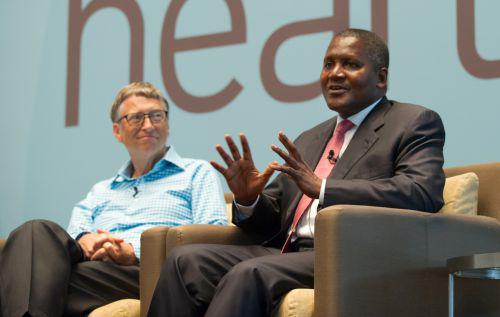
And by coincidence, it was almost seven years ago that the two of us first met in a hotel conference room in Abuja, Nigeria’s capital. We were there as part of a diverse group—public officials, religious leaders, business people, polio survivors, and journalists—to discuss how we could work together to stop polio in Nigeria.

At the time, Nigeria had done an amazing job tackling polio—reducing reported cases by 95 percent in just one year. But it was still circulating in six Nigerian states. While 95 percent might seem like success, as long as a single child remains infected, children across Africa and around the world are at risk.

Thanks to the effort of so many, Nigeria’s Borno State is now the only place in Africa today where polio is still circulating. It will take ingenuity to end polio there, and it will take persistence to continue reaching children in the surrounding area with vaccines to protect them from the disease until it is eradicated. But we’re confident it can be done. And when that happens, Africa will celebrate one of the biggest victories ever in public health.

Since our first meeting in 2010, the two of us have worked together on a range of other projects to help improve health in Nigeria and across Africa.

We supported the establishment of emergency operations centers in Nigeria and other countries to keep polio from spreading. This turned out to be a blessing during the 2014 Ebola outbreak in West Africa. When the disease first appeared in Nigeria—an international travel hub that is home to more than 180 million people—the staff of an emergency operations center set up in Lagos jumped into action and stopped the disease in its tracks. It’s almost unimaginable to think what would have happened without them.

In the state of Kano, we are working with the government to ensure that children can get essential childhood immunizations against tetanus, pneumonia, liver cancer and measles. And when parents bring their children into a clinic for vaccinations, health workers can address other health issues, too, like nutrition, care for pregnant mothers and newborns and malaria prevention and treatment. We have since widened the program to several other states.

Vaccines are also one of the best tools to save lives in an epidemic, such as the meningitis C outbreak happening now in Nigeria and other West African countries.

And because of the devastating impact malnutrition has on Nigeria’s children –  leading to 300,000 deaths annually and causing stunted growth and development in millions more – we have expanded our partnership to include nutrition programs across 12 states.

Earlier this year, we also helped launch the End Malaria Council, a group of influential public and private sector leaders committed to ensuring that malaria eradication remains a top global priority.

Underlying all these efforts is our belief that strengthening health systems is the key to breaking the cycle of extreme poverty and disease—and kick-starting a virtuous cycle of health, productivity, and prosperity.

In our work together, we have learned a few important lessons.

First, improving the health of communities depends on a successful partnership between government, communities, religious and business leaders, volunteers, and NGOs. This ensures that everyone is rowing in the same direction. And it is essential to building trust so parents have the confidence that vaccines are safe and will protect their children from life-threatening diseases.

Second, we must keep innovating to speed up progress. This month, for example, vaccinators will test a new vaccine carrier that keeps the temperature of vaccines stable for up to five days, even in blistering heat. This breakthrough will enable vaccinators to finally reach children in extremely remote areas with life-saving vaccines.

Last, accurate and reliable data is central to any effort to improve health. Data can tell a health officer which communities are running low on vaccine supplies, where there are gaps in vaccination coverage, and which new mothers need reminders to take their babies to the health clinic to be immunized.

An Africa without polio is within reach. So is the vision of getting life-saving vaccines to every child. Success will generate more enthusiasm and support from across different sectors – government, business, civil society, the media – to tackle other killer diseases and the underlying conditions that affect people’s health, including fixing broken health systems.

We know that strengthening health systems takes time and diligence. We are optimistic that Africa can achieve the future it aspires to. That future depends on people working together—across national borders and across socioeconomic strata—to build the better world we all want.

This is an opinion piece by Aliko Dangote and Bill Gates

Modupe Gbadeyanka is a fast-rising journalist with Business Post Nigeria. Her passion for journalism is amazing. She is willing to learn more with a view to becoming one of the best pen-pushers in Nigeria. Her role models are the duo of CNN's Richard Quest and Christiane Amanpour.

Advertisement
Click to comment

Leave a Reply

Your email address will not be published. Required fields are marked *

Health

Nigeria Launches First National Antimicrobial Resistance Survey

Published

on

Antimicrobial Resistance Survey

By Adedapo Adesanya

Nigeria has launched its first nationally representative survey on antimicrobial resistance to generate critical data to guide evidence-based policies, improve patient outcomes, and strengthen health system resilience.

Antimicrobial resistance occurs when bacteria, viruses, fungi, and parasites evolve to resist treatment, making infections harder to cure.

As a result, surveillance is essential to track resistance patterns, identify priority pathogens, and guide targeted interventions and with support from the World Health Organization (WHO) and other partners, the initiative marks a milestone in the country’s public health response.

Nigeria becomes the third country globally to partner with WHO on a national antimicrobial resistance survey. having been selected based on the country’s strong commitment to AMR surveillance, its updated WHO Nigeria NAP 2.0, and readiness to expand laboratory and data systems.

Africa’s most populous country ranks 20th globally for age-standardized mortality due to antimicrobial resistance . In 2019, an estimated 263,400 deaths in Nigeria were linked to  it—more than the combined deaths from enteric infections, tuberculosis, respiratory infections, maternal and neonatal disorders, neglected tropical diseases, malaria, and cardiovascular diseases.

Globally, resistant infections in tertiary care settings cost between $2,371 and $29,289 per patient episode, extend hospital stays by an average of 7.4 days, and increase mortality risk by 84 per cent.

The survey will see the establishment of a national baseline on antimicrobial resistance prevalence to monitor interventions, assess the distribution, burden (morbidity, mortality, DALYs, cost), and diversity of AMR across regions and populations, as well as contribute to the global target of reducing AMR deaths by 10 per cent by 2030, in line with the political declaration endorsed at the 79th United Nations General Assembly in 2024.

It also seeks to strengthen routine antimicrobial resistance surveillance, including diagnostics, sample referral systems, and laboratory capacity.

Using WHO’s standardized methodology, the survey will run for 12–15 months and cover 40–45 randomly selected health facilities nationwide. Patients with suspected bloodstream infections (BSIs) will be identified using standard case definitions, and blood samples will be analysed in quality-assured laboratories.

Data will be collected across all age groups, covering clinical, demographic, laboratory, financial, and outcome indicators. Follow-up will occur at discharge, 28 days, and three months post-infection. The survey will sample approximately 35,000 patients suspected of BSIs to obtain around 800 isolates of the most common pathogens.

Dr Tochi Okwor, Acting Head, Disease Prevention and Health Promotion, Nigeria Centre for Disease Control and Prevention (NCDC) said, “With WHO’s support, we are confident the survey will generate the evidence needed to protect public health.”

WHO Representative in Nigeria, Dr Pavel Ursu, reaffirmed WHO’s commitment stating that ,“Nigeria is taking a decisive step toward combating AMR with an approach grounded in data, science, and measurable impact. This survey will provide the clarity needed to drive smarter policies, stronger surveillance, and better patient outcomes. Nigeria is laying the foundations for a resilient health system, one that protects lives, strengthens trust, and ensures that essential medicines remain effective for future generations.”

Adding her input, Dr Laetitia Gahimbare, Technical Officer at WHO Regional Office for Africa, added:“Strengthening surveillance enhances Nigeria’s capacity to detect and respond to AMR threats, supporting better patient outcomes, reinforcing health security, and building a resilient system.”

Professor Babatunde Ogunbosi, Paediatric Infectious Diseases Specialist at University College Hospital, Ibadan, highlighted the broader impact:, “This survey is about more than data. It’s about building national capacity for research, diagnostics, and policy. It integrates science into public health decision-making.”

Continue Reading

Health

Our Vision Extends Beyond Offering Health Insurance Packages—SUNU Health

Published

on

SUNU Health walk

By Modupe Gbadeyanka

One of the leading Health Maintenance Organisations (HMOs) in Nigeria, SUNU Health, has said its philosophy is proactive wellness, noting that this was why it recently partnered with The Divine Physician and St. Luke Catholic Chaplaincy Centre for a community health initiative.

The chief executive of the company, Dr Patrick Korie, said, “SUNU Health’s vision extends far beyond merely offering health packages and insurance.”

“We are fundamentally interested in proactive wellness—preventing illness rather than just treating it. This annual exercise is a crucial part of that commitment, and we will continue to champion it for as long as we exist,” he stressed.

The medical practitioner led the company’s annual Health Walk in Lagos on Saturday, November 8, 2025. The event drew hundreds of health enthusiasts, including the Chaplain of the centre, Rev Fr. John Okoria SJ.

His active participation reinforced the spiritual and moral commitment to holistic well-being, proving crucial in mobilizing staff and community members, thereby ensuring the vital wellness message reached a broad and deeply engaged audience.

The health walk covered several major streets in Lagos, starting from Ishaga Road and navigating through Itire Road, Randle Avenue, Akerele, Ogunlana Drive, and Workers Street before concluding back at the starting point. Following the vigorous walk, participants engaged in a session of high-energy aerobics and other outdoor exercises, reinforcing the day’s focus on fitness.

“We are delighted to champion this vital health initiative alongside the Catholic Chaplaincy Centre LUTH/CMUL. The turnout was truly delightful, reflecting the community’s deep desire to embrace wellness.

“Collaborations like this amplify our message and commitment to the Nigerian community,” the Brand and Corporate Communications Lead at SUNU Health, Mr Samuel Olayemi, stated.

Continue Reading

Health

80 Coronation Registrars Staff Donate Blood in Lagos CSR Initiative

Published

on

blood donation

By Adedapo Adesanya

Coronation Registrars Limited, a subsidiary of Coronation Group, in partnership with the Lagos State Blood Transfusion Committee (LSBTC), recently hosted a Blood Drive Initiative at the 5th floor of Coronation Group Plaza. The event saw over 80 staff donate blood to support critical healthcare needs in Lagos State.

The Blood Drive Initiative forms part of Coronation’s commitment to meaningful, human-centred corporate social responsibility, a direct, measurable, and life-saving effort that reflects the Group’s health and sustainability values.

As Prosperity Partners dedicated to creating sustainable wealth for clients and the African continent, Coronation recognises that true prosperity extends beyond financial returns to encompass the well-being of communities we serve.

The company noted that this initiative enabled it to deliver immediate social impact by supporting national blood supply shortfalls through employee-driven action, demonstrate leadership in health-focused CSR aligned with ESG goals and SDG 3 (Good Health & Well-being), strengthen internal culture by fostering employee engagement, empathy, and purpose in a safe, structured environment, and reinforce corporate reputation through public-facing acts of service, stakeholder trust, and media visibility.

Blood donation remains a critical need in Nigeria, where regular blood supply is essential for emergency care, surgeries, and treatment of various medical conditions. Each donation can save up to three lives, and the collective effort of Coronation employees will significantly impact patients in need across Lagos State healthcare facilities.

“This aligns seamlessly with Coronation’s broader sustainability agenda, which views healthcare access as fundamental to building prosperous communities across Africa,” the company said in a statement on Tuesday.

Partnering with a certified medical institution, the drive was professionally managed, medically compliant, and logistically efficient. Participants underwent necessary medical screening procedures to ensure donor fitness and safety. Following their donations, donors received refreshments and appreciation for their life-saving contribution.

“At Coronation, we believe in making a meaningful difference in the communities we serve,” said Mr Oluseyi Owoturo, Chief Executive Officer of Coronation Registrars Limited. “This Blood donation Initiative reflects our values in action, saving lives, building community, and positioning the company as a purpose-driven brand. We’re proud of our employees who stepped forward to donate blood and save lives. This is what sustainable impact looks like: tangible solutions that address real challenges facing our continent.”

The partnership with the Lagos State Blood Transfusion Committee ensured professional handling of the donation process, meeting all safety and quality standards for blood collection and storage.

Coronation Registrars Limited says it continues to demonstrate that corporate success goes hand-in-hand with social responsibility.

“This initiative reinforces the company’s purpose to create a prosperous future for clients and the African continent through transformational solutions,” it added.

Continue Reading

Trending