

Connect with us

Media OutReach

Thomson Fertility Embarks on In-Vitro Activation (IVA): New Hope for Women with Primary Ovarian Insufficiency or Diminished Ovarian Reserves

Published

on

Celebrating life through innovation and compassion in reproductive medicine.

KOTA DAMANSARA, MALAYSIA – Media OutReach Newswire – 2 October 2025 – Thomson Fertility is shining a spotlight on In Vitro Activation (IVA), an advanced technique that provides renewed possibilities for women diagnosed with Primary Ovarian Insufficiency (POI) (due to follicular dysfunction or early loss of eggs) and diminished ovarian reserves (DOR), two conditions that significantly reduce fertility potential.

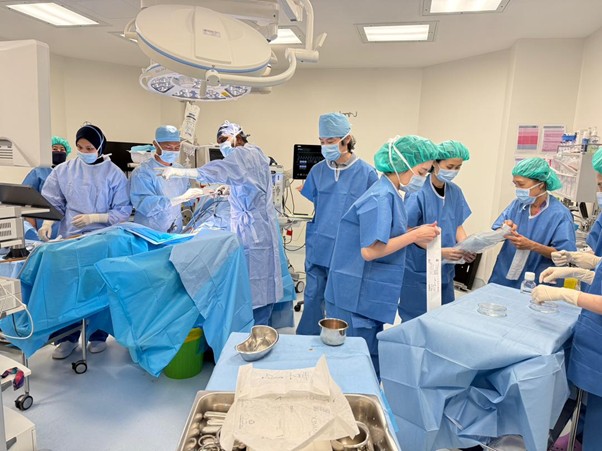
Prof. Dr. Kawamura observes the IVA procedure led by Prof. Dr. Prasanna of Thomson Fertility, as the embryologists prepare for the tissue processing.

IVA has emerged as an innovative approach, offering new possibilities for women with limited ovarian function to use their own eggs and achieve pregnancy. Research has shown that IVA can potentially increase the live birth rate in women with POI and DOR from a mere 5% to as high as 20% ⁽¹⁾⁽²⁾, offering new optimism where options were once limited.

The IVA procedure involves:

  • Key-hole surgery to remove a portion of ovarian tissue
  • Activating dormant follicles outside the body using specialised techniques and then,
  • Re-implanting the rejuvenated tissue into the ovarian bed. Patients are then given hormone therapy to stimulate follicle growth, where eggs can develop.

Thomson Fertility’s collaboration with Professor Dr. Kazuhiro Kawamura of Juntendo University, Tokyo, the leading expert behind the IVA technology, further strengthens the centre’s role in raising awareness and expanding access to this treatment option in Malaysia.

Prof. Dr. Prasanna Supramaniam, Consultant in Obstetrics & Gynaecology, Fertility Specialist, Subspecialist in Reproductive Medicine, Minimally Invasive Gynaecological Surgeon and Associate Professor, representing Thomson Fertility, Malaysia, explained:

For women living with primary ovarian insufficiency or diminished ovarian reserve, fertility struggles often feel like a closed door. IVA is a remarkable scientific step forward, creating the opportunity for them to use their own eggs in their journey to parenthood. At Thomson Fertility, we believe it is important to highlight such advancements, so that women know there is hope.”

Prof. Dr. Kazuhiro Kawamura, Juntendo University, Tokyo, Japan, added: “IVA is the culmination of extensive research into ovarian tissue activation. Collaborations with centres such as Thomson Fertility in Malaysia ensure that more patients can access and benefit from cutting-edge scientific research as they explore the possibilities in starting a family”.

Ms. Lakshmi Menon, Chief Executive Officer of Thomson Fertility, shared: “Celebrating life has always been at the heart of what we do at Thomson Fertility. By raising awareness of IVA, we aim to empower every woman who has been told that her chances are gone, with the knowledge about the options available to her – we are here to tell her: there is still hope and a path forward to experiencing the joy of parenthood. For Muslim women, with limited ovarian function to use their own eggs, IVA represents a particularly pivotal opportunity to start a family.

“With over 8,000 IVF babies born from a single facility, Thomson Fertility remains at the forefront of fertility innovation in the region. By providing women with access to IVA and partnering with world renowned experts, Thomson Fertility continues to champion innovation, patient education, and compassionate care, ensuring that women and couples across Malaysia are empowered with every possible chance to build the families they dream of”.

References:

  1. Kawamura K Ishizuka B Hsueh AJW. Drug-free in-vitro activation of follicles for infertility treatment in poor ovarian response patients with decreased ovarian reserve. Reprod Biomed Online 2020; 40:245–253
  2. Ferreri J Fàbregues F Calafell JM Solernou R Borrás A Saco A Manau D Carmona F. Drug-free in-vitro activation of follicles and fresh tissue autotransplantation as a therapeutic option in patients with primary ovarian insufficiency. Reprod Biomed Online 2020; 40:254–260

Hashtag: #ThomsonFertility

The issuer is solely responsible for the content of this announcement.

ABOUT THOMSON FERTILITY

Since 1994, Thomson Fertility has been Malaysia’s leading fertility centre, combining over 30 years of clinical expertise with cutting edge technology to deliver exceptional care and consistently high success rates. With multiple centres across Peninsular Malaysia, Thomson Fertility provides personalised, compassionate fertility care tailored to each patient’s unique journey. Their dedicated team of specialists, advanced treatment protocols and unwavering commitment to innovation empower individuals and couples to overcome fertility challenges and embrace their dreams of parenthood.

Advertisement

Media OutReach

SIM and the True Worth of Education: Beyond Tuition Fees

Published

on

SINGAPORE – Media OutReach Newswire – 7 December 2025 – As Singaporean families plan for higher education, tuition costs often dominate the conversation. However, the more critical consideration lies in understanding the relationship between cost and value. This article provides an in-depth understanding of the financial implications of pursuing studies at local public universities, private institutions such as SIM, and overseas universities, while highlighting SIM’s distinctive proposition that extends beyond competitive pricing.

Local Public Universities: Affordable and Prestigious

Singapore’s autonomous universities remain among the most cost-effective options for Singapore citizens, thanks to the Ministry of Education’s Tuition Grant. For example, undergraduate programs at NUS and NTU cost around S$8,250 per year for Singaporeans, while SMU averages S$11,500 annually. Other institutions such as SUTD, SUSS and SIT fall within similar ranges, typically between S$8,000 and S$13,500 per year. Over a three- to four-year degree, this translates to roughly S$25,000 to $54,000 in tuition fees.

The autonomous universities offer strong reputations and excellent graduate outcomes, but entry to some programme is highly competitive, and program flexibility may be limited compared to private or overseas options.

Overseas Universities: Prestige Comes at a Price

For families considering an overseas education, costs escalate dramatically. Tuition at U.S. private universities averages US$50,000 to US$60,000 per year (about S$70,000 to S$84,000), with living expenses adding another US$10,000 to US$15,000 annually. In the UK, fees range from £10,000 to £38,000 per year (approximately S$17,000 to $65,000), while Canada and Australia typically charge S$14,000 to $28,000 for tuition alone. Factoring in accommodation, travel, and insurance, a four-year overseas degree can easily exceed S$150,000.

While these programs offer prestige and cultural immersion, they also involve significant financial, visa, and lifestyle considerations.

SIM Global Education: International Degrees at Local Cost

SIM offers a compelling alternative for students seeking global credentials without the high cost of studying abroad. Through partnerships with leading universities from the UK, Australia, the U.S., Canada, and Europe, SIM delivers more than 140 programs in Singapore, allowing students to earn internationally recognized degrees, essentially the same degree if you studied overseas, but locally at SIM. Tuition fees vary by program, for example, a University of London BSc ranges from S$26,685 to S$42,835, a University of Birmingham top-up degree costs S$42,000 to S$57,100, and a degree from the University at Buffalo falls between S$41,700 and S$74,600 for Singaporeans.

Beyond competitive pricing, SIM emphasizes value. Degrees are awarded by partner universities and aligned with global academic standards. The institution holds EduTrust Star certification and ISO accreditation, ensuring the best quality assurance. Students benefit from bond-free scholarships and bursaries, as well as Career Connect services that provide internships, mentoring, and employer networking. Graduate outcomes are strong, with nearly 80% of SIM graduates securing employment within six months of graduation.

Why Value Matters as Much as Cost

Choosing a degree isn’t just about tuition fees, it’s about the total investment, which includes living costs, global recognition, and career outcomes. Local autonomous universities such as NUS, NTU, and SMU remain highly attractive for their subsidized fees and strong reputations, making them one of the most cost-effective options for Singaporeans. However, entry is competitive, and program flexibility may be limited.

On the other end of the spectrum, overseas universities offer prestige and cultural immersion but often come with six-figure costs and additional living expenses. This is where SIM provides a strategic middle ground, delivering internationally recognized degrees from leading global universities at local cost. Students gain access to global curricula, industry-ready skills, and career networks without the financial burden of relocating overseas. For families seeking international exposure at sustainable costs, SIM combines affordability with the value of global education

References:

  1. NUS Fees for Undergraduate Programmes – https://www.nus.edu.sg/registrar/docs/info/administrative-policies-procedures/ugtuitioncurrent.pdf
  2. NTU Fees for Undergraduate Programmes – https://www.ntu.edu.sg/docs/default-source/onestop@sac/2025/tuition-fees-ft-ay2025_12mar25.pdf?sfvrsn=b8c5474_1
  3. SMU Fees for Undergraduate Programmes – https://admissions.smu.edu.sg/financial-matters/tuition-fees-grant
  4. SUTD Fees for Undergraduate Programmes – https://www.sutd.edu.sg/admissions/undergraduate/education-expenses/fees/tuition-fees/
  5. SUSS Fees for Undergraduate Programmes – https://www.suss.edu.sg/admissions/financial-matters/tuition-fee-subsidy/full-time-undergraduate
  6. SIT Fees from Undergraduate Programmes – https://www.suss.edu.sg/admissions/financial-matters/tuition-fee-subsidy/full-time-undergraduate
  7. Comparison of Tuition Fees in US, UK, Canada and Australia – https://uninist.com/blog/financial-planning/comparison-of-tuition-fees-guide
  8. How much does college cost in 2025 – https://research.com/universities-colleges/how-much-does-college-cost
  9. Price of attending undergraduate institutions – https://nces.ed.gov/programs/coe/indicator/cua
  10. University of London Bachelor Degree – https://www.sim.edu.sg/degrees-diplomas/programmes/programme-listing?academic=2%7C&programmetype=1%7C3&university=1%7C
  11. University of Brimingham Bachelor Degree – https://www.sim.edu.sg/degrees-diplomas/programmes/programme-listing?academic=2%7C&programmetype=1%7C3&university=10%7C

Hashtag: #SIMGlobalEducation #SIMGE #GlobalEducation #InternationalDegree #CareerReady #FutureSkills

The issuer is solely responsible for the content of this announcement.

About SIM Global Education

SIM Global Education (SIM GE) is a leading private education institution in Singapore and the region. We offer more than 140 academic programmes ranging from diplomas and graduate diploma programmes to bachelor’s and master’s degree programmes with some of the world’s most reputable universities from Australia, Canada, Europe, United Kingdom, and the United States. SIM GE’s cohort is made up of 16,000 full- and part-time students and adult learners, of which approximately 36% are international students hailing from over 50 countries.

SIM GE’s holistic learning approach and culturally diverse learning environment aim to equip students with knowledge, industry skills and employability competencies, as well as a global perspective to succeed as future leaders in a fast-changing, technologically driven world.

For more information on SIM Global Education, visit sim.edu.sg

Continue Reading

Media OutReach

A-Level vs Polytechnic: Understanding different pathways offer competitive edge at SIM

Published

on

SINGAPORE – Media OutReach Newswire – 6 December 2025 – Singapore’s education system offers two popular tertiary pathways after post-secondary, A-Levels through Junior Colleges and Polytechnic diplomas. Both leading to higher education but differ in focus. A-Levels are academically rigorous and theory-driven, preparing students for university through subject-based learning over two years at junior colleges or three years at Millennia Institute.

Conversely, Polytechnic programmes emphasize applied learning, incorporating projects and industry attachments, and culminate in a diploma after three years. Understanding how these distinct approaches translate into admission considerations at SIM, one of Singapore’s leading private education institutions, is essential.

For students and parents, evaluating these options is critical to determining which pathway offers the greatest advantage in today’s competitive education landscape.

Applying with A-Levels

For students who have completed A-Levels, SIM requires applicants to meet the academic and English language criteria specified for each degree programme. According to SIM’s admissions process, candidates must submit their GCE A-Level certificates and transcripts along with other supporting documents. Entry is subject to programme-specific requirements set by SIM and its universities partner from Australia, Canada, Europe, the United Kingdom, and the United States. This pathway allows applicants to begin their degree studies immediately after junior college, provided they meet the specific entry requirements for their chosen programme.

Applying with a Polytechnic Diploma

Polytechnic graduates may be eligible for advanced standing and credit exemptions when applying to SIM’s degree programmes. The amount of exemption depends on the relevance of the diploma and the chosen degree. For example, IT-related diplomas from local polytechnics can receive up to two years of credit exemptions for certain programmes, such as those offered by the University of Wollongong, provided the applicant meets GPA requirements (typically 2.0 or above). Other diplomas may receive partial exemptions on a case-by-case basis. These exemptions reduce both time and cost, making SIM an attractive option for Polytechnic graduates who want to build on their applied learning experience.

Why It Matters

According to the Ministry of Education (MOE) statistics in 2021, roughly one in three Polytechnic graduates progress to local autonomous universities, compared to about four in five A‑Level and International Baccalaureate graduates. This gap underscores the importance of additional pathways such as SIM, which enable Polytechnic graduates to earn globally recognised degrees and expand their career prospects.

Student Stories: Two Potential Paths to Success at SIM

At SIM, students have the flexibility to shape their academic journey based on their background and career goals. For some, it’s about gaining a head start; for others, it’s about leveraging credit exemptions to fast-track progress. Ashley Ong and Violet Weng exemplify these two pathways, each leading to success in its own way.

Ashley Ong, an A-Level graduate, chose to begin her degree journey with the University at Buffalo Bachelor of Science in Business Administration. She embraced every opportunity SIM offered such as internships, hackathons, and networking events, building practical skills and global perspectives that prepared her for a competitive business world.

Meanwhile, Violet Weng, a Singapore Polytechnic graduate, opted for a different approach. While pursuing her RMIT Bachelor of Business (Economics and Finance), Violet leveraged SIM’s credit exemptions to shorten her study duration and reduce costs, all while working full-time. This flexibility allowed her to balance work and study, accelerate graduation, and advance her career without compromise.

Both stories highlight SIM’s commitment to offering customized pathways for students whether you’re starting fresh or building on prior learning.

Conclusion

Whether you come from an academic route like A-Levels or an applied learning path through Polytechnic, the journey to a degree can look very different. A-Level graduates often enjoy a head start with direct entry, while Polytechnic graduates benefit from credit exemptions that recognize their practical skills. Both pathways reflect Singapore’s evolving education landscape where flexibility and global opportunities matter more than ever.

References:

  1. MOE Post-Secondary – https://www.moe.gov.sg/post-secondary/
  2. SIM Application Process – https://www.sim.edu.sg/degrees-diplomas/admissions/application-process
  3. SIM-UOW Credit Exemption Table – https://www.sim.edu.sg/getmedia/9c0ad90d-5910-4d47-b044-f815188a4b16/sim002856.pdf
  4. MOE Education Statistics Digest – https://www.moe.gov.sg/about-us/publications/education-statistics-digest
  5. Polytechnic graduates progression and subsidies for PEIs – https://www.moe.gov.sg/news/parliamentary-replies/20210510-polytechnic-graduates-progression-and-subsidies-for-peis
  6. askST: How many uni places are there for Singaporeans? Is there a quota for poly grads? – https://www.straitstimes.com/singapore/how-many-uni-places-for-locals-any-quota-for-poly-grads
  7. How 6 internships, 4 hackathons, and CCAs paved the way for Ashley – https://www.sim.edu.sg/articles-inspirations/how-6-internships-4-hackathons-and-ccas-paved-the-way-for-ashley
  8. How this graduate pivoted her career by pursuing a degree while working full time – https://www.sim.edu.sg/articles-inspirations/how-this-graduate-pivoted-her-career-by-pursuing-a-degree-while-working-full-time

Hashtag: #SIMGlobalEducation #SIMGE

The issuer is solely responsible for the content of this announcement.

About SIM Global Education

SIM Global Education (SIM GE) is a leading private education institution in Singapore and the region. We offer more than 140 academic programmes ranging from diplomas and graduate diploma programmes to bachelor’s and master’s degree programmes with some of the world’s most reputable universities from Australia, Canada, Europe, United Kingdom, and the United States. SIM GE’s cohort is made up of 16,000 full- and part-time students and adult learners, of which approximately 36% are international students hailing from over 50 countries.

SIM GE’s holistic learning approach and culturally diverse learning environment aim to equip students with knowledge, industry skills and employability competencies, as well as a global perspective to succeed as future leaders in a fast-changing, technologically driven world.

For more information on SIM Global Education, visit sim.edu.sg

Continue Reading

Media OutReach

K. Wah Group Donates Additional HK$12.07 Million for Tai Po Recovery

Published

on

Chairman Mr. Francis Lui Urges Public to Turn Compassion into Action and Vote 7 December

HONG KONG SAR – Wechat: 嘉华集团 K. Wah Group

The issuer is solely responsible for the content of this announcement.

About K. Wah Group

K. Wah Group was founded in 1955 by Dr. Lui Che Woo and has since grown into a diversified multinational corporation. Its core businesses span property development and investment, integrated resort and entertainment, hospitality, and construction materials.

The Group has a strong presence in Mainland China, Hong Kong, Macau, Southeast Asia, and key international markets. Its major subsidiaries include two Hong Kong-listed flagships: K. Wah International Holdings Limited (HKEX: 00173), focused on premium property development and investment; and Galaxy Entertainment Group Limited (HKEX: 00027), a constituent of the Hang Seng Index and a leading gaming and entertainment operator in Macau. Other key members of the Group include Stanford Hotels International and K. Wah Construction Materials Limited. Today, K. Wah Group comprises over 200 subsidiaries worldwide.

Website:

Continue Reading

Trending

