Media OutReach
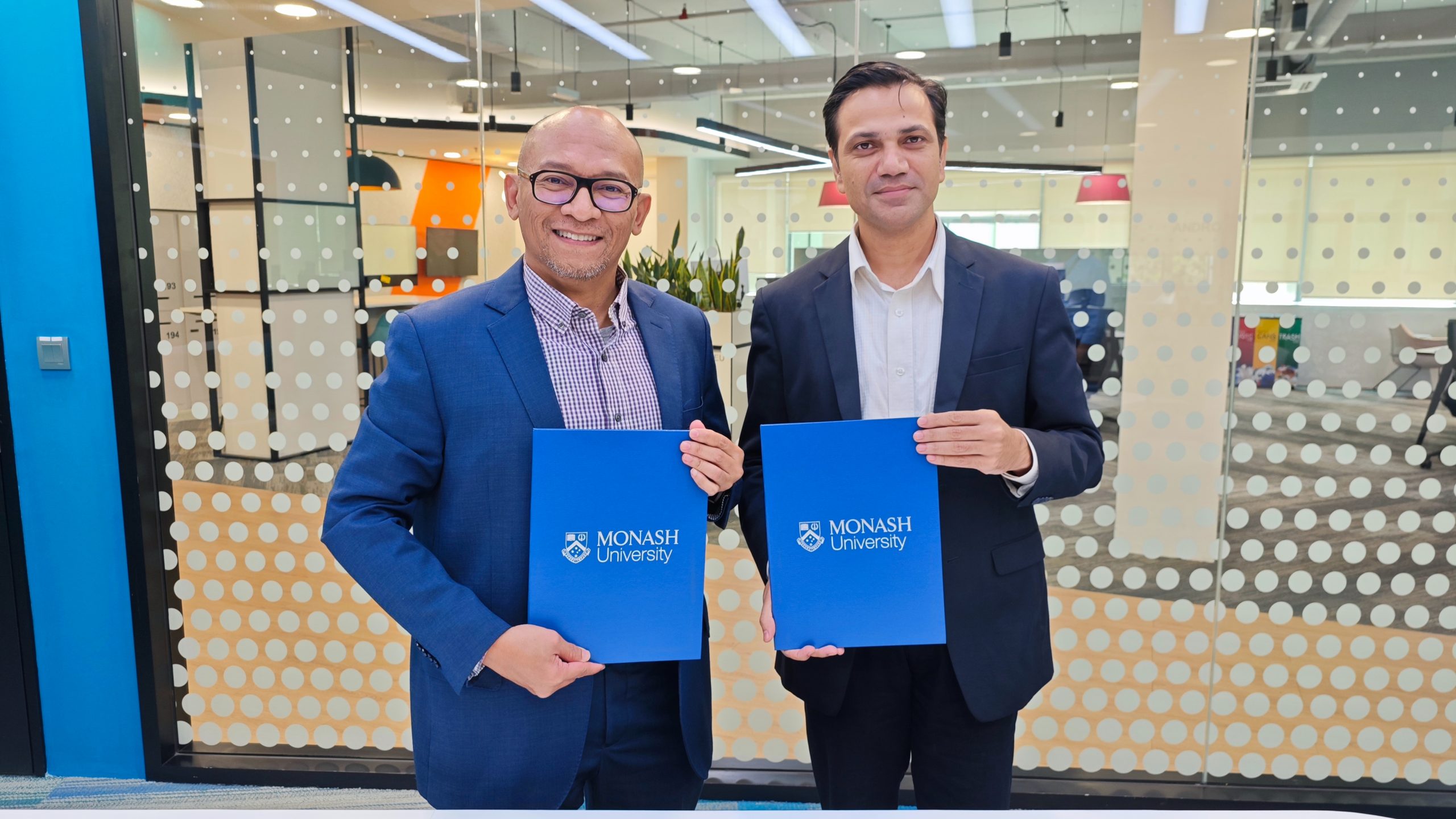
Monash University Malaysia and Tata Chemicals forge research-focused partnership: A research alliance combining industrial innovation with academic excellence to advance community health
Maintaining optimal gastrointestinal health or tummy health as it’s often referred to, is crucial for addressing various scientific and health challenges. For instance, one major project seeks to understand the role of postbiotics in alleviating “leaky gut symptoms”. A combination of immunological assessment, transcriptomic, and epigenetic profiling will be carried out on the colon epithelial cells to show how postbiotic compounds can influence inflammation at the cellular and genetic levels. This research is significant because it aims to inform future therapeutic applications for gastrointestinal health and chronic diseases, indicating a link between gut health and the prevention or management of long-term health conditions.
According to Dr Richard Lobo, Head of Innovation, R&D, Business Excellence, Chief Ethics Counsellor, Tata Chemicals Ltd, “Tata Chemicals’ mission of Serving Society through Science guides us as we continually innovate, leveraging science-led differentiation, to contribute toward a sustainable, better world and deliver a positive impact to people and the planet. We focus on aligning our businesses, our processes, and our actions along the core principles of sustainability. This association is a progressive step towards creating sustainable as well as innovative solutions addressing the needs of the future generation and creating a healthier world.”
Furthermore, the research extends to the elderly population, who commonly experience gastrointestinal symptoms such as bloating, reflux, and indigestion. Evaluating the effectiveness of Fructooligosaccharide (FOS) supplementation to promote beneficial gut bacteria in older adults underscores the commitment to community health and addressing nutritional deficiencies. By improving gut health in the elderly, the initiative indirectly contributes to their wellbeing and potentially their longevity.
Professor Faisal Rafiq Mahamd Adikan, Vice President (Research & Development), added that, “At Monash University Malaysia, we pride ourselves on our research-concentrated strength and academic excellence, driven by prominent researchers who lead in developing frameworks, conducting fieldwork, and analysing data. This strategic partnership with Tata Chemicals Limited exemplifies our belief that forging alliances that combine industrial innovation with academic expertise is crucial. By doing so, we can effectively address targeted health benefits and the growing, socially relevant health challenges faced by our community”.
Overall, the collaboration reflects a broader mission of “Serving Society through Science” and contributing towards “a sustainable, better world and deliver a positive impact to people and the planet”. The focus on creating “a healthier world” for “future generations” through these innovative solutions further emphasises the long-term, preventive benefits of understanding and improving gastrointestinal health.
Hashtag: #monashuniversitymalaysia
The issuer is solely responsible for the content of this announcement.
About Monash University Malaysia
Monash University Malaysia, established in 1998, is the third-largest campus of Australia’s largest university and the first foreign university campus in Malaysia. We are a premier research-intensive Australian university ranked among the top 50 universities globally by the QS World University Rankings 2024 and a member of Australia’s prestigious Group of Eight (Go8). Monash University is also ranked 58 in the latest Times Higher Education World University Rankings. A self-accrediting university, we offer a distinctly international and culturally rich environment with approximately 11,000+ students from 85 countries. Monash University Malaysia, including the Jeffrey Cheah School of Medicine and Health Sciences, is wholly owned and operated by Monash University since 2020.
Media OutReach
St. George’s University Prepares Future South Korean Physicians for the Growing Global Cancer Care Challenge
Recognizing the importance of addressing workforce shortage in South Korea, St. George’s University (SGU) School of Medicine in Grenada, West Indies, highlights how its medical education approach supports the development of clinical competencies relevant to cancer care across healthcare settings.
These challenges reflect broader global trends, where cancer care increasingly depends on multidisciplinary teams rather than specialty expansion alone. SGU’s curriculum is designed to build a strong foundation in clinical diagnosis, patient communication and multidisciplinary care, which are essential skills for effective oncology and cancer-related care. Through anatomy labs, simulation-based learning, and integrated digital tools, students develop foundational clinical skills in structured, supervised environments designed to reflect real-world medical practice.
The curriculum also integrates traditional cadaveric dissection with modern 3D anatomical modeling. This blend helps students visualize the human body in a holistic way while reinforcing knowledge through their hands-on interaction. SGU’s simulation lab also enables medical students to have their first direct interaction with ill patients in a safe, simulated learning environment.
On top of core medical training, SGU offers early exposure to prevention, diagnosis and patient-centered care to prepare graduates to tackle complex health issues. SGU has developed long-standing relationships with more than 75 established hospitals and clinical centers in the US and UK. These clinical placements provide exposure to diverse patient populations and care environments, including settings where cancer diagnosis and management are part of routine clinical practice.
South Korean SGU alumni are contributing to healthcare systems through roles that intersect with cancer diagnosis, treatment coordination, and long-term patient care. For example, Dr. Julia Hweyryoung Cho, MD 2022 is practicing internal medicine, which plays a crucial role in cancer care. Internal medicine physicians are often involved in the initial diagnosis of cancer, managing complex medical conditions that may arise during treatment and providing long-term comprehensive care and survivorship planning for patients with a history of cancer.
In observance of World Cancer Day 2026, SGU encourages all medical professionals and organizations to collaboratively address global cancer care challenges. This includes recognizing and meeting the cancer healthcare needs of individuals and communities in South Korea.
For more information on the programs and tracks available through SGU School of Medicine, visit SGU’s website.Hashtag: #St.George’sUniversity
The issuer is solely responsible for the content of this announcement.
Media OutReach
Finalists and Semifinalists for $1 Million Seeding The Future Global Food System Challenge Announced
Created and funded by Seeding The Future Foundation and, for the first time, hosted by Welthungerhilfe (WHH), the Challenge attracted a record 1,600+ applications from innovator teams in 112 countries, underscoring growing global momentum for food systems transformation.
Following a multi-stage, rigorous international review process, 36 teams have advanced across three award levels. These include 16 Seed Grant Finalists (competing for 8 awards of USD 25,000), 12 Growth Grant Semifinalists (competing for 3 awards of USD 100,000), and 8 Seeding The Future Grand Prize Semifinalists (competing for 2 awards of USD 250,000).
“Hosting the GFSC reflects Welthungerhilfe’s commitment to accelerating bold, scalable innovations where they are needed most. This year’s diversity of solutions underscores the complexity of food system challenges and the creativity of innovators worldwide.” said Jan Kever, Head of Innovation at Welthungerhilfe
The submitted innovations span diverse themes and approaches, including climate-smart production, nutrient-dense foods, food loss reduction, and inclusive market models, reflecting the complexity and interconnected nature of today’s food systems challenges.
“The Seeding The Future Global Food System Challenge exists to catalyze impactful, bold, and scalable innovations that advance food systems transformation. We are excited to work alongside Welthungerhilfe as a trusted partner and host of the Challenge and are encouraged by the quality and diversity of innovations emerging from this first year of collaboration.” said Bernhard van Lengerich, Founder and CEO of Seeding The Future Foundation
While the number of awards is limited, all semifinalists and finalist applicants plus all applicants with any prior recognition of other innovation competitions can join the STF Global Food System Innovation Database and Network—currently in beta testing with the Food and Agriculture Organization of the United Nations—vastly expanding their visibility and reach across a global audience.
List of 2025 GFSC Seed Grant Finalists, Growth Grant and Seeding The Future Grand Prize Semifinalists
Find details here: welthungerhilfe.org/gfsc-finalists
Seeding The Future Grand Prize Semi-Finalists
- CNF Global, Kenya
- ZTN Technology PLC, Ethiopia
- One Acre Fund, Rwanda
- Sanku, Tanzania
- Nabahya Food Institute (NFI), Democratic Republic of the Congo
- ABALOBI, South Africa
- metaBIX Biotech, Uruguay
- Nurture Posterity International, Uganda
Growth Grant Semi-Finalists
- Baobaby, Togo
- Safi International Technologies Inc., Canada
- Centro Internacional de Mejoramiento de Maíz y Trigo (CIMMYT), Mexico
- Farmlab Yeranda Agrisolution Producer Company Limited, India
- Banco de Alimentos Santa Fe (BASFE), Argentina
- Chartered Consilorum (Pty) Ltd, South Africa
- American University of Beirut, Environment and Sustainable Development Unit (ESDU at AUB), Lebanon
- The Source Plus, Kenya
- Iviani Farm Limited, Kenya
- Rwandese Endogenous Development Association, Rwanda
- NatureLEAD, Madagascar
- Ndaloh Heritage Organisation, Kenya
Seed Grant Finalists
- Inua Damsite CBO, Kenya
- World Neighbors, United States
- Keloks Technologies Ltd, Nigeria
- REBUS Albania, Albania
- Tanzania Conservation and Community Empowerment Initiative (TACCEI), Tanzania
- Intrasect, Switzerland
- VKS AGRITECH, India
- Murmushi People’s Development Foundation, Nigeria
- Levo International, Inc., United States
- Effective Altruism Research Services Ltd, Uganda
- Taita Taveta University, Kenya
- CultivaHub, Democratic Republic of the Congo
- Resource Hub for Development (RHD), Kenya
- FUTURALGA S.COOP.AND, Spain
- West Africa Centre for Crop Improvement, University of Ghana, Ghana
- Sustainable Solutions Kenya, Kenya
Hashtag: #TheFutureGlobalFoodSystemChallenge
The issuer is solely responsible for the content of this announcement.
About Seeding The Future Foundation
STF is a private nonprofit dedicated to ensuring equitable access to safe, nutritious, affordable, and trusted food. It supports innovations that transform food systems and benefit both people and planet. More at Seeding the future.
About Welthungerhilfe
WHH is one of Germany’s largest private aid organizations, striving for a world without hunger since 1962. More at: Welthungerhilfe (WHH)
Media OutReach
PolyU develops novel antibody targeting fat cell protein, offering new approach to treating metabolism-related liver cancer
Metabolic dysfunction-associated steatotic liver disease (MASLD), commonly known as fatty liver disease, currently affects around a quarter of the global population and is an important risk factor for liver cancer. In affected individuals, fat cells induce insulin resistance and chronic inflammation, leading to excessive fat accumulation in the liver. This ultimately impairs liver function and may progress to liver cancer. Treatment options for MASLD-induced liver cancer remain limited and the effectiveness of current immunotherapies is suboptimal.
A breakthrough study led by Prof. Terence LEE, Associate Head and Professor of the PolyU Department of Applied Biology and Chemical Technology, and his research team has revealed that an adipocyte-derived protein, known as fatty acid-binding protein 4 (FABP4) is a key driver that accelerates tumour growth. Through mass spectrometry, the team confirmed that patients with MASLD-induced liver cancer had markedly elevated FABP4 levels in their serum. Further investigations showed that FABP4 activates a series of pro-proliferative signalling pathways within cells, causing cancer cells to multiply and grow more rapidly.
Prof. Lee’s team has successfully developed a monoclonal antibody that neutralises FABP4. This antibody not only inhibits the growth and proliferation of FABP4-driven cancer stem cells, but also enhances the ability of immune cells to combat cancer.
Prof. Lee said, “This neutralising antibody against FABP4 demonstrates significant potential in inhibiting tumour growth and activating immune cells, providing a complementary approach to current immunotherapy strategies. Our findings highlight that targeting adipocyte-derived FABP4 holds promise for treating MASLD-induced liver cancer.”
Prof. Lee added that gaining deeper insights into how adipocyte-derived FABP4 affects liver cancer cells helps to explicate the disease mechanisms of liver cancer, particularly in obese individuals. Intervening in the relevant signalling pathways could provide effective methods to combat this aggressive malignancy.
Prof. Lee believes that, as this adipocyte-targeted immunotherapy continues to mature, it will bring more treatment options to MASLD patients. He remarked, “If its efficacy can be proven in clinical trials, it could offer new hope to many affected individuals.”
The research is supported by the Innovation and Technology Fund of the Innovation and Technology Commission of the Government of the Hong Kong Special Administrative Region of the People’s Republic of China. PolyU has filed a non-provisional patent for the developed antibody and is continuing to optimise its binding affinity to facilitate future clinical applications.
Hashtag: #PolyU #FattyLiver #Cancer #LiverCancer #理大 #香港理工大学 #肝癌 #癌症 #脂肪肝
The issuer is solely responsible for the content of this announcement.
-
Feature/OPED6 years agoDavos was Different this year
-
Travel/Tourism9 years ago
Lagos Seals Western Lodge Hotel In Ikorodu
-
Showbiz3 years agoEstranged Lover Releases Videos of Empress Njamah Bathing
-
Banking8 years agoSort Codes of GTBank Branches in Nigeria
-
Economy3 years agoSubsidy Removal: CNG at N130 Per Litre Cheaper Than Petrol—IPMAN
-
Banking3 years agoSort Codes of UBA Branches in Nigeria
-
Banking3 years agoFirst Bank Announces Planned Downtime
-
Sports3 years agoHighest Paid Nigerian Footballer – How Much Do Nigerian Footballers Earn