Connect with us

Economy

Stanbic IBTC Asset Mgt Maintains Spot as Nigeria’s Largest Mutual Fund Firm

Published

on

By Quantitative Financial Analytics

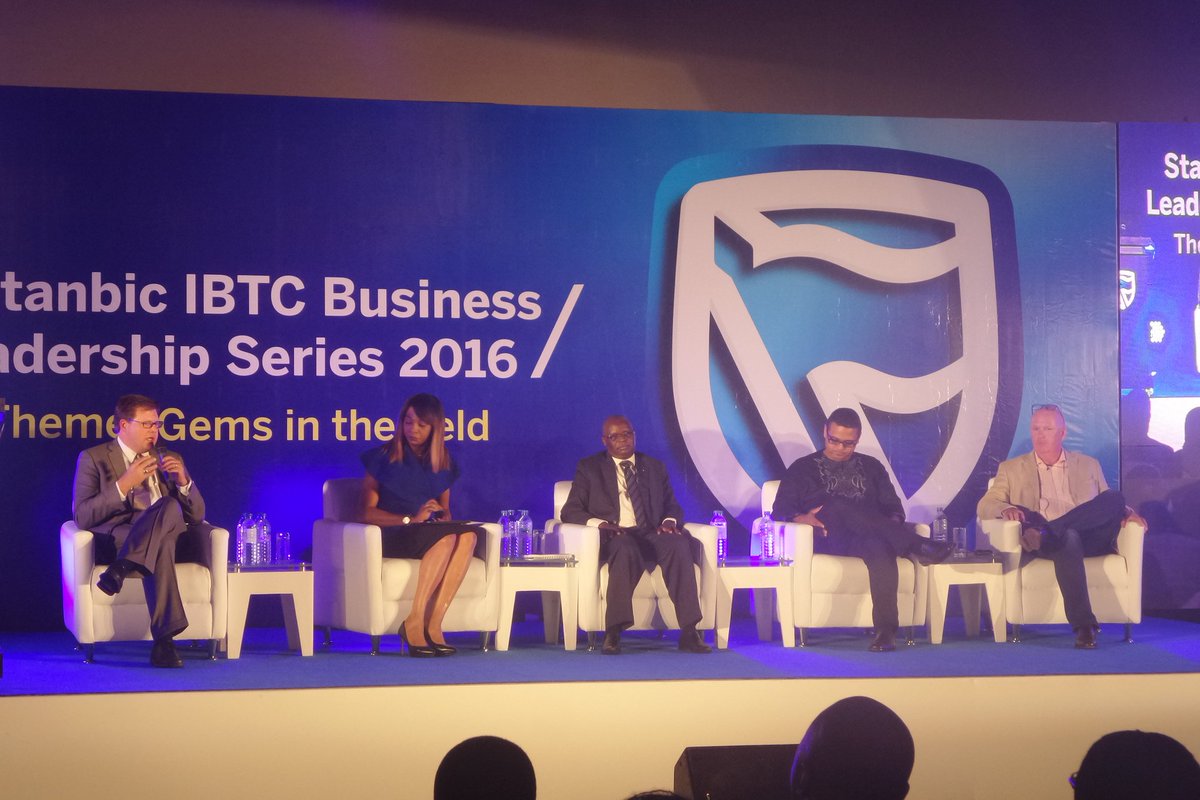
The assets of Stanbic IBTC Asset Management have recorded a significant increase by 24 percent in the first quarter of 2017 to cement its position as Nigeria’s largest mutual fund company by asset, Quantitative Financial Analytics reports.

Assets under management stood at N107.4 billion as at March 31, 2017, up from N86.8 billion the previous year end.

Also, its nearest rival, FBN Asset Management, grew its assets by about 21 percent to N39.4 billion, according to analysis of latest available information by Quantitative Financial Analytics Ltd.

Stanbic IBTC Asset Management now overseas 41.53 percent of total mutual funds’ Asset Under Management (AUM) as at March 31, 2017.

Stanbic IBTC Asset Management has at least one fund in each category of mutual funds in Nigeria which enables the fund management company to offer market synergies and diversification for its clients

The fund management company has seen substantial investor interest in an array of its mutual funds over the years.

In particular, Stanbic IBTC Money Market fund has seen significant growth in net flows year after year since inception. Investment performance has also been solid especially with Stanbic IBTC Absolute fund.

The Stanbic IBTC Money Market fund currently offers the highest yield among money market funds and is also the largest mutual fund by assets in Nigeria. It currently has an AUM of N83.1 billion which represents 32.14 percent of total mutual fund assets in Nigeria.

Stanbic IBTC’s fund family is next to none in terms of reporting and transparency. While the prices of its mutual funds are readily available on its web site daily, the fact sheets of the funds are also easily accessible and comprehensible. The company is about the only one that indicates the risk profile of its funds on its fact sheet on a risk continuum ranging from 1 to 5, (5 being the highest risk). This information helps investors in selecting funds that match or are in tune with their risk appetites and tolerance levels.

The company has won a whole lot of accolades because of its skilful fund management.

In 2015, the company won three Global Banking and Finance Review Awards- “Best Asset Management Company in Nigeria award”, Best Mutual Fund Provider in Nigeria, 2015 and Best Non-Pension Fund Manager in Nigeria.

Only recently, the company launched two new mutual funds- Stanbic IBTC Dollar Fund and Stanbic BTC Pension ETF 40, bringing the number of mutual funds being managed by the company to 13, including the Umbrella Funds.

“As the market leader in Nigeria, we are aware of our responsibility to continuously provide unparalleled solution and services to Nigerians in a very cost effective and timely manner” said Mrs Bunmi Dayo-Olagunju Chief Executive of Stanbic IBTC Asset Management.

Too Big to Fail Concern

The only concern about the fund manager is the fear of “too big to fail”, meaning that should Stanbic IBTC Asset Management sneeze, the Nigerian mutual fund industry might catch cold or even fever given the size of its stake in the industry.

That fear has been allayed by many experts who have opined that the too big to fail hysteria does not directly apply to asset management companies since they do not engage in lending or trading in exotic and high risk derivatives which were the triggers of the 2008 financial crisis.


Modupe Gbadeyanka is a fast-rising journalist with Business Post Nigeria. Her passion for journalism is amazing. She is willing to learn more with a view to becoming one of the best pen-pushers in Nigeria. Her role models are the duo of CNN's Richard Quest and Christiane Amanpour.

Advertisement
Click to comment

Leave a Reply

Your email address will not be published. Required fields are marked *

Economy

Tinubu, Dangote Meet Over Oil Market Volatility as Petrol Hits N1,400

Published

on

Dangote Tinubu

By Adedapo Adesanya

The president of the Dangote Group, Mr Aliko Dangote, met with President Bola Tinubu on Monday to discuss and address concerns about the growing volatility in the global oil market and its impact on Nigerians.

Petrol prices have jumped to as high as N1,400 per litre amid the continuous rise in prices of crude oil in the global market as a result of the Middle East war. Brent crude rose above $100 per barrel due to compounding supply constraints, though it closed below the mark yesterday.

Mr Dangote, whose company controlled about 60 per cent of Nigeria’s domestic supply pre-war, speaking after the meeting, said that although Nigeria is not directly involved in the war, the ripple effects of global oil price fluctuations would inevitably be felt.

“It means quite a lot. We don’t have much to do with it, but I know the world is a global village. And it definitely will affect us, unfortunately, but we pray this situation will be sorted out,” he said after his visit to President Tinubu in Lagos yesterday.

He warned that a prolonged crisis could further destabilise economies, particularly in Africa, where fiscal buffers are limited, and debt pressures remain high.

“If it doesn’t de-escalate, we’ll end up paying high prices, like what I said earlier on CNN. Africa is very busy paying debt, and putting this again on top of us is going to add a lot of hardship on people, on the government, on the people, on everybody, for something that we have no involvement in.”

He stressed that energy costs are central to nearly all sectors of the economy, meaning sustained increases would have widespread and cascading effects on livelihoods and production.

He explained that governments could face mounting fiscal strain as subsidies rise and revenues fluctuate under unstable global oil market conditions.

Mr Dangote added that Africa’s rising debt burden could worsen under prolonged instability, further limiting fiscal space and weakening economic resilience.

“Africa is already grappling with debt, and additional shocks will only compound hardship for governments and the people,” he said.

He said escalating energy costs would disrupt nearly every sector, including small enterprises, manufacturing chains, logistics operations and household consumption patterns.

The business mogul noted that some countries were already adopting coping strategies such as reduced workdays, energy rationing and remote working arrangements.

Mr Dangote said such measures, while necessary, could reduce productivity, slow economic output and affect livelihoods, particularly among vulnerable populations.

He urged global leaders to prioritise de-escalation, stressing that many Africans rely on daily earnings and remain highly exposed to economic shocks.

Continue Reading

Economy

SEC, NYSC to Create CDS Group on Investment Education for Corps Members

Published

on

SEC NYSC CDS group

By Aduragbemi Omiyale

A Community Development Service (CDS) group focused on investment education for corps members is to be established by the National Youth Service Corps (NYSC) in partnership with the Securities and Exchange Commission (SEC).

Both organisations recently sealed a Memorandum of Understanding (MoU) for this new initiative, which will promote sound investment habits among Nigerian youths, equip corps members with essential financial knowledge and help them avoid fraudulent schemes.

Under the agreement, the NYSC and SEC will work together on joint awareness campaigns, utilising various channels and platforms, including social media, traditional media, and community outreach, to disseminate information on safe investment and expose fraudulent schemes.

They will also agree on mechanisms for sharing relevant data and reporting on the progress and impact of the collaborative initiatives.

Specifically, the capital market regulator will develop and provide relevant and up-to-date educational content, materials, and training modules on capital market operations, safe investment practices, and the identification and avoidance of Ponzi schemes.

The agency will also be responsible for the content, resources and funding of training sessions for selected corps members and NYSC supervisors who will serve as trainers and facilitators in their respective communities.

On its part, the NYSC will facilitate the integration of anti-Ponzi scheme education into its Education and Enlightenment CDS programme, which could be through dedicated sessions, workshops, or awareness campaigns during orientation camps and throughout the service year.

The Director General of SEC, Mr Emomotimi Agama, expressed satisfaction with the collaboration, saying it will promote financial literacy and sound investment habits among young Nigerians.

His counterpart at the NYSC, Brig-Gen Olakunle Nafiu, lauded the initiative, stressing that it will help in enhancing public awareness campaigns against illegal financial schemes across all Local Government Areas in the country, among other objectives.

Continue Reading

Economy

Unlisted Securities Exchange Opens Week 0.84% Bullish

Published

on

unlisted securities exchange

By Adedapo Adesanya

The NASD Over-the-Counter (OTC) Securities Exchange opened the week on a positive note after it appreciated by 0.84 per cent on Monday, March 23.

Trading activity returned yesterday after a two-day break last Thursday and Friday to celebrate the end of Ramadan.

The market capitalisation was up by N20.68 billion to N2.482 trillion from N2.461 trillion, and the NASD Unlisted Security Index (NSI) increased by 34.68 points to 4,149.38 points from 4,114.75 points.

The bourse was bullish amid a 1.34 per cent decline in the share price of Geo-Fluids Plc at the close of transactions. The loss was offset by the 3.45 per cent surge in the value of FrieslandCampina Wamco Plc.

A look at the trading data indicated that the activity was weaker yesterday, as the trading volume, value, and number of deals all tumbled.

There was a 99.9 per cent slip in the volume of securities to 412,260 units from the 400.8 million units recorded in the preceding session. The value of securities fell by 99.4 per cent to N7.37 million from N1.2 billion, and the number of deals went down by 31.9 per cent to 32 deals from 47 deals.

Central Securities Clearing System (CSCS) Plc ended the day as the most traded stock by value on a year-to-date basis with 38.7 million units sold for N2.4 billion. Infrastructure Guarantee Credit Plc followed with 400 million units valued at N1.2 billion, and Okitipupa Plc occupied the third spot with 6.4 million units traded for N1.2 billion.

Resourcery Plc closed the trading session as the most active by volume on a year-to-date basis with 1.1 billion units worth N415.7 million, trailed by Infrastructure Credit Plc with 400 million units transacted for N1.2 billion, and Geo-Fluids Plc with 131.1 million units exchanged for N505.6 million.

Continue Reading

Trending