Health
Nigeria Kicks Off Integrated Vaccination for Protect 106 million Children
By Modupe Gbadeyanka
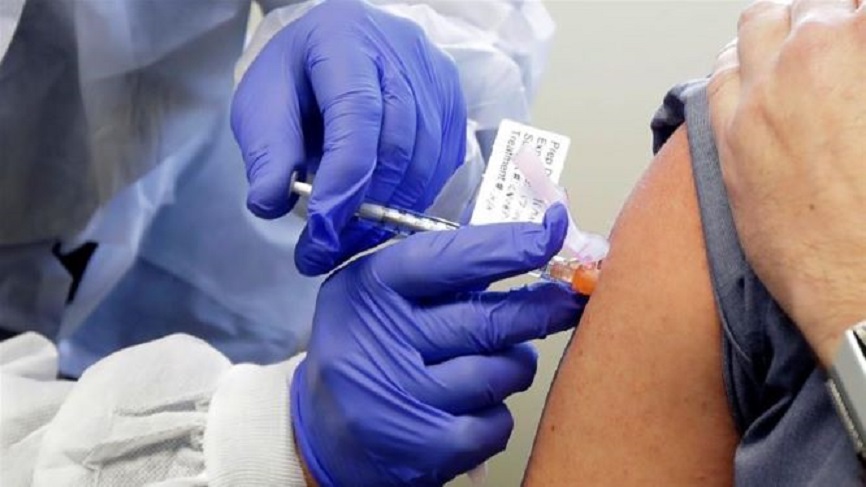
An integrated vaccination campaign aimed to protect 106 million children against measles, rubella and polio has been launched by the Nigerian government.
This initiative is a response to persistent outbreaks of circulating variant poliovirus type 2 (cVDPV2) as well as measles and rubella outbreaks in Nigeria and across the Lake Chad Basin.
The large-scale campaign will be implemented in two phases, with the first targeting 20 high-risk northern states and Oyo state in the southwest, and the second beginning in January 2026, and will be expanded to the remaining southern states.
Children between 0 and 14 years would be given vaccines for measles and rubella and 0–59 months for polio, with health workers delivering services through fixed posts, temporary outreach points, and house-to-house “sweep teams,” ensuring that even children in the most remote and underserved areas are reached.
In addition to measles-rubella and polio vaccines, the campaign integrates routine immunization and other essential child health services, including treatment for neglected tropical diseases and seasonal malaria chemoprevention in high-risk areas. This holistic approach supports Nigeria’s “Primary Health Care Under One Roof” strategy and advances the Health Campaign Effectiveness agenda towards universal health coverage.
Nigeria is coordinating with Cameroon, Central African Republic, Chad and Niger through a cross-border action plan to stop active outbreaks by the end of 2025 and eliminate remaining risks by the end of 2026.
“On behalf of the Government, I want to express our deep respect and gratitude to Nigeria’s frontline health workers for their unwavering dedication. I urge you to approach this campaign with the same resilience and commitment you have shown over the years.
“As a parent myself, I know that no parent would ever refuse something that protects their child. Vaccines are safe, and they save lives,” the Minister of Health and Social Welfare, Mr Ali Pate, stated.
This campaign builds on the success of two recent “In-between Round Activities” in 11 northern states (August–September 2025), which reached over 3.1 million children with vaccines, provided nutrition supplements to 500 000 malnourished children, and delivered anti-malaria interventions to 150 000 children.
“Nigeria’s integrated approach sets a strong example for the Region. By uniting efforts against measles, rubella and polio, and by working hand-in-hand with communities and partners, we are moving closer to the day when no African child suffers or dies from these preventable diseases,” Dr Mohammed Janabi, World Health Organization (WHO) Regional Director for Africa.
In preparation for this nationwide rollout, Nigeria has also strengthened systems to ensure smooth implementation. Trainers have been mobilized across states, payment processes for frontline workers have been redesigned for greater efficiency, and campaign systems have been upgraded to integrate data more effectively and safeguard integrity. These investments will ensure that every health worker is supported and every child vaccinated is recorded accurately, bolstering accountability and trust in the programme.
The country is also introducing a new combined measles-rubella vaccine to replace the measles-only vaccine. Measles is a highly contagious and potentially fatal disease, particularly for malnourished children, while rubella can cause severe birth defects (Congenital Rubella Syndrome) if contracted during pregnancy.
The campaign is led by the government with support from the WHOUNICEF, Gavi, the Vaccine Alliance, Rotary International, the Gates Foundation, Africa Centres for Disease Control and Prevention, civil society organizations, and traditional and religious leaders. Robust coordination mechanisms are in place for financing, social mobilization, training, vaccines and logistics to ensure success.
Health
Tinubu Transmits 24 Bills to Reduce Bloated Health Sector Boards to Senate
By Adedapo Adesanya
President Bola Tinubu has transmitted 24 bills for consideration of the Senate which seeks to reduce the country’s over-bloated board memberships in the health sector.
The bills were conveyed alongside a letter addressed to President of Senate, Godswill Akpabio, and read at plenary on Tuesday, in line with Section 58(2) of the 1999 Constitution of Federal Republic of Nigeria.
President Tinubu said the proposed legislations followed a comprehensive review of existing health sector laws by the Attorney-General of the Federation and Minister of Justice.
He said the review, approved by the Federal Executive Council (FEC), was in collaboration with the Minister of Health and Social Welfare, Professor Muhammad Ali Pate.
According to the President, the bills aims at streamlining governance structures across health institutions by reducing over-bloated board memberships.
This, he said, would improve efficiency, effectiveness, and service delivery within the sector.
According to him, the proposed legislations cover a wide range of health institutions and regulatory bodies, including tertiary and teaching hospitals, specialty hospitals, professional councils, and regulatory agencies.
He said the bills transmitted to the Senate includes the National Hospital for Women and Children, Abuja, Federal Medical Centres, National Specialty Hospitals Management Board; Orthopaedic Hospitals Management Board
Others are the National Eye Centre, National Ear Care Centre, Nursing and Midwifery Council of Nigeria; Medical Laboratory Science Council of Nigeria, the National Agency for Food and Drug Administration and Control (NAFDAC) and the National Blood Service Agency, among others.
The President also listed additional legislative proposals such as the Records Officers Registration and Digital Health Bill 2025 and the Federal College of Complementary and Alternative Medicine Bill 2025.
President Tinubu expressed confidence that the Senate would give the bills careful and judicious consideration in the interest of strengthening Nigeria’s health sector.
After the letter accompanying the bills was read, Senate President referred all the 24 bills to the Senate Committee on Rules and Business for further legislative action.
Health
Africa Wellness Voices Initiative Promotes Mental Wellbeing
By Adedapo Adesanya
A new pan-African mental wellness campaign, the Africa Wellness Voices Initiative (AWVI), is set to launch this February, bringing together voices from across Africa to promote mental wellbeing, reduce stigma, and encourage supportive conversations around mental health.
Led by SereniMind, a mental health and wellness organization, AWVI will spotlight different African countries daily throughout February by sharing short wellness statements from individuals, organizations, youth leaders, and institutions.
Each daily feature will highlight local perspectives on mental wellbeing while reinforcing a shared continental message: mental health matters, it said in a statement shared with Business Post.
Mental health remains a critical but under-addressed issue across Africa. According to the World Health Organisation (WHO), depression affects more than 66 million people in the African Region, while mental health services remain limited in many countries. Young people are particularly affected, facing stigma, lack of awareness, and barriers to accessing support.
AWVI said it aims to address these gaps through a unified, prevention-focused awareness campaign that leverages digital platforms to reach communities across borders. In addition to featured voices, members of the public are encouraged to participate by sharing short wellness videos on social media, fostering grassroots engagement and peer-to-peer support.
Speaking on the initiative, Mr Oyenuga Ridwan, Founder of SereniMind, said: “Across Africa, too many people suffer in silence when it comes to mental health. Africa Wellness Voices Initiative is about unity, bringing together Africans from different countries, ages, and backgrounds to normalize conversations around wellbeing and remind people that seeking support is a strength, not a weakness.”
The February campaign is expected to reach 15–25 African countries, feature 60–120 individuals and organizations, and generate over 500,000 digital impressions across platforms including Instagram, LinkedIn, X (formerly Twitter), and TikTok. The organizers hope to scale the initiative in future editions to include all 54 African countries.
AWVI says it aligns with broader continental and global priorities on health, youth empowerment, and wellbeing, contributing to conversations around preventive mental health, community resilience, and inclusive development.
Through technology, partnerships, and community engagement, SereniMind works to promote wellbeing and reduce stigma around mental health.
Health
Mpox No Longer Public Emergency in Africa—CDC
By Adedapo Adesanya
The Africa Centres for Disease Control and Prevention has said Africa was no longer in the grip of a public health emergency over mpox, but warned that it remains endemic in several settings.
The announcement by the Director General of the Africa CDC, Dr Jean Kaseya, on Saturday, comes after the World Health Organisation (WHO) in September said mpox was no longer a global health emergency.
The organisation had declared its worldwide public health emergency over the viral infection — previously known as Monkeypox, and related to smallpox — in August 2024, after a two-pronged mpox epidemic broke out, primarily in the Democratic Republic of Congo (DRC).
Dr Kaseya said Africa was lifting its regional emergency status for the illness because of boosted detection, therapy, and the roll-out of more than five million mpox vaccines in 16 countries since 2024.
The response contributed to confirmed cases dropping by 60 percent between early 2025 and late 2025, and the number of deaths among those infected dropping from 2.6 per cent to 0.6 per cent, he said in a statement.
The lifting of the regional public health emergency status “does not mark the end of mpox in Africa,” he stated.
“Rather, it signals a transition from emergency response to a sustained, country-led pathway toward elimination.
“Mpox remains endemic in several settings, and continued vigilance, targeted investment, and innovation will be essential to consolidate gains and prevent resurgence,” the CDC chief added.
According to the WHO, 78 per cent of mpox cases were detected in Africa, with the DRC, Guinea, and Madagascar most affected.
-
Feature/OPED6 years agoDavos was Different this year
-
Travel/Tourism9 years ago
Lagos Seals Western Lodge Hotel In Ikorodu
-
Showbiz3 years agoEstranged Lover Releases Videos of Empress Njamah Bathing
-
Banking8 years agoSort Codes of GTBank Branches in Nigeria
-
Economy3 years agoSubsidy Removal: CNG at N130 Per Litre Cheaper Than Petrol—IPMAN
-
Banking3 years agoSort Codes of UBA Branches in Nigeria
-
Banking3 years agoFirst Bank Announces Planned Downtime
-
Sports3 years agoHighest Paid Nigerian Footballer – How Much Do Nigerian Footballers Earn