Media OutReach
DBS Hong Kong Launches Regional Investment Corridors Initiative to Forge New Cross-Border Growth Channels Across Asia
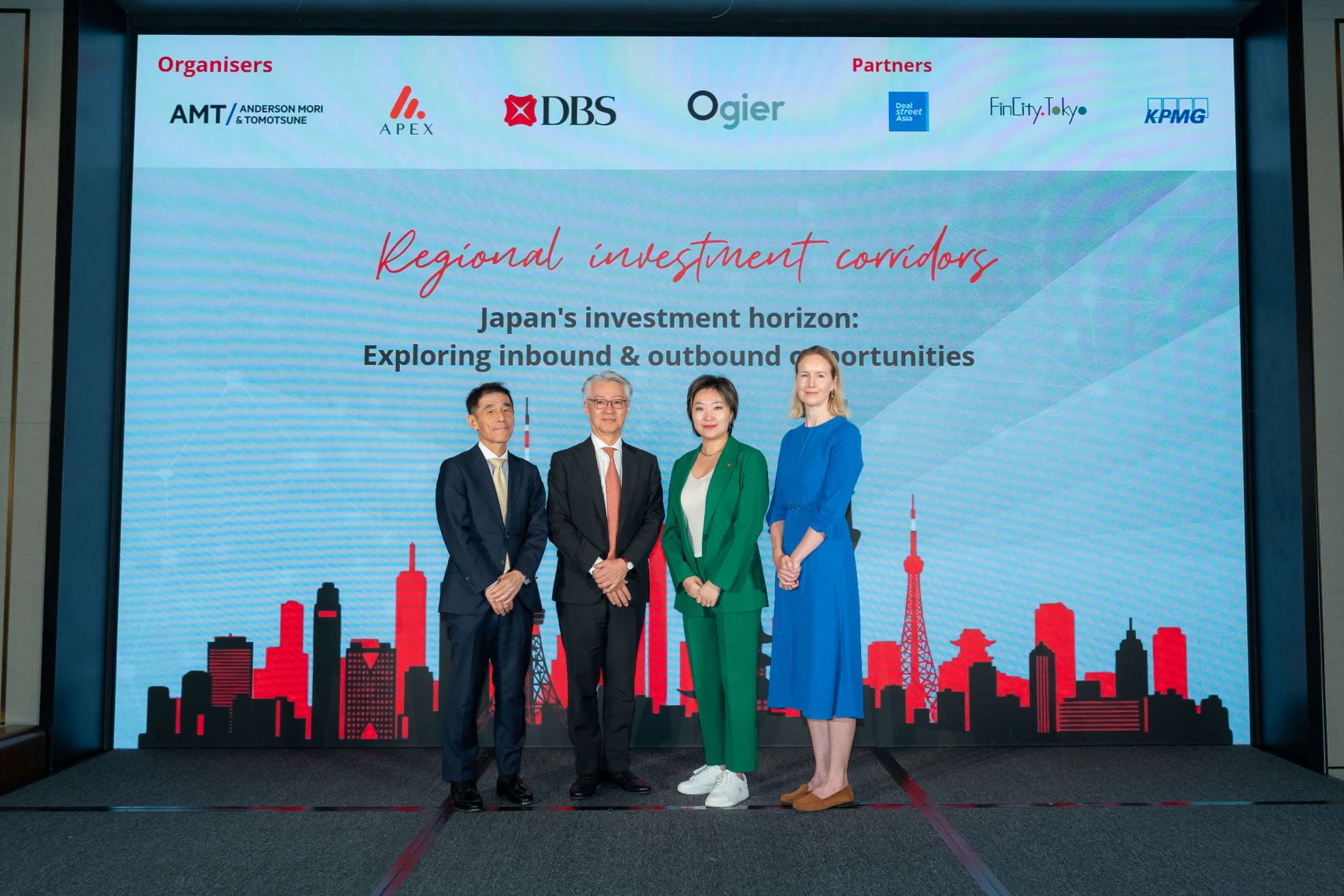
Inaugural event, themed “Japan’s Investment Horizon: Exploring Inbound & Outbound Opportunities”, bridges private capital opportunities between Hong Kong and Japan
HONG KONG SAR – Media OutReach Newswire – 8 October 2025 – Asia’s investment landscape is undergoing rapid evolution, and DBS stands at the forefront as the preferred banking partner for emerging and mid-sized asset managers seeking to scale across borders. DBS Bank (Hong Kong) Limited (“DBS Hong Kong”) is delighted to announce the launch of its “Regional Investment Corridors” initiative. In addition to strengthening DBS’ position as a conduit for growth and opportunity, the initiative empowers our clients to seize high-potential ventures across Asia by unlocking new pathways and connecting capital with diverse ventures opportunities in Asia.
The exclusive debut luncheon event in Hong Kong focused on fostering connections to bridge private capital opportunities between Hong Kong and Japan and was a great success. The event brought together a group of distinguished industry leaders and esteemed partners, including Anderson Mori & Tomotsune, Apex Group, DealStreetAsia, FinCity.Tokyo, KPMG and Ogier.
Japan’s ascent as an international financial hub is particularly noteworthy, evidenced by a record Foreign Direct Investment (FDI) stock exceeding JPY 50 trillion in 2023, with ambitious government targets aiming to double this by 2030[1]. As highlighted by the virtual keynote address from FinCity.Tokyo, Japan’s first public-private partnership financial promotion organisation, new initiatives such as the expanded NISA tax exemption scheme and Tokyo Stock Exchange reforms are driving a significant shift from savings to investment in Japan.
As part of the “Regional Investment Corridors” initiative, DBS Hong Kong will also host events targeting Shanghai, Singapore and South Korea in the upcoming months to build robust corridors for capital exchange and foster region-wide impact. DBS Hong Kong remains committed to supporting the ambitions of asset managers and enterprises by fostering collaborative partnerships and providing integrated solutions tailored to the fast-changing Asian investment landscape.
Boris Chan, Managing Director and Head of Institutional Banking Group, DBS Hong Kong, commented, “DBS, as a ‘super connector,’ actively shapes Asia’s investment ecosystem by bridging businesses, markets and strategic partners. The launch of our ‘Regional Investment Corridors’ initiative reflects our dedication to acting as a facilitator and a strategic partner for inbound and outbound investment flows. Recognised by Global Finance as the safest bank in Asia for 17 consecutive years, DBS is unwavering in its pursuit of supporting clients’ strategic investments and fostering economic development across the region.”
This initiative builds on the success of DBS’ past engagements in connecting clients and decision-makers across the region, including the “Investment Insights: Unlocking Opportunities in Greater China and Asia” event in Singapore in February 2025. These previous events shared dynamic asset management trends, fundraising strategies and emerging investment opportunities, receiving overwhelmingly positive feedback.
Hashtag: #DBS
The issuer is solely responsible for the content of this announcement.
DBS
DBS is a leading financial services group in Asia with a presence in 19 markets. Headquartered and listed in Singapore, DBS is in the three key Asian axes of growth: Greater China, Southeast Asia and South Asia. The bank’s “AA-” and “Aa1” credit ratings are among the highest in the world.
Recognised for its global leadership, DBS has been named “World’s Best Bank” by Global Finance, “World’s Best Bank” by Euromoney and “Global Bank of the Year” by The Banker. The bank is at the forefront of leveraging digital technology to shape the future of banking, having been named “World’s Best Digital Bank” by Euromoney and the world’s “Most Innovative in Digital Banking” by The Banker. In addition, DBS has been accorded the “Safest Bank in Asia” award by Global Finance for 17 consecutive years from 2009 to 2025.
DBS provides a full range of services in consumer, SME and corporate banking. As a bank born and bred in Asia, DBS understands the intricacies of doing business in the region’s most dynamic markets.
DBS is committed to building lasting relationships with customers, as it banks the Asian way. Through the DBS Foundation, the bank creates impact beyond banking by uplifting lives and livelihoods of those in need. It provides essential needs to the underprivileged, and fosters inclusion by equipping the underserved with financial and digital literacy skills. It also nurtures innovative social enterprises that create positive impact.
With its extensive network of operations in Asia and emphasis on engaging and empowering its staff, DBS presents exciting career opportunities. For more information, please visit www.dbs.com.
Media OutReach
SIM and the True Worth of Education: Beyond Tuition Fees
Local Public Universities: Affordable and Prestigious
Singapore’s autonomous universities remain among the most cost-effective options for Singapore citizens, thanks to the Ministry of Education’s Tuition Grant. For example, undergraduate programs at NUS and NTU cost around S$8,250 per year for Singaporeans, while SMU averages S$11,500 annually. Other institutions such as SUTD, SUSS and SIT fall within similar ranges, typically between S$8,000 and S$13,500 per year. Over a three- to four-year degree, this translates to roughly S$25,000 to $54,000 in tuition fees.
The autonomous universities offer strong reputations and excellent graduate outcomes, but entry to some programme is highly competitive, and program flexibility may be limited compared to private or overseas options.
Overseas Universities: Prestige Comes at a Price
For families considering an overseas education, costs escalate dramatically. Tuition at U.S. private universities averages US$50,000 to US$60,000 per year (about S$70,000 to S$84,000), with living expenses adding another US$10,000 to US$15,000 annually. In the UK, fees range from £10,000 to £38,000 per year (approximately S$17,000 to $65,000), while Canada and Australia typically charge S$14,000 to $28,000 for tuition alone. Factoring in accommodation, travel, and insurance, a four-year overseas degree can easily exceed S$150,000.
While these programs offer prestige and cultural immersion, they also involve significant financial, visa, and lifestyle considerations.
SIM Global Education: International Degrees at Local Cost
SIM offers a compelling alternative for students seeking global credentials without the high cost of studying abroad. Through partnerships with leading universities from the UK, Australia, the U.S., Canada, and Europe, SIM delivers more than 140 programs in Singapore, allowing students to earn internationally recognized degrees, essentially the same degree if you studied overseas, but locally at SIM. Tuition fees vary by program, for example, a University of London BSc ranges from S$26,685 to S$42,835, a University of Birmingham top-up degree costs S$42,000 to S$57,100, and a degree from the University at Buffalo falls between S$41,700 and S$74,600 for Singaporeans.
Beyond competitive pricing, SIM emphasizes value. Degrees are awarded by partner universities and aligned with global academic standards. The institution holds EduTrust Star certification and ISO accreditation, ensuring the best quality assurance. Students benefit from bond-free scholarships and bursaries, as well as Career Connect services that provide internships, mentoring, and employer networking. Graduate outcomes are strong, with nearly 80% of SIM graduates securing employment within six months of graduation.
Why Value Matters as Much as Cost
Choosing a degree isn’t just about tuition fees, it’s about the total investment, which includes living costs, global recognition, and career outcomes. Local autonomous universities such as NUS, NTU, and SMU remain highly attractive for their subsidized fees and strong reputations, making them one of the most cost-effective options for Singaporeans. However, entry is competitive, and program flexibility may be limited.
On the other end of the spectrum, overseas universities offer prestige and cultural immersion but often come with six-figure costs and additional living expenses. This is where SIM provides a strategic middle ground, delivering internationally recognized degrees from leading global universities at local cost. Students gain access to global curricula, industry-ready skills, and career networks without the financial burden of relocating overseas. For families seeking international exposure at sustainable costs, SIM combines affordability with the value of global education
References:
- NUS Fees for Undergraduate Programmes – https://www.nus.edu.sg/registrar/docs/info/administrative-policies-procedures/ugtuitioncurrent.pdf
- NTU Fees for Undergraduate Programmes – https://www.ntu.edu.sg/docs/default-source/onestop@sac/2025/tuition-fees-ft-ay2025_12mar25.pdf?sfvrsn=b8c5474_1
- SMU Fees for Undergraduate Programmes – https://admissions.smu.edu.sg/financial-matters/tuition-fees-grant
- SUTD Fees for Undergraduate Programmes – https://www.sutd.edu.sg/admissions/undergraduate/education-expenses/fees/tuition-fees/
- SUSS Fees for Undergraduate Programmes – https://www.suss.edu.sg/admissions/financial-matters/tuition-fee-subsidy/full-time-undergraduate
- SIT Fees from Undergraduate Programmes – https://www.suss.edu.sg/admissions/financial-matters/tuition-fee-subsidy/full-time-undergraduate
- Comparison of Tuition Fees in US, UK, Canada and Australia – https://uninist.com/blog/financial-planning/comparison-of-tuition-fees-guide
- How much does college cost in 2025 – https://research.com/universities-colleges/how-much-does-college-cost
- Price of attending undergraduate institutions – https://nces.ed.gov/programs/coe/indicator/cua
- University of London Bachelor Degree – https://www.sim.edu.sg/degrees-diplomas/programmes/programme-listing?academic=2%7C&programmetype=1%7C3&university=1%7C
- University of Brimingham Bachelor Degree – https://www.sim.edu.sg/degrees-diplomas/programmes/programme-listing?academic=2%7C&programmetype=1%7C3&university=10%7C
Hashtag: #SIMGlobalEducation #SIMGE #GlobalEducation #InternationalDegree #CareerReady #FutureSkills
The issuer is solely responsible for the content of this announcement.
About SIM Global Education
SIM Global Education (SIM GE) is a leading private education institution in Singapore and the region. We offer more than 140 academic programmes ranging from diplomas and graduate diploma programmes to bachelor’s and master’s degree programmes with some of the world’s most reputable universities from Australia, Canada, Europe, United Kingdom, and the United States. SIM GE’s cohort is made up of 16,000 full- and part-time students and adult learners, of which approximately 36% are international students hailing from over 50 countries.
SIM GE’s holistic learning approach and culturally diverse learning environment aim to equip students with knowledge, industry skills and employability competencies, as well as a global perspective to succeed as future leaders in a fast-changing, technologically driven world.
For more information on SIM Global Education, visit sim.edu.sg
Media OutReach
A-Level vs Polytechnic: Understanding different pathways offer competitive edge at SIM
Conversely, Polytechnic programmes emphasize applied learning, incorporating projects and industry attachments, and culminate in a diploma after three years. Understanding how these distinct approaches translate into admission considerations at SIM, one of Singapore’s leading private education institutions, is essential.
For students and parents, evaluating these options is critical to determining which pathway offers the greatest advantage in today’s competitive education landscape.
Applying with A-Levels
For students who have completed A-Levels, SIM requires applicants to meet the academic and English language criteria specified for each degree programme. According to SIM’s admissions process, candidates must submit their GCE A-Level certificates and transcripts along with other supporting documents. Entry is subject to programme-specific requirements set by SIM and its universities partner from Australia, Canada, Europe, the United Kingdom, and the United States. This pathway allows applicants to begin their degree studies immediately after junior college, provided they meet the specific entry requirements for their chosen programme.
Applying with a Polytechnic Diploma
Polytechnic graduates may be eligible for advanced standing and credit exemptions when applying to SIM’s degree programmes. The amount of exemption depends on the relevance of the diploma and the chosen degree. For example, IT-related diplomas from local polytechnics can receive up to two years of credit exemptions for certain programmes, such as those offered by the University of Wollongong, provided the applicant meets GPA requirements (typically 2.0 or above). Other diplomas may receive partial exemptions on a case-by-case basis. These exemptions reduce both time and cost, making SIM an attractive option for Polytechnic graduates who want to build on their applied learning experience.
Why It Matters
According to the Ministry of Education (MOE) statistics in 2021, roughly one in three Polytechnic graduates progress to local autonomous universities, compared to about four in five A‑Level and International Baccalaureate graduates. This gap underscores the importance of additional pathways such as SIM, which enable Polytechnic graduates to earn globally recognised degrees and expand their career prospects.
Student Stories: Two Potential Paths to Success at SIM
At SIM, students have the flexibility to shape their academic journey based on their background and career goals. For some, it’s about gaining a head start; for others, it’s about leveraging credit exemptions to fast-track progress. Ashley Ong and Violet Weng exemplify these two pathways, each leading to success in its own way.
Ashley Ong, an A-Level graduate, chose to begin her degree journey with the University at Buffalo Bachelor of Science in Business Administration. She embraced every opportunity SIM offered such as internships, hackathons, and networking events, building practical skills and global perspectives that prepared her for a competitive business world.
Meanwhile, Violet Weng, a Singapore Polytechnic graduate, opted for a different approach. While pursuing her RMIT Bachelor of Business (Economics and Finance), Violet leveraged SIM’s credit exemptions to shorten her study duration and reduce costs, all while working full-time. This flexibility allowed her to balance work and study, accelerate graduation, and advance her career without compromise.
Both stories highlight SIM’s commitment to offering customized pathways for students whether you’re starting fresh or building on prior learning.
Conclusion
Whether you come from an academic route like A-Levels or an applied learning path through Polytechnic, the journey to a degree can look very different. A-Level graduates often enjoy a head start with direct entry, while Polytechnic graduates benefit from credit exemptions that recognize their practical skills. Both pathways reflect Singapore’s evolving education landscape where flexibility and global opportunities matter more than ever.
References:
- MOE Post-Secondary – https://www.moe.gov.sg/post-secondary/
- SIM Application Process – https://www.sim.edu.sg/degrees-diplomas/admissions/application-process
- SIM-UOW Credit Exemption Table – https://www.sim.edu.sg/getmedia/9c0ad90d-5910-4d47-b044-f815188a4b16/sim002856.pdf
- MOE Education Statistics Digest – https://www.moe.gov.sg/about-us/publications/education-statistics-digest
- Polytechnic graduates progression and subsidies for PEIs – https://www.moe.gov.sg/news/parliamentary-replies/20210510-polytechnic-graduates-progression-and-subsidies-for-peis
- askST: How many uni places are there for Singaporeans? Is there a quota for poly grads? – https://www.straitstimes.com/singapore/how-many-uni-places-for-locals-any-quota-for-poly-grads
- How 6 internships, 4 hackathons, and CCAs paved the way for Ashley – https://www.sim.edu.sg/articles-inspirations/how-6-internships-4-hackathons-and-ccas-paved-the-way-for-ashley
- How this graduate pivoted her career by pursuing a degree while working full time – https://www.sim.edu.sg/articles-inspirations/how-this-graduate-pivoted-her-career-by-pursuing-a-degree-while-working-full-time
Hashtag: #SIMGlobalEducation #SIMGE
The issuer is solely responsible for the content of this announcement.
About SIM Global Education
SIM Global Education (SIM GE) is a leading private education institution in Singapore and the region. We offer more than 140 academic programmes ranging from diplomas and graduate diploma programmes to bachelor’s and master’s degree programmes with some of the world’s most reputable universities from Australia, Canada, Europe, United Kingdom, and the United States. SIM GE’s cohort is made up of 16,000 full- and part-time students and adult learners, of which approximately 36% are international students hailing from over 50 countries.
SIM GE’s holistic learning approach and culturally diverse learning environment aim to equip students with knowledge, industry skills and employability competencies, as well as a global perspective to succeed as future leaders in a fast-changing, technologically driven world.
For more information on SIM Global Education, visit sim.edu.sg
Media OutReach
K. Wah Group Donates Additional HK$12.07 Million for Tai Po Recovery
Chairman Mr. Francis Lui Urges Public to Turn Compassion into Action and Vote 7 December
HONG KONG SAR – Wechat: 嘉华集团 K. Wah Group
https://www.youtube.com/@kwahgroup
The issuer is solely responsible for the content of this announcement.
About K. Wah Group
K. Wah Group was founded in 1955 by Dr. Lui Che Woo and has since grown into a diversified multinational corporation. Its core businesses span property development and investment, integrated resort and entertainment, hospitality, and construction materials.
The Group has a strong presence in Mainland China, Hong Kong, Macau, Southeast Asia, and key international markets. Its major subsidiaries include two Hong Kong-listed flagships: K. Wah International Holdings Limited (HKEX: 00173), focused on premium property development and investment; and Galaxy Entertainment Group Limited (HKEX: 00027), a constituent of the Hang Seng Index and a leading gaming and entertainment operator in Macau. Other key members of the Group include Stanford Hotels International and K. Wah Construction Materials Limited. Today, K. Wah Group comprises over 200 subsidiaries worldwide.
Website:
http://www.kwah.com
-
Feature/OPED6 years agoDavos was Different this year
-
Travel/Tourism9 years ago
Lagos Seals Western Lodge Hotel In Ikorodu
-
Showbiz3 years agoEstranged Lover Releases Videos of Empress Njamah Bathing
-
Banking7 years agoSort Codes of GTBank Branches in Nigeria
-
Economy3 years agoSubsidy Removal: CNG at N130 Per Litre Cheaper Than Petrol—IPMAN
-
Banking3 years agoFirst Bank Announces Planned Downtime
-
Banking3 years agoSort Codes of UBA Branches in Nigeria
-
Sports3 years agoHighest Paid Nigerian Footballer – How Much Do Nigerian Footballers Earn