Connect with us

Economy

NUPRC Unveils Roadmap to Unlock 55 TCF of Uncommitted Gas Reserves

Published

on

Local Gas Supply

By Adedapo Adesanya

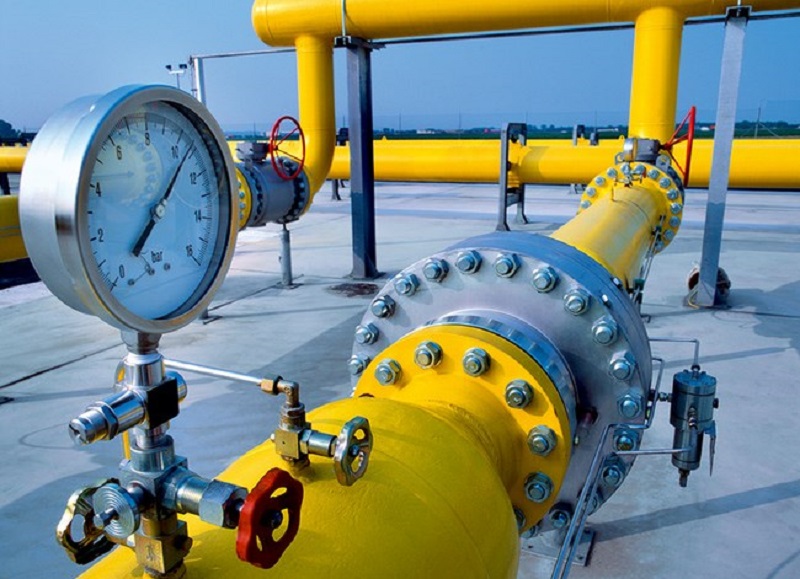
The Nigerian Upstream Petroleum Regulatory Commission (NUPRC) has unveiled a comprehensive regulatory roadmap designed to unlock over 55 trillion cubic feet (TCF) of uncommitted gas reserves and attract billions of dollars in new investments into the nation’s gas value chain.

This is part of roadmap, which aligns with President Bola Tinubu’s economic diversification and energy transition priorities, announced at the 3rd Gas Investment Forum held in Lagos recently.

The road outlines key policy and regulatory measures targeted at driving gas development, monetisation, and infrastructure expansion across the country.

Speaking at the forum, the commission’s chief executive, Mr Gbenga Komolafe, represented by the Executive Commissioner for Development and Production, Mr Enorense Amadasu, said the initiative is pivotal to securing Nigeria’s long-term energy security and global competitiveness.

“Nigeria’s proven gas reserves currently stand at 210.54 trillion cubic feet, comprising 109.51 TCF of Non-Associated Gas and 101.03 TCF of Associated Gas,” Mr Amadasu stated.

“Of this, about 55 TCF, representing 26 percent, remains uncommitted to existing or planned monetisation projects. This presents a massive investment opportunity for both domestic and international investors.”

According to him, since the enactment of the Petroleum Industry Act in 2021, the Commission has approved over 25 Non-Associated Gas, NAG, Field Development Plans, unlocking nearly 9,790 billion standard cubic feet, BSCF, of reserves and attracting over $4.9 billion in capital expenditure, CAPEX.

He further disclosed that the country’s annual average daily gas production in 2024 stood at 6.99 billion standard cubic feet per day, BSCF/D, with a Reserves Replacement Ratio of 1.56 and a Reserves Life Index of 92.7 years, an indication, he said, of the sector’s long-term sustainability.

“The national gas reserves have grown steadily from 208.83 TCF in 2023 to 210.54 TCF in 2025, while production rose from 6.91 BSCF/D to 7.61 BSCF/D,” he added.

“These figures demonstrate resilience and steady progress across the gas value chain.”

Providing further insight into gas utilisation patterns, Mr Amadasu explained that the domestic market currently accounts for about 28 percent of total gas consumption, while exports via LNG and the West African Gas Pipeline, WAGP, take up 35 per cent. Field use, including gas lift and reinjection, represents about 29 per cent.

He noted that NUPRC’s regulatory milestones have been instrumental in shaping the nation’s gas landscape, citing policies such as the Associated Gas Re-injection Act (1979), National Gas Policy (2008), Flare Gas (Prevention of Waste and Pollution) Regulations (2018), and the Decade of Gas Initiative.

“The PIA 2021, alongside recent instruments like the Domestic Gas Delivery Obligation Regulations (2022), Gas Flaring, Venting and Methane Emissions Regulations (2023), and the Oil and Gas Companies (Tax Incentives) Order (2024), underscores our commitment to a transparent, pro-investment framework,” he said.

Mr Amadasu further revealed that the Commission is actively facilitating regulatory approvals and negotiations for gas supply to major national projects such as the NLNG Train 7, the Ajaokuta–Kaduna–Kano Pipeline, and the Brass Fertilizer and Petrochemical Project.

He also disclosed that the Commission is currently monitoring 19 active gas development projects, 10 production facilities and 9 pipeline projects, with a combined capacity of 3.55 BSCF/D.

About 88 per cent of these projects are in the engineering phase, while 12 percent have moved to construction or fabrication.

“Eighty-six per cent of the new gas projects are designed for the export market, particularly to feed the Nigerian LNG, while about 23 percent, equivalent to 142 million standard cubic feet per day, MMSCFD,, will serve the domestic market,” he noted.


Adedapo Adesanya is a journalist, polymath, and connoisseur of everything art. When he is not writing, he has his nose buried in one of the many books or articles he has bookmarked or simply listening to good music with a bottle of beer or wine. He supports the greatest club in the world, Manchester United F.C.

Advertisement
Click to comment

Leave a Reply

Your email address will not be published. Required fields are marked *

Economy

Russia’s Lukoil Agrees to Sell International Assets in Nigeria, Others to Carlyle

Published

on

Russias Lukoil

By Adedapo Adesanya

US sanctioned Russian oil giant Lukoil, will sell its foreign assets, including those in Nigeria and five other countries, to the US investment firm, The Carlyle Group.

According to an announcement on Thursday, Lukoil reached an agreement with the US investment firm on the sale of Lukoil International GmbH, the holding company that owns the group’s non-Russian international assets.

These foreign assets include shares in oil fields and refineries across the globe, including in Iraq, Azerbaijan, Egypt, the United Arab Emirates (UAE), Nigeria, and Mexico.

The sale follows the US sanctions on Lukoil and Rosneft, “as a result of Russia’s lack of serious commitment to a peace process to end the war in Ukraine.”

The Donald Trump administration in October 2025 had carried out the decision to put pressure on Russia’s state finances, adding the country’s two largest oil producers, Lukoil and Rosneft, to its blacklist of sanctioned entities. The US had initially given the oil firm one month to sell the holdings before gradually extending it as negotiations dragged on.

Lukoil had announced that same month that it would sell all of its international assets, initiating a formal process to receive bids from potential buyers.

After months of negotiations with potential buyers and one preliminary agreement with Gunvor blocked by the US Treasury, which described the trading group as “the Kremlin’s puppet”, it has now signed an agreement to sell Lukoil International GmbH to Carlyle.

Companies working with the sanctioned firms risk secondary sanctions that would deny them access to US banks, traders, transporters, and insurers.

The agreement is not exclusive and is subject to conditions such as the procurement of necessary regulatory approvals, including permission from the US Department of the Treasury’s Office of Foreign Assets Control (OFAC) for the transaction with Carlyle.

Carlyle said that the agreement “has been structured to be fully compliant” with US Treasury policies and that it was “conditional upon Carlyle’s due diligence and regulatory approvals”.

Prior to the Carlyle news, other US oil and gas supermajors Chevron and ExxonMobil, and International Holding Company (IHC) of Abu Dhabi  expressed interest to the US Treasury to potentially acquire Lukoil’s international assets.

The sale would further dent Russian economy which has been struggling because of its war in Ukraine and Western sanctions have increased inflation and slowed economic growth. In 2025, the country’s oil and gas revenues, which make up about a quarter of government income and help fund the war, fell to their lowest level in five years.

Continue Reading

Economy

Eyesan Assures Investors of Transparency, Merit in Oil Licensing Bid

Published

on

Oil Licensing Bid

By Adedapo Adesanya

The chief executive of the Nigerian Upstream Petroleum Regulatory Commission (NUPRC), Mrs Oritsemeyiwa Eyesan, has assured investors of a transparent, merit-based and competitive process for Nigeria’s 2025 oil and gas licensing round.

Mrs Eyesan, gave the assurance on Wednesday while speaking at a Pre-Bid Webinar organised by the commission, noting that only applicants with strong technical, financial credentials, professionalism and credible plans would proceed to the critical stage of the bidding process.

The NUPRC in December 1, 2025 inaugurated Nigeria’s 2025 Licensing Bid Round, offering 50 oil and gas blocks across frontier, onshore, shallow water, and deepwater terrains for potential investors.

The basins included Niger Delta basin, with 35 blocks, Benin (Frontier) with three blocks, Anambra (Frontier), with four blocks, Benue (Frontier), with four blocks and Chad (Frontier) with four blocks on offer.

Mrs Eyesan explained that the licensing process would follow five stages: Registration and pre-qualification, data acquisition, technical bid submission, evaluation, and a commercial bid conference, with only bidders that meet strong technical and financial criteria progressing.

The NUPRC executive said the 2025 Licensing Round represented a deliberate effort by Nigeria to reposition its upstream petroleum sector for long-term investment, transparency, and value creation, amid increasing global competition for capital.

She said that energy security and supply resilience had become key global economic and geopolitical priorities, while investment capital was increasingly selective and disciplined.

“Our national priority is clear: to attract capital, grow reserves, and improve production in a responsible and sustainable manner.

“A structured and transparent licensing round is essential to achieving these objectives.

“The NUPRC is legally mandated to conduct licensing rounds in a periodic, open, transparent, and fully competitive manner and the entire 2025 process will be governed strictly by published rules,” she said.

The official further revealed that, with the approval of President Bola Tinubu, signature bonuses for the 2025 round have been set within a range designed to lower entry barriers and prioritise technical capability, credible work programmes, financial strength, and speed to production.

She emphasised that the bid process will fully comply with the Petroleum Industry Act (PIA) and remain open to public and institutional scrutiny through the Nigeria Extractive Industries Transparency Initiative (NEITI) and other oversight agencies.

Continue Reading

Economy

Afriland Properties, Three Others Weaken NASD Exchange by 0.06%

Published

on

Afriland Properties

By Adedapo Adesanya

Four price losers weakened the NASD Over-the-Counter (OTC) Securities Exchange by 0.06 per cent on Wednesday, January 28.

The decliners were led by Afriland Properties Plc, which lost N1.53 to close at N14.50 per share compared with the previous day’s N16.03 per share, Geo-Fluids Plc dropped 50 Kobo to end at N6.35 per unit versus Tuesday’s price of N6.85 per unit, Central Securities Clearing System (CSCS) Plc declined by 35 Kobo to N40.15 per share from N40.50 per share, and Food Concepts Plc decreased by 28 Kobo to sell at N2.72 per unit versus N3.00 per unit.

As a result, the market capitalisation of the bourse went down by N1.3 billion to N2.173 trillion from the N2.174 trillion it ended a day earlier, and the NASD Unlisted Security Index (NSI) fell by 2.17 points to 3,632.56 points from Tuesday’s 3,634.73 points.

In the midst of the profit-taking, some securities witnessed bargain-hunting, with Nipco Plc gaining N22.00 to close at N242.00 per share versus N220.00 per share of the previous session, FrieslandCampina Wamco Nigeria Plc improved by N4.00 to N68.00 per unit from N64.00 per unit, and Acorn Petroleum Plc added 8 Kobo to finish at N1.38 per share versus N1.30 per share.

At midweek, the volume of securities transacted by the market participants surged by 259.9 per cent to 4.7 million units from 1.3 million units, but the value of securities went down by 8.6 per cent to N52.4 million from N57.3 million and the number of deals shrank by 15.8 per cent to 32 deals from 38 deals.

CSCS Plc remained the most traded stock by value (year-to-date) with 15.3 million units exchanged for N622.4 million, followed by FrieslandCampina Wamco Nigeria Plc with 1.6 million units valued at N108.4 million, and Geo-Fluids Plc with 8.9 million units worth N60.3 million.

CSCS Plc was also the most traded stock by volume (year-to-date) with 15.3 million units sold for N622.4 million, followed by Geo-Fluids Plc with 8.9 million units exchanged for N60.3 million, and Mass Telecom Innovation Plc with 8.4 million units traded for N3.4 million.

Continue Reading

Trending