Health
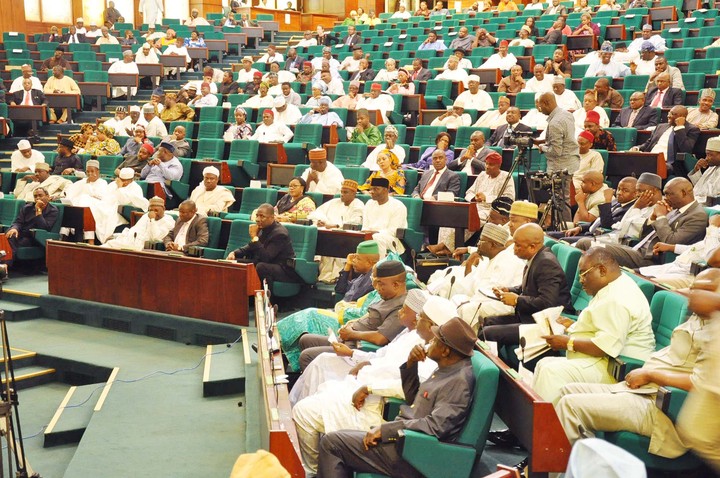
House of Reps Probes Nigeria’s $4.6bn International Health Aid Grants
By Adedapo Adesanya
The House of Representatives is investigating how $4.6 billion in international health aid grants between 2021 and 2025 were used.
During Wednesday’s plenary, lawmakers argued that the grants had failed to prevent high mortality rates, including Human Immunodeficiency Virus (HIV), tuberculosis, and malaria.
In a motion presented, the lawmakers said urgent oversight and a reevaluation of current strategies were necessary to prevent the country from missing the United Nations Sustainable Development Goal of ending epidemics of those diseases by 2030.
The probe comes amid international aid cuts from the United States after President Donald Trump returned to office in January. The Trump administration has led the way in cutting foreign aid budgets, prompting humanitarian workers to warn he has put the lives of vulnerable people, especially in Africa, at risk.
The lower chamber noted that Nigeria accounts for 31 per cent of global malaria deaths and ranked first in Africa and sixth globally for tuberculosis cases.
They directed the Committee on HIV/AIDS to report back after a month to propose legislative action.
The committee will investigate the grants provided by the United States Agency for International Development (USAID) and the Global Fund to fight AIDS, Tuberculosis, and Malaria.
The House noted that the United States Emergency Plan for AIDS Relief also contributed $6 billion over the same period to support HIV/AIDS treatment and strengthen health systems.
“Despite these significant investments, Nigeria remains burdened by public health challenges, including 51,000 AIDS-related deaths in 2023, ranking third globally,” the parliamentary motion said.
With Nigeria’s revenue already strained and health budget below the 15 per cent threshold recommended by the World Health Organisation (WHO), foreign aids help to fund health programmes. The cuts have since reduced available funds for a lot of projects, according to the Ministry of Health.
Aid cuts are threatening efforts like vaccine supply chains, treatment access, and disease control efforts, which could erase progress around mortality and morbidity reduction rates. Vulnerable conflict-prone regions like North East Nigeria also face shortages in medical aid and nutrition programmes.
Health
Tinubu Transmits 24 Bills to Reduce Bloated Health Sector Boards to Senate
By Adedapo Adesanya
President Bola Tinubu has transmitted 24 bills for consideration of the Senate which seeks to reduce the country’s over-bloated board memberships in the health sector.
The bills were conveyed alongside a letter addressed to President of Senate, Godswill Akpabio, and read at plenary on Tuesday, in line with Section 58(2) of the 1999 Constitution of Federal Republic of Nigeria.
President Tinubu said the proposed legislations followed a comprehensive review of existing health sector laws by the Attorney-General of the Federation and Minister of Justice.
He said the review, approved by the Federal Executive Council (FEC), was in collaboration with the Minister of Health and Social Welfare, Professor Muhammad Ali Pate.
According to the President, the bills aims at streamlining governance structures across health institutions by reducing over-bloated board memberships.
This, he said, would improve efficiency, effectiveness, and service delivery within the sector.
According to him, the proposed legislations cover a wide range of health institutions and regulatory bodies, including tertiary and teaching hospitals, specialty hospitals, professional councils, and regulatory agencies.
He said the bills transmitted to the Senate includes the National Hospital for Women and Children, Abuja, Federal Medical Centres, National Specialty Hospitals Management Board; Orthopaedic Hospitals Management Board
Others are the National Eye Centre, National Ear Care Centre, Nursing and Midwifery Council of Nigeria; Medical Laboratory Science Council of Nigeria, the National Agency for Food and Drug Administration and Control (NAFDAC) and the National Blood Service Agency, among others.
The President also listed additional legislative proposals such as the Records Officers Registration and Digital Health Bill 2025 and the Federal College of Complementary and Alternative Medicine Bill 2025.
President Tinubu expressed confidence that the Senate would give the bills careful and judicious consideration in the interest of strengthening Nigeria’s health sector.
After the letter accompanying the bills was read, Senate President referred all the 24 bills to the Senate Committee on Rules and Business for further legislative action.
Health
Africa Wellness Voices Initiative Promotes Mental Wellbeing
By Adedapo Adesanya
A new pan-African mental wellness campaign, the Africa Wellness Voices Initiative (AWVI), is set to launch this February, bringing together voices from across Africa to promote mental wellbeing, reduce stigma, and encourage supportive conversations around mental health.
Led by SereniMind, a mental health and wellness organization, AWVI will spotlight different African countries daily throughout February by sharing short wellness statements from individuals, organizations, youth leaders, and institutions.
Each daily feature will highlight local perspectives on mental wellbeing while reinforcing a shared continental message: mental health matters, it said in a statement shared with Business Post.
Mental health remains a critical but under-addressed issue across Africa. According to the World Health Organisation (WHO), depression affects more than 66 million people in the African Region, while mental health services remain limited in many countries. Young people are particularly affected, facing stigma, lack of awareness, and barriers to accessing support.
AWVI said it aims to address these gaps through a unified, prevention-focused awareness campaign that leverages digital platforms to reach communities across borders. In addition to featured voices, members of the public are encouraged to participate by sharing short wellness videos on social media, fostering grassroots engagement and peer-to-peer support.
Speaking on the initiative, Mr Oyenuga Ridwan, Founder of SereniMind, said: “Across Africa, too many people suffer in silence when it comes to mental health. Africa Wellness Voices Initiative is about unity, bringing together Africans from different countries, ages, and backgrounds to normalize conversations around wellbeing and remind people that seeking support is a strength, not a weakness.”
The February campaign is expected to reach 15–25 African countries, feature 60–120 individuals and organizations, and generate over 500,000 digital impressions across platforms including Instagram, LinkedIn, X (formerly Twitter), and TikTok. The organizers hope to scale the initiative in future editions to include all 54 African countries.
AWVI says it aligns with broader continental and global priorities on health, youth empowerment, and wellbeing, contributing to conversations around preventive mental health, community resilience, and inclusive development.
Through technology, partnerships, and community engagement, SereniMind works to promote wellbeing and reduce stigma around mental health.
Health
Mpox No Longer Public Emergency in Africa—CDC
By Adedapo Adesanya
The Africa Centres for Disease Control and Prevention has said Africa was no longer in the grip of a public health emergency over mpox, but warned that it remains endemic in several settings.
The announcement by the Director General of the Africa CDC, Dr Jean Kaseya, on Saturday, comes after the World Health Organisation (WHO) in September said mpox was no longer a global health emergency.
The organisation had declared its worldwide public health emergency over the viral infection — previously known as Monkeypox, and related to smallpox — in August 2024, after a two-pronged mpox epidemic broke out, primarily in the Democratic Republic of Congo (DRC).
Dr Kaseya said Africa was lifting its regional emergency status for the illness because of boosted detection, therapy, and the roll-out of more than five million mpox vaccines in 16 countries since 2024.
The response contributed to confirmed cases dropping by 60 percent between early 2025 and late 2025, and the number of deaths among those infected dropping from 2.6 per cent to 0.6 per cent, he said in a statement.
The lifting of the regional public health emergency status “does not mark the end of mpox in Africa,” he stated.
“Rather, it signals a transition from emergency response to a sustained, country-led pathway toward elimination.
“Mpox remains endemic in several settings, and continued vigilance, targeted investment, and innovation will be essential to consolidate gains and prevent resurgence,” the CDC chief added.
According to the WHO, 78 per cent of mpox cases were detected in Africa, with the DRC, Guinea, and Madagascar most affected.
-
Feature/OPED6 years agoDavos was Different this year
-
Travel/Tourism9 years ago
Lagos Seals Western Lodge Hotel In Ikorodu
-
Showbiz3 years agoEstranged Lover Releases Videos of Empress Njamah Bathing
-
Banking8 years agoSort Codes of GTBank Branches in Nigeria
-
Economy3 years agoSubsidy Removal: CNG at N130 Per Litre Cheaper Than Petrol—IPMAN
-
Banking3 years agoSort Codes of UBA Branches in Nigeria
-
Banking3 years agoFirst Bank Announces Planned Downtime
-
Sports3 years agoHighest Paid Nigerian Footballer – How Much Do Nigerian Footballers Earn