

General
Tinubu Delists Illicit Drug Convicts, Others in Updated Pardon List

By Adedapo Adesanya
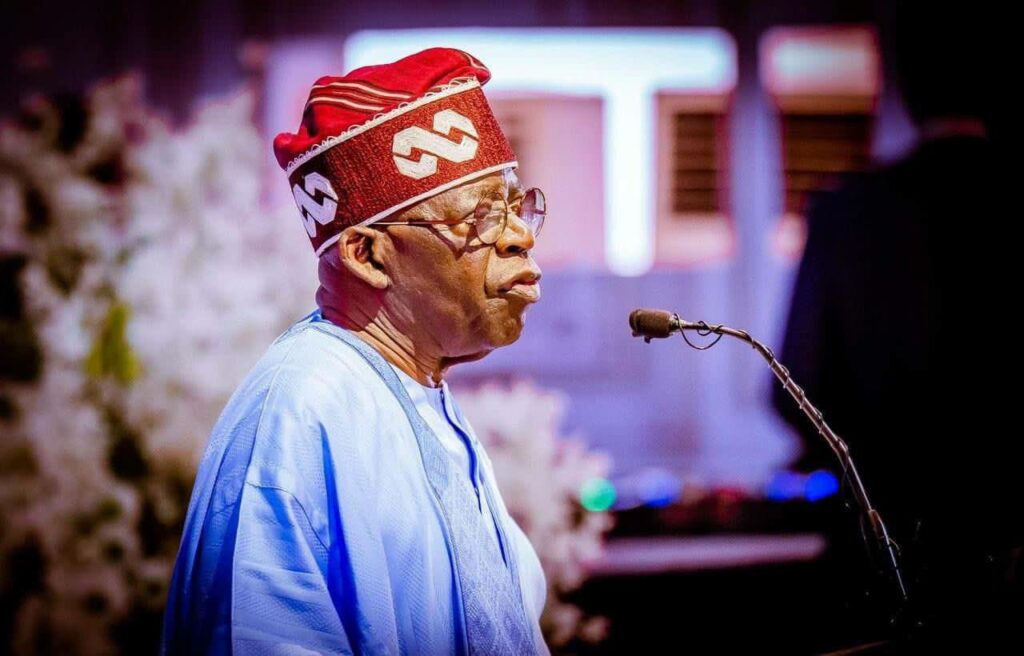
President Bola Tinubu has removed pardons for serious crimes as he signed the reviewed instrument of clemency and pardon.
The President executed the relevant instruments of release to complete the process of formally exercising his constitutional power of prerogative of mercy to grant pardon and clemency to specific individuals who were earlier convicted for various offences.
This was contained in a statement by his Special Adviser on Information and Strategy, Mr Bayo Onanuga, on Wednesday.
Recall that a few weeks ago, President Tinubu pardoned 15 former convicts (11 posthumously), granted clemency to 82 inmates, and commuted sentences for 65 others.
Totalling 175, these include high-profile cases, illegal miners, white-collar offenders, and those convicted of capital crimes; what the Presidency described as “the President’s commitment to justice, rehabilitation, and correcting historical wrongs.”
This action spurred outrage at some of the beneficiaries of the President’s goodwill.
According to today’s statement, following consultations with the Council of State and public opinion on the matter, Mr Tinubu directed a further review of the initially approved list for consideration in furtherance of his discretionary powers under Section 175(1)(&(2) of the 1999 Constitution (as amended).
It revealed that following the review, certain persons convicted of serious crimes such as kidnapping, drug-related offences, human trafficking, fraud, unlawful possession of firearms/arms dealing, etc, were “deleted from the list”.
The statement further revealed that others who had been hitherto pardoned in the old list had their sentences “commuted”.
“This action became necessary in view of the seriousness and security implications of some of the offences, the need to be sensitive to the feelings of the victims of the crimes and society in general, the need to boost the morale of law enforcement agencies, and adherence to bilateral obligations.
“The concept of justice as a three-way traffic for the Accused, the Victim, and the State/Society also guided the review,” the statement partly read.
The presidency further stated that the approved list of eligible beneficiaries had been transmitted to the Nigerian Correctional Service for implementation in line with the duly signed instruments of release.
President Tinubu also directed the immediate relocation of the secretariat of the Presidential Advisory Committee on Prerogative of Mercy from the Federal Ministry of Special Duties to the Federal Ministry of Justice.
This, he said, is to ensure that future exercises meet public expectations and best practices.
“President Tinubu also directed the Attorney-General of the Federation to issue appropriate Guidelines for the Exercise of the Power of Prerogative of Mercy, which includes compulsory consultation with relevant prosecuting agencies.
“This will ensure that only persons who fully meet the stipulated legal and procedural requirements will henceforth benefit from the issuance of instruments of release.
“The President appreciated the constructive feedback and engagement from stakeholders and the general public on this matter. President Tinubu also reaffirmed his administration’s broader commitment to judicial reforms and improving the administration of justice in Nigeria,” the statement added.



By Adedapo Adesanya
The Independent Petroleum Marketers Association of Nigeria (IPMAN) has urged the federal government to review the fuel import licences recently issued to some marketers, saying the policy is driving up fuel prices, putting pressure on foreign exchange and creating instability in the downstream petroleum sector.
Speaking in Abuja, IPMAN’s National Publicity Secretary, Mr Chinedu Ukadike, said the current import regime has not achieved its goal of making fuel more affordable. Instead, he argued that it has encouraged the importation of more expensive petrol while increasing the country’s dependence on foreign exchange.
According to Mr Ukadike, some importers plan to sell Premium Motor Spirit (PMS), also known as petrol, for about N1,350 per litre, which is higher than the ex-depot price offered by the Dangote Petroleum Refinery.
The IPMAN official questioned the need to import fuel at higher prices when locally refined products are available at lower costs, noting that the situation has made it difficult for independent marketers to plan their businesses because import costs continue to fluctuate.
Mr Ukadike also raised concerns about the quality of some imported fuel and called on regulators to ensure that only products that meet Nigeria’s standards are allowed into the country.
The association warned that continued fuel imports also increase demand for the US Dollar since importers pay for products in foreign currency. This, the association said, puts additional pressure on the naira and contributes to higher fuel prices.
The association stressed that Nigeria should focus on supporting local refining to improve energy security and reduce reliance on imported petroleum products.
It noted that the Dangote Petroleum Refinery has helped maintain steady fuel supply despite global disruptions, including tensions in the Middle East.
According to IPMAN, greater use of locally refined fuel would reduce FX demand, strengthen the refining industry, create jobs and improve economic stability. It also said producing enough fuel for local consumption while exporting excess output would help Nigeria earn more foreign exchange.
The association called on the federal government, the Nigerian Midstream and Downstream Petroleum Regulatory Authority (NMDPRA), the Nigerian National Petroleum Company (NNPC) Limited and the Presidential Committee on downstream reforms to engage stakeholders and adopt policies that support domestic refining.
IPMAN said strengthening local refining remains the best long-term solution for affordable fuel, stable supply and improved energy security in Nigeria.

By Adedapo Adesanya
The National Insurance Commission (NAICOM) has reiterated that the July 31, 2026, deadline for insurance companies to meet the new minimum capital requirements remains firm, warning operators against treating it as a mere formality.
The Commissioner for Insurance of NAICOM, Mr Olusegun Ayo Omosehin, who gave this warning, urged companies that have yet to meet the new minimum capital requirements to act with urgency.
Speaking on Friday at the investiture of Mr Akinjide Oluwarotimi-Orimolade as the 53rd President and Chairman of Council of the Chartered Insurance Institute of Nigeria (CIIN) in Lagos, Mr Omosehin said the recapitalisation exercise remained a critical pillar of the Commission’s ongoing reforms aimed at building a stronger, more resilient and consumer-focused insurance industry.
According to him, the new minimum capital requirement is designed to improve insurers’ claims-paying capacity, strengthen their balance sheets, support higher domestic risk retention and prepare the industry for a risk-based capital regime.
“With about 14 days to the July 31 deadline, we commend operators that have made significant progress in raising capital, engaging investors, strengthening governance and submitting for the Commission’s verification process.
“However, the deadline is not symbolic; it is regulatory, and the industry must treat it with the urgency it deserves,” he said.
The Commissioner assured stakeholders that the insurance sector regulator would maintain a transparent, fair and firm process, stressing that every operator must demonstrate financial soundness, regulatory compliance and operational readiness.
He added that stronger capitalisation must ultimately translate into better service delivery, prompt settlement of claims, improved consumer protection and greater public confidence in insurance.
Mr Omosehin noted that the Nigerian Insurance Industry Reform Act (NIIRA) 2025 has provided a stronger legal framework for a more resilient, better-governed and responsive insurance market, adding that NAICOM’s reform agenda is focused on market conduct, policyholder protection, governance, insurance penetration, financial inclusion and responsible innovation.
He described professionalism as the foundation of a trusted insurance market, saying the industry’s growth depends not only on adequate capital and effective regulation but also on ethics, competence, innovation and public confidence.
“The strength of insurance depends not only on capital and regulation but also on professionalism, ethics, innovation and public confidence. A trusted insurance market cannot be built on capital alone. It requires competent professionals, ethical institutions, credible advice and fair treatment of policyholders,” he stated.


By Bon Peters
About 29,645 litres of premium motor spirit (PMS), otherwise known as petrol, as well as industrial palm oil, edible palm oil and vegetable oil with a Duty Paid Value (DPV) of N26 million have been auctioned by the Eastern Marine Command of the Nigeria Customs Service (NCS).
The products were seized by the agency from some smugglers and auctioned on Thursday, July 16, 2026, at the Oron Outstation of the Command in Akwa Ibom State, in strict compliance with Section 119 of the Nigeria Customs Service (NCS) Act 2023.
It was gathered that the command auctioned 14,720 litres of petrol and 14,925 litres of industrial palm oil, edible palm oil and vegetable oil, according to a statement issued over the weekend in Port Harcourt, Rivers State, by the command’s spokesman, Mr Joshua Iliya, a Deputy Superintendent of Customs.
It was disclosed that the exercise aligned with the service’s statutory mandate to transparently dispose of seized, forfeited, and abandoned goods after all due legal processes have been completed.
The petrol had a DPV of N11.4 million, 14,200 litres of industrial palm oil with a DPV of N14.1 million, 600 litres of edible palm oil with a DPV of N840,000, and 125 litres of vegetable oil with a DPV of N141,000.
Declaring the auction open, the Acting Comptroller of the Eastern Marine Command, Mr Esien Etim Esiet, stated that the items were intercepted during successful anti-smuggling operations within the command’s jurisdiction, adding that the seizures followed direct violations of the NCS Act and other extant laws governing restricted goods.
“This exercise reflects our unwavering commitment to transparency, accountability, and the prudent management of government assets,” he stated, reiterating that, “Beyond the lawful disposal of goods, this auction serves as a stark reminder that smuggling is an economic crime.”
“It undermines national development, threatens local industries, and deprives the government of critical revenue,” he averred, commending the resilience and professionalism of the command’s officers for securing Nigeria’s maritime borders despite operating in challenging terrains.
The customs officer assured bidders that the process was structured to be fair, open, and legally compliant while offering equal opportunity to all eligible participants.
