Feature/OPED
CBN’s New Cash Policy: A Welcome Liberalisation or a Risky Retreat?
By Blaise Udunze
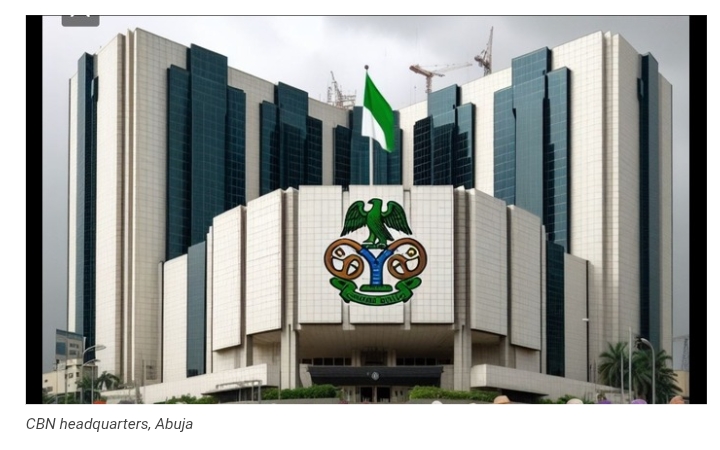
On December 2, 2025, the Central Bank of Nigeria (CBN) announced a policy that significantly departs from the cash-restriction measures Nigerians have faced lately. The apex bank abolished restrictions on cash deposits. Increased the weekly cash withdrawal limits to N500,000 for individuals and N5 million for corporates while substituting the earlier monthly limits of N5 million and N10 million respectively. These modifications, which will be effective from January 1, 2026, represent what the CBN describes as the necessity to “streamline provisions to reflect present-day realities.”
Authorized by the Director of Financial Policy & Regulation, Dr. Rita I. Sike, the policy overhaul aims to lower cash-management expenses, improve security, and lessen money-laundering threats related to Nigeria’s significant dependence on physical cash. Daily ATM withdrawal limits stay fixed at N100,000 and count toward the total cap. Withdrawals exceeding the limits incur charges of three percent for individuals and five percent for companies, with the revenues divided: 40 percent to the CBN and 60 percent to the banks.
This update comes three years following the disputed 2022-2023 cash redesign crisis at a time characterized by extreme cash deficits, extended lines at banks, and devastating impacts on the informal economy. Consequently, the newest order generates responses: praise from individuals who consider it delayed aid, disapproval from those perceiving it as a bewildering backtrack, and concern from those apprehensive about potential enduring hazards.
Experts Applaud a More Realistic Modification
For economists, in a publication by Nairametrics showed that the action taken by the CBN signifies much-needed practicality. Dr. Salisu Ahmed, an economist based in Abuja, refers to the updated limits as “a step,” praising the CBN for gaining a clearer insight into “cash management practices in a predominantly informal economy.”
He stated that the changes will alleviate the difficulties faced by families and small enterprises due to restrictions. Rigid withdrawal caps had limited transactions, made small-scale commerce more difficult, and caused numerous businesses to experience cash-flow problems. “This adjustment signifies a response from the CBN recognizing the challenges Nigerians face daily and easing rules that previously hindered commerce and individual management,” he clarified.
Banking analyst, David Omale, echoes this view, seeing the CBN’s action as a sign of responsiveness. He points out that higher limits could “enhance liquidity for firms facing challenges from inflation, supply-chain issues and unpredictable cash flows.”
In an economy in which over 60 percent of trade is informal and where the adoption of digital payments varies across different socio-economic groups, experts suggest the updated limits correspond more accurately to real-world conditions. These limits offer businesses flexibility to reinstate transactional liberty and may help recover public confidence diminished by previous cash shortages.
Critics Caution About Continuing Disparities and New Threats
However, the praise is not universally shared. Numerous specialists and industry participants contend that the modifications, although appreciated, are inadequate or might even be detrimental.
Financial strategist Nnenna Okafor contends that the updated limits are insufficient for traders and micro-businesses that depend largely on cash to sustain their operations amid challenges. Due to increasing product prices, logistical difficulties, and unreliable digital banking services in regions, she asserts that numerous Nigerians will still need more liquidity than the new thresholds to stay viable.
Within PoS operators’ players, in Nigeria’s payment system, the response is notably divided.
PoS Operators Split
Certain PoS agents appreciate the modifications, anticipating that they will:
– Reduce friction with banks over “flagged” transactions
– Facilitate processes for clients requiring withdrawals
– Rebuild trust after months of cash shortages
Others convey concern. A PoS operator in Lagos cautions that greater cash availability could hinder the adoption of payments. “While easier access to cash can address problems, it may also decrease dependence on PoS terminals and other digital payment solutions that provide long-term security and efficiency,” she remarked.
She argues that if the CBN does not combine the policy with targeted incentives to encourage payment uptake, Nigeria runs the risk of regressing into deep-rooted reliance on cash.
Another operator in Abuja points out a different issue that has to do with unstable cash supply at numerous commercial banks. He insists that simply boosting withdrawal limits does not automatically fix supply shortages. “If banks cannot consistently provide cash, raising limits fails to solve the issue,” he stated.
Other operators also caution that the new setting might push fintech firms out of the market, which possibly allows monopolies to form since only big payment firms can endure the transition back to increased cash usage.
Experts in Security Alert to Increasing Threats, from Crime
Apart from operational issues, security experts have expressed concerns about the dangers linked to greater cash flow.
Abas Ogendengbe, a security expert at Anold Consulting Ltd., warns that increased access to amounts without strict controls “opens up risks for theft, fraud and money laundering.” He contends that without improvements in surveillance transaction tracking and reporting frameworks by banks, criminal groups might take advantage of the restrictions.
Nigeria continues to confront:
– High rates of petty theft
– Organised criminal cash-for-goods networks
– Ransom-based criminality
– Fraudulent cash-flow manipulation
He contends that a policy boosting the amount of currency in circulation should consequently be accompanied by enhanced institutional protections, rather than diminished ones.
Advantages of the New Policy: Relief, Liquidity, and Business Freedom
Although it has faced criticism, the CBN’s decision carries benefits:
- Increased Liquidity for the Informal Sector
Small-scale merchants, farm producers, haulers, craftsmen, and market participants relying significantly on cash will experience ease in transferring money, purchasing stock, and expanding their businesses.
- Reduced Transaction Friction
Companies that once faced limiting restrictions now recover agility, enhancing business continuity and lowering administrative challenges.
- Restoration of Public Trust
After the trauma of the cash scarcity era, easing restrictions may slowly rebuild confidence in the banking system and encourage more people to save and transact through formal channels.
- Policy Simplicity
The updated limits, while still restricted, are more straightforward and less administrative compared to the special-authorization system.
The Disadvantages: Policy Volatility, Inflationary Risks, and Stunted Digitalisation
Nonetheless, the policy change is also accompanied by drawbacks:
- Weakening of Monetary Policy Credibility
Regular significant reversals indicate instability and undermine confidence. A central bank needs to be consistent and foreseeable; Nigeria’s policy environment has shifted in the contrary.
- Potential for More Money Laundering
Unlimited cash deposits and increased withdrawal limits are inconsistent with standards for preventing illegal financial transactions.
- Undermining Digital Payment Growth
The increase in fintech was expedited amidst cash availability. A return to reliance on cash might hinder innovation. Dampen the use of safer trackable digital methods.
- Increased Risk of Robbery and Cash-Based Crime
An increased amount of cash in use results in tangible currency to be stolen additional opportunities for criminals and amplified operational difficulties for the police.
- Higher Costs of Cash Management
The processes of currency production, circulation, and safeguarding place financial strains on the banking sector and the CBN.
Policy Details and Operational Complexities
The CBN’s circular offers instructions for operations:
– Excess withdrawal charges:
3 percent for individuals
5 percent for corporates
– Revenue sharing:
40 percent to CBN, 60 percent to banks
– Withdrawals from ATMs and PoS terminals contribute to the limit, highlighting the importance for customers to monitor where their withdrawals originate.
– ATMs can now be loaded with all denominations, although third-party cheque cashing is still limited to N100,000.
– Exemptions are maintained for government revenue accounts, microfinance banks, and primary mortgage banks.
– The removal of exemptions for embassies and donor agencies is a move that some parties consider diplomatically risky.
The CBN frames this policy change as a balance, boosting liquidity while still maintaining the nation’s goal of a cashless economy. Nevertheless, its effectiveness depends on the ability of the government and financial institutions to encourage payments while addressing the security challenges posed by greater cash circulation.
A Relief Today, a Question Mark Tomorrow
The CBN’s updated cash-policy structure provides support for families, small enterprises, and the informal sector. It addresses some of the severe effects of previous policies and shows a readiness, though delayed, to adjust to practical realities.
However, the enduring consequences are complex. The policy creates openings, as money laundering hampers progress in payments, increases security threats, and shows a regulatory environment grappling with achieving stability and trustworthiness.
Nigeria is at an intersection. While cash can relieve hardships, it cannot shape the future economic landscape. The current task is to apply this policy without hindering progress, undermining financial integrity, or jeopardizing monetary stability.
The question of whether this constitutes a liberalisation or an expensive withdrawal will in the end hinge on a single element, the CBN’s ability to pair increased liquidity with stronger oversight, steadfast policy direction, and sustained digital-payment incentives.
Only then can Nigeria avoid sliding backward and instead build a financial system that truly reflects the realities of its people, its economy, and its future.
Blaise, a journalist and PR professional, writes from Lagos, can be reached via: [email protected]
Feature/OPED
What Dangote’s Reported $40bn Private-Placement Valuation Could Mean for Nigerian Investors, NGX
Dangote Petroleum Refinery could become an unusually large part of Nigeria’s stock market if its eventual IPO valuation is close to the roughly $40 billion implied by a recent private placement.
EBC Financial Group (EBC) highlights that this would value the refinery at about N54.63 trillion, using the Central Bank of Nigeria (CBN) Nigerian Foreign Exchange Market rate of N1,365.6856 per USD on August 7. Against the N158.513 trillion value of companies listed on the Nigerian Exchange (NGX) on the same date, adding the refinery at that value would produce a market worth about N213.14 trillion, with Dangote Refinery accounting for 25.6%.
This scenario assumes the full $40 billion equity value is reflected in NGX market capitalisation and other listed company values remain unchanged. At that size, movements in the company could become highly visible across the Nigerian equity market, although its actual influence on NGX indices may depend on the shares available for public trading and the relevant index rules.
David Precious, Senior Market Analyst at EBC Financial Group, said: “If Dangote Refinery entered the Nigerian Exchange at close to a $40 billion valuation, it could account for roughly one-quarter of the resulting NGX market value. If that valuation is difficult to support, few shares are available for public trading, or investors need to reduce other Nigerian holdings to participate, the effects could extend across Nigeria’s equity market, including existing NGX-listed companies and their shareholders.”
A Private Transaction Can Indicate Value, but Public Investors Need Financial Evidence
Based on the private transaction, $40 billion provides an indication of Dangote Refinery’s value, but it does not establish the eventual IPO price. Details published on August 4 said a $2.5 billion private placement for a 6% stake implied a valuation of roughly $40 billion. The proposed initial public offering (IPO) was reported to target about $5 billion, while the eventual IPO valuation and percentage offered to the public were not disclosed. This is important as a private transaction may produce a different valuation from the price a broad group of public investors is prepared to accept.
For context, public equity market values cited alongside the transaction were about $12 billion for Türkiye’s Tupras and $16 billion for US-listed HF Sinclair. The Dangote figure is about 3.3 times Tupras and 2.5 times HF Sinclair. They are not direct comparisons because profitability, debt, operations and growth plans differ. The gap nevertheless increases the need for audited earnings, cash flow, debt and investment plans that explain what supports the higher valuation.
The reported $5 billion fundraising target is equivalent to about N6.83 trillion at the August 7 exchange rate, or approximately 4.3% of the N158.513 trillion existing NGX market value. Proposed $5 billion raise. If new Nigerian or foreign money funds the offer, the pool of capital invested in Nigerian equities could expand. If investors sell current holdings to participate, capital could instead move away from other listed companies.
Publicly Tradable Shares and New Investment Could Shape the Wider Market Impact
NGX rules show why total company value does not tell investors how much stock they can actually trade. Main Board companies can qualify through either 20% public ownership held by at least 300 shareholders or publicly tradable shares worth at least N20 billion. The Premium Board value alternative is N40 billion. Holdings controlled by promoters, directors and close relatives, government, or strategic investors owning at least 5% are excluded from qualifying public shares.
This means a company worth tens of trillions of naira could still have a much smaller amount of stock available for regular trading if ownership remains concentrated. The key issue is therefore how much of Dangote Refinery becomes accessible to public investors and how widely those shares are held.
Regional investment could also affect the outcome. Details published on 4 August indicated engagement involving South Africa, Kenya, Egypt, Ghana and Rwanda, including possible Kenyan participation of up to $500 million, although no allocations were confirmed. The Johannesburg Stock Exchange separately said Dangote Group had shown strong intent to pursue a South African listing after Nigeria. Regional participation in the Nigerian offer could bring new capital directly into Nigerian equities. A later South African listing could broaden access but would not itself increase money raised through the Nigerian IPO.
Pension funds face the same question of capital allocation. The National Pension Commission (PenCom) waived the usual existence, profitability and dividend requirements so Pension Fund Administrators can consider the IPO, while retaining internal investment policies, risk-management requirements and duties to contributors and retirees. PenCom Circular on Dangote Refiner. PenCom states that the dispensation is exceptional, one-off and specific to this proposed IPO.
Pension funds held N5.907 trillion in domestic ordinary shares at the end of June, compared with the offer’s approximately N6.83 trillion equivalent. This does not imply pension funds would finance the offer. It shows why managers must consider exposure to one company and whether participation requires reducing other investments.
Precious added, “Dangote being listed could become a turning point for Nigeria’s equity market if it brings wider public ownership and additional African capital. Investors still need clear evidence supporting the valuation, clarity on how much of the company they can trade and an explanation of where the money raised will go. Those answers will determine whether the listing expands the Nigerian equity market or concentrates more investment around one company.”
An approved prospectus should clarify the valuation, shares offered, public ownership and use of proceeds. The Securities and Exchange Commission (SEC) said on June 23 that no IPO application had then been filed or approved and ordered unauthorised pre-marketing to stop. Details published on 4 August later said an IPO application had been submitted, with regulatory approval expected in the following weeks. Until final terms are disclosed, the test for Nigeria is whether the listing combines a supportable valuation with broad public ownership and genuinely additional investment.
Feature/OPED
Moving the Stablecoin Conversation From Hype to Utility in Africa’s Next Payments Evolution
By Rajat Mishra
For much of the past decade, discussions around stablecoins have been dominated by cryptocurrency speculation. Increasingly, however, stablecoins are emerging as practical financial infrastructure for moving money across borders, managing liquidity and improving payment efficiency.
The real opportunity lies not in choosing between traditional finance and digital assets, but in building an integrated financial ecosystem where both work together to improve efficiency, broaden financial access and deepen economic connectivity across the continent.
Despite significant advances in financial inclusion and digital payments, moving money across African borders remains far more difficult than it should be. Businesses continue to face challenges when making cross-border payments. Fragmented payment networks, multiple intermediaries, and lengthy settlement processes increase costs and create operational inefficiencies.
Remittance providers, the specialised financial services that millions rely on to send money home, face many of the same structural challenges. These providers play a critical role across the continent. In fact, 19 of Africa’s 54 countries receive remittance inflows equivalent to at least 4% of their GDP. Yet Africa remains the world’s most expensive region to send money to.
These challenges are not a reflection of remittance providers themselves, but of the fragmented banking and settlement infrastructure underpinning international money movement. Financial institutions must often manage liquidity across multiple disconnected currency markets while relying on complex correspondent banking networks and clearing systems. The result is higher costs, slower settlements, and capital that remains unnecessarily locked up.
One of the most immediate opportunities for stablecoins lies in improving cross-border settlement. Consider a Kenyan business importing goods from South Africa. Under traditional settlement models, payments often pass through multiple correspondent banking relationships, involve several foreign exchange conversions, and can take days before funds reach the intended recipient.
Stablecoin-enabled settlement rails have the potential to reduce much of this friction by enabling value to move more efficiently between financial institutions across markets. The result can be shorter settlement times, greater transparency and improved predictability for businesses operating across borders.
The benefits extend well beyond businesses. For millions of Africans working abroad, remittances remain a financial lifeline, helping families pay school fees, healthcare costs and daily living expenses. Yet sending money home often involves navigating a complex chain of money transfer operators, correspondent banks, and local payout partners, with each additional layer introducing costs and delays.
Stablecoins can help streamline the backend movement of funds between institutional participants, reducing settlement costs and improving efficiency across the value chain.
For end users, the advantage is simplicity. Recipients do not need to interact with, or even understand stablecoins directly. They continue to receive money through familiar, trusted channels, whether a local bank account or mobile money wallet, only faster and at a lower cost.
Beyond payments, stablecoins also address one of the less visible but most significant challenges in cross-border finance: liquidity management. Financial institutions operating across multiple markets must constantly ensure they have sufficient funds in the right currency, in the right jurisdiction and at the right time. Today, this often requires pre-funding accounts across multiple countries, a costly practice that traps large amounts of capital and limits financial flexibility.
Stablecoins introduce a new model for moving value across borders in near real time, enabling institutions to manage liquidity dynamically as demand arises. This can reduce the need for large pre-funded balances, improve treasury efficiency and free up capital that can be deployed more productively. Ultimately, these efficiencies can translate into faster settlements, lower costs, and better services for businesses and consumers alike.
However, the true value of stablecoins will not come from isolated blockchain networks operating independently of existing financial systems. Their long-term impact will depend on how effectively they integrate with banks, mobile money platforms, payment service providers and existing payment infrastructure. Interoperability will be critical to ensuring payment flows move seamlessly between systems, markets and currencies. The goal should be to strengthen and modernise today’s payment ecosystem, not replace it.
From experiment to infrastructure: what global moves are telling us
Some of the clearest signals that stablecoins are moving from experimentation to infrastructure are coming from card networks. Mastercard’s reported agreement to acquire BVNK, valued at up to $1.8 billion, points to a strategic investment in the settlement layer connecting stablecoin rails with traditional banking and reflects growing institutional confidence in stablecoin-enabled cross-border payments.
Visa’s expansion of stablecoin-backed cards through Stripe’s Bridge to more than 100 countries reflects a complementary strategy. Rather than acquiring infrastructure outright, Visa is leveraging its existing global network as the final distribution layer for stablecoin-funded payments.
The inclusion of African markets is particularly significant. It signals growing confidence that stablecoin-backed payment instruments can operate alongside, and in some cases complement, the mobile money ecosystems that already dominate wallet-based payments across much of the continent.
Taken together, these developments point to a broader shift. Card payment networks are moving from observing the stablecoin conversation to investing directly in the infrastructure that underpins it. For Africa, the implication is not that stablecoins will replace existing payment rails, but that success will increasingly belong to institutions capable of orchestrating multiple settlement rails – cards, bank transfers, mobile money and stablecoins- within a unified, interoperable ecosystem. Local market expertise, regulatory relationships and last-mile distribution will remain decisive competitive advantages.
Building for scale through trust and regulation
But despite their potential, stablecoins cannot operate outside the boundaries of regulated financial systems. Their long-term viability across Africa depends on clear regulatory frameworks, robust compliance standards and trusted infrastructure that supports transparency, risk management and consumer protection.
We are already seeing this evolution. In markets such as South Africa, institutions facilitating cross-border settlements must navigate increasingly sophisticated regulatory requirements, including approvals for certain offshore crypto-related activities. Globally, initiatives such as the OECD’s Crypto-Asset Reporting Framework (CARF) and expanded Travel Rule obligations are raising expectations around reporting, tax transparency and compliance.
These developments reinforce a simple reality: stablecoin infrastructure does not reduce compliance obligations. It raises the bar for governance, transparency and institutional risk management. The objective is not to bypass regulation, but to build interoperable payment systems that can innovate confidently within it.
From the edges to the plumbing
The stablecoin conversation is steadily moving beyond speculation and towards practical implementation. What once sat at the edges of the payments debate is becoming part of the plumbing of cross-border finance rather than a parallel system to it.
The question is no longer whether stablecoins have a role to play in payments. The question is where they deliver the greatest value. In Africa, that value is increasingly clear: faster settlement, improved liquidity efficiency and more connected cross-border commerce. The winners will not be those that replace existing financial systems, but those that successfully connect stablecoin rails with the banks, mobile money networks and payment providers that already power the continent’s economy.
For pan-African payment networks such as Onafriq, the priority is ensuring that emerging technologies complement the financial infrastructure businesses and consumers already trust, rather than introducing new layers of complexity.
The opportunity lies in connecting stablecoin settlement with banks, mobile money networks and payment providers, ensuring the benefits of this new infrastructure deliver tangible outcomes for African businesses and consumers.
Rajat Mishra is the CPO for Network Product & Deputy Group CPIO at Onafriq
Feature/OPED
The Quiet Strength of Kaduna’s Fiscal Discipline and Public Finance
By Sani Abdulrazak, PhD
The irony in governance is that the projects that capture public imagination are often the least difficult to appreciate. A newly commissioned road, a modern school, a renovated hospital or a flyover bridge speaks for itself. Fiscal discipline does not. Yet, behind every lasting development lies an often-overlooked virtue: the prudent management of public resources. Governments are judged ultimately not by the abundance of their income but by the wisdom of their choices in spending that income. Though prosperity is desirable as we all know, we have to admit that stewardship is equally indispensable. When public finance is guided by discipline rather than expediency, governments create not only projects but also the confidence that today’s development will not become tomorrow’s burden.
It is against this backdrop that Kaduna State’s fiscal journey deserves careful reflection.
Governor Uba Sani assumed office in May 2023 at a time when the state, and by extension the country’s economic landscape, was anything but forgiving. The removal of fuel subsidy, exchange-rate volatility, persistent inflation, and rising debt-service obligations placed unprecedented pressure on governments at every level. States were confronted with a difficult reality: revenues were uncertain, the demands of citizens were increasing, and the cost of delivering public services was rising sharply. In such circumstances, leadership is tested less by ambition than by restraint. The challenge is not merely to spend, but to spend wisely.
One of the defining features of Kaduna’s public finance strategy has been its emphasis on fiscal prudence. The evolution of Kaduna’s budgets illustrates this approach. The approved 2023 budget stood at approximately ₦376 billion, with about 64 per cent allocated to capital expenditure. By 2026, the state’s budget had expanded to approximately ₦985.9 billion, with nearly 71 per cent earmarked for capital projects. While a larger budget does not automatically translate into better governance, the increasing share devoted to capital expenditure suggests an intention to invest more heavily in assets capable of generating long-term social and economic value.
It is important to note that Kaduna’s fiscal philosophy appears to rest on the belief that sustainable development cannot be separated from responsible financial management. Whether this approach ultimately delivers all the expected outcomes will be judged by history. But the effort to align expenditure with development priorities represents a significant dimension of governance, one that often receives less public attention than it deserves.
Like most Nigerian states, Kaduna relies on a combination of statutory allocations from the Federation Account and internally generated revenue (IGR). Available fiscal reports indicate that Kaduna has continued efforts to strengthen its internally generated revenue through reforms in tax administration and improved collection mechanisms. While revenue generation alone is not evidence of economic prosperity, it provides government with greater fiscal flexibility and resilience, particularly during periods of national economic uncertainty. Equally important is the principle that expanding the revenue base should not be confused with imposing heavier burdens on taxpayers. The more sustainable path lies in improving efficiency, reducing leakages, and encouraging economic activity that naturally broadens the tax net.
Another pertinently salient aspect of Kaduna’s fiscal approach that deserves attention is the administration’s stated commitment to avoiding new borrowing while continuing to service inherited debt obligations. In a federation where public borrowing has become a common instrument for financing development, such a position reflects a cautious philosophy of public finance. According to official statements, the government has prioritised meeting existing debt commitments while financing new projects through budgetary allocations, statutory revenues, and other available funding sources rather than contracting fresh loans. The most overlooked measure of fiscal discipline is not the size of a budget or even the amount of revenue collected. It is the willingness of a government to treat public funds as a trust rather than an entitlement. Financial prudence is rarely dramatic, but it is often decisive. It is the quiet habit of making difficult choices today so that tomorrow’s opportunities are not compromised by yesterday’s excesses.
There is, pertinently, external evidence to suggest that Kaduna’s emphasis on fiscal discipline is not merely a government narrative. In the 2025 Transparency and Integrity Index of the Centre for Fiscal Transparency and Public Integrity (CeFTPI), Kaduna ranked first among Nigeria’s 36 states for the second consecutive year, scoring 49.08 per cent and recording the country’s highest score; 80 per cent, in the Control of Corruption variable. The assessment covered fiscal transparency, open procurement, human resources, control of corruption and citizen engagement. This was not an isolated recognition. In the 2024 edition, Kaduna again ranked first among the states, ahead of Kano and Kogi, while in the 2023 Transparency and Integrity Index it placed second nationally with 59.7 per cent.
More recently, the 2025 Phillips Consulting State Performance Index placed Kaduna third among the 36 states and awarded it an Excellent Four-Star rating, with fiscal management among the areas assessed. These assessments do not, by themselves, prove that every naira has been optimally spent, nor do they erase the challenges confronting the state. They do, however, provide an important independent corroboration that Kaduna’s efforts in transparency, accountability and public-sector financial management have been noticed beyond the corridors of government. In public finance, therefore, such external assessments are worth considering.
Yet, no appraisal of public finance can be complete without acknowledging its limits. Fiscal discipline, however commendable, is not a panacea for every economic challenge. Kaduna, like every other state in Nigeria, operates within a national macroeconomic environment over which it has limited control. Inflation continues to erode purchasing power, businesses contend with high operating costs, exchange-rate volatility affects production and investment, and many households still struggle with the rising cost of living. These realities remind us that sound state finances cannot, by themselves, insulate citizens from broader economic shocks.
This distinction is important because it separates governance from circumstance. A prudent administration may not be able to determine the value of the naira or the global price of commodities, but it can determine how efficiently public resources are managed, how transparently budgets are implemented, and how wisely limited revenues are allocated. In that sense, fiscal discipline should not be judged by whether every economic hardship disappears, but by whether government responds to those hardships with responsibility and not recklessness.
Kaduna’s experience suggests an appreciation of this responsibility. The emphasis on capital investment, efforts to strengthen internally generated revenue, and the administration’s declared preference for avoiding new borrowing while servicing inherited obligations point to a philosophy that values sustainability over expediency. These choices contribute to a financial culture that seeks to preserve the state’s capacity to invest, grow, and respond to future challenges.
That is not to suggest that the work is complete. Public finance is never a finished project; it is a continuous exercise in adaptation. As Kaduna’s economy evolves, expectations will also rightly rise; citizens will demand greater efficiency in service delivery, stronger budget implementation, improved transparency, broader private-sector participation, and measurable improvements in living standards. Fiscal discipline must therefore remain dynamic, ensuring that every naira spent delivers the greatest possible public value.
Prudent financial management remains the quiet strength of Kaduna’s fiscal discipline and public finance. It is a strength that is rarely seen or acknowledged by the majority; the strength to prioritise sustainability over excess and fiscal adventurism. It is important to note that the loudest achievements may command today’s headlines, but it is often the quiet virtues- prudence, discipline, accountability, and foresight- that shape tomorrow’s verdict. In public finance, as in life, the strongest foundations are rarely the most visible, yet they are almost always the most enduring.
Sani Abdulrazak, PhD, is a writer, researcher and public affairs analyst based in Zaria, Kaduna State.