Feature/OPED
A Nation on Alert: Is FIRS’ Xpress Payments Move Consolidating a Revenue Cartel?
By Blaise Udunze
Nigeria’s national mood is tense. The country is facing economic hardship, insecurity, public distrust in institutions, and an increasingly widening gap between citizens and their government. Yet, in the midst of this fragility, a quiet administrative action by the Federal Inland Revenue Service (FIRS) has sparked a storm of public concern, political accusations, and renewed debate over who truly controls Nigeria’s revenue system.
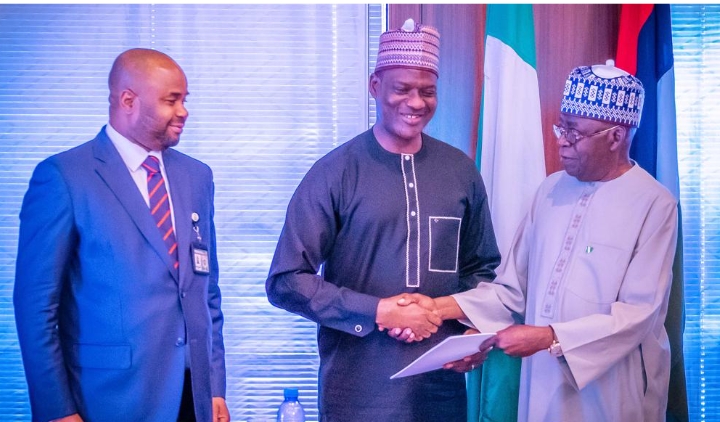
The controversy began when the FIRS quietly announced the appointment of Xpress Payment Solutions Limited, a fast-rising Nigerian fintech company, as a Treasury Single Account (TSA) collecting agent, effectively giving the company authority to process federal government tax payments through the TaxPro Max platform. With this appointment, taxpayers can now remit Company Income Tax, Value Added Tax, Withholding Tax, and other federal payments using XpressPay or the company’s in-branch e-Cashier platform.
At first glance, the move appears technical and harmless, perhaps even a necessary step to modernize Nigeria’s digital tax infrastructure. But almost immediately, outrage erupted across political, civil society, and economic circles. And within hours, the debate had escalated into what is now being framed as a national question: Is Nigeria witnessing the quiet re-emergence of a revenue cartel, this time on a federal scale?
A Tax Gatekeeper Emerges Silently
Xpress Payments is not an unfamiliar name in Nigeria’s fintech landscape. Incorporated in 2016, the company has grown steadily, offering secure payment gateways, switching services, and enterprise financial solutions. Its Acting Managing Director, Wale Olayisade, expressed delight at the appointment, describing it as a major milestone, “We are honoured to be selected by FIRS. Our systems are built to ensure ease, speed, and security for every transaction.”
He insisted that taxpayers would enjoy a seamless, transparent, and reliable experience.
Ordinarily, such remarks should settle nerves. But the public response was anything but calm. Citizens and political stakeholders immediately raised a torrent of questions:
– Why was this appointment announced quietly, without public consultation?
– What new value does Xpress Payments add that existing TSA channels, such as Remita, do not already provide?
– Were there competitive bids?
– What are the contract terms, and who benefits financially?
– Why concentrate such a sensitive national function in private hands at a time when transparency is already strained?
The silence from government circles only deepened the suspicion. In governance, especially around revenue, silence is not neutrality; it is oxygen for mistrust.
Atiku Abubakar Explodes: “This Is Lagos-Style State Capture”
The loudest reaction came from former Vice President Atiku Abubakar, who issued one of his most forceful statements in recent years. Atiku accused the Federal Government of attempting to replicate the same at a national scale. The controversial Lagos revenue model was dominated for years by Alpha Beta, a private firm accused of enjoying a monopoly over the state’s revenue pipeline.
In his words, “This is the resurrection of the Alpha Beta revenue cartel. What we are witnessing now is an attempt to nationalise that template.”
Atiku warned that the move could concentrate power around politically connected private actors, enabling them to sit at the centre of federal revenue flows. He questioned the timing, calling it insensitive given the nationwide grief over insecurity, “When a nation is mourning, leadership should show empathy, not expand private revenue pipelines.”
He issued five demands:
- Immediate suspension of the Xpress Payments appointment
- Full disclosure of contract terms and beneficiaries
- A comprehensive audit of TSA operations
- A legal framework preventing private proxies from controlling public revenue
- A shift in national priorities toward security and transparent governance
His final warning was blunt, “Nigeria’s revenues are not political spoils. They are the lifeblood of our national survival.”
The Ghost of Alphabeta: Why Nigerians Are Worried
For many Nigerians, this controversy triggers painful memories of earlier private-sector dominance over public revenue. The “Alphabeta era” in Lagos is widely remembered, fairly or unfairly, as a time when a single private company appeared to dominate the state’s tax collection landscape, shrouded in secrecy and controversy.
Nigeria’s fear is simple:
– If revenue collection becomes controlled by one or two private companies, transparency dies, and corruption flourishes.
– Allowing private entities to sit between taxpayers and government can create:
- Monopoly power
- Inflated service fees
- Data privacy concerns
- Political weaponization of revenue information
- Institutional dependency
- Centralization of sensitive national data
Each of these risks has real consequences for economic stability.
FIRS’ Defence: “It Is Only an Additional Option”
To be fair, the FIRS insists that Xpress Payments is only one of several available channels, not the exclusive gatekeeper. Remita and other payment service providers remain operational.
According to FIRS, the move is part of a broader effort to modernize and expand taxpayer options within the TSA. In a functional environment, this would be welcomed as healthy competition. But Nigerians are not reacting to the announcement; they are reacting to the pattern:
– Sudden appointments
– Lack of transparency
– Political undertones
– Private-sector centralization of public revenue
– Timing that coincides with widespread economic strain
The concern is not the company itself; it is the impenetrability surrounding how such decisions are made.
The Big Tax Picture: Major Reforms Coming in January 2026
While the Xpress Payments controversy rages, Nigeria is simultaneously preparing for the most ambitious tax reform in decades, one that may change how individuals and businesses perceive taxation entirely.
The reforms, spearheaded by the Presidential Fiscal Policy and Tax Reforms Committee, chaired by Mr. Taiwo Oyedele, will take effect in January 2026, and they promise sweeping changes.
- Drastic Reduction of Tax Burden on 98 percent of Nigerians
Oyedele has repeatedly emphasized, “You will pay less or no tax if you are in the bottom 98 percent of income earners.” Under the new regime:
– Workers earning below N800,000 annually pay zero personal income tax.
– Basic food, healthcare, education, and public transport become VAT-exempt, lowering living costs.
– Small companies (turnover ≤ N100m) will pay zero corporate tax, zero capital gains tax, and be exempt from the new 4 percent development levy.
- Consolidation of Multiple Tax Laws
The reform merges numerous existing laws, CITA, PITA, VAT Act, CGT Act, into a unified tax code. This eliminates duplication, confusion, and overlapping mandates that have plagued Nigeria for decades.
- Increased CGT for Companies, Fairer Rates for Individuals
– Companies now pay 30 percent CGT.
– Individuals pay CGT based on their income band.
- Tax on Digital and Virtual Asset Profits
The reforms modernize the tax base to include digital transactions and virtual assets.
- Export Incentives
Profits from goods exported will now be income tax-free, provided proceeds are repatriated legally.
- Stronger Tax Institutions
A new Nigeria Revenue Service (NRS) will become the sole federal tax collector, while the Tax Ombudsman will resolve disputes.
- President Tinubu Sets Up an Implementation Committee
To ensure smooth rollout, President Tinubu has approved the National Tax Policy Implementation Committee (NTPIC) chaired by Joseph Tegbe and supervised by Minister of Finance, Wale Edun.
The goal:
Improve compliance, reduce leakages, and reinforce fiscal sustainability.
So, Why Are Nigerians Still Worried?
Because reform alone does not guarantee trust. Nigerians welcome the promise of lower taxes, simpler laws, and less harassment. But they fear that while the tax burden may be reduced, the control over tax collection may be quietly shifting into private hands.
The unsettling question persists:
– How can a nation modernize its tax system while simultaneously outsourcing its revenue gateways?
– What Exactly Is the Risk?
- Over-Centralization of Revenue Gateways
Even if Xpress Payments is “an option,” such appointments can slowly evolve into de facto monopolies, especially in Nigeria, where political influence often determines market dominance.
- Data Privacy and National Security
Tax data is deeply sensitive. It reveals income patterns, business operations, sectoral flows, and strategic economic information. Consolidating such data under private firms raises major cybersecurity concerns.
- Potential for Political Capture
The fear is not that Xpress Payments lacks capacity; the company is reputable, but that future actors may exploit such arrangements for political financing or influence.
- Risk of Middlemen Profiting from Public Revenue
If service fees or transaction charges apply, taxpayers may indirectly fund private intermediaries for basic access to government services.
- Erosion of Public Trust
A tax system must be trusted to function. When people sense secrecy, they resist compliance.
What Nigeria Needs Now: Full Transparency, Not Silence
To rebuild confidence, the federal government must take immediate steps:
- Publish All Contract Details
Service fees, revenue-sharing models, data access permissions, contracts’ duration, and ownership disclosures must be made public.
- Conduct an Independent Audit of TSA Payment Providers
This should include Remita, Xpress Payments, and all other agents.
- Prevent Monopolies in Revenue Collection
No single company should control more than 30 percent of federal tax traffic.
- Strengthen FIRS Capacity
Modern digital tax administration should rely primarily on state capacity, not outsourcing.
- Establish a Legal Framework for Digital Tax Contractors
To regulate:
– Data usage
– Infrastructure standards
– Profit margins
– Conflict-of-interest rules
Without such laws, Nigeria remains vulnerable.
A Nation at a Revenue Intersection
Nigeria stands at a defining moment. The 2026 tax reforms promise hope: lower taxes, simpler rules, better compliance, and reduced harassment. They present an opportunity to reset the social contract around taxation.
But that promise is threatened by the unsettling perception that tax collection is quietly being privatized, again. The public narrative is now locked in a dangerous contradiction; the government promises tax relief, while citizens fear revenue capture.
Until transparency is restored, the controversy surrounding Xpress Payments will not disappear. It has grown beyond a payment gateway issue. It has become a test of Nigeria’s commitment to:
– Accountability
– Institutional integrity
– Democratic oversight
– And the protection of national revenue
A country cannot modernize its tax system while leaving its revenue gateways in the shadows. Nigerians want answers. They want openness. And they want assurance that the era of revenue cartels, real or perceived, will never return. Anything short of full disclosure leaves the nation with a painful question: Who is truly controlling Nigeria’s money?
Blaise, a journalist and PR professional, writes from Lagos, can be reached via: bl***********@***il.com
Feature/OPED
3 Infrastructure Gaps Nigerian Lenders Can’t Afford to Ignore
By Winston Osuchukwu
Digital transformation has modernised the front end of the credit process in Nigeria, streamlining customer journeys and shortening the path from application to disbursement. However, this progress has not reached the core of the credit process. While digital application flows are now standard, the underlying risk infrastructure remains underdeveloped. Following the withdrawal of the Central Bank of Nigeria’s forbearance measures, the sector’s non-performing loan (NPL) ratio climbed to 8.03% – well above the 5% regulatory limit.
The deeper, structural flaw is that banks still run on legacy risk models and backwards-looking data: an approach that leaves existing portfolios exposed while shutting out the vast retail market. To scale retail and SME credit safely, forward-looking institutions must close three critical gaps in their core credit infrastructure.
1. The Bureau and Data Blind Spot
Many institutions rely on a fragmented view of borrower risk. Internal transaction data offers a deep but narrow view of a borrower’s behaviour within one institution, while periodic credit bureau reports provide a broad but shallow, “negative-only” history across other lenders. Because credit bureau coverage in Nigeria remains relatively low and data sharing is often inconsistent, neither source effectively captures how a borrower actually earns, spends, and repays. Resolving this requires unifying the data architecture, integrating internal behavioural signals with diverse external streams such as payroll, utility, and alternative financial data, to build a continuous, real-time picture of cash flow and true repayment capacity.
2. Static Risk Acceptance Criteria
To assess a borrower’s credit eligibility, banks apply internal risk acceptance criteria that are often static. In a volatile macroeconomic environment marked by shifting interest rates and inflation, a borrower’s financial reality changes rapidly, rendering these rigid, point-in-time benchmarks obsolete. Furthermore, out of caution, these inflexible thresholds often default to conservative rejections for unfamiliar applicants, such as new salaried employees or thin-file borrowers – those with little or no formal credit history for a bureau or bank to draw on – leaving profitable loans on the table. Transitioning to a predictive model changes risk management into a continuous, data-driven cycle. By ingesting high-frequency behavioural data, risk systems can dynamically govern their acceptance criteria in real-time, allowing them to adjust parameters, optimise pricing, and deploy interventions well before a default occurs.
3. The Collections Disconnect
In many institutions, collections teams operate in silos downstream of the credit department, meaning critical recovery performance data rarely gets fed back to front-end risk models. Consequently, underwriting systems fail to learn from actual repayment behaviours – repeating the same structural pricing mistakes. Integrating these functions via a direct data pipeline creates a self-learning loop, routing recovery outcomes back into the origination engine. This empowers the risk engine to dynamically update models, continuously refining underwriting criteria based on real-world results to prevent future defaults and capture lost basis points.
The Bottom Line
Closing these gaps requires intentionality: moving away from ‘set-and-forget’ tools to systems that actively manage risk. It means moving beyond fragmented data toward an integrated intelligence layer that learns from borrower behaviour to govern automated decisions with precision. The lenders that lead over the next year will be those that treat credit not as an isolated transaction, but as a continuous, dynamic process. At Mathesis, we have spent years building the engine that makes this possible, powering over eight million loans for two million Nigerians. The future of credit belongs to those who adopt this predictive approach – and we have the proven tools and expertise to help you get there.
Winston Osuchukwu is the Founder and Chief Executive of Mathesis, a Nigerian credit intelligence company
Feature/OPED
Nigeria’s Power Reform Faces Delivery Test as Band A Credits, Net Billing Take Effect
EBC Financial Group (EBC) notes that Nigeria’s electricity reform is entering a phase where higher tariffs, customer credits and new rules on renewable self-generation will be judged by whether businesses actually receive reliable power and can reduce diesel backup costs. Under the Nigerian Electricity Regulatory Commission (NERC) Service-Based Tariff (SBT) system, a tariff model that links electricity prices to expected supply levels, Band A customers pay premium electricity tariffs in exchange for an expected minimum supply of 20 hours per day. NERC’s latest compensation order sends a clear signal: if customers are paying a premium rate, they should receive the supply level they are paying for, and if they do not, they should be credited.
Why Power Reliability is Now a Business-Cost Story
Nigeria’s power supply gap remains a direct cost for businesses. NERC’s April 2026 Operational Performance Factsheet showed that grid-connected power plants had a Plant Availability Factor (PAF) of 31 per cent, with an average of 4,286 megawatts (MW) available for dispatch out of 13,625MW of installed capacity. When available grid power falls short of business needs, companies often have to keep backup generators running, adding fuel, maintenance and planning costs to production.
The Central Bank of Nigeria (CBN) Business Expectations Survey for March 2026 identified insufficient power supply with an index reading of 74.5 as a leading business constraint, ahead of insecurity, high or multiple taxes, high interest rates and financial problems. The index ranks the severity of reported business constraints, with higher readings indicating a more pressing concern for firms.
Band A Compensation Tests Tariff Credibility
NERC’s compensation directive does more than reimburse customers for missed supply hours. It sets a precedent that premium tariff bands carry enforceable service obligations. NERC issued Directive No. NERC/2026/002 on the Special Compensation of Band A Customers Arising from Grid Generation Constraints, covering eligible Band A customers affected by power shortfalls between February and March 2026.
Under the framework, smaller electricity users, classified as Non-Maximum Demand (Non-MD) customers, are to receive a credit equal to 20 per cent of the approved February 2026 energy cap for the affected feeder, meaning the electricity line serving those customers. Larger commercial and industrial users, classified as Maximum Demand (MD) customers, are to receive 20 per cent of the average energy billed per MD customer in February 2026. Prepaid customers are to receive token credits, while postpaid customers are to receive bill adjustments, with February compensation due by 31 May 2026 and March compensation due by 30 June 2026. NERC also directed Distribution Companies (DisCos), the companies that deliver electricity to end-users, not to offset compensation credits against existing customer debts.
The cost of unreliable power does not stay inside the electricity bill. When a factory, supermarket, estate, logistics operator or cold-storage facility pays a premium tariff but still runs diesel backup, those costs move into production, inventory protection, food storage, transport pricing and consumer prices. Customer credits help, but the wider sector still has to manage generation limits, revenue collection and payments across the supply chain.
David Precious, Senior Market Analyst at EBC Financial Group, said, “Nigeria’s power reform is moving into an accountability phase. Higher tariffs can only build confidence if customers and businesses receive the level of supply they are paying for. NERC’s Band A compensation order and the rollout of net billing point to the same market test: electricity reform must now be measured by delivery, transparent credit mechanisms and whether businesses can reduce diesel backup costs.”
Net Billing Turns Self-Generation into a Business-Cost Question
Beyond customer credits, NERC’s Net Billing Regulations 2026, published on 3 June 2026, open a separate question for businesses already spending heavily on diesel and backup power: whether renewable self-generation can become a more reliable and cost-effective alternative. The regulation creates a framework for eligible customers to generate renewable electricity, use what they need and export any surplus power to distribution networks.
Many Nigerian businesses already invest in generators, diesel storage, solar systems or hybrid power because grid supply is not reliable enough for production, refrigeration, logistics, retail operations and business continuity. Net billing could make that investment more efficient by allowing eligible users to recover some value from excess renewable power rather than leaving it unused.
The framework is not designed as an instant solution for every household. Qualifying solar or renewable systems must have installed capacity between 50 kilowatt peak (kWp) and 1.5 megawatt peak (MWp), making it more immediately relevant to commercial users, estates, shopping centres, manufacturers, institutions and larger facilities with enough electricity demand and capital to invest. Participants will also need approval from their local distribution company, a technical feasibility review, a Net Billing Agreement and NERC registration. Qualifying systems will require meters that record both electricity consumed and electricity exported.
Whether net billing delivers real savings will come down to implementation. Exported electricity will be credited at an export tariff approved by NERC, which will not necessarily match the price businesses pay for retail electricity purchases. The specific rate and how payments will be settled are still to be confirmed by NERC and DisCos. That export tariff, together with metering, approval timelines and settlement reliability, will determine whether net billing reduces actual costs or remains a regulation that has not yet translated into commercial value.
New Minister Adds an Implementation Test
The appointment of a new Minister of Power adds a wider delivery test to both reforms. President Bola Ahmed Tinubu swore in Joseph Olasunkanmi Tegbe as Minister of Power on 8 June 2026, after the Senate cleared his appointment on 6 May 2026, according to the State House. For businesses and investors, the question is not only whether Nigeria has new rules, but whether the sector can implement them consistently. That means Band A credits must be applied on time, net billing approvals must be workable in practice, export tariffs must be transparent and distribution companies must collect enough revenue to keep paying generators and transmission companies.
What Nigeria’s Electricity Market Will Watch Next
The next phase of Nigeria’s electricity reform may be judged by whether existing rules work in practice, not by new announcements. By 30 June 2026, the March Band A compensation deadline will show whether premium-tariff customers receive visible credits when supply falls short. Net billing faces the same practical test: whether approvals, meters, export tariffs and settlement processes can turn renewable self-generation into a real cost-saving option for eligible businesses. At the same time, both reforms raise the operating bar for DisCos. They must credit customers when service falls short, collect revenue efficiently and keep payments moving to generators and transmission companies. Higher electricity prices may improve sector revenue, but they will not be enough if businesses still have to pay twice: once for premium grid supply and again for diesel backup.
Feature/OPED
America Borrows Power, Nigeria Borrows Survival
By Blaise Udunze
Findings show that the United States owes more than $36 trillion while Nigeria owes over N159.28 trillion, with external debt now standing at approximately $51.8 billion. At first glance, when comparing the debt profiles of the world’s largest economy and Africa’s largest economy, it may seem misplaced. America can borrow almost indefinitely because it issues the world’s reserve currency. Nigeria cannot. Yet both countries are confronting a similar worry. This has led to asking, when does debt cease to be a tool for development and become a permanent feature of national survival?
The difference is that while America may be testing the limits of how much debt a superpower can carry, Nigeria is testing how much debt a fragile developing economy can sustain before it begins to mortgage its future.
The latest proposal by the federal government to secure another $1.25 billion World Bank facility under the Nigeria Actions for Investment and Jobs Acceleration Programme has once again reignited a debate that refuses to disappear. What appears to be far from the daily lived experience of Nigerians over the years is having government officials insisting that the loan will support investment, expand access to finance, improve electricity, enhance digital services, and create jobs. According to the claims, these are worthy objectives. But Nigerians have heard similar promises before.
The more important question is no longer whether Nigeria should borrow. Virtually every modern economy borrows. The real question which calls for critical concern is what exactly Nigeria is borrowing for, and why the benefits of decades of borrowing remain largely invisible in the everyday lives of millions of citizens. This is where the national conversation becomes uncomfortable.
Funny enough, over the years, successive governments have justified borrowing as a necessary response to development deficits. Yet despite rising debt levels, many Nigerians struggle to identify corresponding improvements in their lived experiences. This justification has kept many wondering as the roads remain dilapidated, public hospitals are overwhelmed, and the electricity supply also remains unreliable. Talk of the public education system, this has continued to deteriorate badly, and unemployment remains stubbornly high. Inflation has eroded incomes, with the cost of cooking gas hitting N2,400 per kg, while businesses struggle under the weight of high operating costs.
If borrowing is supposed to finance development, where is the development? The concern becomes even more urgent and highly alarming when viewed against the backdrop of Nigeria’s worsening fiscal position. According to the Debt Management Office, public debt has climbed to over N159 trillion. With this outrageous figure, more troubling is the fact that debt servicing now consumes an alarming share of government revenue, which has continued to cripple economic growth and compromise the future. This development caught the attention of the Nigerian Economic Summit Group, as it recently noted that Nigeria’s debt-service-to-revenue ratio remains among the highest in the world. In simple and practical terms, this implies that the government is spending an increasingly large portion of what it earns paying creditors rather than investing in infrastructure, healthcare, education, security, or economic expansion.
This is the hallmark of a debt trap. The danger is not necessarily that Nigeria will default tomorrow. The danger is that the nation becomes trapped in a vicious cycle where governments borrow to finance deficits, then borrow again to service existing obligations, and then borrow even more to cover the consequences of previous borrowing. That cycle is already becoming visible.
Come to think of it, President Bola Tinubu’s administration has boldly defended borrowing as necessary to support reforms, cushion economic shocks, and stimulate growth. Yet critics have continued to point to the fact that since May 2023, borrowing has accelerated significantly.
According to economic analyst Dele Oye, the current administration has added approximately N65.9 trillion to Nigeria’s debt stock within just two years, a figure that exceeds several multiples of what Nigeria accumulated during its first five decades after independence.
Whether one agrees with the politics surrounding that claim is secondary. The underlying concern remains valid since debt is growing far faster than the visible capacity of the economy to generate sustainable revenue. This is why comparisons with the United States are useful.
America’s debt is enormous, but debt sustainability is not determined by the size of debt alone. It is determined by economic productivity. The United States supports its debt burden through a diversified economy, deep capital markets, technological innovation, globally competitive corporations, advanced research institutions, and an unmatched ability to attract global investment.
Debt is not what sustains America. Productivity does. Unlike Nigeria, it continues to rely heavily on crude oil revenues, a narrow tax base, volatile foreign exchange earnings, and a fragile manufacturing sector. The critical difference is that every dollar borrowed by Nigeria therefore carries greater risks than every dollar borrowed by the United States.
When America borrows, it borrows largely in its own currency. When Nigeria borrows externally, it exposes itself to exchange-rate risks that can dramatically increase repayment costs whenever the naira weakens, as this calls for utmost caution. Every currency depreciation effectively inflates the burden of external obligations. What appears manageable today can become overwhelming tomorrow. This reality makes Nigeria’s current debt trajectory particularly concerning, which is the truth.
The World Bank itself has raised concerns about governance risks and structural weaknesses within Nigeria’s fiscal architecture. Even more troubling are recent revelations indicating that more than N34.5 trillion was reportedly deducted through pre-distribution mechanisms before revenues reached the Federation Account between 2023 and 2025. According to the findings, approximately 41 per cent of government revenues were removed as first-line charges before distribution.
Whichever way it is viewed, perhaps as fiscal leakages, weak oversight, or institutional inefficiency, the implications are profound and of critical concern. If we must begin to tell ourselves the factual truth, a nation cannot continue borrowing aggressively while simultaneously failing to maximise the value of revenues it already generates.
This brings us to the central question confronting Nigeria today. The point is, are these loans building future productive capacity, or are they merely financing continuity?
Borrowing can be justified when it funds projects that expand economic output. Investments in power generation, transport infrastructure, agriculture, industrialisation, technology, and education can create long-term growth that eventually pays for the debt itself. In such cases, debt becomes a bridge to prosperity.
But it must be known that borrowing to fund recurrent expenditure, sustain bloated government structures, finance consumption, cover inefficiencies, or service previous debts transforms borrowing into a treadmill. The irony here is that the country runs harder every year but remains trapped in the same place. Unfortunately, much of Nigeria’s fiscal reality increasingly resembles the latter.
The tragedy is that this debt burden is not abstract. It is already affecting ordinary Nigerians. The adverse implication and critical point are that every naira directed toward debt servicing is a naira unavailable for schools, hospitals, security, electricity, or social protection. Every external loan increases future repayment obligations. Every missed opportunity to invest borrowed funds productively transfers today’s policy failures to future generations.
The consequences are visible everywhere. Businesses face prohibitively high borrowing costs. Today in Nigeria, it is no longer news that manufacturers struggle with energy expenses, which adversely affect the citizens. The same applies to youth unemployment, which remains widespread. Also, infrastructure deficits persist. Another critical issue is that states remain heavily dependent on monthly allocations from the federal level. With the developments, economic growth remains too weak to significantly improve living standards.
The result is a contradiction in which debt rises while prosperity stagnates. This is perhaps the greatest lesson Nigeria must learn from America’s debt experience.
The debate should not focus exclusively on how much debt a nation carries. The more important progressive question is whether the economy is productive enough to sustain that debt.
What every Nigerian should know is that Nigeria as a country cannot borrow its way to prosperity because it must first strengthen the foundations that generate sustainable growth. With the lingering challenging surrounding the borrowing and the mountain of debts, one key fact is that it cannot rely indefinitely on external creditors while neglecting domestic productivity. Also, it cannot continue to depend on oil revenues while failing to broaden its tax base. Another loose end that has been a critical matter is that it cannot expect debt-financed development without strong institutions, transparency, accountability and effective project execution.
The solutions are neither mysterious nor impossible. This entails that Nigeria must aggressively expand domestic revenue mobilisation without suffocating businesses and ensure it digitises tax administration, eliminates leakages, enforce fiscal responsibility laws. Also, it must reduce the cost of governance, strengthen public procurement systems, while ensuring that every borrowed naira and kobo is linked to measurable economic outcomes.
Equally important, the government must rebuild public trust. The truth is that citizens are more willing to support reforms when they can see tangible results. Some of the developments in the past that have continued to erode public trust are when subsidy savings are announced, people expect better roads, improved healthcare, reliable electricity, and enhanced security. When new loans are obtained, they expect visible projects and measurable returns, but the reverse has been the case. Those at the helm of affairs of this country must understand that transparency is not merely good governance; it is an economic necessity. History offers a warning.
In 2006, under the leadership of Olusegun Obasanjo, Nigeria celebrated its exit from the Paris Club debt burden after securing one of Africa’s most significant debt relief achievements. Not too long but for a brief period, the country stood relatively free from the crushing obligations that had constrained development for decades. Two decades later, that achievement appears increasingly distant.
The danger is not simply that Nigeria is borrowing. The danger is that borrowing is becoming normalised as a substitute for difficult reforms.
A nation can borrow to build industries or borrow to pay bills. It can borrow to create future wealth or borrow to postpone present challenges. One path expands prosperity; the other compounds dependency.
America’s debt mountain demonstrates that even wealthy nations are not immune to the consequences of structural borrowing. Nigeria’s debt burden demonstrates how much more dangerous that reality becomes when economic productivity fails to keep pace. Borrowing can buy time. It cannot buy prosperity.
Sooner or later, every nation must generate the economic value necessary to justify the debts it accumulates. Nigeria’s future will depend not on how much it can borrow, but on how effectively it can produce, innovate, industrialise, and grow.
That is the lesson hidden underneath America’s debt mountain. It is also the lesson Nigeria ignores at its own peril.
Blaise, a journalist and PR professional, writes from Lagos and can be reached via: bl***********@***il.com
-
Feature/OPED6 years agoDavos was Different this year
-
Travel/Tourism10 years ago
Lagos Seals Western Lodge Hotel In Ikorodu
-
Showbiz3 years agoEstranged Lover Releases Videos of Empress Njamah Bathing
-
Banking8 years agoSort Codes of GTBank Branches in Nigeria
-
Economy3 years agoSubsidy Removal: CNG at N130 Per Litre Cheaper Than Petrol—IPMAN
-
Banking3 years agoSort Codes of UBA Branches in Nigeria
-
Banking3 years agoFirst Bank Announces Planned Downtime
-
Sports3 years agoHighest Paid Nigerian Footballer – How Much Do Nigerian Footballers Earn