Banking
CBN Streamlines BDC Operators to 82 to Sanitise FX Market
By Adedapo Adesanya
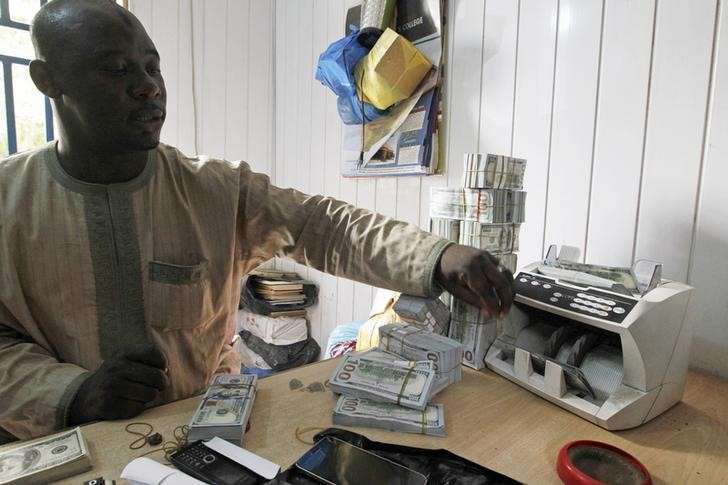
The Central Bank of Nigeria (CBN) has issued final operating licences to 82 Bureaux De Change (BDC) operators under its revised regulatory framework.
In a statement released on Monday, signed by its acting Director of Corporate Communications, Mrs Hakama Sidi-Ali, the apex bank said the licences took effect from November 27, 2025, under the 2024 Regulatory and Supervisory Guidelines for BDC Operations in Nigeria.
BDCs are instrumental to the foreign exchange market, as their activity could help regulate demand and cover supply deficits.
The apex lender also cautioned the public against dealing with unlicensed foreign exchange operators.
“The Central Bank of Nigeria, in exercise of its powers under the Banks and Other Financial Institutions Act (BOFIA) 2020 and the 2024 Guidelines, has granted final licences to 82 Bureaux De Change to operate with effect from November 27, 2025,” a part of the statement read.
The central bank stressed that only BDCs listed on its official website are recognised as licensed operators and urged the public to verify the status of any BDC before transacting.
“While the CBN will continue to update the list of Bureaux De Change with valid operating licences for public verification on our website, the Bank advises the general public to avoid dealing with unlicensed Foreign Exchange Operators,” the statement warned.
The bank also noted that operating a BDC without a valid licence is punishable under Section 57(1) of the BOFIA 2020 and promised legal action against illegal operators.
This licensing exercise is part of CBN’s broader efforts to sanitise the foreign exchange market as well as enhance transparency, and ensure that only credible players operate in the sector.
A 2024 guideline, which became effective in June 2024, requires all BDCs to reapply for Tier 1 or Tier 2 licences and meet minimum capital requirements, N2 billion for Tier 1 and N500 million for Tier 2, alongside non-refundable license fees of N5 million and N2 million, respectively.
Banking
Interswitch Champions Dialogue on Alternative Credit Scoring for Underserved
By Modupe Gbadeyanka
Technology leaders from across Nigeria’s digital finance ecosystem recently converged on Eko Convention Centre in Lagos to explore pathways for expanding credit access to underserved communities.
It platform for this was the 2025 Committee of e-Business Industry Heads (CeBIH) Annual Conference themed Reimagining Financial Inclusion through Cultural Shifts in Consumer Credit. Interswitch was a returning gold sponsor.
At a high-impact panel session titled Alternative Credit Scoring for the Underserved, moderated by Wunmi Ogunbiyi of the CeBIH Advisory Council, the Divisional Head of Product Management and Solution Delivery at Verve International, a subsidiary of Interswitch Group, Mr Ademola Adeniran, examined how alternative data and digital intelligence can unlock credit for millions excluded by conventional financial models.
“For us, this conversation goes beyond technology. It is about designing credit systems that truly reflect African realities.
“Millions transact daily outside traditional banking frameworks, and alternative credit scoring enables us to recognise that economic activity and responsibly convert it into access to finance.
“At Verve and Interswitch, we are committed to building the digital infrastructure that makes this inclusion scalable and sustainable,” Mr Adeniran stated.
Also, the Vice President for Sales and Account Management, Digital Infrastructure and Managed Services at Interswitch Systegra, Ms Robinta Aluyi, stressed the importance of African-led solutions in addressing the continent’s financial challenges, noting that sustainable progress must be rooted in local realities.
Interswitch’s strength, she said, lies in the fact that it was built on the continent, for the continent, with solutions designed to serve individuals, small businesses, enterprises, and government institutions across every layer of the payment value chain.
She also emphasized the company’s purpose-driven approach to building the infrastructure that powers Africa’s digital economy and enabling secure money movement on a scale.
“Interswitch helps people navigate their daily lives with greater ease. We make transactions flow safely and reliably. We do this by connecting banks, supporting secure and reliable payments, and strengthening the entire value chain of digital finance.
“Today, we hold a significant portion of the market, and that achievement reflects the deep trust our banking and fintech partners place in our platforms. We continue to deliver because the ecosystem has worked with us every step of the way,” Ms Aliyu said.
There were also contributions from Munachimso Duru, Head, Products, Partnership and Innovation, Afrigopay Financial Services Limited; Damola Giwa, Country Manager, Visa West Africa; Nike Kolawole, representing Aisha Abdullahi, Executive Director, Credit and Portfolio Management, CREDICORP; and Ifeanyi Chukuwekem, Head, Corporate Strategy Department, eTranzact, offering a broad industry perspective on the future of responsible credit delivery.
Banking
Stanbic IBTC Bank, AfDB Drive Sustainable Economic Growth
By Modupe Gbadeyanka
Stanbic IBTC Bank and the African Development Bank (AfDB) have sealed a strategic partnership to deepen sustainable economic growth.
The deal allows the subsidiary of Stanbic IBTC Holdings Plc to provide greater resilience and expand access to finance for businesses that drive job creation and national development.
A statement noted that the Nigerian lender has been given access to funding support to channel long‑term funding into critical areas of the Nigerian economy, including trade, infrastructure, and small and medium‑sized enterprises (MSMEs).
This collaboration also The underscores Stanbic IBTC’s dedication to environmental and social responsibility, ensuring that all funding is deployed in line with international best practice and the bank’s robust sustainability framework as evidenced by the Independent Project Monitoring Company’s (IPMC) ranking of Stanbic IBTC as one of the leading institutions in its latest sustainability rankings.
This recognition underscores the bank’s continuing commitment to advancing sustainable practices that benefit the environment and society.
“This agreement reflects our forward‑looking strategy to support the sectors that matter most to Nigeria’s future.
“Our focus is on empowering businesses, enabling sustainable growth, and ensuring that our financial system remains strong enough to meet the evolving needs of the economy,” the chief executive of Stanbic IBTC Bank, Mr Wole Adeniyi, stated.
Also speaking, the Director General of AFDB Nigeria, Mr Abdul Kamara, said, “Working with Stanbic IBTC aligns with our mission to accelerate Africa’s economic transformation. This collaboration ensures the bank can continue to play a pivotal role in financing infrastructure and sustainable development projects in Nigeria.”
Stanbic IBTC Bank has consistently demonstrated leadership through innovation in structured finance, digital transformation, and the integration of sustainability principles into its operations.
This latest step reaffirms its role as a thought leader in shaping Nigeria’s financial landscape and highlights its commitment to building a more resilient and prosperous future for the country.
Banking
Senate Seeks CBN’s Full Disclosure on Unremitted N1.44trn Surplus
By Adedapo Adesanya
The Senate has demanded detailed explanation from the Central Bank of Nigeria (CBN) over the alleged non-remittance of N1.44 trillion in operating surplus.
The Senate Committee on Banking, Insurance and Other Financial Institutions, chaired by Mr Tokunbo Abiru, opened its statutory briefing with a firm call for transparency at the apex bank, noting that the Auditor-General’s query on the unremitted funds required a full, clear and documented response, insisting that public trust in monetary governance depended on strict accountability.
While acknowledging the CBN’s achievements in stabilising the foreign exchange market and reducing inflation, Mr Abiru underscored that such progress must be accompanied by institutional responsibility.
He stated the Senate expected the CBN to explain the circumstances surrounding the query, outline corrective steps taken and reveal safeguards against future lapses.
This came as the Governor of the central bank, Mr Yemi Cardoso, appeared before the senate committee and offered an extensive review of economic conditions, asserting that Nigeria was experiencing renewed macroeconomic stability across major indicators.
Mr Cardoso attributed the progress to bold monetary reforms, foreign-exchange liberalisation and disciplined liquidity management implemented since mid-2025.
According to him, headline inflation had declined for seven consecutive months, from 34.6 per cent in November 2024 to 16.05 per cent in October 2025, marking the steepest and longest disinflation trend in over a decade.
Food inflation accruing to him also slowed to 13.12 per cent, supported by improved supply conditions and exchange-rate predictability.
The CBN governor described the foreign-exchange market as fundamentally transformed, adding that speculative attacks and arbitrage opportunities had largely disappeared.
According to him, the premium between the official and parallel markets had fallen to below two per cent, compared to over 60 per cent a year earlier. As of November 26, the naira traded at N1,442.92 per dollar at the Nigerian Foreign Exchange Market, stronger than the N1,551 average recorded in the first half of 2025.
He also announced a sharp rise in external reserves to $46.7 billion, the highest in nearly seven years and sufficient to cover over ten months of imports.
Diaspora remittances, he noted, had tripled to about $600 million monthly, while foreign capital inflows reached $20.98 billion in the first ten months of 2025, 70 per cent higher than in 2024 and more than four times the 2023 figure.
Cardoso further confirmed that the CBN had fully cleared the $7 billion verified FX backlog, restoring investor confidence and strengthening Nigeria’s balance-of-payments position.
On banking-sector stability, he reported that recapitalisation efforts were progressing smoothly. Twenty-seven banks had already raised new capital, with sixteen meeting or surpassing the new regulatory thresholds ahead of the March 31, 2026 deadline, highlighting improvements in ATM cash availability, digital-payments oversight and cybersecurity compliance.
Despite the positive indicators, the Senate sought clarity on several policy decisions.
Mr Abiru pressed for explanations on the sustained 45 per cent Cash Reserve Ratio (CRR), the 75 per cent CRR applied to non-Treasury Single Account public-sector deposits, FX forward settlements, mutilated naira notes in circulation, excessive bank charges, failed electronic transactions and the compliance of CBN subsidiaries with parliamentary oversight.
He also requested an update on the activities of the Financial Services Regulatory Coordinating Committee, arguing that stronger inter-agency cooperation was necessary to maintain public confidence.
The session later moved into a closed-door meeting.
-
Feature/OPED6 years agoDavos was Different this year
-
Travel/Tourism9 years ago
Lagos Seals Western Lodge Hotel In Ikorodu
-
Showbiz3 years agoEstranged Lover Releases Videos of Empress Njamah Bathing
-
Banking7 years agoSort Codes of GTBank Branches in Nigeria
-
Economy3 years agoSubsidy Removal: CNG at N130 Per Litre Cheaper Than Petrol—IPMAN
-
Banking3 years agoFirst Bank Announces Planned Downtime
-
Banking3 years agoSort Codes of UBA Branches in Nigeria
-
Sports3 years agoHighest Paid Nigerian Footballer – How Much Do Nigerian Footballers Earn