

Connect with us

Media OutReach

The Autumn Economic Forum 2025: Vietnam affirms its leading role in the region, driving global investment into the pillars of green and digital transformation

Published

on

HO CHI MINH CITY, VIETNAM – Media OutReach Newswire – 9 December 2025 – The Autumn Economic Forum 2025 took place from 25 to 27 November 2025. The event was organized under the direct guidance of the Prime Minister, chaired by the People’s Committee of Ho Chi Minh City, and hosted by the Viet Nam Centre for the Fourth Industrial Revolution in Ho Chi Minh City (HCMC C4IR) in coordination with relevant ministries, agencies, and the World Economic Forum (WEF).

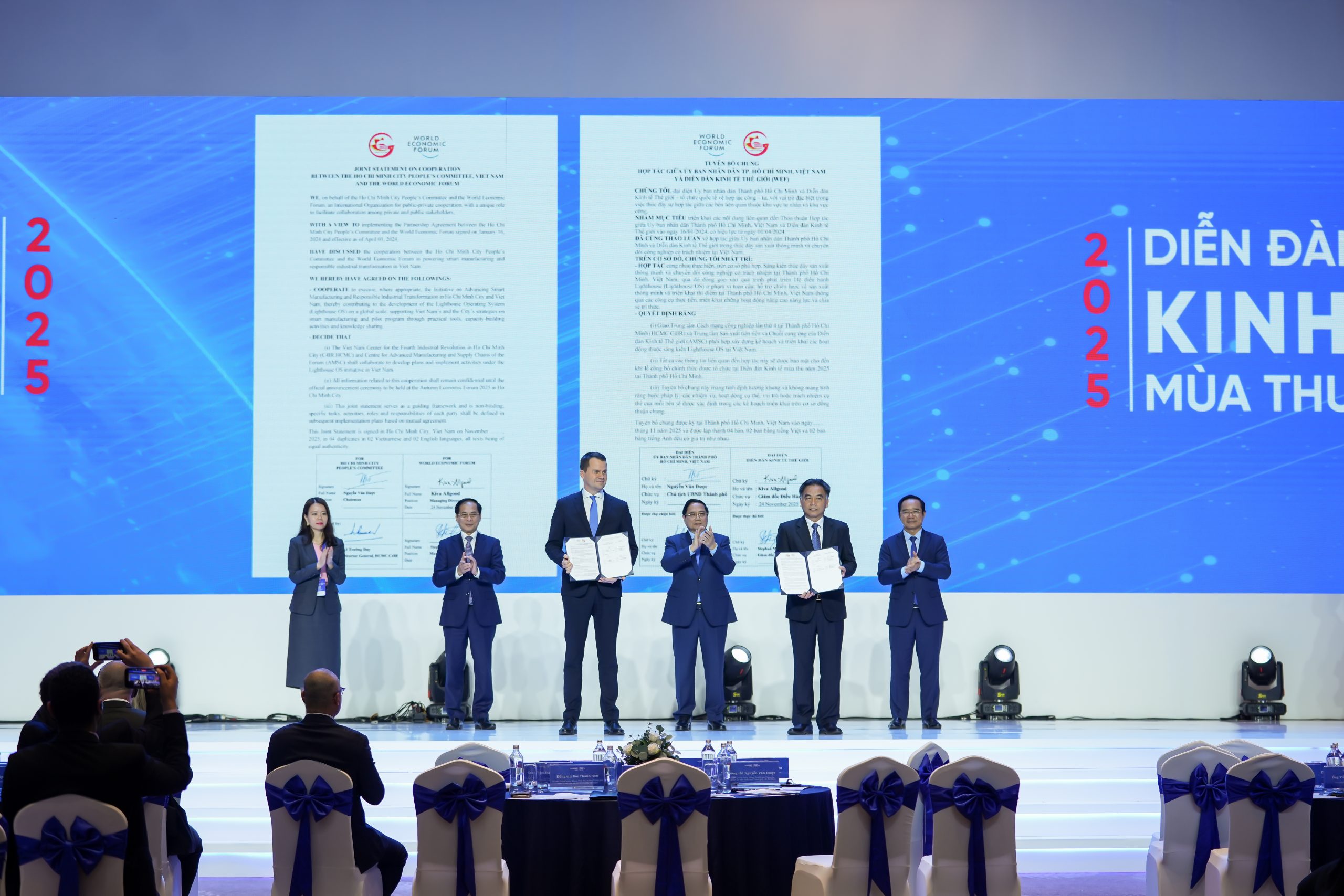
Vice Chairman of Ho Chi Minh City People’s Committee Nguyễn Lộc Hà and WEF Managing Director Stephan Mergenthaler presented the Joint Statement between Ho Chi Minh City and WEF in the presence of Prime Minister Phạm Minh Chính, Deputy Prime Minister Bùi Thanh Sơn, and leaders of Ministries and the City.

The Forum attracted 70 delegations from innovation centers and large corporations, 5 government delegations (Kuwait, Japan, Oman, Qatar, China), 4 delegations from international ministries and agencies (Cambodia, Malaysia, Laos, Australia), 8 delegations from international localities, 7 delegations from major international organizations such as the United Nations (UN), International Monetary Fund (IMF), and Asian Development Bank (ADB), and representatives from 10 global Centers for the Fourth Industrial Revolution (C4IRs). This diversity in participation underscores the Forum’s credibility and reputation, establishing a comprehensive and high-level strategic dialogue platform that fosters multinational cooperation in green economy, digital transformation, and innovation. Notably, Mr. Stephan Mergenthaler – Managing Director of the World Economic Forum (WEF) – together with leaders of several WEF departments and centers, attended in person. Their deep engagement demonstrates WEF’s strong interest and commitment to advancing its strategic partnership with Viet Nam in general and Ho Chi Minh City in particular in the time ahead.

At the Forum, Prime Minister Phạm Minh Chính delivered a strong commitment to prioritizing green–digital twin transformation, positioning Viet Nam not only as a promising market but also as a reliable partner and strategic destination for global sustainable development and technology initiatives. The event recorded an unprecedented attendance of over 1,800 delegates, including 500 CEOs, leaders of multinational organizations, and policymakers from over 30 countries, reaffirming Viet Nam’s growing importance within global value chains and in shaping global solutions.

During the special dialogue program “60 Minutes with the Prime Minister of Viet Nam”, Prime Minister Phạm Minh Chính exchanged directly with Mr. Stephan Mergenthaler to clarify Viet Nam’s new development orientation amid profound global economic transformation.

The Prime Minister emphasized that Viet Nam’s development path is built on independence, self-reliance, peace, cooperation, and future-oriented thinking. After decades of war, blockade, and sanctions, Viet Nam chose to set aside the past, find common ground in differences, and focus on socio-economic development. From a poor agricultural country, Viet Nam has advanced industrialization, reaching an economic scale of around USD 510 billion and per-capita income exceeding USD 5,000. In the coming period, science–technology, innovation, and the twin engines of digital and green transformation will be the foundation for Viet Nam to realize its goal of becoming a developed, high-income nation by 2045.

Presenting the new development vision, Prime Minister Pham Minh Chính identified green transition and digital transition as the two pillars of Viet Nam’s next growth model. Viet Nam will prioritize completing institutional frameworks for emerging sectors such as renewable energy, data, green finance, and carbon markets; developing strategic infrastructure including clean energy, smart grids, high-quality telecommunications and data systems, and digital governance platforms; mobilizing international resources in finance, technology, expertise, and high-quality human capital training.

On this foundation, Viet Nam maintains three consistent development principles: (i) Putting people and businesses at the center of all policies; (ii) Upholding an external policy of peace, cooperation, and responsibility; (iii) Considering innovation, science–technology, and the collective strength of the people as key drivers.

Regionally, the Prime Minister affirmed that Viet Nam aligns its development future with ASEAN – one of the world’s fastest-growing regions. Viet Nam proposes: Strengthening interregional infrastructure connectivity in transport, logistics, and energy; Building shared digital infrastructure and data exchange frameworks; Coordinating to implement the ASEAN Power Grid Initiative to enhance energy security; Promoting intra-regional trade, investment, and innovation.

The Prime Minister also emphasized the central role of dialogue amid rising geopolitical uncertainties. Viet Nam pursues an independent, balanced, multilateral, and diversified foreign policy, and stands ready to serve as a bridge to foster dialogue, narrow differences, build trust, and contribute to regional and global peace and stability. Viet Nam also reaffirmed its readiness to coordinate with WEF and international partners to promote new cooperation initiatives.

National Strategy: Delivering the Twin Transformation through Five Breakthrough Solutions

Regarding global commitments, Viet Nam reaffirmed its target of achieving net-zero emissions by 2050 and is actively implementing the National Green Growth Strategy and the Just Energy Transition Program (JETP) by mobilizing international finance for renewable energy and low-carbon infrastructure. Simultaneously, Viet Nam is accelerating digital transformation, aiming to become a regional leader in digital government, digital economy, and digital society.

This development strategy is operationalized through five breakthrough solutions:

  1. Institutional reform as the leading step

    Improve legal and policy frameworks for emerging sectors such as renewable energy, green finance, data economy, and innovation.

  2. Green and digital infrastructure as strategic investment priorities

    Strongly invest in green infrastructure and digital infrastructure projects.

  3. High-quality human capital development

    Train a highly skilled workforce capable of mastering advanced technologies such as AI, semiconductors, and Industry 4.0 technologies.

  4. Promoting the role of public–private partnerships (PPP)

    PPP is a key mechanism to unlock all societal resources, mobilizing both domestic capacities and international capital into Viet Nam.

  5. Smart governance to optimize resources

    Efficiently manage national resources—natural, financial, and human—through analytical, forecasting, and smart decision-making tools, thereby improving investment efficiency, increasing productivity, and building a foundation for long-term sustainable development.

Prime Minister Phạm Minh Chính affirmed that the domestic and international business community is the decisive force behind the success of the country’s dual transformation. Viet Nam is committed to maintaining a transparent, stable institutional environment; building synchronized infrastructure systems; and improving human-capital training to support sustainable business development and deeper integration into global value chains. He underscored three essential conditions for enabling businesses: transparent, streamlined, and stable institutional environment; high-quality strategic infrastructure that reduces input costs; well-trained, appropriately skilled workforce that supports business growth. As businesses grow, their managerial thinking and capabilities must also advance.

At the Forum, major organizations and corporations announced concrete investment and cooperation commitments:

World Economic Forum (WEF):

In addition to cooperation areas related to smart manufacturing and responsible industrial transformation for Ho Chi Minh City in particular and Viet Nam in general, Mr. Stephan Mergenthaler, WEF Managing Director, also committed to expanding support programs for businesses and youth in Viet Nam and Ho Chi Minh City. These programs will focus on key themes such as net-zero, artificial intelligence (AI), and green finance.

Global Government Technology Center (C4IR Berlin):

Mr. Manuel Kilian, Director of the Center, assessed that “Ho Chi Minh City’s reform momentum and digital transformation drive are truly distinctive”. On this basis, the Center will soon collaborate with Ho Chi Minh City on three major areas: developing a technology startup ecosystem; applying IoT in traffic management, data systems, and business operations; and piloting a digital government model aligned with international standards. In December, both sides are expected to finalize a detailed project portfolio to ensure rapid progress and clear results.

MassRobotics:

Mr. Daniel Theobald – Co-founder of MassRobotics – noted that Ho Chi Minh City shares many similarities with Silicon Valley in its early stages and emphasized that the City “is moving fast and is prioritizing supporting founders in building real businesses.” He expressed readiness to deploy resources to help develop startups in industrial production, smart agriculture, digital healthcare, and to support technology startups in overcoming the early-stage development gap and expanding access to global markets.

Foxconn Industrial Internet (Fii):

A strategic link in smart manufacturing. Mr. Brand Cheng, Chairman of Foxconn Industrial Internet, affirmed that expanding investment in Viet Nam stems from a proactive and consistent policy environment. He emphasized that Viet Nam has become an important link in the global supply chain.

Ant International:

Mr. Yang Peng, Chief Executive Officer of Ant International, stated that Ho Chi Minh City possesses three “golden advantages” to break through and become a new-generation International Financial Centre, namely: (i) Digital readiness; (ii) A strategic gateway position at the heart of Southeast Asia – the world’s fastest-growing region; (iii) A vibrant SME ecosystem.

Currently, the Group operates in more than 70 countries and users, with more than 1,000 partners that are financial institutions and banks. The Group plans to invest in and expand its presence in Ho Chi Minh City, transforming the City into a hub for technology, operations, and a “launchpad” for the Group within its globalisation strategy. Ant International commits to accompanying the Government of Viet Nam and Ho Chi Minh City through concrete actions: (i) Enhancing competitiveness and promoting global connectivity for SMEs using advanced technological solutions from Alipay+, Antom, WorldFirst, and Bettr; (ii) Bringing globally proven core technologies in financial infrastructure (AI, Blockchain, Data Privacy Computing) to Ho Chi Minh City; (iii) Developing and providing new-generation digital financial tools to facilitate international capital mobilisation; (iv) Sharing experience to support the development of policies that attract foreign businesses and advance progressive innovation frameworks; (v) Developing next-generation talent and fostering domestic innovation.

Global On-chain Economy Alliance (GOE Alliance) and Ho Chi Minh City International Financial Centre (IFC HCM):

GOE Alliance – with the participation of Viettel Digital, Dragon Capital, Tether, Ava Labs, Sky Mavis, Republic, and On-chain Academy – committed to three key areas: (i) Developing high-quality talent and high-quality projects; (ii) Connecting global on-chain infrastructure with Ho Chi Minh City as the hub; and (iii) Contributing substantial economic value to the Ho Chi Minh City International Financial Centre (IFC HCM).

Amazon Global Selling:

Recognizes Viet Nam as a key growth driver for Southeast Asia’s digital commerce; officially launched Amazon Global Logistics (AGL) operations in Viet Nam, enabling goods to be shipped directly from Viet Nam to Amazon FBA warehouses in the United States.

TikTok:

Proposed supporting the establishment of three legal entities in Ho Chi Minh City that would provide e-commerce, digital payment, and digital logistics services to serve more than 40 million Vietnamese customers.

Aspirations of a Mega-City: Ho Chi Minh City’s Leading Role

As the host of the first Autumn Economic Forum, Ho Chi Minh City is demonstrating its aspiration to become an international mega-city and a regional hub for economy, finance, science, and technology. Mr. Trần Lưu Quang, Secretary of the Ho Chi Minh City Party Committee, affirmed the City’s development vision based on five strategic pillars: (i) High-tech industry; (ii) Logistics and free trade; (iii) Ho Chi Minh City International Financial Centre (IFC HCM); (iv) Tourism and cultural industries; (v) International-standard education, healthcare, and science–technology. With its GRDP accounting for approximately 23.5% of Viet Nam’s national GDP and per-capita GRDP approaching USD 9,000 (2025), Ho Chi Minh City continues to serve as the nation’s economic locomotive and is committed to ensuring the best possible conditions for investors.

The Autumn Economic Forum 2025 reaffirms Viet Nam’s readiness to work alongside businesses, experts, and investors under the principle of “A facilitating State – pioneering enterprises – public–private partnership – and shared benefits for the people and businesses.” Prime Minister Phạm Minh Chính reiterated Viet Nam’s consistent foreign policy approach: “We remain steadfast in the view that all disputes and differences must be resolved through dialogue and peaceful means. On that basis, Viet Nam is ready to work with the World Economic Forum and partners to promote dialogue, reduce tensions, and contribute to peace, stability, and development worldwide.”

The Joint Statement between Ho Chi Minh City and the World Economic Forum (WEF) on smart manufacturing and responsible industrial transformation marks an important milestone, underscoring the City’s and Viet Nam’s role as the “co-creator” in global initiatives led by WEF. This reflects the new position of Viet Nam and Ho Chi Minh City within international cooperation networks. Through this milestone, Ho Chi Minh City joins the global innovation and manufacturing network as an active contributor, helping shape advanced industrial models that support the country’s green and sustainable development in the new era.

With 14 cooperation agreements signed and one alliance announced at the Forum—across green and digital sectors such as energy, logistics, artificial intelligence, and finance—alongside a series of sideline meetings and numerous bilateral and multilateral engagements, the Forum underscores its essential role in translating ideas into real-world solutions. Through the Forum, the bridge between enterprises and government, and between domestic and international resources, is strengthened—creating opportunities for all sides to exchange, collaborate, and jointly pursue integrated development solutions that connect the green economy with the digital economy.

The Forum also reaffirmed the strong commitment of Viet Nam and Ho Chi Minh City to offering the best possible support and a highly conducive environment for businesses, investors, scientists, and international organizations in applying science–technology and fostering innovation. This demonstrates the City’s vision and ambition to become a leading innovation hub in Southeast Asia—a green, smart, and livable mega-city making meaningful contributions to national and regional development. The Forum represents a major milestone in Ho Chi Minh City’s journey to become a premier destination within the innovation ecosystem—a place where new ideas are nurtured, expanded, and transformed into forces that shape development in the era of the digital economy.

Media gallery: https://hef.gov.vn/media-hef

Hashtag: #HCMCC4IR

The issuer is solely responsible for the content of this announcement.

Advertisement

Media OutReach

MIMO: The AI-Native Storage Species Enables Desktop Scale AI Clusters With NVIDIA DGX Spark

Published

on

  • Engineered for the AI era, MIMO delivers breakthrough metrics: 400 GB/s bandwidth, 54 million IOPS, and 40–90 μs latency—all within a form factor comparable to a large suitcase.
  • MIMO serves as both a high-performance data hub for large-scale GPU clusters and a flexible edge deployment platform, extending seamlessly to desktop environments where it orchestrates workflows with various DGX Spark units based on NVIDIA’s GB10 Grace Blackwell superchip.
  • This architecture enables independent AI clusters supporting up to 16 computing nodes within constrained environments, managing the complete workflow from large-scale pre-training and fine-tuning to production inference—effectively democratizing enterprise-grade AI capabilities for labs, edge sites, and distributed teams.

SINGAPORE –

Professor Zhang Sheng from Tsinghua University Shenzhen International Graduate School expressed a more pragmatic view: “With this solution, we finally no longer have to rely on the university’s data center. Our current annual budget alone is enough to deploy an AI cluster within our lab that better fits our needs—this will significantly boost our research efficiency both technically and operationally. It’s truly fantastic news.”

Asia Debut Marks Industry Inflection Point

Earlier at the 8th China International Import Expo (CIIE), the solution’s core—the world’s first AI-native storage system MIMO—made its strategic Asian debut. Engineered for the AI era, MIMO delivers breakthrough metrics: 400 GB/s bandwidth, 54 million IOPS, and 40–90 μs latency—all within a form factor comparable to a large suitcase.

The platform’s defining Fast-Light-Edge proposition, delivered through its breakthrough architecture, cut through the exhibition noise, generating immediate and widespread attention. MIMO earned exclusive features in top-tier media including Hong Kong Ta Kung Pao and China Securities Journal, while its product demonstration videos gained rapid traction across leading digital channels.

Addressing Foundational Challenges: Technical Dialogues That Matter

During the exhibitions, technical leaders from the United States, Spain, Singapore, Colombia, the UAE (Dubai), India, Pakistan, and Hong Kong SAR engaged in substantive dialogues with Ridger’s Asia team, raising questions that revealed systemic industry gaps:

Architectural Transformation & Strategic Positioning
“Can MIMO fundamentally replace legacy storage architectures—traditional NAS, unified, distributed, and parallel file systems—to deliver accelerated parallel training and high-concurrency inference?”
“With such exceptional performance, would deploying MIMO for traditional enterprise applications represent strategic overinvestment or forward-looking infrastructure?”

Mobile Deployment & Borderless Operations
“MIMO’s suitcase-sized footprint suggests unprecedented mobility. Can it truly accompany research teams globally like standard equipment? How does it maintain operational continuity across jurisdictions? What’s the customs protocol for such ‘technical luggage’?”

Seamless Integration & Global Accessibility
“In scenarios with unnetworked AI servers, can MIMO rapidly establish dedicated training environments with true plug-and-play functionality?”
“Does MIMO integrate transparently with existing AI infrastructure and software stacks without requiring modifications?”
“Beyond Asia-Pacific, what’s the procurement pathway for MIMO? Which currencies and payment methods are accommodated?”

Architectural Breakthrough: Redefining What’s Possible

Addressing these operational realities, Ridger demonstrated MIMO’s system-level value—transcending its role as a storage device to become an architectural cornerstone. MIMO serves as both a high-performance data hub for large-scale GPU clusters and a flexible edge deployment platform, extending seamlessly to desktop environments where it orchestrates workflows with various DGX Spark units based on NVIDIA’s GB10 Grace Blackwell superchip.

Notably, eight global OEM partners—including Dell, HPE, Lenovo, xFusion, H3C, MSI, GIGABYTE, and Acer—have concurrently launched Spark versions based on NVIDIA’s GB10 Grace Blackwell superchip, creating a robust compatibility foundation for MIMO’s ecosystem integration.

This architecture enables independent AI clusters supporting up to 16 computing nodes within constrained environments, managing the complete workflow from large-scale pre-training and fine-tuning to production inference—effectively democratizing enterprise-grade AI capabilities for labs, edge sites, and distributed teams.

As Zhu Ting, an industry observer from Beijing, noted: “This represents the ‘IBM PC moment’ for AI infrastructure—transforming specialized capability into accessible utility.”

Market Validation Through Early Adoption

Market response has been decisive. Following the exhibitions, pioneering organizations across pathological image foundation model development, legal-tech innovation, industrial visual inspection, and naked-eye 3D content production have joined Ridger’s Early Access program, validating the architecture’s transformative potential in real-world operational contexts.

Global Rollout: Accelerating Accessibility

Responding to accelerating global demand, Ridger confirmed the imminent launch of the complete MIMO portfolio and optimized solution bundles for specific DGX Spark configurations through the Ridger Official Global Store. Designed as a frictionless procurement channel, the platform will support diverse payment options including multiple fiat currencies and cryptocurrencies—streamlining access to advanced AI infrastructure.

Organizations seeking deeper understanding of MIMO and its integrated lightweight AI solution with DGX Spark are invited to connect with Ridger team or its strategic partner, NVIDIA Elite Solution Partner SinoInfo.
Hashtag: #Technology #ESG #AI #GPU #Enterprise #Finance #Storage #Flash #Compute #DGX-Spark #NVIDIA #AI-Lab #GDS #NAS #AI-Native


The issuer is solely responsible for the content of this announcement.

Ridger

Ridger is a global technology pioneer building next-generation computing & storage infrastructure for the AI era. Born in the East and operating worldwide, Ridger challenges conventional paths to create new technological paradigms.

The team unites seasoned experts from global storage leaders with visionary AI architects, all driven by a shared mission to democratize cutting-edge technology, rejects incremental improvements and hollow prestige, focusing exclusively on foundational breakthroughs that deliver tangible value and sustainable impact.

From architecture to implementation and from service to empowerment, Ridger provides end-to-end solutions that help clients worldwide ascend to their highest summits.

Continue Reading

Media OutReach

Johnson & Johnson and Asia Pacific Patient Advocacy Group Leaders Unite to Strengthen Shared Decision-Making in Lung Cancer Care

Published

on

Patient survey finds that those engaged in shared decision-making were 11 times more likely to report higher satisfaction with their treatments, with 90% of lung cancer patients in Japan wanting to play an active role in their treatment decisions[1]

J&J deepens its commitment to patient empowerment in Asia Pacific by launching J&J withMe, a new patient portal offering tailored patient resources, and co-driving market-specific initiatives with patient advocacy groups

SINGAPORE – Media OutReach Newswire – 11 December 2025 – Johnson & Johnson announced the next phase of The 3rd Opinion campaign across Asia Pacific, focused on championing shared decision-making between lung cancer patients and healthcare professionals through events and stakeholder engagements at ESMO Asia 2025 in Singapore.

At a Patient Reception on 6th December 2025, 20 leaders from 17 patient advocacy groups from across Asia Pacific, Europe and the United States shared their support for the need to strengthen shared decision-making. On December 7, 2025, the ESMO Asia 2025 Symposium, ‘Advancing EGFRm NSCLC Treatment Through Shared Decision-Making’ highlighted the role of healthcare professionals not only in making sense of the data but also in helping patients and their families navigate complex decision-making.

“High prevalence in Asia of certain NSCLC mutations makes the choice of first-line therapy absolutely critical. Treatment decisions must balance clinical objectives with patient values — weighing disease biology, survival prospects, durable disease control and the tradeoffs of side effects. That’s why shared decision-making is essential: clinicians should present all appropriate treatment options, so the final choice is collaborative and aligned with each patient’s goals,” said Professor Zhu Zhengfei, Director of the Radiation Oncology Department, Fudan University Shanghai Cancer Center.

“When lung cancer patients are empowered to speak up and understand their options, they are more likely to continue the treatment and their dignity is preserved. Initiatives like ‘The 3rd Opinion’ are vital for fostering truly patient-centered partnerships between people living with cancer and their healthcare teams,” noted Ms. Liu Yiting, Marketing & Branding Director, China MeetHealth Mi-Jian Patient Community.

“The shared commitment validates what many people living with lung cancer have long expressed: shared decision making is essential. From our experience supporting patients, meaningful conversations with clinicians help acknowledge patients’ experiences, address their concerns, and preserving their hopes,” added Mr. Jung-Il Cho, Chairman of Korea Lung Cancer Patients Association.

Our commitment comes off the back of a recent patient survey revealing that 90% of Japanese lung cancer patients want to play an active role in their treatment decisions. The survey also found that shared decision-making, where physicians and patients jointly compare treatment options and decide together, is the strongest driver of treatment satisfaction.1

Patient survey finds that those engaged in shared decision-making were 11 times more likely to report higher satisfaction with their treatments, with 90% of lung cancer patients in Japan wanting to play an active role in their treatment decisions. This finding underscores the importance of shared decision-making and patient-centered care.1

To bridge the gap between patients’ desire to engage in shared decision making and their lack of practical support, J&J has launched “J&J withMe”, an online hub that equips lung cancer patients and caregivers with tailored toolkits and conversation guides to prepare for consultations and make informed, personalized treatment decisions.

Anthony Elgamal, Vice President of Oncology, Johnson & Johnson Innovative Medicine Asia Pacific said, The 3rd Opinion truly puts patients at the center of care. As part of our deep commitment to address patients’ unmet needs, we will continue partnering with patient advocacy groups and healthcare professionals to help patients to find their voice and the moment when medical advice meets what truly matters to patients.”

图像 (3)

In recognition of diverse cultural and clinical norms across Asia Pacific, J&J has also rolled out tailored market activations in collaboration with local patient advocacy groups:

  • Provision of patient resources such as the “Lung Cancer Book of Answers” in China, ‘Value of Time’ video for patients in Japan, and educational assets in India and Australia/New Zealand;
  • Digital and social media engagement featuring patients and creators discussing the importance of shared decision-making across Singapore, Malaysia, Philippines, Thailand, and Vietnam;
  • Event engagement via the establishment of a patient advisory board in India;
  • Corporate Social Responsibility program with a lung cancer patient group in Korea, bringing employees and patients together to better understand the disease burden of patients and strengthen emotional support for the patient community.

###

About the 3rd Opinion

“The 3rd Opinion”, the patient’s own opinion, is a new term that sparks a social movement in the lung cancer treatment journey – designed to elevate the patient voice and empower individuals to take an active role in shaping their treatment plan. By prioritizing shared decision-making between patients and healthcare professionals, this collaborative approach ensures that treatment choices are aligned to each patient’s goals, preferences and circumstances. This results in more informed decisions, greater patient satisfaction, and the best possible outcomes.

About Non-Small Cell Lung Cancer

Worldwide, lung cancer is one of the most common cancers, with NSCLC making up 80 to 85 percent of all lung cancer cases.[1], [2] The main subtypes of NSCLC are adenocarcinoma, squamous cell carcinoma, and large cell carcinoma.[3] Among the most common driver mutations in NSCLC are alterations in EGFR, which is a receptor tyrosine kinase controlling cell growth and division.[4] EGFR mutations are present in 10 to 15 percent of Western patients with NSCLC with adenocarcinoma histology and occur in 40 to 50 percent of Asian patients.[5], [6],[7],[8],[9],[10] EGFR ex19del or EGFR L858R mutations are the most common EGFR mutations.[11] The five-year survival rate for all people with advanced NSCLC and EGFR mutations treated with EGFR tyrosine kinase inhibitors (TKIs) is less than 20 percent.[12],[13] EGFR exon 20 insertion mutations are the third most prevalent activating EGFR mutation.[14] Patients with EGFR exon 20 insertion mutations have a real-world five-year overall survival (OS) of eight percent in the frontline setting, which is worse than patients with EGFR ex19del or L858R mutations, who have a real-world five-year OS of 19 percent.[15]By comparison, other common cancers, such as breast and prostate cancer have a 5-year real world OS of 90% and 97% respectively[16].


[1] Johnson & Johnson lung cancer patient quantitative survey conducted in Japan, 2025

[2] The World Health Organization. Cancer. https://www.who.int/news-room/fact-sheets/detail/cancer. Accessed March 2025.

[3] American Cancer Society. What is Lung Cancer? https://www.cancer.org/content/cancer/en/cancer/lung-cancer/about/what-is.html. Accessed March 2025.

[4] Oxnard JR, et al. Natural history and molecular characteristics of lung cancers harboring EGFR exon 20 insertions. J Thorac Oncol. 2013 Feb;8(2):179-84. doi: 10.1097/JTO.0b013e3182779d18.

[5] Bauml JM, et al. Underdiagnosis of EGFR Exon 20 Insertion Mutation Variants: Estimates from NGS-based Real World Datasets. Abstract presented at: World Conference on Lung Cancer Annual Meeting; January 29, 2021; Singapore.

[6] The World Health Organization. Cancer. https://www.who.int/news-room/fact-sheets/detail/cancer. Accessed March 2025.

[7] American Cancer Society. What is Lung Cancer? https://www.cancer.org/content/cancer/en/cancer/lung-cancer/about/what-is.html. Accessed March 2025.

[8] Pennell NA, et al. A phase II trial of adjuvant erlotinib in patients with resected epidermal growth factor receptor-mutant non-small cell lung cancer. J Clin Oncol. 37:97-104.

[9] Burnett H, et al. Epidemiological and clinical burden of EGFR exon 20 insertion in advanced non-small cell lung cancer: a systematic literature review. Abstract presented at: World Conference on Lung Cancer Annual Meeting; January 29, 2021; Singapore.

[10] Zhang YL, et al. The prevalence of EGFR mutation in patients with non-small cell lung cancer: a systematic review and meta-analysis. Oncotarget. 2016;7(48):78985-78993.

[11] Midha A, et al. EGFR mutation incidence in non-small-cell lung cancer of adenocarcinoma histology: a systematic review and global map by ethnicity. Am J Cancer Res. 2015;5(9):2892-2911.

[12] American Lung Association. EGFR and Lung Cancer. https://www.lung.org/lung-health-diseases/lung-disease-lookup/lung-cancer/symptoms-diagnosis/biomarker-testing/egfr. Accessed March 2025.

[13] Howlader N, et al. SEER Cancer Statistics Review, 1975-2016, National Cancer Institute. Bethesda, MD, https://seer.cancer.gov/csr/1975_2016/, based on November 2018 SEER data submission, posted to the SEER web site.

[14] Lin JJ, et al. Five-Year Survival in EGFR-Mutant Metastatic Lung Adenocarcinoma Treated with EGFR-TKIs. J Thorac Oncol. 2016 Apr;11(4):556-65

[15] Arcila, M. et al. EGFR exon 20 insertion mutations in lung adenocarcinomas: prevalence, molecular heterogeneity, and clinicopathologic characteristics. Mol Cancer Ther. 2013 Feb; 12(2):220-9.

[16] Girard N, et al. Comparative clinical outcomes for patients with NSCLC harboring EGFR exon 20 insertion mutations and common EGFR mutations. Abstract presented at: World Conference on Lung Cancer Annual Meeting; January 29, 2021; Singapore.

[17] Surveillance, Epidemiology, and End Results (SEER) Program, National Cancer Institute, 2024.

Hashtag: #Johnson&Johnson

The issuer is solely responsible for the content of this announcement.

About Johnson & Johnson

At Johnson & Johnson, we believe health is everything. Our strength in healthcare innovation empowers us to build a world where complex diseases are prevented, treated, and cured, where treatments are smarter and less invasive, and solutions are personal. Through our expertise in Innovative Medicine and MedTech, we are uniquely positioned to innovate across the full spectrum of healthcare solutions today to deliver the breakthroughs of tomorrow, and profoundly impact health for humanity.

Learn more at or at . Follow us at .

Johnson & Johnson Innovative Medicine Asia Pacific, a division of Johnson & Johnson International (Singapore) Pte. Ltd is a Johnson & Johnson company.

© Johnson & Johnson International (Singapore) Pte. Ltd. [2025] All rights reserved.

Continue Reading

Media OutReach

Skychakra Global Capital Strategy Upgrade: Advancing Cross-Border Listings and RWA Ecosystem

Published

on

HONG KONG SAR – Media OutReach Newswire – 11 December 2025 – Skychakra Group recently held a grand inauguration ceremony at the Hong Kong International Center, announcing the official acceleration of its globalization strategy. With a mission to “enhance individual energy, empower enterprise growth, and promote asset capitalization,” Skychakra simultaneously launched three major international initiatives: a cross-border listing incubation system, an RWA (Real World Assets) technology ecosystem, and the international upgrade of mind-body energy science, building a new economic ecosystem that spans technology, industry, and capital.

As a global hub for innovation and capital, Hong Kong serves as a significant gateway for the activation of Skychakra’s global strategy. This inauguration not only symbolizes the completion of the facility but also marks the comprehensive rollout of Skychakra’s international layout.

Official Launch of Cross-Border Listing Incubation Center

During the inauguration, Skychakra announced the establishment of a cross-border listing incubation center, led by a professional team qualified with SEC, PCAOB, and FINRA credentials, boasting over a hundred projects in cross-border listings. The service scope includes U.S. stocks, Hong Kong stocks, and SPACs. Unlike traditional investment banks and financial advisors, Skychakra offers a “full-link” service for enterprise capitalization, encompassing red-chip structure setup, financial and audit compliance, SEC and Hong Kong Stock Exchange filing guidance, dual-path IPO/SPAC design, market value management, enterprise internationalization guidance, and digital upgrades.

Originally planning to sign contracts for four companies at the conference, Skychakra exceeded expectations by signing 12, demonstrating its strong appeal and industry influence in cross-border listings and capital operations.

RWA Technology Ecosystem: Making Enterprise Assets Visible to the Financial System

Real World Assets (RWA) are becoming the core of global financial transformation. From BlackRock’s launch of tokenized funds to Hong Kong and Singapore incorporating RWA into financial infrastructure, RWAs are transitioning from concept to large-scale implementation. Skychakra emphasizes that small and medium-sized enterprises face common challenges such as lack of recognition for their assets within the financial system, difficulties in cross-border financing, and a lack of transparency in asset value.

The Skychakra RWA ecosystem will provide enterprises with: tokenizable asset identification, asset structuring and entitlement, on-chain mapping and minting, cross-border compliance design, global issuance and liquidity channels, and on-chain risk control and transparent tracking. The core value of RWA lies in reducing friction for enterprises in connecting to global capital, enhancing asset liquidity and valuation potential.

A Holistic Growth Model: “From People to Enterprises, From Enterprises to Capital”

Skychakra’s differentiated advantage stems from its foundational logic of “starting with people.” The Skychakra energy courses utilize scientific equipment to measure energy fields, emotional frequencies, and meridian states, assisting individuals in enhancing stability, insight, and decision-making abilities.

Based on this foundation, Skychakra constructs three major systems:

1. Enterprise Growth System: Enhancing organizational capabilities, introducing international business, and providing capital operation guidance.

2. Capitalization System: Building global financing capabilities through listings and RWA structures.

3. Asset Digitalization System: Making enterprise value quantifiable, verifiable, and tradable.

These three systems dynamically interact in a spiral structure, forming Skychakra’s unique full-link growth ecosystem.

Conclusion: Global Layout for Greater International Influence

The inauguration of Skychakra’s Hong Kong International Center signifies the official implementation of the group’s globalization strategy. Looking forward, the focus will be on Hong Kong as the core, with Asia as the main axis, while establishing deep collaborations with the North American and Middle Eastern markets. Through this global layout, Skychakra is creating a new organizational model that transcends regions, industries, and capital, enabling enterprises to achieve value flow in the global market and allowing more Asian companies to gain a stronger voice on the international stage.

Hashtag: #Skychakra

The issuer is solely responsible for the content of this announcement.

Continue Reading

Trending