Economy
Nigeria Gets Fresh $500m World Bank Loan for Small Businesses
By Adedapo Adesanya
The World Bank has approved a $500 million facility for Nigeria to expand longer-term lending to small and medium sized businesses.
Approved under the Fostering Inclusive Finance for MSMEs in Nigeria (FINCLUDE) project, the package comprises a $400 million International Bank for Reconstruction and Development (IBRD) loan and a $100 million International Development Association (IDA) credit. Both IBRD and IDA are members of the World Bank Group.
The scheme will be implemented by the Development Bank of Nigeria (DBN), with credit guarantees provided through DBN’s subsidiary, Impact Credit Guarantee Limited (ICGL).
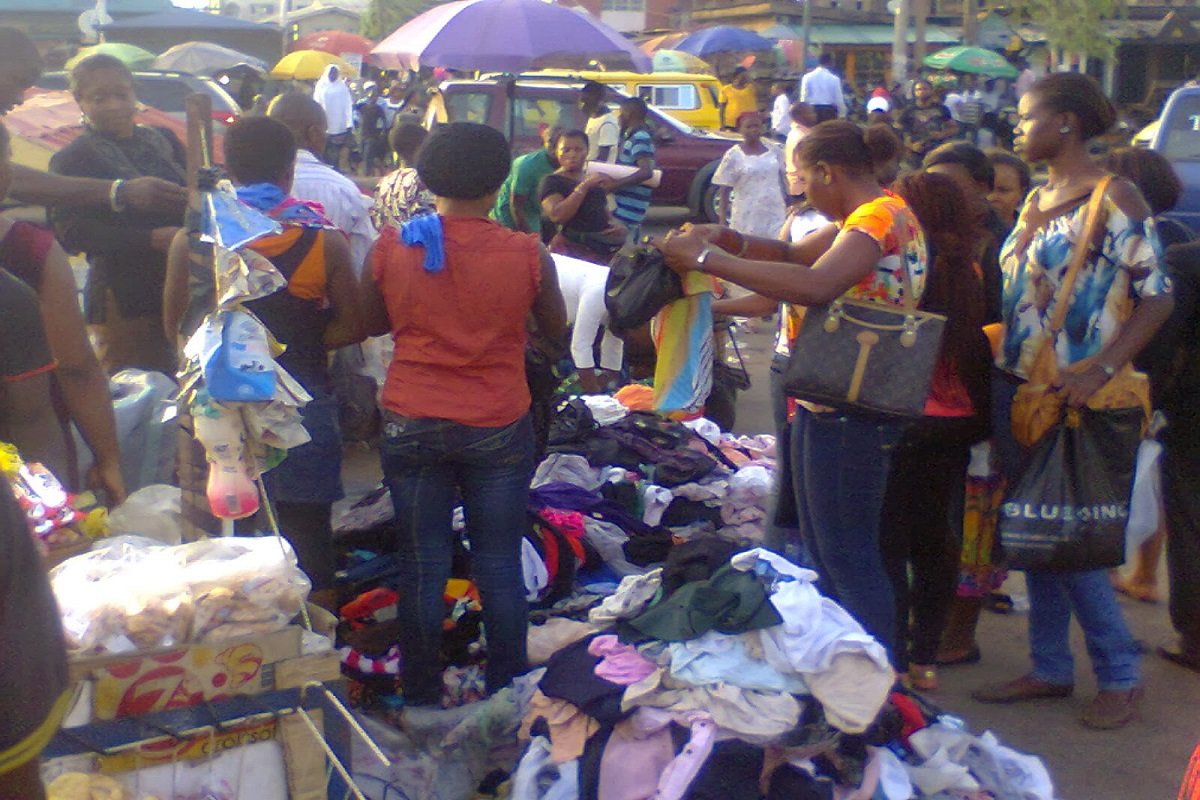
FINCLUDE is designed to address constraints faced by micro, small, and medium enterprises (MSMEs) in Nigeria which despite accounting for most businesses and nearly half of gross domestic product (GDP) face long-standing barriers to formal finance.
Fewer than one in 20 MSMEs have access to bank credit; loans are often short-term and costly; and collateral requirements exclude many viable firms. Women-led enterprises, which make up a substantial portion of MSMEs, are disproportionately affected, facing higher rejection rates and limited tailored products. Agribusinesses, central to food security and rural livelihoods, similarly struggle to obtain more extended‑tenor financing for equipment, processing, storage, and logistics.
However, FINCLUDE seeks to address these constraints by expanding access to affordable, longer-term finance and tailored solutions for segments with the most significant development impact.
Speaking on this, the World Bank Country Director for Nigeria, Mr Mathew Verghis, said, “FINCLUDE is about jobs, opportunity, and inclusion. By expanding access to finance for viable MSMEs—particularly women-led firms and agribusinesses—Nigeria can accelerate growth and deliver tangible benefits across communities nationwide.
“The project will make it easier for deserving small businesses to get the finance they need to grow and hire workers. With better support for lenders that practice inclusive finance and fairer, longer-term loans for entrepreneurs, we are backing the people who power Nigeria’s economy—especially women and those in agriculture.”
The FINCLUDE project will help to mobilise private investment and expand access to and usage of inclusive, innovative financial products for MSMEs nationwide.
Through DBN, the operation will strengthen the capacity of banks, including microfinance banks and non-bank financial institutions such as financial technologies (fintechs), to provide larger loans with more reasonable repayment periods, and—through ICGL—will scale partial credit guarantees so that lenders can extend credit to businesses they might otherwise consider too risky.
Targeted technical assistance will modernise loan appraisal by leveraging AI-enabled digital platforms to accelerate decision-making, improve data quality, strengthen impact measurement, and build capacity for both MSMEs and participating financial institutions.
According to the World Bank, a strong emphasis on inclusion will ensure that women-led businesses and agribusinesses benefit from these improvements.
Also commenting, Task Team Leader for FINCLUDE, Mrs Hadija Kamayo, said, “FINCLUDE will help to mobilize approximately $1.89 billion in private capital, expand debt financing to 250,000 MSMEs—including at least 150,000 women-led businesses and 100,000 agribusinesses—and issue up to $800 million in guarantees to catalyse lending.
“By extending the average maturity of MSME loans to about three years, it will help firms invest in equipment, factories, staff, and productivity, translating finance into jobs and growth.”
Economy
Nigerian Stock Market Rebounds 2.30% Amid Cautious Trading
By Dipo Olowookere
The Nigerian Exchange (NGX) Limited returned to winning ways on Tuesday after it closed higher by 2.30 per cent amid cautious trading.
Yesterday, investor sentiment at the Nigerian stock market was weak after finishing with 37 price gainers and 40 price losers, indicating a negative market breadth index.
It was observed that the industrial goods sector rose by 4.86 per cent, the energy index appreciated by 4.66 per cent, and the consumer goods segment soared by 2.74 per cent. They offset the 1.38 per cent loss recorded by the banking counter and the 0.20 per cent decline printed by the insurance sector.
At the close of business, the All-Share Index (ASI) was up by 5,137.90 points to 228,740.19 points from 223,602.29 points, and the market capitalisation went up by N3.308 trillion to N147.278 trillion from N143.970 trillion.
The trio of FTN Cocoa, Industrial and Medical Gases, and Lafarge Africa gained 10.00 per cent each to sell for N5.50, N39.60, and N324.50, respectively, while Austin Laz grew by 9.71 per cent to N3.73, and Aradel Holdings jumped 9.52 per cent to N1,840.00.
On the flip side, UBA lost 10.00 per cent trade at N44.55, Trans-Nationwide Express slipped by 9.99 per cent to N6.40, NASCON crashed by 9.18 per cent to N187.90, Jaiz Bank depreciated by 8.93 per cent to N8.01, and Berger Paints crumbled by 8.66 per cent to N68.00.
Yesterday, market participants traded 908.0 million equities valued at N68.2 billion in 72,886 deals compared with the 678.2 million equities worth N44.1 billion transacted in 82,838 deals on Monday, showing a drop in the number of deals by 12.01 per cent, and a spike in the trading volume and value by 33.88 per cent and 54.65 per cent, respectively.
Economy
Nigeria Records Five-Year Peak in Oil Output at 1.71mbpd
By Adedapo Adesanya
Nigeria’s oil production recorded a five-year high of 1.71 million barrels per day, marking a significant rebound for the country’s upstream sector amid renewed efforts to restore output and improve operational stability.
The latest figure, released by Nigerian National Petroleum Company (NNPC) Limited, covers the period from April 2025 to April 2026 and underscores a steady recovery in crude production after years of disruptions caused by theft, pipeline vandalism and underinvestment.
According to the chief executive of the national oil company, Mr Bayo Ojulari, the performance reflects measurable progress across the company’s upstream, gas and downstream operations, with production gains supported by improved asset management and stronger field performance.
Within its exploration and production business, NNPC recorded a peak daily output of 365,000 barrels in December 2025, the highest level ever achieved by its upstream subsidiary. The company also advanced key contractual reforms, including revised production-sharing terms for deepwater assets aimed at unlocking additional gas reserves.
Nigeria’s gas ambitions are also gaining traction. Gas supply rose to 7.5 billion standard cubic feet per day in 2025, driven by major infrastructure milestones such as the River Niger crossing on the Ajaokuta-Kaduna-Kano pipeline and the commissioning of the Assa North-Ohaji South gas processing plant.
These investments are beginning to strengthen domestic gas utilisation. New supply agreements with major industrial consumers, including Dangote Refinery, Dangote Fertiliser and Dangote Cement, are expected to deepen gas penetration across manufacturing and power generation.
On the downstream front, NNPC has continued crude supply to Dangote Refinery under the crude-for-naira arrangement, a policy designed to reduce foreign exchange demand, support local refining and improve fuel market stability. The company also reaffirmed its 7.25 per cent equity stake in the refinery as part of its long-term energy security strategy.
Financially, the national oil company said it has resumed full monthly remittances to the Federation Account since July 2025. It has also reinstated regular performance reporting and held its first earnings call, moves widely seen as part of a broader push towards greater transparency and corporate accountability.
Despite the progress, challenges remain. Crude theft, pipeline outages and infrastructure bottlenecks continue to threaten production stability. Sustaining this recovery will depend on stronger security, reliable infrastructure and policy consistency as Nigeria seeks to maximise the benefits of rising domestic refining capacity.
Economy
UAE to Leave OPEC May 1
By Adedapo Adesanya
The United Arab Emirates has announced its decision to quit the Organisation of the Petroleum Exporting Countries (OPEC) to focus on national interests.
This dealt a heavy blow to the oil-exporting group at a time when the US-Israel war on Iran had caused a historic energy shock and rattled the global economy.
The move, which will take effect on May 1, 2026, reflects “the UAE’s long-term strategic and economic vision and evolving energy profile”, a statement carried by state media said on Tuesday.
“During our time in the organisation, we made significant contributions and even greater sacrifices for the benefit of all,” it added. “However, the time has come to focus our efforts on what our national interest dictates.”
The loss of the UAE, a longstanding OPEC member, could create disarray and weaken the oil cartel, which has usually sought to show a united front despite internal disagreements over a range of issues from geopolitics to production quotas.
UAE Energy Minister Suhail Mohamed al-Mazrouei said the decision was taken after a careful look at the regional power’s energy strategies.
“This is a policy decision. It has been done after a careful look at current and future policies related to the level of production,” the minister said.
OPEC’s Gulf producers have already been struggling to ship exports through the Strait of Hormuz, a narrow chokepoint between Iran and Oman through which a fifth of the world’s crude oil and liquefied natural gas supplies normally pass, because of threats and attacks against vessels during the war.
The UAE had been a member of OPEC first through its emirate of Abu Dhabi in 1967 and later when it became its own country in 1971.
The oil cartel, based in Vienna, has seen some of its market power wane as the US has increased its production of crude oil in recent years.
Additionally, the UAE and Saudi Arabia have increasingly competed over economic issues and regional politics, particularly in the Red Sea area.
The two countries had joined a coalition to fight against Yemen’s Iran-backed Houthis in 2015. However, that coalition broke down into recriminations in late December when Saudi Arabia bombed what it described as a weapons shipment bound for Yemeni separatists backed by the UAE.
-
Feature/OPED6 years agoDavos was Different this year
-
Travel/Tourism10 years ago
Lagos Seals Western Lodge Hotel In Ikorodu
-
Showbiz3 years agoEstranged Lover Releases Videos of Empress Njamah Bathing
-
Banking8 years agoSort Codes of GTBank Branches in Nigeria
-
Economy3 years agoSubsidy Removal: CNG at N130 Per Litre Cheaper Than Petrol—IPMAN
-
Banking3 years agoSort Codes of UBA Branches in Nigeria
-
Banking3 years agoFirst Bank Announces Planned Downtime
-
Sports3 years agoHighest Paid Nigerian Footballer – How Much Do Nigerian Footballers Earn

Pingback: Nigeria Gets Fresh $500m World Bank Loan for Small Businesses – PRIMA NEWS