General
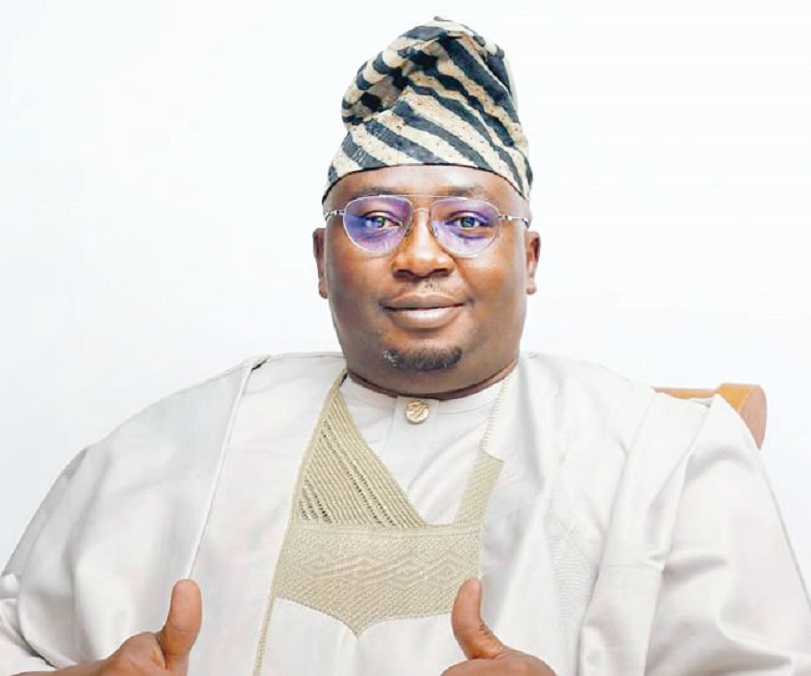
Adelabu Says Missing N128bn Happened Before Appointment as Power Minister
By Adedapo Adesanya
The Minister of Power, Mr Adebayo Adelabu, has dismissed allegations of N128 billion in misappropriated public funds linked to his ministry and the Nigerian Bulk Electricity Trading Plc (NBET), insisting the irregularities occurred before his administration.
In a statement issued by his Special Adviser on Strategic Communications and Media Relations, Mr Bolaji Tunji, the minister, who is rumoured to be gunning for the Oyo State Governor position, clarified that he assumed office in August 2023, while the audit report under scrutiny pertains to the 2022 financial year.
The Socio-Economic Rights and Accountability Project (SERAP) in a statement issued on Sunday tasked President Bola Tinubu to investigate allegations that more than N128 billion could not be accounted for by the ministry and NBET Plc.
The group urged Mr Tinubu to give directive to the Attorney General of the Federation and Minister of Justice, Mr Lateef Fagbemi (SAN), and the appropriate anti-corruption agencies to look into the allegations of the missing N128 billion.
It declared that anyone suspected to be responsible should face prosecution as appropriate, especially if there is sufficient admissible evidence, and any missing or diverted public funds should be fully recovered and remitted to the treasury.
In his response, the Minister said he has no objection to calls for investigation, but noted that it was important to clearly state that he was appointed in August 2023, whereas the audit report in question relates to the 2022 financial year.
“The issues raised in the referenced audit report pertain entirely to a period before the minister’s tenure. The call for investigation, therefore, has no bearing on the operations or financial activities of the ministry under the current administration.
“The Office of the Minister reaffirms its commitment to transparency and accountability and will co-operate fully with any legitimate process aimed at addressing legacy issues in the power sector, while remaining focused on its mandate of delivering stable and reliable electricity to all Nigerians,” the statement declared.
The statement also highlighted Mr Adelabu’s reputation for transparency and due process, noting that he is “widely regarded for his strict adherence to due process, probity, transparency, and accountability, as demonstrated in his previous roles in both the public and private sectors, and remains resolute in safeguarding this reputation.”
General
Chimamanda Ngozi Adichie Loses One of Twin Sons After Brief Illness
By Adedapo Adesanya
Nigerian author, Ms Chimamanda Ngozi Adichie, and her husband, Dr Ivara Esege, have lost one of their twin sons, Nkanu Nnamdi.
According to a statement issued on Thursday by Ms Omawumi Ogbe, on behalf of the family, the 21-month-old baby passed away on Wednesday, January 7, 2026, after a brief illness.
The statement said the family is devastated by the loss, and requested that their privacy be respected during this difficult time.
“We’re deeply saddened to confirm the passing of one of Ms Chimamanda Ngozi Adichie and Dr Ivara Esege’s twin boys, Nkanu Nnamdi, who passed on Wednesday, 7th of January 2026, after a brief illness. He was 21 months old.
“The family is devastated by this profound loss, and we request that their privacy be respected during this incredibly difficult time.
“We ask for your grace and prayers as they mourn in private.
“No further statements will be made, and we thank the public and the media for respecting their need for seclusion during this period of immense grief,” the statement read.
Ms Adichie is known for works including Half of a Yellow Sun, Americanah and her 2012 Ted Talk and essay We Should All Be Feminists, which was sampled by Beyoncé on her 2013 song Flawless.
The 48 year old writer had her first child, a daughter, in 2016. In 2024, her twin boys were born using a surrogate.
In 2020, her 2006 novel Half of a Yellow Sun was voted the best book to have won the Women’s Prize for Fiction in its 25-year history.
Her latest book, Dream Count, was published in 2025.
General
Peter Obi Questions Tinubu’s Approval of NNPC Debt Cancellation
By Adedapo Adesanya
The presidential candidate of Labour Party in the 2023 general elections, Mr Peter Obi, has queried the decision of President Bola Tinubu to write-off about N8 trillion in debts owed by the Nigerian National Petroleum Company (NNPC) Limited despite unresolved audit queries running into trillions of Naira.
Mr Obi, in a statement titled Era of Financial Recklessness, described the reported debt forgiveness as alarming, especially at a time Nigerians are grappling with rising energy costs, inflation and heavier tax burdens.
“Just last week, it was alarmingly reported that the President approved the write-off of N5.57 trillion and $1.42 billion, approximately N8 trillion, in debts owed by NNPC, a company that recently announced profits and claimed it had turned a new leaf,” Mr Obi said in the statement on X, formerly Twitter.
He noted that the development comes amid ongoing audit investigations into NNPC over an alleged failure to account for N210 trillion, a figure he said exceeds Nigeria’s combined federal budgets between 2023 and 2026.
“For context, the total federal government budgets from 2023 to 2026 amount to about N178.56 trillion. Nigerians are still waiting for the outcome of the National Assembly investigation into the missing trillions,” Mr Obi stated.
The former Anambra State governor questioned the rationale behind the debt write-off, pointing out that NNPC is also under scrutiny over trillions of naira spent on non-functional refineries.
“This is the same agency facing serious audit inquiries and yet the President, who also serves as the Minister in charge, has approved the write-off of about N8 trillion in NNPC debts,” he said.
Mr Obi argued that the debt forgiveness effectively shifts the revenue burden to ordinary Nigerians, who are already reeling from the removal of fuel and electricity subsidies.
“Nigerians, already enduring severe hardships, are now confronted with this unexplained debt forgiveness. The nearly N8 trillion write-off will effectively replace revenue that the government is now seeking through unfair taxation,” he said.
Mr Obi stressed that the amount written off could have significantly strengthened key sectors of the economy.
“This almost N8 trillion exceeds the combined 2025 federal budget allocations for education, health and agriculture, which total N7.1 trillion,” he noted, adding that it is also “nearly twice the 2025 federal security budget of N4.9 trillion.”
He maintained that such resources could have been deployed to stimulate productivity, create jobs and reduce poverty, particularly in an economy struggling with unemployment and weak growth.
“The President owes Nigerians clear answers. Citizens deserve honesty, fiscal discipline and governance that protects their interests, not the interests of mismanaged corporations or political elites,” Mr Obi said.
He called for transparency around the reported write-off, warning that unchecked fiscal decisions in the energy sector could further undermine public trust and economic stability.
“This betrayal of the people must be stopped,” Mr Obi concluded.
General
Togo, Niger, Benin Owe Nigeria $17.76m for Electricity
By Adedapo Adesanya
Three international customers owe Nigeria $17.8 million for electricity supplied under bilateral arrangements, according to the Nigerian Electricity Regulatory Commission (NERC).
The electricity regulator in its Third Quarter 2025 report, noted that Togo, Niger, and Benin Republic were invoiced a total of $18.69 million by the Market Operator for electricity supplied during the period, but only remitted only $7.125 million, leaving an outstanding balance of $11.56 million.
The regulator identified the international offtakers as Compagnie Énergie Électrique du Togo, Société Béninoise d’Énergie Électrique of the Republic of Benin, and Société Nigérienne d’Électricité of the Republic of Niger.
Electricity supplied to the three countries was generated by grid-connected Nigerian generation companies (GenCos) and delivered through bilateral cross-border power arrangements.
According to the report, the three international customers had legacy invoices of $14.7 million, out of which they paid $7.84 million, leaving a balance of $6.2 million.
The debt incurred from the previous quarters and that of Q3 2025 amounted to $17.76 million.
NERC’s report stated that the remittance level represented a 38.09 per cent remittance performance, with more than half of the invoices remaining unpaid at the end of the quarter.
“The three international bilateral customers being supplied by GenCos in the NESI made a payment of $7.12 million against the cumulative invoice of $18.69 million issued by the MO for services rendered in 2025/Q3, translating to a remittance performance of 38.09 per cent.”
The commission explained that some bilateral customers paid for power purchased in the quarters before the one being reviewed.
“It is noteworthy that some bilateral customers also made payments for outstanding MO invoices from previous quarters, as follows: the MO received $7.84 million from the international bilateral customers and N1.3 billion from the domestic bilateral customers,” the report added.
In contrast, NERC said domestic bilateral customers performed better, remitting N3.19 billion out of the N3.64 billion invoiced to them during the quarter, representing a remittance rate of 87.61 per cent.
“The domestic bilateral customers made a cumulative payment of N3.19 billion against the invoice of N3.64 billion issued to them by the MO for services rendered in 2025/Q3, translating to 87.61 per cent remittance performance,” it added.
The commission further disclosed that Nigeria’s 11 electricity distribution companies remitted a combined N381.29 billion to the Nigerian Bulk Electricity Trading (NBET) Plc and the Market Operator in Q3 2025, out of a total invoice of N400.48 billion, translating to a remittance performance of 95.21 per cent.
As part of its statutory assessment of the commercial performance of the electricity market, the regulator noted that the figures were based on reconciled market settlements submitted to the commission as of December 18, 2025.
Nigeria supplies electricity to neighboring, however, faces significant challenges with unpaid bills data showing millions unpaid in arrears from these customers, despite NERC capping exports to prioritise domestic needs due to generation shortfalls and payment indiscipline.
These exports utilise Nigeria’s surplus power but highlight issues with consistent payment and balancing regional obligations with local demand, leading to reduced export levels.
-
Feature/OPED6 years agoDavos was Different this year
-
Travel/Tourism9 years ago
Lagos Seals Western Lodge Hotel In Ikorodu
-
Showbiz3 years agoEstranged Lover Releases Videos of Empress Njamah Bathing
-
Banking8 years agoSort Codes of GTBank Branches in Nigeria
-
Economy3 years agoSubsidy Removal: CNG at N130 Per Litre Cheaper Than Petrol—IPMAN
-
Banking3 years agoFirst Bank Announces Planned Downtime
-
Banking3 years agoSort Codes of UBA Branches in Nigeria
-
Sports3 years agoHighest Paid Nigerian Footballer – How Much Do Nigerian Footballers Earn