Connect with us

General

SERAP Sues Governors, Wike Over Security Votes Spending

Published

on

nyesom wike

By Adedapo Adesanya

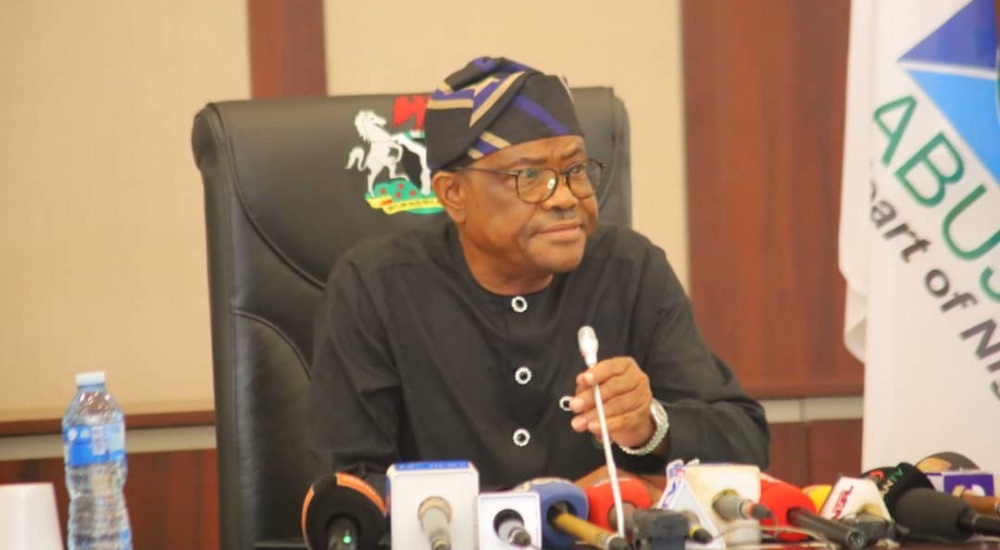
The Socio-Economic Rights and Accountability Project (SERAP) has filed a lawsuit against Nigeria’s governors and the Minister of the Federal Capital Territory, Abuja (FCT), Mr Nyesom Wike, over their failure to account for security votes spending since May 29, 2023.

According to the organisation, the suit followed reports of the Benue massacre and well-documented ongoing cases of insecurity in several states and FCT, despite the over N400 billion budgeted yearly as ‘security votes.’ 10 governors reportedly budgeted about N140 billion as security votes in 2026.

In the suit number FHC/ABJ/CS/95/2026 filed last Friday at the Federal High Court in Abuja, SERAP is asking the court to “direct and compel the governors and Mr Wike to disclose the details of the spending of security votes by them since 29 May 2023 to date, which are intended to ensure the security of life and property of Nigerians.”

It asked the court to compel the governors and Mr Wike to provide detailed reports on the allocation and spending of security votes by their states and the FCT, including the information on implementation status and completion reports, and the plans, if any, for improving the security infrastructure in the states and FCT.

In the suit, SERAP is arguing that, “Nigerians ought to know in what manner public funds including security votes meant to ensure the security of life and property of Nigerians, are spent by the governors and FCT minister.”

It noted that escalating insecurity in several states and FCT is taking a devastating toll on socially and economically vulnerable Nigerians, driving up extreme poverty, intensifying hunger and leading to other grave human rights violations.

SERAP also noted that, “Citizens’ right to know promotes openness, transparency, and accountability that is in turn crucial for the country’s democratic order.”

The suit filed on behalf of SERAP by its lawyers Ms Oluwakemi Agunbiade, Mr Andrew Nwankwo, and  Ms Valentina Adegoke, read in part: “There is a significant risk of embezzlement, misappropriation or diversion of public funds collected by the states and FCT as security votes.

“Despite the billions of naira yearly budgeted as security votes, many governors and FCT ministers are grossly failing to guarantee and ensure the security and welfare of the Nigerian people, contrary to section 14(2)(b) of the Nigerian Constitution.

“Directing the governors and FCT minister to account for security votes spending would serve to engage Nigerians in an honest conversation about the security problems and what the governors and minister are doing to respond to them.”

No date has been fixed for the hearing of the suit.

Adedapo Adesanya is a journalist, polymath, and connoisseur of everything art. When he is not writing, he has his nose buried in one of the many books or articles he has bookmarked or simply listening to good music with a bottle of beer or wine. He supports the greatest club in the world, Manchester United F.C.

General

Excitement as Nigeria Exits EU’s High-Risk Financial List

Published

on

map of nigeria

By Adedapo Adesanya

The European Union (EU) has officially removed Nigeria from its list of High-Risk Third Country Jurisdictions.

This decision follows Nigeria’s successful exit from the Financial Action Task Force (FATF) “grey list” in late 2025, signaling international recognition of the country’s improved anti-money laundering and counter-terrorism financing (AML/CFT) frameworks.

The development is expected to ease trade, payments and investment flows between the country and Europe

The European Commission confirmed that Nigeria, alongside South Africa, Burkina Faso, Mali, Mozambique and Tanzania, had strengthened its AML/CFT regimes and no longer posed “strategic deficiencies” under EU assessment standards.

The commission noted that the affected countries had implemented reforms that brought their financial systems in line with international standards set by the FATF.

Reacting to the development, the Minister of State for Finance, Mrs Doris Uzoka-Anite, described Nigeria’s removal from the list as a major boost to investor confidence.

On a post on X on Thursday, she wrote, “Big win for Nigeria! Removed from EU’s financial ‘high-risk’ list!Congrats to President @officialABAT on this achievement. As Minister of State for Finance, I’m proud of this boost to trade and investor confidence.”

Being on the EU’s high-risk list previously meant that transactions with European partners required enhanced due diligence, stricter documentation, and additional oversight.

Nigerian businesses and banks faced increased scrutiny, which slowed cross-border trade and complicated investment flows.

The lifting of enhanced due diligence requirements is scheduled to take effect on January 29, 2026, following confirmation by the Commission confirmed that Nigeria has addressed strategic deficiencies and strengthened its financial governance through critical legislative reforms, such as the Money Laundering (Prevention and Prohibition) Act.

The development could have a series of positive impact including the provision of several immediate and long-term benefits as well as reduction of compliance costs.

As a result, EU financial institutions will no longer be legally required to apply “enhanced due diligence” to transactions involving Nigeria, which previously involved more intrusive checks and rigorous documentation.

It will also enhance smoother cross-border trade by simplifying trade and payment flows between Nigeria and European partners, reducing the complexity and time required for transactions.

Nigerian officials, including the Minister of State for Finance, have highlighted this as a “major boost” to investor confidence, positioning Nigeria as a more credible destination for international capital.

Continue Reading

General

Dangote Cement Distributors, Customers Share N15bn Gifts, Cash at Awards Nite

Published

on

Dangote Cement Distributors

By Aduragbemi Omiyale

Cash and gifts worth about N15 billion were given out to distributors and customers of Dangote Cement Plc at a ceremony organised to reward their continued loyalty, resilience, and outstanding performance.

At the event, held recently at Eko Convention Centre, Lagos, the chairman of president of Dangote Industries Limited, Mr Aliko Dangote, described the distributors as the heartbeat of the organisation and thanked them for their dedication in ensuring the Dangote products reach communities nationwide.

Business Post reports that the 2026 Distributors’ Awards Night, held under the theme, Partner for Growth, recipients received an impressive array of gifts, including cash prizes, containers of cement, high-end SUVs, and CNG-powered trucks.

Mr Dangote used the occasion to reiterate the company’s Vision 2030 strategy, aimed at transforming Dangote Group into a $100 billion enterprise by 2030.

The plan, he explained, focuses on industrial expansion, cross-border investments, and building Africa’s self-sufficiency in sectors such as energy, manufacturing, and infrastructure.

“Your tireless work in the field, your alluring commitment to our products and your direct engagement with our customers are what turn our vision and strategies into tangible results,” he posited.

“Vision 2030, an integral aspect of our Africa First project, was borne out of my firm belief that Africa’s future will be built by Africans who refuse to accept limits – people who dream big, work hard, and never stop believing in what is possible,” he added.

On his part, chairman of the board of Dangote Cement, Mr Emmanuel Ikazoboh, highlighted the critical role of distributor partnerships in ensuring the company’s products reach every corner of the country.

“Tonight, we are giving out about ₦9 billion in cash to our distributors. For some of you, it will be a double celebration, as you may receive two alerts in recognition of both your volume and growth results,” he disclosed.

“In addition to the cash prizes, we have prepared other exciting gifts, including CNG-powered trucks, high-end cars, and more, to show our appreciation for your commitment and outstanding performance,” he added.

The board chairman further outlined the company’s plans to start the year strong by supporting its distributor partners, stressing the importance of supply chain efficiency and profitability as key pillars for growth.

Mr Ikazoboh also noted that the company has invested in new CNG-powered trucks, as the company’s target at the end of 2027 is to have all its trucks CNG-powered, supporting both logistics efficiency and empowering customers.

“We have made significant investments in new Compressed Natural Gas (CNG)-powered trucks. This initiative not only empowers our customers but also emphasises our dedication to corporate responsibility and global sustainability guidelines. These rewards reflect our promise to support customers and champion sustainable business practices,” he stated.

Continue Reading

General

Navy Launches Operation Delta Sentinel to Achieve 2.5mb/d Oil Output

Published

on

Utapate crude oil blend

By Adedapo Adesanya

The Nigerian Navy has launched Operation Delta Sentinel, a new maritime security initiative designed to curb crude oil theft, secure critical oil assets and support the federal government’s ambition to ramp up crude production to 2.5 million barrels per day by 2027.

The operation, which replaces Operation Delta Sanity II, was formally unveiled at the Nigerian Navy Ship (NNS) Pathfinder Jetty in Port Harcourt, marking a renewed push to stabilise the Niger Delta and protect Nigeria’s oil-dependent economy.

Speaking at the launch, Commander Task Group 26.1, Operation Delta Sentinel, Rear Admiral Suleiman Ibrahim, said the initiative was aligned with the Federal Government’s drive to boost oil exploration and production under the Project 1 Million Barrels Per Day initiative of the Nigerian Upstream Petroleum Regulatory Commission (NUPRC).

“The transformation from Operation Delta Sanity II to Operation Delta Sentinel is necessitated, among other considerations, by the Federal Government drive to increase oil exploration and production,” he said, adding that, “It is further anticipated that oil production would be about 2.5 million barrels per day by 2027.”

Rear Admiral Ibrahim, who is also the Flag Officer Commanding, Central Naval Command, said Operation Delta Sentinel would run for an initial one-year period, subject to 90-day renewable mandates, and would focus on denying criminal networks access to Nigeria’s maritime and oil infrastructure.

“Our objective is clear and unambiguous: to deny criminal elements freedom of action, protect critical national oil assets, support legitimate economic activities and contribute to enduring peace and stability in the Niger Delta,” he stated.

He explained that the operation would rely heavily on intelligence-driven missions, enhanced inter-agency collaboration and advanced surveillance tools, including Maritime Domain Awareness infrastructure, new maritime platforms, and manned and unmanned air assets.

“Our approach will be deliberate, innovative and technology-enabled. These capabilities will enable us to optimise asset utilisation, improve situational awareness and maintain a proactive operational posture,” he added.

The Navy said early indicators already show progress, noting that crude oil losses have dropped by about 90 per cent, from 102,900 barrels per day in 2021 to 9,600 barrels per day as of September 25.

Earlier, Flag Officer Commanding, Eastern Naval Command, Rear Admiral Chiedozie Okehie, highlighted the achievements of Operation Delta Sanity II, which was launched on December 30, 2024, to combat crude oil theft, illegal bunkering and pipeline vandalism.

“Operation Delta Sanity II lived up to expectations and made measurable contributions to national security and economic stability,” the Naval commander said.

According to him, between January 1 and December 31, 2025, the operation led to the arrest of 203 suspects, the deactivation of 324 illegal refining sites, and the seizure of stolen petroleum products valued at over N3.65 billion.

“An estimated 3.78 million litres of stolen crude oil, over 1.09 million litres of illegally refined AGO, 86,210 litres of PMS and 74,300 litres of kerosene were seized and appropriately handled,” he disclosed.

Rear Admiral Okehie added that the Navy’s operations, supported by collaboration with regulators, security agencies, oil industry stakeholders and host communities, contributed to a significant decline in crude oil losses, with NUPRC reporting the lowest loss levels since 2009 in September 2025.

With Operation Delta Sentinel now in force, the Navy said it is positioning itself as a key enabler of Nigeria’s oil production growth, investor confidence and long-term stability in the Niger Delta.

Continue Reading

Trending