Economy
Naira Loses N2.33 at NAFEX to Trade N1,420 Per Dollar
By Adedapo Adesanya
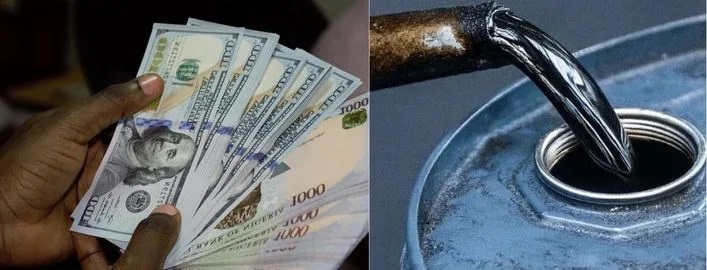
The Naira opened the week heading south against the US Dollar on Monday, January 19 in the Nigerian Autonomous Foreign Exchange Market (NAFEX) after it lost N2.33 or 0.16 per cent to sell for N1,420.28/$1 compared with the preceding trading day’s N1,417.95/$1.
Equally, the Nigerian Naira depleted against the Pound Sterling in the same market window during the session by N4.56 to close at N1,905.8/£1 compared with last Friday’s value of N1,901.32/£1 and depreciated against the Euro by N5.27 to quote at N1,652.78/€1 versus the preceding session’s N1,647.51/€1.
But at the GTBank FX desk, the domestic currency appreciated against the greenback yesterday by N3 to sell at N1,424/$1, in contrast to last Friday’s price of N1,427/$1, and at the black market, it remained unchanged at N1,485/$1.
The weakening of the Nigerian currency in the official market on Monday was driven by relatively higher demand than the available supply as the Central Bank of Nigeria (CBN) made no visible intervention.
Regardless, there are expectations that improved supply conditions from the apex bank will be readily available to keep the market within range supplemented by exporters’ and importers’ inflows in addition to non-bank corporate supply enhanced liquidity.
Nigeria has seen projections of a stronger economic or gross domestic product (GDP) growth and lower inflation in 2026, with these forecasts citing improved macroeconomic fundamentals and reform impacts.
The Chartered Institute of Bankers of Nigeria (CIBN) projected a single interest rate for the year, while it made further positive forecasts regarding the Nigerian economy.
Despite oil earnings fluctuations, Nigeria’s gross external reserves balance increased by $40.71 million to the previous day’s balance, bringing total reserves to $45.90 trillion.
In the cryptocurrency market, benchmarked tokens were largely down as renewed tariff threats between the US and Europe, tied to President Donald Trump’s comments on Greenland, have pushed investors back toward traditional safe havens. Gold and silver rallied, while cryptocurrencies underperformed.
Ethereum (ETH) declined by 2.3 per cent to $3,119.97, Bitcoin (BTC) slumped by 1.7 per cent to $90,940.76, Binance Coin (BNB) went down by 0.9 per cent to $915.39, Solana (SOL) dipped by 0.9 per cent to $131.81, Ripple (XRP) slipped by 0.2 per cent to $1.95, US Dollar Tether (USDT) slid by 0.1 per cent to $0.9990, and US Dollar Coin (USDC) lost 0.01 per cent to settle at $0.9997.
On the flip side, Cardano (ADA) jumped by 1.5 per cent to $0.3666, Litecoin (LTC) appreciated by 0.3 per cent to $70.17, and Dogecoin (DOGE) went up by 0.2 per cent to $0.1269.
Economy
Oil Prices Spike 3% as Trump Warns Iran Over Strait of Hormuz
By Adedapo Adesanya
Oil prices jumped 3 per cent on Wednesday as mounting supply concerns following escalating hostilities between the United States and Iran, while threats to shipping by the Iran-backed Houthi militia in Yemen further boosted prices.
Brent crude futures went up by $3.06 or 3.36 per cent to $94.07 a barrel, while the US West Texas Intermediate crude climbed $2.49 or 2.95 per cent to $86.83 a barrel.
The US military said it carried out an 11th consecutive night of attacks on Iran. The US attacks came a short while after the Kuwaiti army said its air defences were intercepting Iranian drones.
President Donald Trump said on Wednesday the US would “bomb and destroy one bridge or power plant” any time Iran targets a ship in the Strait of Hormuz.
Iran’s Revolutionary Guards’ spokesperson warned shipping companies that the Strait of Hormuz southern route is mined.
As well as the renewed conflict over control of that key waterway, the Iran-aligned Houthis have opened a new front in the war by threatening to target vessels carrying Saudi oil in the Bab el-Mandeb Strait and announced a naval blockade of Saudi Arabia.
Bab el-Mandeb at the southern entrance to the Red Sea has become an increasingly important route for Saudi Arabian crude exports as traffic through the Strait of Hormuz has fallen sharply again since a ceasefire between the US and Iran collapsed earlier this month.
Five tankers in the Red Sea avoided the Bab el-Mandeb Strait on Wednesday after the Houthis’ threat to block Saudi oil exports.
The European Union’s naval force Aspides said on Wednesday that ships with links to Israel, the US or Saudi Arabia are at a higher risk of being attacked by Yemen’s Iran-aligned Houthi militia and are advised to avoid voyages through the Red Sea and Gulf of Aden.
Crude oil inventories in the US saw an increase of 2.0 million barrels during the week ending July 17, according to new data from the US Energy Information Administration (EIA) released on Wednesday.
It follows figures by the American Petroleum Institute (API) that were released a day earlier, which reported that crude oil inventories had risen by 2.603 million barrels in the period.
The increase brings commercial stockpiles to 411.7 million barrels, according to government data, which are now 6 per cent below the five-year average for this time of year.
Meanwhile, European Union (EU) ambassadors failed on Wednesday to agree on a 21st package of sanctions against Russia over its invasion of Ukraine in 2022.
Economy
DMO Allots N929.3bn to Investors in July FGN Bond Sales
By Aduragbemi Omiyale
The Debt Management Office (DMO) on Monday allotted bonds worth N929.3 billion to investors from the N1.7 trillion bids it received from subscribers.
The exercise, which took place on Monday, July 20, 2026, was oversubscribed by market participants, reflecting the confidence investors have in the government’s ability to redeem the debt instrument on maturity.
On offer for sale for the July auction was N1.2 trillion worth of the FGN bonds, but the DMO allotted below this, despite receiving bids above the offer.
The papers were offered in 10-year, 15-year, and 20-year tenors, at N400 billion each.
For the decade-old note, investors staked N444.47 billion, but the debt office sold N245.73 billion at an 18.34 per cent coupon rate. For the one and a half-decade-old paper, bids valued at N518.00 billion were received by the DMO, with a non-competitive bid of N50.00 billion, with N302.13 billion allotted to investors at 18.40 per cent, and for the two-decade paper, the DMO got competitive bids of N665.19 billion and N381.46 billion was sold to bondholders at 18.35 per cent.
Economy
Nigeria’s External Reserves Hit $52.5bn, Cover Nine Months of Imports
By Adedapo Adesanya
The Governor of the Central Bank of Nigeria (CBN), Mr Yemi Cardoso, disclosed that Nigeria’s external reserves had risen to $52.5 billion, enough to finance about nine months of imports.
He disclosed this on Tuesday at the end of the 306th meeting of the Monetary Policy Committee (MPC) held in Abuja, where the Monetary Policy Committee (MPC) retained the benchmark interest rate at 26.50 per cent as well as the standing facilities corridor at +50/-450 basis points around the MPR.
Similarly, the Cash Reserve Requirement (CRR) was maintained at 45 per cent for Deposit Money Banks, 16 per cent for Merchant Banks, and 75 per cent for non-Treasury Single Account (TSA) public sector deposits.
Speaking on FX developments, the central banker said at the $52 billion level, the country’s external reserves were significantly above the internationally recommended threshold of three months of import cover.
On the Naira exchange rate, Mr Cardoso said the foreign exchange market had deepened and was now operating on a transparent willing-buyer, willing-seller basis.
He said the apex bank remained committed to maintaining a liquid and functional foreign exchange market, adding that daily market turnover sometimes exceeded $1 billion.
According to him, the long-term stability of the naira would depend on key economic fundamentals, including increased oil exports, foreign direct investment, and improved domestic productivity to reduce dependence on imports.
He also added that the MPC welcomed the federal government’s renewed commitment to stronger policy coordination, particularly collaboration between fiscal and monetary authorities, which he said had helped reduce the impact of the Middle East crisis on the Nigerian economy.
Mr Cardoso said members of the committee also commended efforts to improve crude oil production and urged relevant agencies to intensify reforms in other sectors, including solid minerals, to boost government revenue.
On the regulatory forbearance granted to banks during the COVID-19 period, he reiterated that this had been discontinued because it had served its purpose.
According to him, the policy had “outlived its time” and was no longer necessary in assessing the health of the banking sector.
“Forbearance, we felt, had outlived its time. Many of you will recall this is something that came as a result of COVID. And now we are in 2026; we did not see the reason why that should continue to form part of the analysis of the banking system,” he said.
Mr Cardoso explained that banks had begun recalibrating their portfolios following the end of the policy, leading to a temporary reduction in outstanding risk assets.
He, however, assured that the development was part of a transition towards a stronger and more sustainable credit environment.
“It reflects a transition to a more sustainable and better quality credit environment, which is what we all want. We don’t want unanticipated shocks that come in a boom-and-bust fashion,” he said.