General
IIF Takes Step to Operationalise Gender-Smart Investing
By Aduragbemi Omiyale
A decisive step aimed at operationalising its Gender Equity and Social Inclusion (GESI) roadmap has been taken by the Impact Investors Foundation (IIF).
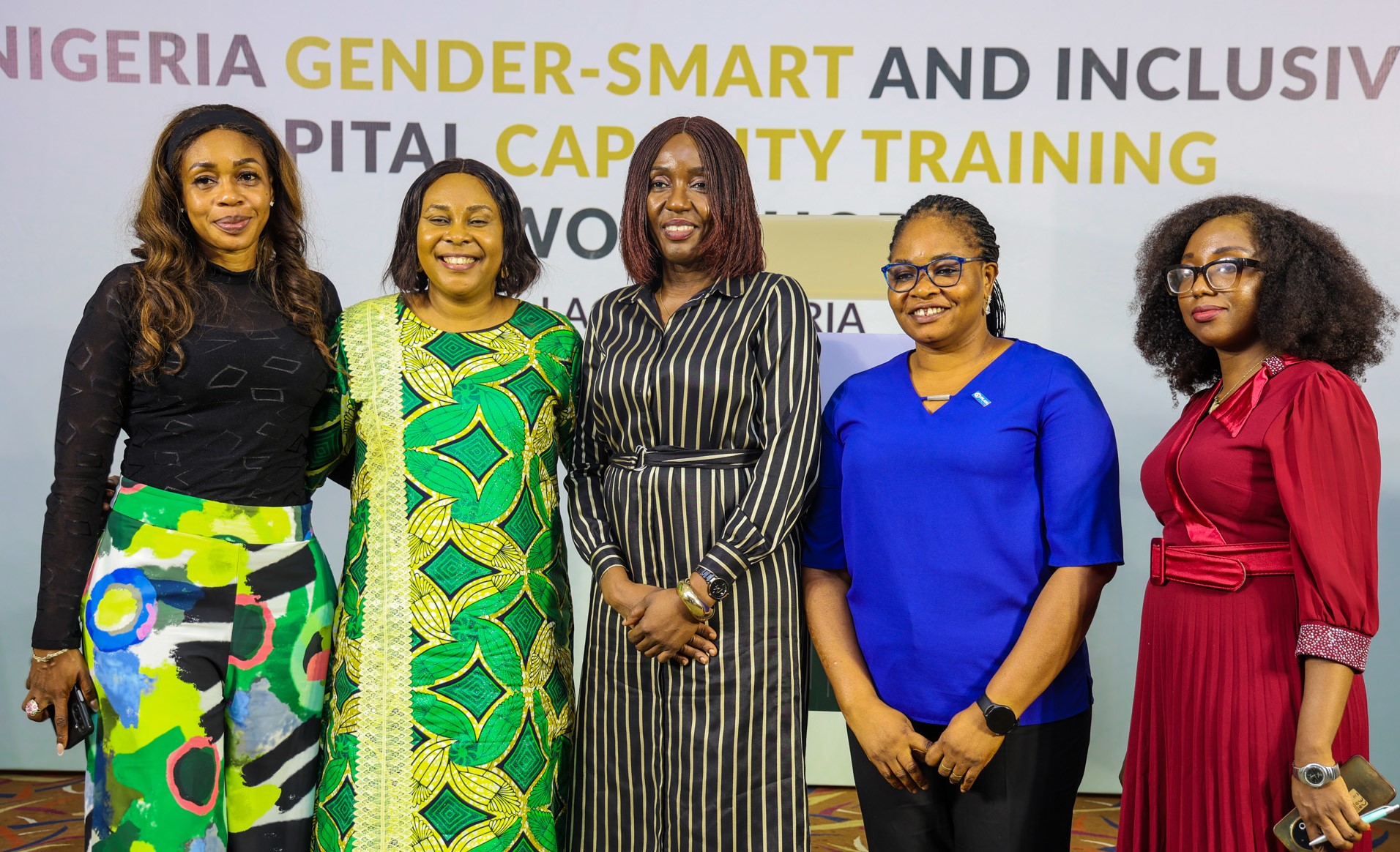
Last week, the organisation organised a high-level workshop in Lagos to equip institutions with the tools, standards, and data necessary to integrate GESI into capital allocation decisions.
In attendance for this programme were investors, policymakers, development partners, and private sector leaders.
The Nigeria Gender-Smart and Inclusive Capital workshop served as a critical component of the broader implementation strategy initiated after the launch of Nigeria’s Gender/GESI Roadmap at the 2025 Gender Impact Investment Summit.
“Following the landmark launch of Nigeria’s Gender/GESI Roadmap in 2025, this workshop represents the essential next strategic step in our journey towards a truly inclusive financial ecosystem,” the chief executive of IIF, Ms Etemore Glover, told participants.
“It is not enough to have a roadmap; we must now begin to operationalise it through institutional transformation that goes beyond mere policy alignment.
“This phase is critical because it moves us past advocacy and into the rigorous work of implementation, ensuring that organisations begin to intentionally deploy strategies to bridge the gaps that have historically sidelined women and marginalised groups,” she added.
Ms Glover submitted that, “With growing evidence that diverse and inclusive enterprises outperform their peers in risk management, innovation, and long-term value creation, Nigeria’s push to operationalise gender-smart investing reflects both a moral imperative and a significant market opportunity.”
A central highlight was a technical deep dive into the Gender/GESI Roadmap, presented by a Partner from PwC. The roadmap provides a structured approach to embedding gender-smart principles across the entire investment lifecycle: deal sourcing, by identifying women-led or gender-diverse enterprises; due diligence, through assessing GESI-related risks and opportunities; portfolio management, by strengthening inclusive governance; and exit strategies, which focus on ensuring long-term impact sustainability.
Investment and sustainability professionals from Verod Capital at the event shared practical strategies for embedding GESI metrics into governance systems. Additionally, a case study from Alitheia Capital illustrated how gender-lens investing drives both financial performance and measurable social impact.
Further, experts from 2X Global and Moremi Capital delivered sessions on the Foundations of Gender-Smart Investing, contextualising global standards such as the 2X Criteria for the Nigerian investment landscape.
These discussions demonstrated how investors can intentionally benefit women-led businesses, women in leadership, and women as value chain participants.
Organisations were charged with embedding gender-smart principles into their core operations to unlock Nigeria’s full economic potential, effectively turning the roadmap into the standard for investment in the nation’s future.
General
Why News Matters More Than Ever
For many people, the relationship with news begins with resistance. As children, news channels felt slow, serious, and far removed from the world we know. They interrupt cartoons and movies, filling the screen with long conversations about politics, crises, and distant places. It is perceived as heavy, formal, and intended only for adults, not for young minds seeking entertainment or fun.
Over time, the value of news becomes clear. Most people want to stay informed, understand context, and gain insight into the events that shape society. News moves beyond reports and statistics to provide essential information for making sense of the world.
News Today Fits Into Life, Not the Other Way Around
Modern audiences no longer consume news the way previous generations did. Attention spans are shorter, schedules are busier, and habits are more flexible. People want updates without commitment and access without pressure. News now adapts to everyday life; it can be a quick headline in the morning, a background update while working, or a detailed story in the evening. It meets audiences where they are, not the other way around.
This is where GOtv excels. GOtv offers a wide range of local and international news channels that allow viewers to stay informed in the way that suits them best. Whether it’s a casual check-in, following major developments throughout the day, or deep-diving into global affairs at night.
Local Stories: Global Perspective
The news landscape on GOtv reflects the world audiences live in, fast-moving, interconnected, and diverse. National channels such as Channels Television and ARISE News cover stories that directly impact Nigeria and Africa, from politics and economy to social trends and culture. Meanwhile, international networks like CNN and Al Jazeera provide a broader lens, connecting viewers to global events and discussions that influence nations and societies. Together, these channels give viewers a comprehensive understanding of the world, offering multiple perspectives rather than a single narrative.
When News Finally Makes Sense
There comes a point where news stops feeling like background noise and starts feeling relevant. It matters when decisions need to be made, when conversations require context, and when understanding the world becomes part of everyday life. It becomes clear why adults value it so much because being informed equips people to engage, respond, and make sense of the complex world around them.
GOtv understands that news consumption evolves. It meets audiences at different stages, from casual viewers who want a simple update to engaged viewers seeking deeper analysis and informed discussion. Growing up isn’t about suddenly loving news channels; it’s about realising that staying informed is no longer optional. It’s a conscious choice, a way to connect with the world, and a tool to navigate life’s complexities.
With GOtv, news is no longer something you’re forced to watch. It becomes a choice, a way to stay connected to both local and global stories that matter.
For easy access, viewers can tune in to Channels Television on Channel 27, ARISE News on Channel 24, CNN on Channel 72, and Al Jazeera on Channel 71.
To subscribe, upgrade, or reconnect, download the MyGOtv App or dial *288#. You can also stream anytime with the GOtv Stream App.
General
FG, AFC to Fund $1.3bn Alumina Refinery, Two Other Mining Projects
By Adedapo Adesanya
The federal government, through the Solid Minerals Development Fund (SMDF), has signed an investment agreement with the Africa Finance Corporation (AFC) to jointly fund three major mining initiatives, including a $1.3 billion alumina refinery project.
Alumina is a chemical compound extracted from bauxite. It is composed of two elements: oxygen and aluminium. It has wide applications across metallurgy, ceramics, electronics, and chemical processing.
The agreement also covers a comprehensive geoscience mapping exercise and the establishment of a joint strategic investment vehicle to drive exploration and development across the sector.
According to a statement on Sunday by Mr Segun Tomori, the Special Assistant on media to the Minister of Solid Minerals Development, the refinery will utilise a modern Bayer-process flowsheet and feature an on-site gas-fired cogeneration plant for steam and power generation.
The ministry said the agreement is the culmination of discussions between AFC and SMDF to co-finance the construction of a $1.3 billion alumina refinery expected to process about one million tonnes of bauxite ore per annum.
“The facility is designed to operate for approximately 20 years at 95 per cent utilisation, with total alumina output projected at 19 million tonnes over its lifespan,” the statement reads.
Speaking at the signing ceremony, Mr Dele Alake, the Minister of Solid Minerals Development, described the deal as a landmark transaction that will transform the mining sector and increase its contribution to Nigeria’s gross domestic product (GDP).
Mr Alake said the deal aligns with the ministry’s reform agenda, noting that efforts to modernise the regulatory framework and strengthen the mineral licensing regime have begun attracting significant private capital.
Demonstrating the federal government’s commitment to fast-tracking the investments, the minister said all necessary approvals have been granted to accelerate implementation of the agreement.
He directed relevant agencies under the ministry to ensure seamless processing of permits, titles, and regulatory clearances.
On her part, Mrs Fatima Shinkafi, the Executive Secretary of the SMDF, said the transaction represents the agency’s largest funding project since inception.
“We are very proud and honoured to facilitate this phenomenal milestone, which is quite unprecedented since the inception of SMDF,” Mrs Shinkafi said.
“It is a $1.3 billion CAPEX. SMDF has come of age and can sit here and sign this deal with AFC. I thank the AFC for collaborating with us to boost the value addition policy of my boss, Dele Alake.”
On his part, Mr Farouk Yabo, permanent secretary of the ministry, said the development could position Nigeria more prominently on the global mining map.
The ministry further said the project is projected to be Nigeria’s largest private investment in the mining sector and will contribute about “$1.2 billion to GDP annually, inject over $25 billion into the national economy across its lifecycle, and generate $8 billion in foreign exchange earnings”.
The statement said initial feasibility studies conducted by the AFC and SMDF confirmed the project’s competitiveness and commercial viability, reinforcing efforts to position Nigeria as a globally competitive minerals destination.
“As part of the agreement, both parties will undertake a comprehensive geoscience mapping exercise aimed at generating mineral data, de-risking exploration for investors, and unlocking the sector’s full potential,” the statement further reads.
“AFC and SMDF also agreed to set up a joint strategic investment vehicle to accelerate the development of identified exploration assets across Nigeria, to drive rapid exploration, development, and production of selected exploration leases upon the execution of a successful exploration campaign.”
Mrs Shinkafi signed the deal on behalf of the federal government, while Mr Franklin Edochie, deputy director and head of metals and mining at AFC, signed for the corporation.
The statement added that Mrs Samaila Zubairu, president and chief executive officer of AFC, witnessed the ceremony alongside the minister.
General
NISO Attributes Electricity Woes to Inadequate Gas Supply
By Adedapo Adesanya
The Nigerian Independent System Operator (NISO) has attributed the poor power supply facing a considerable number of Nigerians to inadequate gas supply to thermal power plants.
Business Post reports that epileptic power supply has plagued consumers in Lagos, Oyo, Abuja, and Osun, among others, this month, leading to worries. Also, some businesses have recorded losses due to the epileptic power supply in their areas.
In a statement posted on its X handle, NISO disclosed that average available generation on the national grid currently stands at about 4,300 megawatts (MW), with the low output primarily attributed to gas supply constraints.
The system operator noted that thermal power plants, which account for the dominant share of Nigeria’s electricity generation mix, require an estimated 1,629.75 million standard cubic feet (MMSCF) of gas per day to operate at optimal capacity. However, as of February 23, 2026, actual gas supply to the plants was approximately 692.00 MMSCF per day.
The available supply represents less than 43 per cent of the daily gas requirement, resulting in constrained generation output and reduced electricity allocation to Distribution Companies (DisCos).
NISO, which independently manages the nation’s electricity grid, explained that any disruption or limitation in gas supply directly affects available generation capacity and overall grid output, given the heavy reliance on thermal plants.
It added that when total system generation drops significantly, the operator is compelled to implement load shedding across the network while dispatching available energy in line with allocation percentages approved under the Multi-Year Tariff Order (MYTO) framework of the Nigerian Electricity Regulatory Commission (NERC), to maintain grid stability and prevent system disturbances.
While expressing regret over the inconvenience to electricity consumers and market participants, NISO said it is working closely with relevant stakeholders to restore full energy allocation once gas supply improves and generation capacity returns to normal levels.
-
Feature/OPED6 years agoDavos was Different this year
-
Travel/Tourism10 years ago
Lagos Seals Western Lodge Hotel In Ikorodu
-
Showbiz3 years agoEstranged Lover Releases Videos of Empress Njamah Bathing
-
Banking8 years agoSort Codes of GTBank Branches in Nigeria
-
Economy3 years agoSubsidy Removal: CNG at N130 Per Litre Cheaper Than Petrol—IPMAN
-
Banking3 years agoSort Codes of UBA Branches in Nigeria
-
Banking3 years agoFirst Bank Announces Planned Downtime
-
Sports3 years agoHighest Paid Nigerian Footballer – How Much Do Nigerian Footballers Earn