Connect with us

Economy

Nigerian Manufacturers Seek Cover from Middle East War-Induced Risks

Published

on

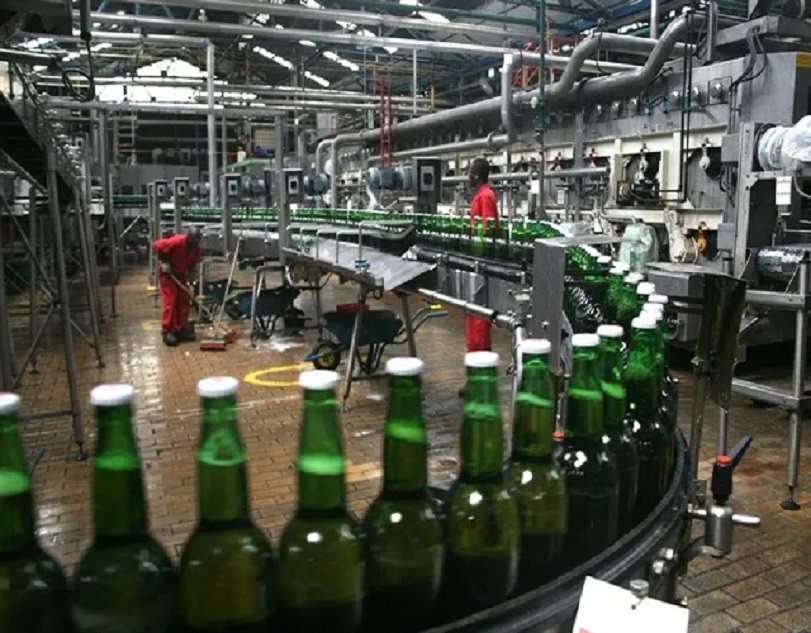
Beer manufacturers in Nigeria

By Adedapo Adesanya

The Manufacturers Association of Nigeria (MAN) is seeking protection from the federal government amid rising concerns over the impact of escalating Middle East tensions on Nigeria’s manufacturing sector, particularly risks linked to disrupted global shipping routes, volatile energy markets, and supply chain bottlenecks.

MAN noted, “Its vigilance regarding the escalating military tensions involving the United States, Israel, and Iran. These events have significant implications for the global macroeconomic landscape, which can indirectly impact Nigeria.”

The director-general of MAN, Mr Segun Ajayi-Kadir, expressed that this situation arises at a pivotal moment when Nigeria has seen its annual inflation rate positively ease to 15.10 per cent, and manufacturing capacity utilisation has begun to exceed the 60 per cent mark, saying, however, the current geopolitical turbulence poses challenges that require careful navigation to protect the economic progress achieved.

“Although these conflicts are occurring far from our shores, their economic consequences may directly influence the Nigerian economy.

“We are particularly attentive to issues surrounding global shipping disruptions, fluctuating energy markets, and potential supply chain bottlenecks that could challenge local production,” Ajayi-Kadir stated.

Mr Ajayi-Kadir further explained that the recent hostilities in the Middle East are reshaping the global energy and logistics environment.

“With critical disruptions in the Strait of Hormuz, the global markets have become unsettled, reflected in rising Brent crude prices exceeding $84.50 per barrel, and increased global freight and war-risk insurance premiums as vessels seek safer routes,” he stated.

For Nigerian manufacturers, MAN DG added that the implications of these developments are immediate and significant, increasing production costs, saying that historically, disruptions in the U.S. and the Middle East have reverberated throughout the global economy, and Nigeria is no exception.

He noted that “while a rise in global oil prices could theoretically benefit Nigeria by bolstering foreign exchange reserves and contributing to the stability of the Naira, the current reality presents a complex challenge. Nigeria’s domestic crude production hovers around 1.3 to 1.4 million barrels per day due to ongoing structural challenges, limiting the ability to fully leverage potential gains.”

He disclosed that in terms of trade relations, the United States remains one of Nigeria’s most vital partners, stating that given the existing conflict, disruptions in this crucial trade relationship could lead to increased costs for global freight forwarding and longer lead times for imported raw materials, potentially resulting in imported inflation.

According to him, the manufacturing sector is poised to face a variety of immediate and complex challenges, including rising energy costs, which are particularly relevant given that manufacturers depend heavily on gas and diesel for effective operations.

“Additionally, increasing freight costs and longer shipping times are making it more expensive to procure raw materials. Furthermore, heightened costs for essential goods could diminish consumer purchasing power, presenting manufacturers with the challenge of rising production costs amid stagnant or declining sales.”

In identifying the sectors most likely to be affected, MAN emphasised that the impact of global conflicts is not uniformly distributed, adding that “while the entire real sector is likely to feel the pressure, specific groups such as the Chemical and Pharmaceuticals Sector and the Basic Metals, Iron, and Steel Sector may encounter unique challenges.


Adedapo Adesanya is a journalist, polymath, and connoisseur of everything art. When he is not writing, he has his nose buried in one of the many books or articles he has bookmarked or simply listening to good music with a bottle of beer or wine. He supports the greatest club in the world, Manchester United F.C.

Click to comment

Leave a Reply

Your email address will not be published. Required fields are marked *

Economy

Naira Falls to N1,383/$1 at Official Market, N1,405/$1 at Parallel Market

Published

on

print Naira massively

By Adedapo Adesanya

The Naira weakened against the US Dollar by N3.43 or 0.25 per cent in the Nigerian Autonomous Foreign Exchange Market (NAFEX) on Tuesday, July 14, to close at N1,383.08/$1 compared with the previous day’s N1,379.65/$1.

Equally, the domestic currency depreciated against the Pound Sterling in the official market during the session by N6.80 to settle at N1,848.18/£1 versus Monday’s closing price of N1,854.98/£1, and lost N7.37 on the Euro to sell at N1,583.76/€1, in contrast to the preceding session’s N1,576.39/€1.

At the parallel market, the Nigerian Naira slumped against the Dollar yesterday by N5 to quote at N1,405/$1 compared with the previous day’s value of N1,400/$1, and at the GTBank FX desk, it traded flat at N1,388/$1.

The squeeze at the market came as demand rose. Total dollar volume hovered around $1 billion with NFEM interbank FX turnover surging to $243.095 million, up 182 per cent from $86.136 million the previous day.

The interbank deals among financial institutions or market makers also increased to 140 from 85 previously reported at the official window on Monday. This indicates a heightened rush of large-scale currency trading in the wholesale forex market.

Shifts in FX supply and demand triggered fluctuations in the NFEM window. Still, FX analysts maintained a positive outlook on the naira as gross external reserves continue to approach $52 billion.

Strong foreign reserves have supported market confidence, as foreign portfolio investors continue to flock to the fixed-income market.

There are also indications of pressure to come as after Dangote Petroleum Refinery scrapped its Naira-denominated pricing model for petrol, diesel and aviation fuel, replacing it with a Dollar-based framework that ties domestic fuel prices directly to exchange rate movements.

Meanwhile, in the crypto market, Bitcoin (BTC) jumped about 3.5 per cent to $64,723.42, while Ethereum (ETH) gained 0.5 per cent to trade at $1,873.15, after US inflation cooled more than expected, sharply reducing market odds of a near-term Federal Reserve rate hike.

June headline inflation slowed to 3.5 per cent and core inflation eased to 2.6 per cent, lifting cryptocurrencies.

Solana (SOL) rose by 3.8 per cent to $77.90, Ripple (XRP) appreciated by 3.6 per cent to $1.10, Cardano (ADA) expanded by 3.4 per cent to $0.1640, Dogecoin (DOGE) soared by 3.0 per cent to $0.0744, Binance Coin (BNB) added 1.9 per cent to sell for $579.51, and TRON (TRX) improved by 0.7 per cent to $0.3270, while the US Dollar Tether (USDT) and the US Dollar Coin (USDC) remained unchanged at $1.00 each.

Continue Reading

Economy

First Holdco Lifts All-Share Index by 0.46% After Significant Trades

Published

on

first holdco subsidiaries

By Dipo Olowookere

The Nigerian Exchange (NGX) Limited rebounded by 0.46 per cent on Tuesday despite continued weak investor sentiment due to low confidence in the market.

The gains recorded yesterday were largely impacted by significant trades in First Holdco by a major shareholder of the financial institution.

In terms of price gainers and losers, the bears won the race, as 28 equities closed in the red and 24 equities ended in the green, indicating a negative market breadth index.

Learn Africa grew by 10.00 per cent to N9.90, First Holdco expanded by 9.98 per cent to N72.15, Thomas Wyatt rose by 9.80 per cent to N2.69, RT Briscoe improved by 8.68 per cent to N13.15, and Transcorp Hotels increased by 8.37 per cent to N242.00.

Conversely, International Energy Insurance lost 9.86 per cent to close at N4.66, Legend Internet slipped by 9.18 per cent to N4.45, Fortis Global Insurance decreased by 7.67 per cent to N2.77, FTN Cocoa tumbled by 7.55 per cent to N8.21, and International Breweries dropped 4.79 per cent to trade at N13.90.

Business Post reports that First Holdco led the activity chart with a turnover of 326.9 million units worth N22.3 billion. GTCO traded 22.5 million units valued at N2.8 billion, Access Holdings transacted 18.5 million units for N461.6 million, FCMB sold 16.1 million units worth N166.8 million, and Zenith Bank exchanged 15.9 million units valued at N1.7 billion.

At the close of business, a total of 634.8 million stocks valued at N53.3 billion exchanged hands in 42,494 deals versus the 523.5 million stocks sold for N22.3 billion in 59,945 deals on Monday, indicating a shortfall in the number of deals by 29.11 per cent, and a surge in the trading volume and value by 21.26 per cent and 139.01 per cent, respectively.

The All-Share Index (ASI) was up during the trading day by 1,121.33 points to 242,870.44 points from 241,749.11 points, and the market capitalisation gained N719 billion to settle at N155.849 trillion compared with the previous day’s N155.130 trillion.

Market participants will be looking forward to the release of inflation data for June 2026 by the National Bureau of Statistics (NBS) today, Wednesday, July 15.

Continue Reading

Economy

Brent Climbs Above $84, WTI Near $80 as Iran Tensions Stoke Oil Rally

Published

on

brent crude oil

By Adedapo Adesanya

Oil prices climbed about 2 per cent to a one-month high on Tuesday after the ​US reportedly reimposed a naval blockade on Iran, which will reduce oil flows from the region through the Strait of Hormuz.

Brent futures rose by $1.43 or 1.7 per cent to settle at $84.73 per barrel, while the US West Texas Intermediate (WTI) crude increased by $1.20 or 1.5 per cent to $79.34 a barrel.

Brent closed at its highest since June ​12, and WTI at its highest since June 15. The closing price increase kept Brent in technically overbought territory for a second day in a row ​for the first time since March.

Before the Iran war, about 20 per cent of global oil supplies flowed through the strait.

US President Donald Trump stepped back from a proposal to charge a 20 per cent fee to guard the Strait of Hormuz as part of the ​conflict with Iran, saying he would instead seek investment deals with Gulf states.

US forces had carried out waves of attacks for the third night after Iran said it had closed the strait. President Trump on Monday reinstated a blockade of Iranian shipping and proposed the fee, but hours before the fee was to take effect, the American President said the strait was open to all shipping traffic except ​that of Iran.

The renewed attacks have fed doubts that a memorandum of understanding signed last month will lead ‌to a ⁠permanent halt in the war that has disrupted global energy supplies and stoked inflation fears.

Data showed that US consumer inflation slowed more than expected in June as energy prices retreated, but financial markets still expect an interest rate hike from the Federal Reserve.

The Federal Reserve Chairman Kevin Warsh ​on Tuesday vowed to “do my job” if ​challenged by President Trump, who has said ⁠he wants the US central bank to cut interest rates and boost economic growth.

The American Petroleum Institute (API) estimated that crude oil inventories in the US fell by 564,000 barrels in the week ending July 10. In the week prior, US crude oil inventories fell by 399,000 barrels.

Although commercial crude oil inventories excluding the SPR have been falling rapidly for three months now, shedding just over 60 million barrels over the last twelve weeks, US crude inventories are only down 9.2 million barrels so far this year. The US Energy Information Administration (EIA) will release its report later on Wednesday.

Continue Reading