Connect with us

Feature/OPED

A Generation Under Siege as Nigeria’s Drug Crisis Deepens

Published

on

Nigeria’s Drug Crisis

By Blaise Udunze 

This piece speaks directly to the current consciousness of many Nigerians as some crises erupt with noise, explosions of violence, economic shocks, political upheavals and then some unfold quietly, steadily, almost invisibly, until their consequences become impossible to ignore.

Nigeria today is living through the latter. Today, this hardly or rarely dominates the front pages of newspapers with the same sustained urgency. Still, the truth is that it depends on whether it is reshaping communities, distorting futures, and hollowing out the very foundation of the nation’s promise.

With the rate at which drug abuse has festered among young Nigerians, it is no longer a social concern. It is a national emergency, silent, systemic, and dangerously underestimated.

The big picture of a bright future led by the youth of today and leaders of tomorrow is gradually fading away, thanks to the menace of drugs. Unfortunately, it is a national problem linked to all other criminal activities, but the system does not consider it critical. A generation of people is gradually being wiped out. The implications of these are too dire even to contemplate.

It is now alarming, as the numbers alone are staggering. Looking closely at the report by the United Nations Office on Drugs and Crime reveals that 14.4 per cent of Nigerians between the ages of 15 and 64, roughly 14.3 million people, use psychoactive substances, nearly three times the global average. Even more troubling, which calls for public concern, is that one in five of these users suffers from drug-related disorders requiring urgent treatment. The implication is clear since this is not casual use; it is a deepening public health crisis.

To many Nigerians, these statistics, as revealed, appear alarming, but the underlying fact is that they are only a scratch on the surface of a much darker reality, which the eyes cannot see.

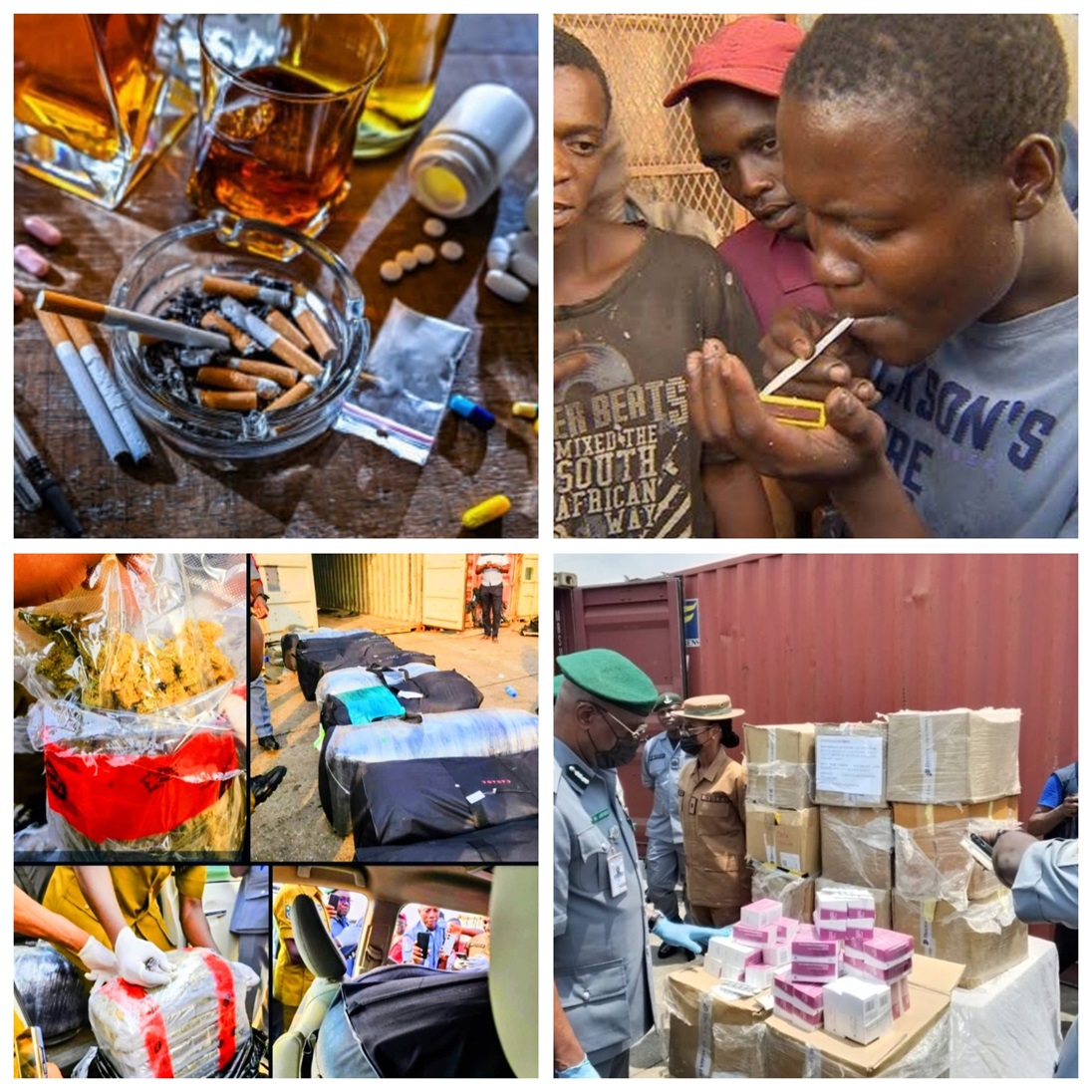
Across Lagos, Kano, Onitsha, and countless towns in between, drug abuse is no longer hidden. It is visible in motor parks where tramadol is sold as casually as bottled water, in university hostels where “home mixes” circulate as social currency, and in street corners where teenagers inhale toxic concoctions in search of escape. Substances that were once tightly regulated, codeine, opioids, and benzodiazepines, are now frighteningly accessible. Others, far more dangerous, are improvised through mixtures of gutter water, chemicals, and pharmaceuticals designed not for healing, but for oblivion.

What is emerging is not just a culture of drug use, but an ecosystem of addiction.

Let us consider the disturbing normalisation of concoctions like “Omi Gutter” (gutter water) or “Jiko”, lethal blends of tramadol, codeine, cannabis, and other substances, just to mention a few. The fear in all of this is that these are not isolated experiments; they are part of a growing subculture among young people seeking relief from pressures they can neither articulate nor escape. Let us see the irony from the point that the deaths incurred from overdoses, seizures, and organ failure are increasingly reported, yet rarely provoke sustained national outrage.

This silence is part of the problem, and what society has failed to recognise is that they are yet to understand the scale of the crisis; one must go beyond the streets and into the systems that have failed to contain it.

What must be known today is that Nigeria’s drug epidemic is deeply intertwined with a mental health crisis that remains largely unaddressed, which appears difficult to deal with because the system’s attention is divided by other trivialities. According to the World Health Organisation, one in four Nigerians, an estimated 50 million people, suffer from some form of mental illness. This is such a fearful trend, whilst among adolescents, the situation is even more fragile. Today, the trend in Nigeria, globally, is also on record that 14 per cent of young people experience mental health challenges, with suicide ranking among the leading causes of death for those aged 15 to 29.

In Nigeria, however, these issues are compounded by stigma, neglect, and systemic absence.

A study conducted in a Borstal Institution in North-Central Nigeria found that 82.5 per cent of adolescent boys had psychiatric disorders. The breakdown actually revealed that disruptive behaviour disorders accounted for 40.8 per cent, substance use disorders 15.8 per cent, anxiety disorders 14.2 per cent, psychosis 6.7 per cent, and mood disorders five per cent. These are not marginal figures; they point to a generation grappling with profound psychological distress.

Many of these boys, according to the timely warning from Professor Olurotimi Coker of the Lagos State University Teaching Hospital, which he revealed, is that they suffer in silence. This, he discloses, is constrained by societal expectations that equate vulnerability with weakness. In a culture where young men are expected to “be strong,” emotional struggles are buried, not addressed. Drugs, in this context, become both refuge and rebellion, a way to cope, to escape, and sometimes, to belong.

The tragedy is that what begins as coping often ends in captivity. The clear fact, which the system must not ignore, is that the crisis does not exist in isolation, yes! because it feeds into and is fed by Nigeria’s broader challenges of insecurity and alongside economic instability. Research by scholars from Chukwuemeka Odumegwu Ojukwu University highlights a dangerous nexus between substance abuse and national security. Drug trafficking networks do not merely distribute substances; they sustain criminal economies, fund violent groups, and perpetuate cycles of instability.

A review of some of the developments will drive us to the activities in the Lake Chad Basin, for instance, an open secret is that insurgent groups such as Boko Haram and Islamic State West Africa Province have been linked to drug trafficking operations. According to regional security analyses, these groups rely on narcotics, from tramadol to cocaine, to finance operations, recruit fighters, and embolden combatants. The use of drugs to suppress fear and heighten aggression among fighters underscores a chilling reality, which obviously shows that Nigeria’s drug crisis is not just a health issue; it is a security threat. To confirm this, only recently, during an interview with Arise TV, General Christopher Musa, the Minister of Defence, concurred that when many of these terrorists are arrested, they are often found to be under the influence of drugs.” He stated that they use different substances, including injectables, which affect their thinking and reduce their fear or sense of pain. In General Musa’s words: “You are dealing with somebody whose mind is made up that if he dies, he doesn’t care. Most times when we arrest them, they are on drugs, so they don’t care, they don’t even feel it, they have Injectables, you get them with all those drugs. So that is how they operate.”

This convergence of addiction and violence creates a vicious cycle. History has shown that drugs fuel crime; crime sustains drug networks, and for this reason, young people, caught in the middle, are both victims and instruments, recruited as couriers, enforcers, and, in some cases, political thugs. One recent example that occurred earlier this month is that of a teenager aged 15 named Tijjani. He was arrested by the Nigerian Army in connection with the Boko Haram deadly attack on military positions in Borno that claimed the life of Brigadier-General Oseni Braimah and other soldiers.

In the political space, history offers a warning because it brings to mind the scenario that played out during the 2011 post-election violence in Nigeria, which claimed over 800 lives in just three days, with the same pattern occurring in the 2023 elections. What Nigerians must know is that these trends expose how easily unemployed, disillusioned youths can be mobilised for violence. In most cases, this happens under the influence of substances, and of concern is that similar patterns are re-emerging currently, raising urgent questions about the future of Nigeria’s democracy.

At the same time, economic realities continue to deepen vulnerability. Youth unemployment and underemployment remain persistently high despite the official rate currently at 5 per cent, which appears to be low under the newer methodology, while the alternative estimate was around 22 per cent in 2025, leaving millions in limbo today. The fact is that, regrettably, for many, the promise of education has not translated into opportunity. As a matter of fact, in many homes, degrees hang on walls, but jobs remain elusive. And that is why, in this vacuum, drugs offer something the system does not in the case of temporary relief from frustration, anxiety, and stagnation.

Even more alarming is how early exposure begins.

A quick look at some reports in Nigeria reveals that hardly any month passed in 2021 without any significant cases of vast amounts of drugs seized at the import gateways in Nigeria or a Nigerian caught abroad with a large consignment of drugs being smuggled into another country. These seizures have shed light on how the work of trafficking networks is facilitated by a range of actors, including alleged businesspeople, politicians, celebrities, and students. Nigeria’s porous borders, weak institutions, corrupt practices, political patronage, poverty, and ethnic identities enable traffickers to avoid detection by the formal security apparatus. There are even times when the conventional security apparatus itself provides cover for traffickers, giving rise to legitimate concerns about the ability of criminal networks and illicit drug monies to infiltrate security and government agencies, transform or influence the motivations of its members, reorient objectives towards the spoils of drug trafficking activity, thus undermining the democratic processes. Still on the supply side is the new availability of cheap opioids in the open market under different brand names.

In Lagos State alone, a 2024 study by the combined team of the National Drug Law Enforcement Agency (NDLEA) and the Federal Ministry of Education found an alarming fact that 13.6 per cent of secondary school students had experimented with drugs, while 6.9 per cent were active users. Unbeknownst to most Nigerians is the fact that these figures represent not just experimentation, but a pipeline into long-term dependency.

This is also confirmed by the Chairman/Chief Executive Officer of the National Drug Law Enforcement Agency (NDLEA), Buba Marwa, who said substance abuse had moved beyond the streets and was now a growing problem within lecture halls and campuses when he spoke on “High Today, Lost Tomorrow: The Real Cost of Drug Abuse on Campus.” Marwa, who further raised concerns over the increasing use of social media platforms for drug distribution, as well as the involvement of students in trafficking, stated that the drug scene had evolved from the use of traditional substances, like cannabis, to more dangerous synthetic opioids and designer drugs, such as Colorado, Loud, and Methamphetamine.

It is more fearful to know that beyond the university students, children as young as 12 are being introduced to substances not through sophisticated cartels, but through peers, neighbourhood influences, and easy market access. Drugs that require prescriptions are sold openly in markets and motor parks, often cheaper than a soft drink. A sachet of tramadol can cost as little as N100.

One surprising revelation is that some of the more dangerous substances, such as petrol fumes, glue, sewage mixtures, are used freely because they are costless. It is now understood that this is not merely a matter of accessibility, but a systemic failure.

Law enforcement efforts, while significant, remain insufficient relative to the scale of the problem, as large-scale numbers of drugs have found their way into society. They can still claim to have succeeded as the National Drug Law Enforcement Agency said to have recorded notable successes, though, with over 57,000 arrests, more than 10,000 convictions, and nearly 10 million kilograms of seized drugs in recent years. Even with these records, it is glaring that society has continued to witness thousands of addicts being rehabilitated, and millions of students have been reached through advocacy campaigns.

Yet, as described earlier, these achievements, though commendable, are dwarfed by the magnitude of the crisis, which gives no room for law enforcement to make any holistic claims of sanitising the system. Seeing the sheer volume of drug inflows, from heroin in Asia, cocaine from South America, cannabis from North Africa, and synthetic drugs from Europe, suggests a system under siege. Enforcement alone cannot outpace demand.

And demand, in Nigeria today, is expanding. Nowhere is the human cost more visible than among the homeless youth population. Along the Oshodi rail corridor in Lagos, thousands of young people live in precarious and questionable conditions, sleeping under bridges and railway platforms, exposed daily to drugs, violence, and exploitation, as they carelessly lose their lives, and some have spent years, even decades, in these environments. Sincerely, there must be this understanding that for many, addiction is both a cause and a consequence of their circumstances.

Some struggling segments of people in society can be linked to broader socio-economic and systemic failures that are associated with widening inequality, lack of social housing, inadequate education, and the absence of structured rehabilitation programs. Another aspect of this that can’t be left out and should be addressed expeditiously is that these vulnerable youths are reportedly recruited into political violence, reinforcing a dangerous cycle of neglect and exploitation, and it must be established that it has become a norm in society.

This is where the conversation must shift, from individual responsibility to systemic accountability.

Drug abuse in Nigeria is not simply about bad choices, as most people perceive it; it is about limited choices if properly looked into. Just as well said, the trend shows that it is about a young man who takes tramadol to endure the physical strain of daily labour, and continues using it long after the pain is gone because addiction has taken hold. Sometimes, it can also be about a teenager who experiments out of curiosity and eventually finds herself trapped in dependency. It is about a boy who cannot and is unable to express or confront his emotional pain, so he copes by suppressing or numbing it instead, while also looking at a society that has normalised survival at the expense of well-being.

The policy response, however, has yet to match the urgency of the crisis, and with this challenge, it will be said that Nigeria lacks a fully integrated national strategy that connects drug prevention, mental health care, education reform, and economic inclusion.

The consequence is a reactive system in a crisis that demands prevention. What would a meaningful response look like?

First, it would reframe drug abuse as a public health emergency. This means prioritising treatment, rehabilitation, and prevention alongside enforcement. Addiction must be treated as a medical condition, not merely a criminal offence.

Second, it would integrate mental health into primary healthcare. Access to counselling, therapy, and early intervention must be expanded, particularly for young people. Schools, communities, and digital platforms should become entry points for support, not just discipline.

Third, it would invest in education reform that goes beyond academics. When this is done, life skills, emotional intelligence, and drug awareness must be embedded in curricula. Students need tools to navigate pressure, not just pass exams.

Fourth, it would address economic exclusion. Job creation, vocational training, and entrepreneurship support must be scaled to match the size of Nigeria’s youth population. Opportunity is one of the most powerful antidotes to despair.

Fifth, it would strengthen community-based interventions. Families, religious institutions, and local leaders must be empowered to recognise early warning signs and provide support. Addiction is rarely an individual battle; it is a collective one.

Finally, it would demand accountability. Data must guide policy, and outcomes must be measured. Good intentions are no substitute for measurable impact.

Nigeria stands at a defining moment and must be aware that its youth population remains its greatest asset but also its greatest risk. The fear today that should be in the heart of many and must suffice as a warning is that a generation lost to addiction is not just a social tragedy; it is a national failure.

The warning signs are already here in the statistics, in the streets, in the stories that rarely make headlines. The question is whether the country is willing to listen. Because silence, in this case, is not neutrality. It is complicity.

And if this silent emergency continues unchecked, Nigeria may soon discover that what it is losing is not just its youth but its future.


Click to comment

Leave a Reply

Your email address will not be published. Required fields are marked *

Feature/OPED

The Risk of Calling Alex Otti ‘Another Sam Mbakwe’

Published

on

Alex Otti Sam Mbakwe

By Blaise Udunze

Do you know that history rarely produces leaders whose names become synonymous with development? In Nigeria’s post-independence political history, only a few governors have achieved that distinction. And, among them stands Dee Sam Mbakwe, whose tenure as Governor of the old Imo State between 1979 and 1983 permanently and to date altered public expectations of what purposeful leadership could accomplish.

One outstanding fact that can’t be erased is that even more than four decades after leaving office, Mbakwe’s name remains shorthand for visionary governance. It has been on record that across today’s Imo, Abia, Ebonyi and parts of Rivers State, the territories carved out of the old Imo State, roads, educational institutions, hospitals and industrial estates associated with his administration still shape public memory to date. His lasting and enduring legacy demonstrates an important principle that visibly shows that governments are remembered less for political speeches or white elephant projects in print than for institutions and infrastructure that survive them.

Today, a similar conversation is unfolding in Abia State. Governor Alex Otti, now in the middle of his first term, is increasingly being compared with the legendary Mbakwe. While noting that it is not a risk, such comparisons should neither be dismissed as political enthusiasm nor accepted as settled history. They deserve careful examination through the lens of governance, economics and institutional transformation. History ultimately rewards evidence, not sentiment.

The more important and inevitable question, therefore, is whether Abia is merely experiencing another burst of public infrastructure or whether it is witnessing the emergence of a developmental state that is strongly built and anchored on long-term economic transformation because the distinction truly matters.

Apt attention is drawn to the view that development economists have long argued that sustained economic growth depends not on isolated projects but on complementary investments in infrastructure, energy, institutions, human capital and productive enterprise. Roads without electricity rarely attract industries. Schools without jobs encourage migration. Fiscal discipline without investment suppresses growth. Successful governments integrate these sectors into a coherent development strategy.

Measured against this framework, Otti’s administration appears to be pursuing something more ambitious than conventional public works.

For decades, the majority of those in the know and who have visited could attest that Abia’s deteriorating road network represented the visible face of state failure. Aba, once known as the commercial heartbeat of the South-East and also one of Africa’s largest clusters of small and medium-scale manufacturers, gradually lost competitiveness as logistics costs rose and businesses struggled with decaying infrastructure.

Economic theory is unequivocal in that infrastructure reduces transaction costs, improves productivity and attracts private investment.

Recognising this reality, the Otti administration has made infrastructure renewal its most visible priority. By its third anniversary, the government reported completing more than 414 road projects covering over 860 kilometres, including strategic economic corridors such as Port Harcourt Road, Ohanku Road, Aguiyi Ironsi Boulevard, Omenuko Bridge and numerous urban and rural link roads.

The significance extends beyond asphalt. This is to say that every rehabilitated road lowers transport costs, improves market access, reduces vehicle operating expenses and enhances the competitiveness of manufacturers, traders and farmers. There must be an understanding that infrastructure, in this context, becomes an economic policy rather than merely a construction programme.

The symbolism of these projects recalls Sam Mbakwe’s philosophy that public works should stimulate production rather than merely create political visibility. Like Mbakwe, Otti appears to recognise that infrastructure is not an end in itself but the foundation upon which economic prosperity is built.

If roads defined Mbakwe’s administration, reliable electricity may ultimately define Otti’s.

Few constraints have damaged Nigeria’s industrial competitiveness more than unreliable power supply. Recognising this, the administration has leveraged the Aba Integrated Power Project developed by Professor Barth Nnaji’s Geometric Power as a catalyst for wider economic transformation.

It is worth noting that Governor Otti has openly acknowledged that more reliable electricity provided the confidence to introduce electric buses into Abia’s transportation system, describing Geometric Power as “a landmark investment” that lays the foundation for industrial growth, energy security, and cleaner transportation. Hence, it has become the goose that lays the golden eggs, as his admission is significant because it demonstrates an understanding that electricity is not merely a utility but an engine of economic growth.

Development is rarely driven by isolated projects. It occurs when infrastructure complements infrastructure. Electricity powers factories. Roads move goods. Efficient transportation expands labour mobility. Water improves public health. Digital infrastructure attracts investment. Together, they create an ecosystem capable of sustaining economic growth.

Professor Barth Nnaji’s disclosure adds another historical dimension to this story. Long before entering politics, Alex Otti played a critical role in securing financing for the Geometric Power Project during his banking career at First Bank and later Diamond Bank. He also helped facilitate the restructuring of the project’s foreign currency obligations from dollars to naira. This continuity suggests that Otti’s commitment to industrial infrastructure predates his governorship. Unlike politicians who discover development after assuming office, his engagement with productive investments appears rooted in decades of experience within Nigeria’s financial system.

One of the enduring criticisms of many Nigerian states is their dependence on monthly allocations from the Federation Account Allocation Committee (FAAC), with limited attention paid to expanding internally generated economic activity. Sam Mbakwe challenged that model through industrial estates and productive public investments.

Otti appears to be pursuing a twenty-first-century version of the same philosophy.

The proposed $145 million solar manufacturing plant in Isiala Ngwa South, government support for Ultimum Limited’s multimillion-dollar beverage manufacturing facility, efforts to operationalise the long-delayed Isiala Ngwa Inland Dry Port and continued urban renewal in Aba all point towards an economy increasingly oriented towards production rather than consumption.

These initiatives matter because investment decisions respond to confidence. Capital flows where infrastructure is reliable, institutions are predictable, and governments demonstrate policy consistency. Every new factory expands employment. Every logistics hub reduces business costs. Every industrial investment broadens the state’s future tax base. This is how economies become less dependent on federal allocations and more reliant on productive enterprise.

Modern development extends beyond physical infrastructure. Recognising this reality, the administration has invested in healthcare, expanded educational reforms, upgraded public hospitals, recruited teachers and healthcare personnel and partnered with the Federal Government, the United Nations Development Programme (UNDP) and TETFund to establish Nigeria’s first Manufacturing Technology University Innovation Pod at Michael Okpara University of Agriculture, Umudike.

The symbolism is significant. While Mbakwe built institutions for an industrial economy, Otti appears to be preparing Abia for an innovation-driven economy where manufacturing increasingly depends on technology, research and advanced skills. Development today requires not only roads and bridges but also intellectual infrastructure.

Beyond healthcare and education, the rehabilitation of the Ubakala and Ariaria Water Schemes underscores the administration’s recognition that access to potable water remains a critical driver of public health and productivity. Likewise, it would be said that the rollout of electric buses, commissioned by the Director-General of the World Trade Organisation, Dr Ngozi Okonjo-Iweala, represents an early attempt to align Abia’s transportation system with global trends in sustainable urban mobility. The basic fact is that these initiatives reinforce the idea that development is most effective when sectors are integrated rather than treated as isolated government programmes, which has been a norm with many states.

Perhaps the least visible but most consequential reform lies in governance itself.

Markets respond not merely to infrastructure but to credibility. Businesses invest where contracts are respected. Banks lend where institutions function. Citizens willingly pay taxes where governments deliver services.

Against this backdrop, efforts to improve fiscal discipline, reduce inherited liabilities, clear more than N40 billion in salary and pension arrears, strengthen transparency and restore confidence in public administration become economic reforms in their own right.

Governance is itself infrastructure. It lowers uncertainty, attracts investment, encourages entrepreneurship and expands opportunity.

One cannot overlook the growing external validation of Abia’s transformation. Members of the Presidency’s Renewed Hope Media Team, after touring projects across the state, publicly acknowledged the scale of infrastructural renewal taking place. The willingness of investors to commit $145 million to a solar manufacturing facility, the collaboration between the Abia State Government, the Federal Government, UNDP and TETFund on innovation projects, and ongoing discussions around the Abia International Airport all point to increasing confidence in the state’s development trajectory.

This matters because no state government possesses sufficient resources to finance development alone; as such, partnerships also come to the rescue. Sustainable economic transformation depends on attracting private investment, fostering productive partnerships and creating an enabling environment where businesses can flourish and remain sustainable.

Notwithstanding, understand that comparisons with Sam Mbakwe should be aptly approached with caution. History has already delivered its verdict on Mbakwe, and there must be this understanding that his reputation has endured because successive generations continued to experience the value of the infrastructure and institutions he built.

Alex Otti’s story is still being written. Many flagship projects remain under construction. The proposed Abia International Airport, the planned FIFA-standard stadium in Aba, the expansion of industrial clusters, the operationalisation of the Isiala Ngwa Inland Dry Port and other strategic initiatives must ultimately translate into measurable improvements in economic performance.

The true indicators of success will not simply be kilometres of roads completed or projects commissioned. They will include higher internally generated revenue, increased private investment, expanded manufacturing output, lower unemployment, stronger small and medium-sized enterprises, improved educational outcomes, wider healthcare access, increased exports and rising household incomes.

These are the metrics that distinguish transformational governance from routine administration.

Nigeria has never lacked development plans. What it has often lacked is disciplined execution.

Sam Mbakwe demonstrated that purposeful leadership could transform public expectations even within a single tenure. Alex Otti appears to be pursuing a similar path under far more difficult macroeconomic conditions characterised by high inflation, fiscal constraints, exchange-rate volatility, elevated public debt and heightened public scrutiny.

Whether he ultimately joins the ranks of Nigeria’s truly transformational governors will depend less on today’s commendations than on tomorrow’s outcomes.

If the institutions being built endure, if industries expand, if investors continue to choose Abia, if innovation flourishes and if ordinary citizens experience sustained improvements in their quality of life, history may indeed place Alex Otti alongside Sam Mbakwe.

For history has always reserved its highest honours not for politicians who merely won elections, but for leaders who fundamentally changed the economic destiny of their people.

Blaise, a journalist and PR professional, writes from Lagos and can be reached via: bl***********@***il.com

Continue Reading

Feature/OPED

The Kaduna Peace Model, HURIWA and Northern Governors: Promise, Proof or Anagnorisis?

Published

on

Sani Abdulrazak rural kaduna

By Sani Abdulrazak, PhD

The fundamentality of securing our lives and property, especially in Northern Nigeria, cannot be overemphasised. Any other responsibility comes after this for a responsible government. Sadly, for close to two decades, Northern Nigeria has been a gallows of despair, rape, and death. From banditry and freelance killings that scratch, pierce, and are ruining the North West, to the bloody insurgency that barks and bites in the North East, to farmers-herder conflicts in the North Central, leaving behind a scorching trail of rancour and sorrow of unimaginable proportion for millions, Kaduna State was one of the worst-hit states in terms of banditry and kidnappings, ethno-religious conflicts, and freelance killings.

But in the last three years, the state has metamorphosed into one of the most peaceful in the region via the Kaduna Peace Model. More so, the recent endorsement of the Kaduna Peace Model by the Human Rights Writers Association of Nigeria (HURIWA) deserves thoughtful examination rather than unquestioning acceptance. HURIWA’s position has brought renewed attention to Kaduna State’s approach to conflict management and peacebuilding. The endorsement raises an important policy question: Has Kaduna developed a governance model capable of reducing conflict in a sustainable manner, and if so, why have other northern states not moved to adapt it? These questions deserve answers rooted in facts rather than political loyalties.

The phrase “Kaduna Peace Model” does not point to or refer to a single law, policy document, or institutional framework. Rather, it describes an evolving approach that combines conventional security operations with community engagement, dialogue among stakeholders, collaboration with traditional and religious institutions, support for security agencies, conflict mediation, and development interventions in communities affected by violence. Instead of relying exclusively on military responses, the approach seeks to address some of the social and political conditions that often sustain insecurity. Whether this amounts to a distinct governance model remains open to debate. Nevertheless, it reflects a broader understanding that lasting peace requires more than the deployment of armed personnel. Security may suppress violence temporarily, but durable peace depends equally on trust, inclusion, justice, and economic opportunity.

The next question is unavoidable: Has the approach worked?

The evidence suggests that Kaduna today presents a different security picture from that of three years ago, although not an entirely peaceful one. Around 2023, the state remained one of Nigeria’s most violence-affected regions. Conflict trackers documented frequent attacks, kidnappings, and communal violence, with 85 recorded conflict incidents resulting in 261 fatalities in the final quarter of 2023 alone. Entire communities lived under constant fear, farming activities were disrupted in several local government areas, and many roads within the state became synonymous with insecurity.

Recent years, however, indicate a significant degree of improvement in almost all parts of the state. Some communities have resumed agricultural activities, commercial movement has improved along previously troubled corridors, and government engagement with local communities has become more visible. These developments suggest that violence has, in almost all areas of the state, reduced in intensity. Yet such observations should not be mistaken for a declaration of victory.

A meaningful assessment, however, goes beyond casualty figures alone. It must also consider whether displaced persons have returned home, whether schools operate without interruption, whether farmers cultivate their lands without fear, whether markets function normally, and whether citizens genuinely perceive improvements in their daily security. Peace, as we know it, is not merely the absence of gunfire; it is the restoration of ordinary life.

It is within this context that HURIWA’s endorsement should be understood.

Civil society organisations play an important role in recognising promising governance practices, encouraging innovation, and stimulating public debate. Their endorsements can influence policy conversations and encourage governments to learn from one another. However, endorsements are neither official certifications nor substitutes for independent evaluation. Every governance model, regardless of who praises it, must remain open to scrutiny, evidence, and continuous improvement.

The larger question, therefore, is whether the Kaduna experience can be replicated elsewhere across Northern Nigeria.

It is a fact that certain principles underlying the Kaduna approach are broadly applicable. Community dialogue, cooperation between government and traditional institutions, investment in local peacebuilding, and stronger collaboration with security agencies are strategies that have relevance beyond Kaduna’s borders. But due to the non-uniformity and complexity of the hydra-headed nature of insecurity across Northern Nigeria, it becomes almost impossible for the model to work across the whole of Northern Nigeria. The security dynamics of Kaduna differ from those of Zamfara, Katsina, Sokoto, Niger, Benue, Plateau, or Borno. Banditry, communal conflicts, terrorism, farmer-herder disputes, and transnational criminal networks vary significantly in their causes and manifestations. A strategy that succeeds in one environment cannot simply be copied into another without adjustment.

This probably explains why other northern governors have not simply adopted what is popularly described as the Kaduna Peace Model. Effective governance is context-specific. Every state possesses different demographic realities, institutional capacities, historical grievances, and security challenges. Replication without adaptation risks producing disappointing outcomes. If northern states are to draw lessons from Kaduna’s experience, several adjustments are necessary. Independent conflict assessments should precede policy adoption. Local governments must become stronger partners in peacebuilding. Traditional and religious leaders should be integrated into structured dialogue mechanisms rather than informal consultations alone. Reliable security data should guide decision-making, while transparent monitoring systems should measure outcomes beyond political narratives. Economic recovery, youth employment, and access to justice must complement security interventions if peace is to endure.

Despite its widely acknowledged contributions to reducing insecurity and fostering dialogue over the past three years, the Kaduna Peace Model is not without significant shortcomings. One of its most notable weaknesses is the absence of a clearly documented framework that defines its philosophy, guiding principles, operational structure, implementation strategy, monitoring indicators, and evaluation mechanisms. Consequently, much of what is described as the “Kaduna Peace Model” exists in practice rather than in a codified, replicable document, making independent assessment, institutional continuity, and adaptation by other jurisdictions difficult. Furthermore, the model remains heavily dependent on the commitment of the incumbent political leadership, raising concerns about its sustainability beyond the current administration. While it has contributed to stabilising many communities, it has yet to comprehensively address the underlying structural drivers of conflict, including competition over natural resources and historical grievances, and questions persist regarding transparency, measurable performance indicators, accountability, and the extent of participation by women, youth, victims, and other marginalised groups. These limitations suggest that although the model has demonstrated practical value, its long-term effectiveness would be strengthened through formal documentation, institutionalisation, a robust implementation framework, and regular independent evaluation.

Possibly the greatest lesson from Kaduna is not that it has discovered a perfect formula for peace. No society has. Rather, it demonstrates that conflict management increasingly demands governance approaches that extend beyond military deployments alone. Therefore, HURIWA’s endorsement should not be viewed as the conclusion of the conversation but as its beginning. Whether the Kaduna Peace Model becomes a genuine reference point for other states will depend less on public commendation than on rigorous evidence, independent evaluation, and its ability to produce durable improvements in the lives of ordinary citizens.

In governance, therefore, the true measure of peace is not the number of endorsements the Kaduna Peace Model receives. It is the number of lives it has protected, the communities restored, and the confidence with which citizens wake each morning believing that tomorrow will be safer than yesterday.

Sani Abdulrazak, PhD, is a writer, researcher and public affairs analyst based in Zaria, Kaduna State

Continue Reading

Feature/OPED

$40bn Net Reserves, Record Wealth, Relentless Poverty: Who Is Nigeria’s Economy Serving Today?

Published

on

Nigeria $40bn Net Reserves

By Blaise Udunze

No doubt, it was a welcome announcement that Nigeria’s net foreign exchange (FX) reserves have surged by an astonishing 1,233 per cent from about $3 billion to over $40 billion. This would ordinarily be the kind of economic milestone that inspires optimism, coupled with gross external reserves of about $52.52 billion, which are sufficient to finance roughly 11 months of imports of goods and services. Penultimate week, the Governor of the Central Bank of Nigeria (CBN), Olayemi Cardoso, presented the development at the end of the 306th meeting of the apex bank’s Monetary Policy Committee (MPC) as evidence that its reforms are working.

It is no surprise that around the same period, one would say that another important economic event occurred with the government sharing more money than ever before with the federal, state, and local governments, as the Federation Account Allocation Committee (FAAC) distributed a record N2.55 trillion, representing an increase of N250 billion over the N2.3 trillion shared in the preceding month.

Of course, the official figures are impressive numbers. Yes, anyone would conclude that the economy is becoming stronger, more stable and better positioned for growth. While this suggests stronger public finances, it also raises the question of whether these larger allocations are producing tangible improvements in the lives of ordinary Nigerians. More interesting is that another set of figures tells a completely different story.

According to the World Bank’s newly approved Country Partnership Framework for Nigeria, 61 per cent of Nigerians now live below the poverty line, while about 79 per cent are either poor or vulnerable to falling into poverty. More than 139 million Nigerians live below the poverty line. Over 86 million people lack access to electricity, while millions of young Nigerians enter the labour market every year with little prospect of decent employment.

The contradiction could not be starker. If reserves are rising, government revenues are increasing, and governments at all levels are receiving record allocations, why are the lives of ordinary Nigerians becoming more difficult?

This is the question policymakers must answer not with statistics, but with tangible improvements in the lives of citizens. If government agencies engineering these figures must know, these are not merely economic statistics; they are the lived realities by which citizens judge any government.

Foreign exchange reserves are not an economic trophy. They are a means to an end. Strong reserves are expected to stabilise the currency, reassure investors, strengthen the country’s ability to withstand external shocks and create an enabling environment for investment, production and employment.

But reserves alone do not feed families nor would they reduce their housing rents. They do not lower transport fares. They do not reduce school fees. They do not make healthcare affordable. Nor do they automatically create jobs.

Ultimately, this is to say that the success of macroeconomic reforms must be measured not by the strength of the CBN’s balance sheet but by the wellbeing of the Nigerian people.

Historically, unlike our dear country, countries that consistently build substantial foreign exchange reserves do so on the back of strong economic fundamentals. The fact is that they maintain sustained trade surpluses, export diversified products, attract large volumes of long-term foreign direct investment (FDI), develop globally competitive manufacturing industries and continuously improve productivity.

Nigeria, unfortunately, still struggles on nearly all these fronts. The country’s export earnings remain overwhelmingly dependent on crude oil. Non-oil exports remain relatively insignificant. Value-added manufacturing exports are weak. Another area that raises concern is agriculture, which continues to export mostly raw commodities rather than higher-value processed products despite being known previously as the country’s mainstay. With all these so-called developments, Nigeria still imports refined petroleum products, machinery, pharmaceuticals, industrial inputs and even food that could be produced locally.

This naturally raises an uncomfortable but legitimate question that requires an answer. Yes, it would be necessary to ask: How exactly has Nigeria grown and accumulated over $40 billion in net foreign exchange reserves without the structural fundamentals that typically support such reserve growth?

The apex bank has continued to credit exchange-rate reforms, improved transparency, stronger investor confidence and increased diaspora remittances. Well, it would be said that these achievements deserve recognition.

However, they do not completely explain the scale or, more importantly, the sustainability of the reserve accumulation.

Nigeria has not consistently recorded the large trade surpluses associated with countries that rapidly accumulate reserves. Oil production remains below historical capacity. Export diversification remains limited. Ease of doing business continues to be constrained by multiple taxation, infrastructure deficits, insecurity, policy uncertainty, logistics bottlenecks and unreliable electricity.

Without addressing these structural deficiencies, reserve accumulation risks becoming more financial than productive.

Equally important is the question of foreign direct investment. Governor Cardoso has argued that improved macroeconomic stability is attracting foreign investors. That may well be true. But confidence alone does not build factories.

The real question is how much fresh FDI has actually entered Nigeria’s productive sectors? How much has gone into manufacturing? How much into agro-processing? How much into export-oriented industries capable of generating sustainable foreign exchange earnings and creating jobs?

If reserve growth is being driven largely by short-term portfolio investments attracted by high interest rates rather than long-term productive investment, then Nigeria remains vulnerable. Portfolio investors can exit as quickly as they entered whenever global financial conditions change.

The unarguable fact is that foreign direct investment, by contrast, creates factories, expands production, develops supply chains and creates lasting employment. Nigeria desperately needs more of the latter.

The CBN also points to diaspora remittances as a growing source of reserve accumulation, projecting inflows of approximately $1 billion every month before the end of the year. Again, this is encouraging.

Again, the country will not be tired of asking questions because several of these questions deserve closer examination. How much of these remittances represent genuinely new inflows rather than funds previously routed through informal channels? Come to think of it, how much of these remittances finance productive investments instead of household consumption? Can diaspora remittances realistically become a permanent substitute for export competitiveness?

No economy has ever industrialised on remittances alone. A nation cannot sustainably depend on the sacrifices of its citizens abroad while failing to create opportunities for them at home.

Beyond the reserve figures lies another troubling contradiction. This is more disturbing because every month, FAAC distributes unprecedented sums to governments across Nigeria. Yet again, with daily regret, the average Nigerian struggles with deteriorating public services.

Honestly speaking, it has become so frustrating that the majority of the people who yearn for pleasant or attractive experiences are struggling as roads remain poor, public hospitals remain overstretched, schools continue to decline, electricity remains unreliable, water infrastructure remains inadequate, and youth unemployment remains widespread. Worst still, think of the cases as the nation continues to grapple with rising inflation, worsening poverty, declining purchasing power, struggling businesses and persistent insecurity.

One major contradiction is that if revenues continue rising while poverty deepens, then one unavoidable question must be asked: Where is the money going? Another pertinent question: How can the citizens be surrounded by water and still suffer from thirst or soap lather in their eyes?

This has been the predominant worry in the minds of many even as the World Bank itself acknowledges this disconnect. While praising recent macroeconomic reforms for improving fiscal stability, strengthening foreign reserves and restoring investor confidence, it concludes emphatically that the gains have not translated into meaningful improvements in living standards.

Ironically, despite the claims of declining inflation, it continues to erode purchasing power. Social protection remains weak. Most Nigerians remain trapped in low-productivity informal employment.

One contradicting and astonishing step taken recently is nowhere more evident than in the Central Bank’s monetary policy. Consider this: despite a marginal decline in headline inflation to 15.91 per cent in June 2026, the Monetary Policy Committee retained the benchmark Monetary Policy Rate (MPR) at 26.5 per cent, alongside a 45 per cent Cash Reserve Ratio (CRR) for commercial banks.

The decision reflects understandable caution. The CBN remains concerned that escalating geopolitical tensions in the Middle East could increase global energy prices, worsen imported inflation and reverse recent gains in price stability.

From a monetary policy perspective, this caution is defensible. But from the standpoint of businesses and households, the consequences are profound. An interest rate of 26.5 per cent inevitably translates into prohibitively expensive bank lending.

The ripple and adverse effects have led to manufacturers struggling to finance expansion. Another tough aspect is seeing the small and medium-sized enterprises, the backbone of employment generation, find access to affordable credit increasingly difficult. Entrepreneurs postpone investments. Factories delay expansion. Potential employers reduce hiring. Economic growth slows.

Ironically, while it is understandable that high interest rates may help stabilise inflation and attract foreign portfolio inflows that support reserves, it should be made known that they simultaneously suppress domestic investment, production and job creation.

In other words, the same policies helping strengthen the country’s macroeconomic indicators may also be constraining the real economy. Even the celebrated decline in inflation deserves closer scrutiny.

The national inflation rate may have eased marginally to 15.91 per cent, but this national average masks severe hardship across much of the country, which continues to create perpetual pain.

How best can this be figured out if data from the National Bureau of Statistics show that 19 states and the Federal Capital Territory recorded inflation rates exceeding 30 per cent, with Niger State above 42 percent and Kogi State exceeding 41 per cent?

Food inflation continues to rise, driven by increases in the prices of tomatoes, pepper, beef, yams, garri and other staple foods.

Businesses themselves remain unconvinced. The Organised Private Sector has welcomed the marginal moderation in inflation but insists that prices remain painfully high for both consumers and businesses.

Leaders of small business associations argue that market realities tell a different story from headline statistics. For millions of Nigerians, inflation is not measured by percentages. It is measured by empty shopping baskets. By reduced meal portions. By businesses shutting their doors. By families withdrawing children from school. By postponed medical treatments.

From a theoretical standpoint, macroeconomic stability is undoubtedly necessary. Without it, sustainable development is impossible. But it would also be agreed that macroeconomic stability alone is not sufficient. It can be argued further that economic reforms must eventually improve household incomes, reduce poverty, expand productive employment and raise living standards.

Otherwise, they risk becoming reforms that look impressive in economic reports but remain invisible in everyday life.

The truth remains that with the current situation, Nigeria therefore stands at a critical pivotal moment and the decisions taken now will determine its future.

The current reserve position should not become a destination for celebration but a foundation for deeper structural transformation. The country must diversify exports beyond crude oil. Strengthen manufacturing. Promote value-added agricultural exports. Improve electricity supply. Reduce the cost of doing business. Expand logistics infrastructure. Attract long-term productive investment.

In addition, support local industries with affordable financing. Strengthen institutions. Improve governance and ensure greater accountability for public spending. Only then will rising reserves translate into rising prosperity. Only then will record FAAC allocations produce visible development. Only then will macroeconomic stability become household stability.

The ultimate measure of economic success is not the number of dollars held in the Central Bank’s vaults. It is whether parents can afford school fees and housing rent. Whether young graduates can find decent jobs. Whether businesses can borrow, produce and expand. Whether families can afford food without sacrificing nutrition. Whether citizens feel that economic growth includes them.

Until those questions receive positive answers, one uncomfortable question will continue to linger. Who Is Nigeria’s Economy Serving Today?

Blaise, a journalist and PR professional, writes from Lagos and can be reached via: bl***********@***il.com  

Continue Reading