Connect with us

Economy

Oando Reports Windfall as Buyers Shift from Middle East Oil

Published

on

oando stocks

By Adedapo Adesanya

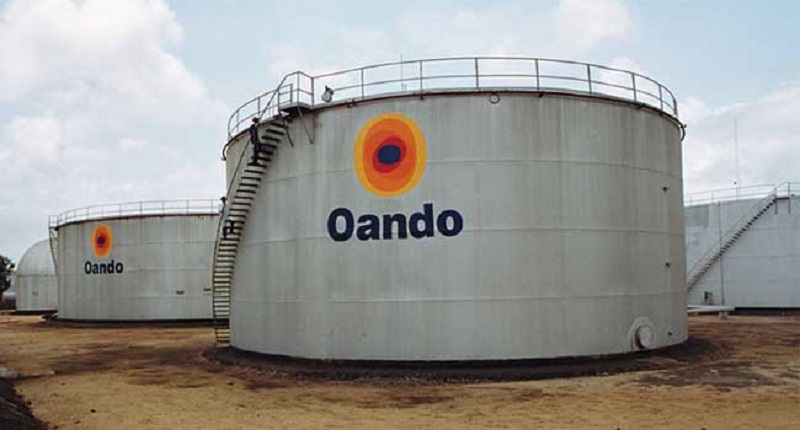
Nigerian energy giant, Oando Plc, says it is reporting rising revenues as global crude buyers increasingly turn away from the volatile Middle East in search of safer supply sources.

According to the chief executive of Oando, Mr Wale Tinubu, the crisis around the Strait of Hormuz has damaged the Gulf region’s long-standing reputation as the world’s safest and most reliable oil-producing hub, leading to demand elsewhere.

Speaking in a recent interview on the sidelines of the Africa CEO Forum in Kigali, Rwanda, Mr Tinubu disclosed that Oando is already benefiting financially from the geopolitical tensions.

“We are certainly getting a windfall increase in our revenues,” Mr Tinubu said.

According to him, mounting security concerns around the Strait of Hormuz have forced buyers to reconsider their dependence on Middle Eastern crude. The waterway accounts for around 20 per cent of global crude and liquified natural gas (LNG) flows, mostly to Asian markets.

“The Middle Eastern premium you got from being a stable environment to produce hydrocarbons has been shattered,” he added.

The conflict is rapidly reshaping global energy trade flows, with African producers, particularly Nigeria, emerging as alternative suppliers at a time of heightened uncertainty in the Gulf.

Indonesia recently took in some Nigeria crude to cushion against the impact that disruptions are having on fuel supplies.

Mr Tinubu said Oando is rolling out a seven-well drilling campaign aiming to add 10,000 barrels per day by the end of the year.

Oando is also looking to raise up to $750 million to execute a 100-well onshore drilling campaign, aiming to triple its oil and gas output from 32,000 barrels of oil equivalent per day to nearly 100,000 barrels of oil equivalent per day.

According to Mr Tinubu, global supply shocks have created highly favourable conditions for securing financing and expanding operations to meet supply gaps.


Adedapo Adesanya is a journalist, polymath, and connoisseur of everything art. When he is not writing, he has his nose buried in one of the many books or articles he has bookmarked or simply listening to good music with a bottle of beer or wine. He supports the greatest club in the world, Manchester United F.C.

Click to comment

Leave a Reply

Your email address will not be published. Required fields are marked *

Economy

CSCS Declares N1 Interim Dividend as H1 2026 Pre-Tax Profit Jumps 115%

Published

on

CSCS Stocks

By Adedapo Adesanya

The Central Securities Clearing System (CSCS) Plc has declared the first interim dividend in its history after posting its financial results for the first half of 2026, reflecting robust earnings growth, improved operating efficiency and stronger capital market activity.

The board approved an interim dividend of N1.00 per ordinary share for the six months ended June 30, 2026, citing the company’s strong cash generation, resilient balance sheet and confidence in the sustainability of its earnings.

The interim payout represents about 56 per cent of the total dividend of N1.78 per share paid for the 2025 financial year, underscoring its strong earnings momentum while preserving financial flexibility to invest in technology, innovation and future growth.

CSCS recorded one of the strongest financial performances in its history during the review period, with total operating income rising by 92 per cent to N18.51 billion from the corresponding period of 2025.

The growth was driven by higher transaction fee income as capital market activity strengthened, continued expansion in depository services, increased collateral management revenues and stronger contributions from data and technology-enabled services. Investment income also improved as the company optimised its investment portfolio.

Despite the sharp rise in revenue, operating expenses increased by only 38 per cent, reflecting disciplined cost management and the scalability of the company’s business model.

As a result, operating profit surged by 186 per cent to N10.11 billion, while profit before tax climbed by 115 per cent to N13.21 billion. Earnings per share also rose significantly to 190.1 kobo from 109.1 kobo in the corresponding period of 2025.

The organisation also recorded improvements in operating efficiency. Its cost-to-income ratio declined to 45.4 per cent from 63.2 per cent a year earlier, while operating profit margin improved to 54.6 per cent from 36.8 per cent.

According to the company, the results demonstrate not only the benefits of stronger market activity but also the resilience of its operating model and its ability to convert revenue growth into higher profitability, improved shareholder returns and sustainable long-term value creation.

Commenting on the interim dividend, the Chairman of CSCS Plc, Mr Temi Popoola, said the board’s decision reflected confidence in the firm’s financial strength, earnings quality and long-term strategic direction.

He said the strong performance was driven not only by increased market activity but also by sustained improvements in operational efficiency, disciplined cost management and the continued diversification of revenue streams.

Mr Popoola noted that the Board remained committed to balancing shareholder returns with investments in technology, innovation, resilience and new growth opportunities that would strengthen CSCS’ position as Nigeria’s leading financial market infrastructure and one of Africa’s foremost post-trade institutions.

The chief executive of CSCS Plc, Mr Shehu Yahaya Shantali, attributed the strong performance to the resilience of the entity’s business model, the dedication of its workforce and the confidence of market participants.

He said the first-ever interim dividend demonstrated the company’s ability to translate strong earnings growth and improved operating efficiency into enhanced shareholder value.

Mr Shantali added that CSCS would continue to strengthen its core market infrastructure, invest in technology and innovation, diversify its revenue base and enhance value creation for stakeholders while supporting the development of Nigeria’s capital market.

Continue Reading

Economy

Axxela’s National Scale Long-Term Issuer Rating Gets GCR Upgrade

Published

on

Axxela N11.5bn bond

By Aduragbemi Omiyale

The national scale long-term issuer rating of Axxela Limited has been upgraded by GCR Rating to A+(NG), just as its short-term issuer rating was affirmed with a stable outlook.

The rating firm upgraded the long-term issue rating for Axxela Funding 1 Plc’s N16.4 billion series 1 senior unsecured bond to A+(NG), while the N11.5 billion series 1 senior secured bond was lifted to A+(NG)(EL).

GCR noted in a note that the actions reflect the leading gas and power portfolio company’s robust business model, strong earnings performance, and sustained financial profile, reinforcing its ability to deliver long-term value while maintaining financial discipline.

Axxela’s recent achievements have been driven by its continued focus on responsible growth, customer satisfaction, and creating lasting value for national development.

“The ratings upgrade by GCR is a strong endorsement of Axxela’s disciplined approach to business. Beyond recognising our financial strength, it reflects the resilience of our business model and the confidence in our strategic direction.

“Over the past few years, we have continued to make significant strides across the business by expanding our natural gas infrastructure, strengthening our operational footprint, advancing our sustainability agenda, and maintaining an unwavering commitment to operational excellence and safety,” the chief executive of Axxela, Mr Moshood Olajide, commented on the development.

As the company continues to advance its long-term growth strategy, the upgraded ratings reinforce confidence in Axxela’s credit profile, financial resilience, and ability to create enduring value for investors, customers and other stakeholders.

Continue Reading

Economy

FG Eyes Digital Identity Solution to End Illegal Mining

Published

on

Illegal Mining Activities1

By Adedapo Adesanya

The Ministry of Solid Minerals Development and the National Identity Management Commission (NIMC) have strengthened their partnership to deploy digital identity technology, aiming to combat illegal mining and enhance security in Nigeria’s mining sector.

Speaking while receiving the Director-General and management of NIMC on a courtesy visit to his office in Abuja, the Minister of Solid Minerals Development, Mr Dele Alake, described the commission as a critical institution in Nigeria’s development architecture, stressing that effective governance could not be achieved without a credible identity management system.

“NIMC occupies a critical position in translating policy into reality. It is pivotal to the development of any nation because governance today is driven by data, technology and credible identity systems,” he added.

He noted that inadequate identification systems had weakened enforcement efforts over the years, allowing illegal mining activities to flourish in mineral-rich communities.

“Without identification, we cannot trace or track, and insecurity will flourish. In the solid minerals sector, we need effective monitoring of both legal and illegal operations.

“A credible identity ecosystem will strengthen regulation, improve enforcement and support our efforts to sanitise the sector,” Mr Alake said.

The minister identified technology, statistics, data gathering and digital identity as critical enablers for evidence-based policymaking, improved regulatory oversight, efficient licensing, investment promotion and national development.

On her part, the DG of NIMC, Mrs Abisoye Coker-Odusote, highlighted several opportunities for collaboration between both institutions, noting that the newly enacted NIMC Act has positioned Nigeria to fully embrace a digital governance ecosystem.

She explained that deeper integration of identity management into the solid minerals sector would facilitate database integration across government institutions, enhance regulatory compliance, strengthen security and law enforcement, improve monitoring of operators, and provide stronger support for the implementation of Community Development Agreements (CDAs) in mining host communities.

Mrs Coker-Odusote added that NIMC’s upgraded digital infrastructure is capable of supporting government institutions in building reliable databases, improving transparency and delivering more efficient public services.

Both institutions said they would immediately begin implementing technology-driven initiatives under the partnership, expressing confidence that expanding access to trusted digital identities for miners and other eligible residents would enhance accountability and strengthen governance in the solid minerals sector.

Continue Reading