Economy
Crude Oil Prices Fall as Fears of US-Iran Conflict Ease
By Adedapo Adesanya
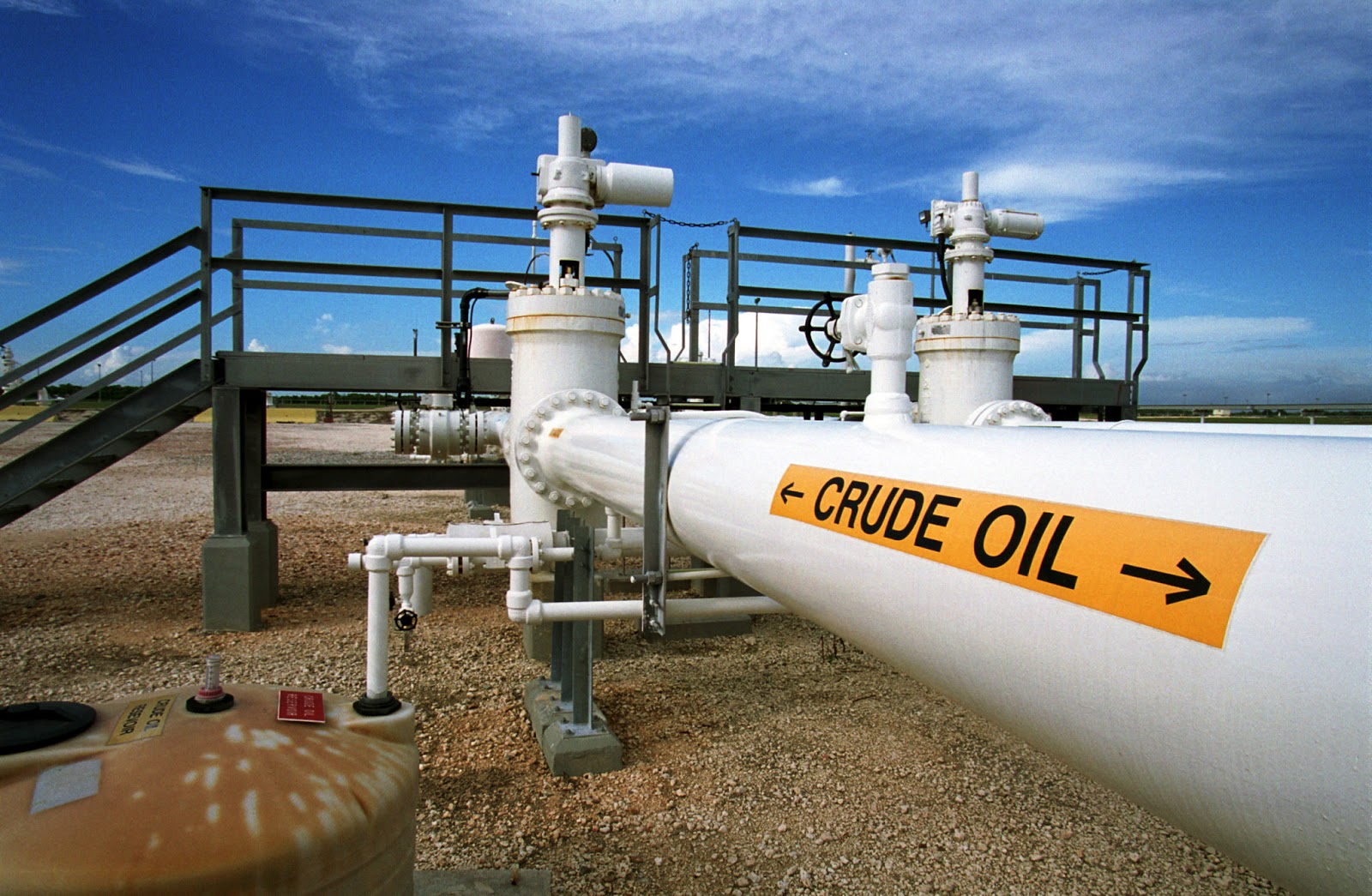
Crude oil prices fell on Friday as traders gained confidence that renewed conflict between the United States and Iran was growing less likely.
The price of Brent crude futures settled at $93.09 a barrel, down $1.94 or 2.04 per cent, and the US West Texas Intermediate (WTI) crude futures finished at $90.54 a barrel, down $2.50 or 2.69 per cent.
President Donald Trump said the US will win the conflict with Iran either “militarily or on paper,” referring to the fitful negotiations with the Iranian government, and he suggested he could meet with Iran’s reclusive supreme leader “if it was to make a deal.”
He also said he had no desire to meet with Iranian Supreme Leader Mojtaba Khamenei, who has not been seen since the outbreak of violence on February 28 and was reportedly seriously injured in US-Israeli air strikes. He, however, added that if the two sides reached a deal, it was possible the two leaders would meet.
Meanwhile, Hezbollah leader Naim Qassem rejected on Thursday a US-brokered agreement between Israel and the Lebanese government to halt the fighting. Iran has made a ceasefire in Lebanon a condition for any peace deal with America.
Oman said operations at Mina al Fahal port were unaffected after it was reported that oil loading had been suspended following an explosion near its mooring berths. Oman exports 800,000 to 900,000 barrels per day of crude from the terminal.
As the US-Iran war peace talks dragged on, traffic in the Strait of Hormuz, where a fifth of the world’s oil passes, remained limited. Gains have been capped by oil inventories lasting longer than expected, rerouted exports and falling demand.
The Organisation of the Petroleum Exporting Countries and its allies (OPEC) is sticking to its oil demand growth forecast of 1.2 million barrels per day for this year, its Secretary General Haitham Al Ghais said, despite the Middle East conflict and closure of the Strait of Hormuz.
OPEC crude output fell last month, hitting its lowest level in decades as the US blockade of Iran and disruption in the Persian Gulf continued to curb production.
Output from its 11 current members dropped by 1.22 million barrels per day to 16.33 million a day in May, with Iran accounting for more than half of the decline, according to a Bloomberg survey. That was the lowest in at least 37 years. The data excludes the United Arab Emirates, which left the organisation last month after six decades.
Key members of the OPEC+ are expected to nudge up targets by a modest 188,000 barrels again in July during a video conference on Sunday. The session is one of four online meetings OPEC and its allies are due to hold that day.
Economy
Heavy Sell-Offs Weaken NASD Index by 0.64%, Erase N16.5bn from Market
By Adedapo Adesanya
NASD Over-the-Counter (OTC) Securities Exchange remained in the negative territory after it further depreciated by 0.64 per cent on Friday, July 24, despite recording four price gainers.
The NASD Security Index (NSI) dropped 27.4 points at the close of business to settle at 4,294.75 points versus the previous day’s 4,383.48 points, while the market capitalisation gave up N16.49 billion to end at N2.577 trillion, in contrast to the N2.594 trillion it ended a day earlier.
The bourse was down during the session amid heavy sell-offs, with the volume of transactions skyrocketing by 693.9 per cent to 2.99 million units from Thursday’s 377,635 units.
Equally, the value of trades went up by 71.6 per cent to N69.4 million from N40.4 million, and the number of deals increased by 41.0 per cent to 55 deals from the preceding day’s 39 deals.
Great Nigeria Insurance (GNI) Plc remained the most active stock by value on a year-to-date basis, with 3.4 billion units worth N8.4 billion, trailed by Infrastructure Credit Guarantee (Infracredit) Plc with 2.3 billion units sold for N6.5 billion, and Central Securities Clearing System (CSCS) Plc with 75.6 million units traded for N5.4 billion.
GNI Plc was also the most active stock by volume on a year-to-date basis, with 3.4 billion units exchanged for N8.4 billion, trailed by Infracredit Plc with 2.3 billion units transacted for N6.5 billion, and Resourcery Plc with 1.1 billion units valued at N415.7 million.
The market ended the session with four price gainers and two price losers, led by FrieslandCampina Wamco Nigeria Plc, which lost N7.44 to trade at N136.19 per share compared with the previous day’s N143.63 per share, and CSCS Plc, which declined by N1.64 to N93.63 per unit from N95.27 per unit.
But MRS Oil gained N13.50 to sell at N148.50 per share versus N135.00 per share, Afriland Properties Plc advanced by 56 Kobo to N17.41 per unit from N16.85 per unit, UBN Property Plc surged by 18 Kobo to N1.93 per share from N1.75 per share, and Food Concepts Plc climbed by 1 Kobo to N2.50 per unit from N2.49 per unit.
Economy
Profit-taking Crashes Nigeria’s Stock Exchange by 0.19%
By Dipo Olowookere
Nigeria’s stock exchange succumbed to profit-taking on Friday, losing 0.19 per cent when the closing gong was hit at 4 pm.
Shares in the banking and energy sectors influenced the decline suffered by the Nigerian Exchange (NGX) Limited during the session, as they respectively closed lower by 0.40 per cent and 0.04 per cent.
The industrial goods index was flat yesterday, while the insurance counter gained 0.68 per cent and the consumer goods space chalked up 0.25 per cent. The gains by these two segments could not keep Customs Street in the green territory at the close of business.
As a result, the All-Share Index (ASI) retreated by 474.00 points to 247,357.40 points from 247,831.40 points, and the market capitalisation decreased by N306 billion to N159.588 trillion from N159.894 trillion.
Presco dropped 10.00 per cent during the trading day to close at N2,070.00, Thomas Wyatt crumbled by 9.93 per cent to N3.63, Trans-Nationwide Express plunged by 8.44 per cent to N2.82, Royal Exchange slipped by 7.86 per cent to N1.29, and LivingTrust Mortgage Bank shrank by 7.32 per cent to N3.80.
On the flip side, C&I Leasing improved by 9.48 per cent to N6.35, Cornerstone Insurance rose by 9.09 per cent to N6.00, RT Briscoe jumped by 8.61 per cent to N13.25, Honeywell Flour expanded by 7.38 per cent to N17.45, and Africa Prudential increased by 6.98 per cent to N13.80.
Despite the poor performance, the local bourse recorded a positive market breadth index after finishing with 35 price gainers and 25 price losers, representing strong investor sentiment.
It was a relatively quiet market on Friday, as the activity level dropped, with the trading volume down by 27.72 per cent to 565.5 million units from 782.4 million units, and the trading value contracted by 46.89 per cent to N29.9 billion from N56.3 billion, while the number of deals executed by investors soared by 16.03 per cent to 53,688 deals from 46,273 deals.
Access Holdings was the busiest stock for the session, with a turnover of 128.0 million units sold for N3.8 billion, First Holdco transacted 35.4 million units worth N4.3 billion, Chams exchanged 34.8 million units valued at N154.3 million, Zenith Bank traded 30.4 million units for N3.9 billion, and UBA sold 30.4 million units worth N1.5 billion.
Economy
Naira Trades N1,362/$1 at Official FX Market, as Bitcoin Falls
By Adedapo Adesanya
The Naira marked a whole week of appreciation against the United States Dollar on Friday, July 24, further gaining N5.67 or 0.41 per cent to close at N1,362.09/$1 in the Nigerian Autonomous Foreign Exchange Market (NAFEX) compared with N1,367.76/$1 it ended on Thursday.
Equally, the local currency appreciated against the Pound Sterling in the official FX market yesterday by N10.83 to trade at N1,813.62/£1 versus the preceding day’s N1,824.45/£1, and improved against the Euro by N7.68 to settle at N1,549.10/€1, in contrast to the N1,556.78/€1 it was exchanged a day earlier.
However, at the parallel market and GTBank forex counter, the Nigerian currency remained unchanged against the greenback during the session at N1,400/$1 and N1,379/$1, respectively.
The Central Bank of Nigeria (CBN) buffer has been strengthened with sustained foreign portfolio inflows and robust foreign reserves, which stand above $52 billion.
The apex bank’s policy signals that the Naira will be stronger in the near term, with Nigeria clearing hurdles with FX reforms and settlement of all backlogs.
However, some traders expect that pressure may come due to foreign-currency buying from fuel importers as they make Dollar purchases to build inventories.
Meanwhile, Bitcoin (BTC), in the digital currency landscape, trimmed recent gains as it fell by 2.3 per cent to $63,787.73.
The weak action in the AI momentum trade is feeding through to crypto as well.
Further, Cardano (ADA) dropped 3.7 per cent to close at $0.1615, Solana (SOL) dipped by 2.8 per cent to $73.71, Ripple (XRP) crashed by 2.3 per cent to $1.08, Ethereum (ETH) slid by 1.9 per cent to $1,851.58, Dogecoin (DOGE) retreated by 0.8 per cent to $0.0694, Binance Coin (BNB) contracted by 0.7 per cent to $564.18, and TRON (TRX) lost 0.5 per cent to trade at $0.3292, while the US Dollar Tether (USDT) and the US Dollar Coin (USDC) traded flat at $1.00 each.