Economy
Naira Firms to N1,369.11/$ at Official Market as FX Pressure Eases
By Adedapo Adesanya
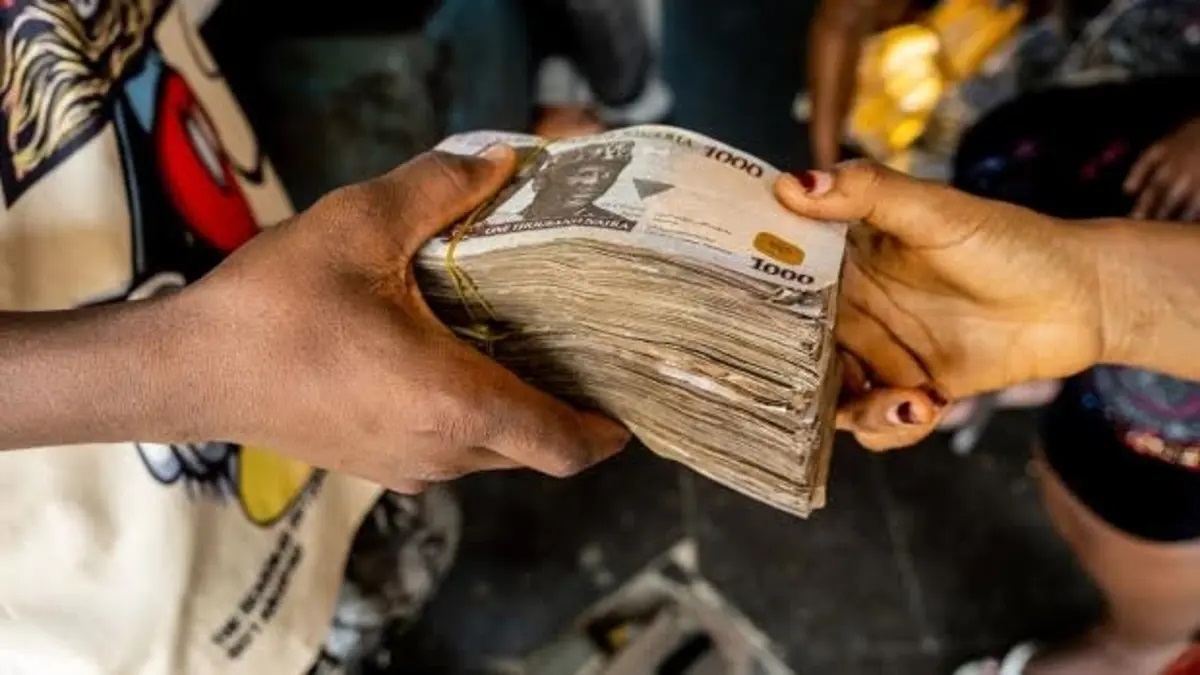
The Naira started the new week on a positive note after its value was strengthened against the United States Dollar by N1.35 or 0.09 per cent in the Nigerian Autonomous Foreign Exchange Market (NAFEX) on Monday, June 22, to N1,369.11/$1 from last Friday’s N1,370.46/$1.
Against the Euro, it appreciated at the official market by N5.11 to sell at N1,566.39/€1 compared with the preceding session’s price of N1,571.50/€1, but against the Pound Sterling, the local currency declined by 68 Kobo to trade at N1,815.44/£1 versus the previous trading day’s rate of N1,814.76/£1.
At the parallel market, the Naira weakened against the US Dollar yesterday by N5 to quote at N1,395/$1 versus the previous rate of N1,390/$1, and at the GTBank forex counter, it lost N4 to exchange at N1,380/$1 versus N1,376/$1.
The Nigerian currency witnessed an easing in FX pressure during the session amid a surge in the country’s foreign reserves to $51.060 billion, its highest since 2009, according to data from the Central Bank of Nigeria (CBN).
FX reserves gained traction as a result of lower oil imports, high crude oil prices in the global commodity market, and a surge in the nation’s production output. This is expected to bolster investor confidence in the Nigerian economy and support exchange rate stability.
Interbank FX turnover increased sharply to $65.206 million, up by more than 63 per cent from the previous close of $39.897 million, according to data published by the apex bank on Monday.
Meanwhile, the cryptocurrency market was down on Monday as a result of sell-offs triggered by risk as investors pulled out of the technology stocks that have led markets all year. A rotation out of this year’s best-performing technology and chip shares sank global equities.
Bitcoin (BTC) fell by 1.3 per cent to $63,352.91, Ethereum (ETH) lost 1.4 per cent to trade at $1,712.35, Solana (SOL) shrank by 4.0 per cent to $70.98, Dogecoin (DOGE) crashed by 2.4 per cent to $0.0814, Ripple (XRP) declined by 1.9 per cent to $1.11, Cardano (ADA) slid by 1.6 per cent to $0.1574, and Binance Coin (BNB) slumped by 1.0 per cent to $585.34.
However, TRON (TRX) added 1.0 per cent to sell at $0.3314, while the US Dollar Tether (USDT) and the US Dollar Coin (USDC) traded flat at $1.00 each.
Economy
NNPC, Dangote Import 38,000 Barrels Daily in May as Petrol Imports Rebound
By Adedapo Adesanya
The Nigerian National Petroleum Company (NNPC) Limited and Dangote Refinery imported a total of 38,000 barrels per day of petrol in May 2026 as the country returned actively to the importation of the fuel.
According to a report by Argus, gasoline (petrol) deliveries to Nigeria were a four-month high of 57,000 barrels a day in the review month.
This came after import permits were issued for the second quarter and market participants flagged maintenance works at independently-owned Dangote’s 700,000 barrels per day Lekki refinery.
The platform reported that petrol exports from Nigeria were 23,000 barrels per day, of which Dangote carried out 65 per cent of the product at 15,000 barrels per day.
This meant Nigeria returned to net gasoline importer status in the month, after net exporting 49,000 barrels per day in April and 6,000 barrels per day in March, citing Kpler data.
The sole destination of all Nigeria’s petrol imports in May came from Europe. A breakdown showed that Nigeria got 37 per cent (21,000 barrels per day) from Norway, Italy provided 16 per cent (9,000 barrels per day), and France covered 14 per cent (8,000 barrels per day).
Out of the 57,000 barrels per day of product brought into the country, Dangote Refinery bought 27,000 barrels per day while the state-owned NNPC brought in 11,000 per day.
Argus, citing Kpler, said the buyer or buyers of the remaining 19,000 barrels per day. These were likely independent marketers who were issued import licenses during the month.
This means Dangote remains the top petrol producer and importer in the country. The refinery owner brought in 29,000 barrels per day of the 67,000 barrels per day total petrol imports in January-May.
According to the Argus report, Nigerian petrol imports have been elevated so far in June, with license holders likely to exercise their allocations before expiry at month-end. AA Rano has landed 56,000 barrels per day, and NNPC has imported 121,000 barrels per day. The 177,000 barrels per day of petrol cargo arrivals in June to date are three times higher than in May and up from 140,000 barrels per day in June 2025.
Economy
Agama Calls for Greater Collaboration Among African Capital Markets
By Adedapo Adesanya
The Director-General of the Securities and Exchange Commission (SEC), Mr Emomotimi Agama, has called for stronger collaboration among African capital markets to enhance regional integration, promote cross-border investments, and drive economic growth across the continent.
Mr Agama made the call in Abuja on Monday during the signing of a Memorandum of Understanding (MoU) between Nigeria’s Securities and Exchange Commission and the Capital Markets Authority (CMA) of Rwanda.
The agreement is aimed at strengthening cooperation between the two regulatory bodies in areas including investor education, capital market development, information exchange on regulatory and market developments, capacity building, technical assistance, and cooperation on enforcement and supervisory matters.
According to the MoU, both parties recognise the importance of collaboration in fostering confidence, innovation, market development, and sound practices within their respective capital markets, while also supporting regional and international engagement.
Speaking at the signing ceremony, Mr Agama emphasised the need for African countries to deepen cooperation and invest in one another’s markets to build a more interconnected and prosperous continent.
“We are excited about this opportunity to help develop your capital market. We need to cooperate in Africa, invest in each other’s markets and grow our continent. In so doing, we will build collaboration so that, as Africans, we can have a common focus and create a strong interconnection. The time is now for us to look inwards,” he said.
The SEC Director-General commended Rwanda’s economic progress and acknowledged the country’s achievements in attracting investment and promoting commerce.
“We appreciate the strength of the Rwandan economy and the efforts made to rekindle the real value of the African race. On our part, we have a very strong capital market structure, and we want to see what role the capital market can play in advancing Africa’s development agenda,” Agama stated.
He described the capital market as the nerve centre of the economy, stressing the need for citizens to understand and utilise it as a tool for wealth creation and improved living standards.
“The capital market is an enabler of economic development, and we believe there is much Rwanda can learn from Nigeria’s experience to strengthen its market. We are willing to contribute to the success of other nations because our relationship and integration will help build both markets and improve the lives of our citizens,” he said.
Mr Agama further urged African governments to leverage long-term capital from the market to finance infrastructure projects, describing the capital market as a critical solution for mobilising sustainable development financing.
“We see the capital market as a solution provider for moving economies forward. We want to make Africa better and a destination of choice for investors. We are committed to working jointly with other regulators to achieve this objective,” he added.
In his remarks, Chief Executive Officer of the Capital Markets Authority of Rwanda, Mr Romeo Ngarambe, welcomed the partnership and expressed confidence that the collaboration would support the growth of Rwanda’s capital market.
“We are here to learn from Nigeria, which has a more advanced capital market. We are confident that the lessons and experiences shared will contribute significantly to the development of our market. Whatever knowledge you provide, we will make good use of it, and we look forward to a fruitful partnership,” Mr Ngarambe said.
The MoU is expected to strengthen regulatory cooperation between both countries and support broader efforts toward the integration and development of African capital markets.
Economy
Lafarge Africa Rebrands to HBM Nigeria
By Aduragbemi Omiyale
To reinforce its commitment to Nigeria’s industrial growth, one of the leading cement manufacturers in the country, Lafarge Africa Plc, has unveiled a new corporate identity, rebranding to HBM Nigeria Plc.
According to the chief executive of the organisation, Mr Lolu Alade-Akinyemi, the new identity signals a forward-looking phase for the company, driven by operational excellence, innovation, sustainability, and long-term value creation.
He noted that the transition marks a significant milestone in the company’s transformation journey and strategic alignment with its new shareholder structure, reflecting the company’s continued evolution as one of Nigeria’s leading building solutions providers, combining strong local roots with enhanced global industrial collaboration.
He reaffirmed that the name change will not affect its operations, workforce, customers, shareholders, or its unwavering commitment to Nigeria’s economic growth and infrastructure development.
“HBM Nigeria Plc represents an exciting new chapter in our journey as a leading building solutions company. While our corporate identity is evolving, our commitment to Nigeria remains unwavering.
“We remain focused on delivering quality cement, concrete, aggregates, and innovative building solutions that support infrastructure development, housing growth, and industrialisation.
“This transition positions us for the future while reinforcing the values of excellence, sustainability, customer satisfaction, and responsible business practices that have defined our legacy for decades,” he stated.
Mr Alade-Akinyemi explained that the transition to HBM Nigeria Plc will be implemented through a structured, phased process across the company’s nationwide operations, adding that employees, customers, shareholders, investors, host communities, and other stakeholders should expect seamless business continuity, sustained investments across the country, and an even stronger focus on creating long-term economic and social value.
In his remarks, the Chairman of HBM Nigeria Plc, Mr Gbenga Oyebode, said the transition is designed to position the company for enduring success while remaining true to the values and principles that have shaped its legacy over the decades.
“I would like to express my sincere appreciation to our shareholders for their continued trust, to the Board and Management for their leadership, and to our employees whose dedication and commitment continue to drive the company forward.
“We are confident that HBM Nigeria Plc will continue to create sustainable value for shareholders, strengthen stakeholder trust, and deliver on its long-term ambitions,” Mr Oyebode said.
Also speaking at the event, the Minister of Works, Mr David Umahi, commended HBM Nigeria Plc for its significant contributions to Nigeria’s infrastructure development by delivering landmark projects across the country.
Highlighting the company’s role in supporting the federal government’s infrastructure agenda, he said, “I can talk about Lafarge for a whole day because we have come a long way. Though the company is very strict and of high integrity, I can say that their products are impeccable.”
-
Feature/OPED6 years agoDavos was Different this year
-
Travel/Tourism10 years ago
Lagos Seals Western Lodge Hotel In Ikorodu
-
Showbiz3 years agoEstranged Lover Releases Videos of Empress Njamah Bathing
-
Banking8 years agoSort Codes of GTBank Branches in Nigeria
-
Economy3 years agoSubsidy Removal: CNG at N130 Per Litre Cheaper Than Petrol—IPMAN
-
Banking3 years agoSort Codes of UBA Branches in Nigeria
-
Banking3 years agoFirst Bank Announces Planned Downtime
-
Sports3 years agoHighest Paid Nigerian Footballer – How Much Do Nigerian Footballers Earn