General
Alleged Fake Agency: Police to Arraign Adeniyi Adeyemi Today
By Adedapo Adesanya
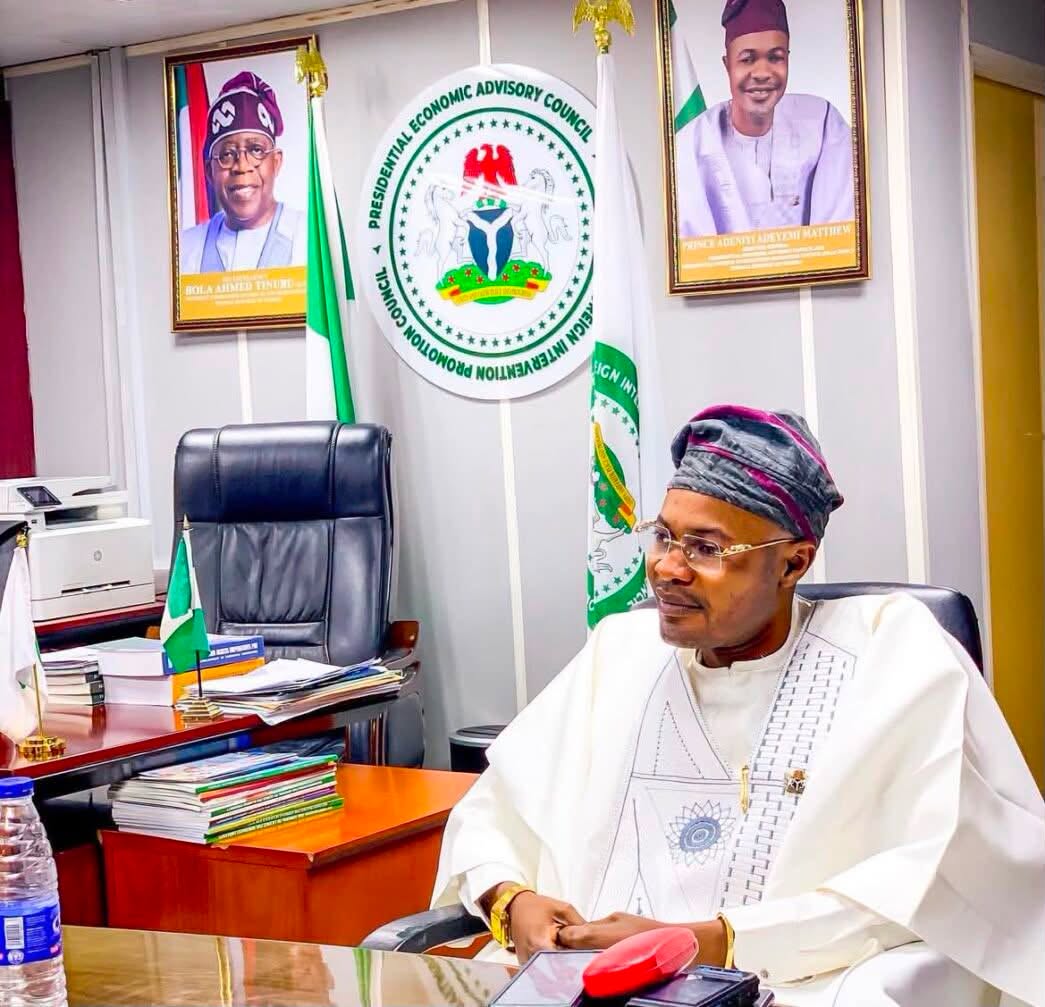
The Nigeria Police Force will today, Tuesday, July 14, 2026, arraign the controversial director-general of the non-existent Presidential Foreign Intervention Promotion Council (PFIPC), Mr Adeniyi Adeyemi.
The arraignment will take place before Justice Mohammed Umar of the Federal High Court in Abuja.
The police had charged Mr Adeyemi alongside two others with eight counts, including forgery and impersonation, in the case marked FHC/ABJ/CR/562/2025.
The case was initially filed on November 27, 2025, by Mr Wisdom Madaki, a police prosecutor.
Court proceedings had stalled on June 16, scheduled for Mr Adeyemi’s arraignment, due to his absence from court on grounds of ill health.
According to the court documents, proposed prosecution witnesses to testify against the defendants include the Chief of Staff to the President, Mr Femi Gbajabiamila; Paul Emmanuel, Jeremiah Imoukhede and Ituah Sylvester.
Others are civil servants working in the Office of the Accountant General of the Federation, Mr Akimbo Shola and Mr Adamu Balongu, a deputy superintendent of police, were on the list.
Also listed as witnesses are Mr Ojo Victor, Mr Omeh Amarachukwu, and Mr Wakili Saidu, all of whom were allegedly posted to work with Mr Adeyemi at the non-existent agency.
Others are Mrs Joy Ngwoke, the owner of Kachi Hotel in Abuja, and Mr Ven Okoriko, the pastor of St. Matthew’s Anglican Church, Maitama.
The documentary exhibits planned to be tendered by the prosecution to prove the case include the police investigation report, Mr Gbajabiamila’s petition dated October 17, 2025, and Mr Adeyemi’s fake presidential appointment letter dated March 8, 2024.
They also include the request for a note verbale by Mr Adeyemi sent to the Ministry of Foreign Affairs and the approvals he got to open accounts with the Central Bank of Nigeria (CBN), the request for approval of self-accounting status Mr Adeyemi sent to the Accountant-General of the Federation’s office and the conveyance of approval for take-off of the PFIPC.
Other documents listed by the prosecution are a letter of request for collaboration with the ministry in the area of land acquisition and offices across the 36 states of the federation; statements of all the witnesses and that of the defendants, and pictures.
The police, in the court document, said, “The prosecution shall at the trial call any other related witness or witnesses to prove its case.”
The prosecution accused Mr Adeyemi of operating the fictitious agency from the 2nd Floor of the Federal Secretariat Complex in Abuja, Phase III, before his arrest.
Last week, President Bola Tinubu directed the Independent Corrupt Practices and Other Related Offences Commission (ICPC) to conduct a thorough investigation into the activities of the fictitious agency.
The president gave the ICPC 30 days to complete the investigation, so it is currently unclear how the outcome of the ICPC investigation would impact the police prosecution.
General
Nigeria’s Private Sector to Unlock Inclusive Growth With NGCP
By Aduragbemi Omiyale
A coordinated push to position gender inclusion as a driver of business competitiveness, investment and long-term economic growth has led to the introduction of the Nigeria Gender Country Programme (NGCP) by the private sector.
This initiative, led by the International Finance Corporation (IFC), a member of the World Bank Group, in partnership with Nigerian Exchange (NGX) Group Plc and the Lagos Chamber of Commerce and Industry (LCCI), aligns advisory expertise, funding and partnerships to strengthen women’s representation in leadership, improve access to quality employment, and expand access to finance, technology and markets for women and women-led businesses.
It builds on the CEO Roundtable held in June and the progress achieved through Nigeria2Equal, IFC’s earlier initiative, as it now moves into implementation, with participating organisations expected to adopt practical, measurable gender-smart business practices.
The economic case is significant, with the program underpinned by research showing that closing gaps in women’s leadership, employment and entrepreneurship could generate an estimated $22.9 billion in additional economic output annually, reinforcing the economic case for stronger private sector action on gender inclusion.
“Advancing women’s economic participation is no longer simply a social aspiration; it is a business imperative, an investment in productivity, a catalyst for innovation and a driver of sustainable economic growth.
“Through the Nigeria Gender Country Program, we are creating a practical framework that will help businesses strengthen leadership, expand opportunity and unlock the inclusion dividend for Nigeria’s economy,” the chairman of NGX Group, Mr Umaru Kwairanga, stated.
The Governor of Lagos State, Mr Babajide Sanwo-Olu, represented by the Commissioner for Commerce, Cooperatives, Trade and Investment, Mrs Folashade Ambrose-Medebem, reaffirmed the state’s commitment to creating an enabling environment for women-led enterprises and strengthening inclusive economic development, while the Minister of Women Affairs, Mrs Imaan Sulaiman-Ibrahim, represented by Ms Aishatu Digili, called for stronger collaboration between government, development institutions and the private sector to accelerate women’s economic empowerment and expand opportunities for women across key sectors of the economy.
The Division Director for West and Central Africa at IFC, Mr Olivier Buyoya, said, “Creating more and better jobs is central to IFC’s mission across Africa. Economies grow faster, and businesses perform better when women have equal opportunities to participate, lead, innovate and succeed.
“Through the Nigeria Gender Country Program, we are bringing together the private sector, capital markets and development partners to help companies turn this opportunity into stronger business performance, greater competitiveness and more inclusive growth. We look forward to working with Nigerian businesses to unlock the full economic potential of women as a driver of Nigeria’s future prosperity.”
Speaking on behalf of the Director-General of the Securities and Exchange Commission (SEC), Mr Emomotimi Agama, the Commission’s Executive Commissioner, Legal and Enforcement, Ms Frana Chukwuogor, said, “The Commission welcomes the Nigeria Gender Country Program as an important platform for deepening collaboration, innovation and knowledge sharing in support of inclusive market development. We commend the IFC for its leadership in promoting inclusive private sector development globally, and for its partnership with Nigeria in strengthening our financial markets.”
General
Tinubu Orders NIMC to Enrol All Nigerians by End of 2026
By Adedapo Adesanya
President Bola Tinubu has directed the National Identity Management Commission (NIMC) to ensure that every Nigerian is enrolled in the national identity database before the end of 2026, the agency’s chief executive, Mrs Abisoye Coker-Odusote, has revealed.
She said the directive forms part of the federal government’s efforts to establish a comprehensive national identity system capable of supporting effective governance, planning, and service delivery.
“The President has given us till the end of this year to make sure that we capture every single Nigerian,” she said on Channels Television’s Sunday Politics.
According to her, NIMC is working with partners under the World Bank-supported Identification for Development (ID4D) project to accelerate nationwide enrolment.
“What we have done is we have partnered through the World Bank ID4D project with front-end partners. They are part of the digital identity ecosystem. These are private citizens that we’ve enabled and given jobs to enrol citizens on our behalf,” she explained.
She stressed that the National Identification Number (NIN) remains a unique identifier, ensuring that every individual is registered only once.
“That’s why it’s called a unique identifier, so that you’re only enrolled once,” the NIMC DG added.
Mrs Coker-Odusote also said Nigeria’s actual population remains uncertain, with estimates ranging from 200 million to 250 million, making a comprehensive identity database essential for national planning.
“It is estimated that we’re 200 million. When we’re done enrolling, we will then know the actual numbers that we have. Some estimates say 230 million, while a few people say 250 million.
“Your identity is basically the foundation for effective governance and service delivery. How can you plan if you don’t know the total number of people that you have? We have been mandated by Mr President to go down to the community levels to enrol every single Nigerian”, she said.
The NIMC DG added that biometric verification, including fingerprints and facial recognition, makes it virtually impossible for one person to maintain multiple identities.
“Absolutely. One of the things that this Act has done is to cement our role in capturing biometrics. Private and public sector organisations will no longer capture biometrics independently. They will validate identities through API integration with NIMC.
“The telcos are already doing that with us. If you need a SIM card, they capture your facial biometrics, which are matched against our database in real time to confirm that you are who you claim to be. We’re using biometric validation to tighten security around identity confirmation,” she said.
The remarks come weeks after Tinubu signed the National Identity Management Commission (NIMC) Act 2026 into law on June 26, repealing the 2007 legislation.
The new law reinforces the “One Person, One Identity” policy by making the NIN the country’s foundational identity credential for accessing government and essential private services, including banking, passport applications, tax administration, pensions, land transactions, and consumer credit.
It also introduces stiffer penalties for identity theft, multiple registrations and unauthorised access to personal identity data, while strengthening data privacy protections and granting NIMC wider powers to investigate identity-related offences.
General
SERAP Sues INEC Over Alleged Diversion of N800bn Campaign Funds
By Adedapo Adesanya
The Socio-Economic Rights and Accountability Project (SERAP) has approached the court against the Independent National Electoral Commission (INEC) over an alleged N800 billion campaign fund diversion.
The organisation is seeking to compel the electoral body to investigate allegations that about N800 million from the Federation Account Allocation Committee (FAAC) allocations was diverted by governors elected on the platform of the All Progressives Congress (APC) to finance political and campaign activities.
The suit, marked FHC/ABJ/CS/1426/2026, was filed at the Federal High Court in Abuja last week, but no date has been fixed for the hearing of the suit.
SERAP is asking the court to issue an order of mandamus directing INEC to investigate the claims that the governors channelled public funds into a dedicated campaign account allegedly meant to support President Bola Tinubu’s 2027 re-election bid.
The organisation is also requesting an order compelling INEC to demand full disclosure from the governors and the APC on any contributions made to such a campaign fund, including the identities of donors and the lawful sources of the funds.
In addition, SERAP wants the electoral commission to commence a comprehensive review of compliance with Section 91 of the Electoral Act by political parties and candidates, particularly regarding campaign financing and the sources of political donations.
According to SERAP, the allegations raise fundamental concerns about transparency in political financing, electoral fairness and the constitutional rights of Nigerians to participate freely in democratic governance.
The organisation argued that opaque campaign financing remains a major avenue for corruption and weakens public confidence in democratic institutions.
It maintained that the alleged misuse of public funds for political purposes threatens the credibility of the 2027 general election and undermines public trust in the electoral process.
In the suit filed by its lawyers, Mr Kolawole Oluwadare and Ms Kehinde Oyewumi, SERAP argued that the reported diversion of public resources for campaign activities warrants immediate action by INEC under its constitutional and statutory responsibilities.
The group stated: “The abuse of state resources for electoral advantage undermines democratic integrity and public trust. Fairness, transparency, and accountability in political or campaign finance are essential safeguards against corruption, state capture, and undue influence in democratic processes.”
SERAP further argued: “The allegations of diversion or opaque use of public funds pose a grave risk to the integrity of the 2027 general elections.”
The organisation said large-scale public financial allocations, combined with weak oversight and limited transparency, provide sufficient grounds for INEC to activate its investigative powers.
Referring to Section 91 of the Electoral Act, SERAP noted that the law empowers INEC to regulate political donations, enforce contribution limits, demand disclosure of funding sources and impose sanctions where violations occur.
The organisation explained that political parties found to have exceeded donation limits risk fines of up to ₦10 million and forfeiture of excess funds, while individuals who exceed prescribed limits are liable to penalties amounting to five times the excess contribution.
SERAP also contended that campaign financing derived from public resources distorts electoral competition and violates constitutional principles guaranteeing free, fair and transparent elections.
According to SERAP, INEC has a constitutional duty to ensure compliance with campaign finance regulations and to investigate allegations that could compromise the integrity of the electoral process.