Media OutReach
Xsolla and Management and Science University (MSU) Sign Memorandum of Understanding (MOU) to Connect Future Game Developers With Global Commercial Opportunities
Collaboration Provides Students Access To Xsolla’s Publishing Suite And Launcher, Bridging Academic Learning With Commercial Game Development Practices
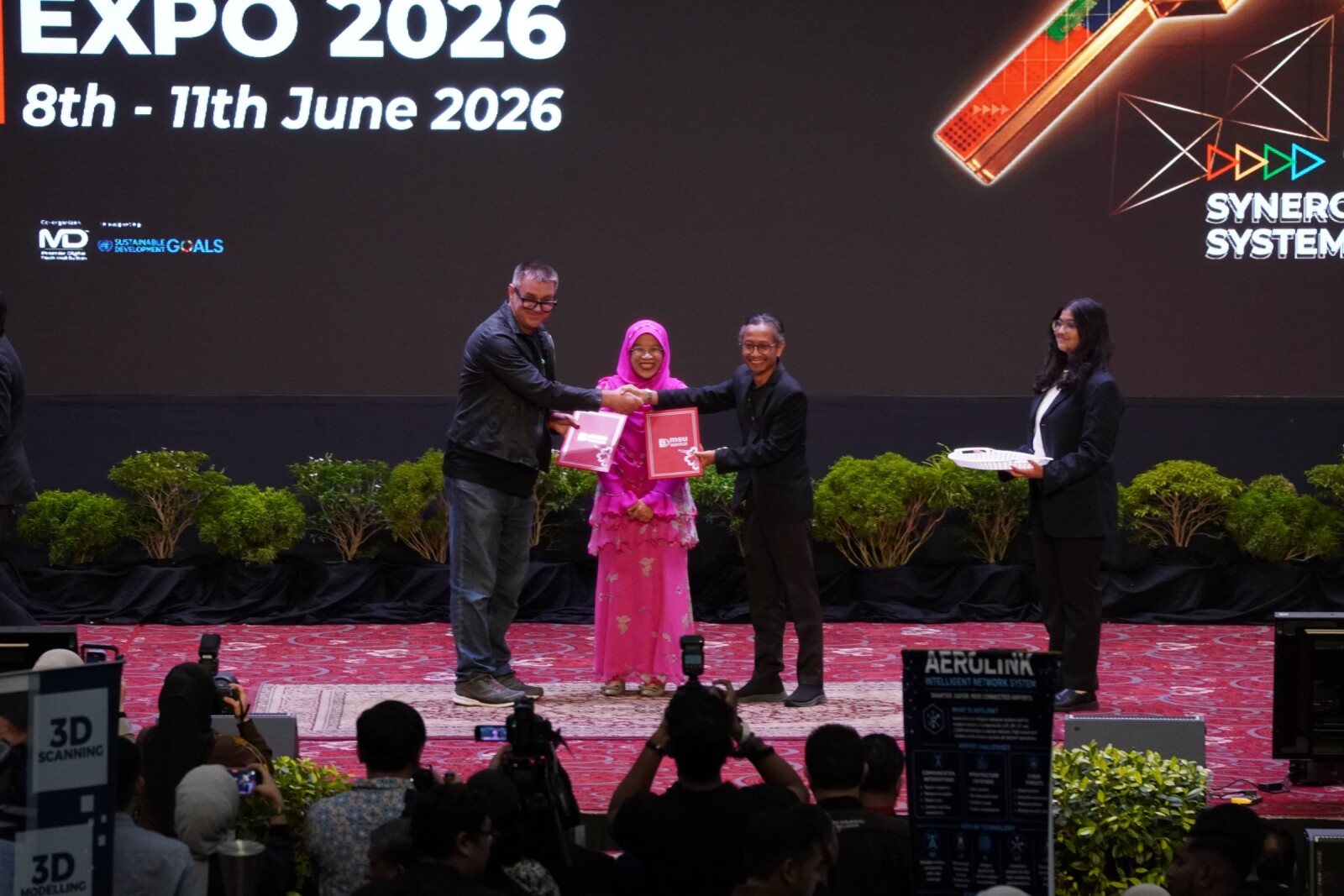
KUALA LUMPUR, MALAYSIA – Media OutReach Newswire – 14 July 2026 – Xsolla, a leading global video game commerce company, today announced the signing of a Memorandum of Understanding (MoU) with Management and Science University (MSU), one of Malaysia’s leading private universities, to strengthen collaboration between academia and the video games industry while providing students with access to professional publishing, monetization, and distribution technologies.
The partnership is designed to support knowledge exchange and talent development across game development, digital commerce, and game monetization. Through industry talks, guest lectures, best-practice sharing sessions, and collaborative educational initiatives, Xsolla and MSU will work together to provide students and faculty with direct exposure to current industry practices and commercial opportunities in the global games market.
As part of the collaboration, Xsolla will facilitate access to its end-to-end game commerce ecosystem across its payments, monetization and distribution platforms. Students will be able to integrate professional-grade publishing, monetization, payment, and distribution capabilities into their projects, helping bridge the gap between academic learning and commercial game development.
“Today’s game developers need more than technical skills; they need to understand the complete business of bringing games to market,” said Chris Hewish, President of Xsolla. “Our partnership with MSU gives students access to the technologies, workflows, and commercial infrastructure used throughout the industry, helping prepare the next generation of developers to successfully launch and grow their games on a global scale.”
MSU is recognized as one of Malaysia’s leading private universities and is ranked #597 in the QS World University Rankings 2026. Through strategic industry partnerships and experiential learning programs, the university continues to connect studios with real-world opportunities across Information Sciences, Engineering, Technology, and related disciplines.
In addition to educational initiatives, Xsolla will participate in selected MSU convocation activities by presenting industry awards to recognize outstanding graduates. Both organizations will continue to explore additional collaborative opportunities that support talent development, innovation, and growth within Malaysia’s interactive entertainment ecosystem.
To learn more about the MoU signing between Xsolla and Management and Science University (MSU), visit: https://xsolla.pro/MSU
Hashtag: #Xsolla #ManagementAndScienceUniversity #MSU
The issuer is solely responsible for the content of this announcement.
About Xsolla
Xsolla is a global commerce company that builds and provides all the things developers need to launch, grow, and monetize video games. Headquartered in Los Angeles, California, the company supports studios of every size, from indie to AAA, with solutions across direct-to-consumer commerce, intelligent payments, entertainment-based IP, and player engagement products. Xsolla helps developers fund, distribute, market, and monetize their games at scale. Trusted by more than 60% of the top 100 highest-grossing games, Xsolla operates as the merchant of record across 200+ geographies with access to over 1,000+ local payment methods worldwide. Grounded in a deep belief in the future of gaming, Xsolla is resolute in bringing opportunities together and unlocking growth for creators everywhere.
Media OutReach
Hong Kong SMEs Accelerate Transformation as AI and Northern Metropolis Unlock New Opportunities, Dah Sing Bank Survey
Capability and Resource Gaps Limit Growth Potential As Firms Explore the New Economy
HONG KONG SAR – Media OutReach Newswire – 15 July 2026 – Dah Sing Bank, Limited (“Dah Sing Bank”) revealed in its latest SME Survey that Hong Kong SMEs are accelerating digital and business transformation, actively exploring opportunities arising from artificial intelligence (AI) and developments in the Northern Metropolis, and seeking new growth drivers in the evolving economic landscape.
Dah Sing Bank remains committed to staying close to the needs of SMEs and understanding the challenges and directions of their business transformation journey. To gain deeper insights into these trends, the Bank commissioned a survey[1] in May 2026 through a major local media outlet, interviewing over 340 Hong Kong SMEs to understand how businesses are navigating current challenges and evolving strategies, while examining their plans and needs in areas such as AI adoption, Northern Metropolis opportunities and business upgrading.
Transformation Gains Momentum
The Survey shows that around 23% of enterprises have already adopted AI or generative AI (GenAI) in their operations, while a further 32% plan to do so within the next one to two years, indicating a growing transformation momentum. At the same time, nearly 70% of respondents believe that developments in the Northern Metropolis and the Hetao-Hong Kong Science Park are relevant to their future businesses, reflecting strong interest in participating in the evolving new economy.
AI Adoption Still at an Early Stage
In terms of AI applications, SMEs are currently focusing on relatively accessible use cases such as marketing and content creation (56%) and customer service (42%), with some also applying AI in sales support (35%) and data analysis (30%).
In contrast, adoption remains limited in more advanced areas such as process automation or workflow improvement (14%), suggesting that overall AI usage among SMEs is still at an early stage and has yet to be fully integrated into core business operations.
Capability Gaps Limit Transformation
The Survey also highlights significant challenges in advancing AI adoption. Around 45% of SMEs have yet to implement AI technologies, with more than half citing a lack of relevant knowledge or skills (57%) as a key barrier. In addition, 38% pointed to unclear return on investment, while others indicated the absence of suitable use cases (29%) or insufficient time and resources to explore further (24%).
These findings suggest that gaps in capabilities, resource allocation and application planning remain major constraints on SMEs’ ability to scale up transformation initiatives.
Business Models and Talent Needs Evolve
SMEs are also advancing their digitalisation efforts, with widespread adoption of social media marketing (51%), e-commerce platforms (43%) and electronic payment solutions (50%), reflecting a shift towards more flexible, multi-channel business models.
As AI adoption gradually expands, workforce requirements are also evolving. About one-quarter of respondents indicated that AI would shift employees towards higher value-added roles, while around one in five expect increased demand for new skills and talent. This suggests a gradual transition towards more knowledge- and technology-driven operating models.
Northern Metropolis Opens New Opportunities
Regarding developments in the Northern Metropolis and the Hetao-Hong Kong Park, SMEs generally prefer to participate as service providers and supporting partners within the broader ecosystem. This includes offering specialised services or solutions to companies in the area (44%), collaborating with research institutions or technology firms (29%), and participating in pilot projects or proof-of-concept programmes (25%).
In addition, some SMEs plan to provide products and services to future residents, businesses and workers in the district (51%), or take part in construction and infrastructure-related supply chains (36%). These responses indicate that SMEs are actively identifying entry points aligned with their strengths to integrate into emerging industry ecosystems.
Dah Sing Bank Supports SMEs Transformation
To address the challenges of transformation, Dah Sing Bank recognises that SMEs not only need financial support but also practical and clear directional guidance. The Bank adopts a holistic approach, offering flexible financing solutions to meet evolving business needs, while streamlining digital banking processes and enhancing cross-border financial services to improve SMEs’ operational efficiency and agility.
In addition, Dah Sing Bank places strong emphasis on equipping SMEs with relevant market insights and practical knowledge. These initiatives include providing the latest market trends and business tips via the Bank’s online educational platform, the “SME Info Hub”. Additionally, the Bank organises tailored SME seminars through its “328 Business School” educational platform on various topics such as AI technology and digital marketing. Together, these efforts aim to help businesses deepen their understanding of emerging technologies and market developments, enabling them to navigate an increasingly dynamic economic landscape.
Dah Sing Bank Deputy Chief Executive, Senior Executive Director and Head of Group Personal Banking, Ms Phoebe Wong, said: “The Survey shows that Hong Kong SMEs are increasingly exploring AI applications and opportunities in the new economy. However, many businesses continue to face challenges in technology adoption and resource allocation. Dah Sing Bank has long been a trusted partner to SMEs on their transformation journey. Beyond providing flexible financing solutions, we are committed to offering market insights and a range of value-added services that help businesses strengthen their understanding of new technologies and market trends, equipping them with the relevant capabilities. By combining financial services with real-world support, we aim to empower SMEs to capture opportunities arising from AI and the Northern Metropolis, and to achieve sustainable growth.”
# # #
To borrow or not to borrow? Borrow only if you can repay!
The service(s) / product(s) mentioned in this document are not targeted at customers in the European Union.
Risk Disclosure Statement
Foreign Exchange Transactions: Foreign exchange involves risk. Currency investments are subject to exchange rate fluctuations, which may result in gains or losses. Customers converting foreign currencies into HKD or other currencies may incur losses due to exchange rate movements. Investors should read and understand all offering documents, including risk disclosures and warnings, before making any investment decisions.
Currency Risk (RMB): Conversion of RMB into HKD or other currencies is subject to exchange rate fluctuations. Customers may experience gains or losses due to RMB exchange rate movements. RMB is currently subject to exchange controls imposed by the PRC government, and its exchange rate may be affected by policy changes.
Unless otherwise specified, this promotional material does not constitute an offer, solicitation, or recommendation to engage in any foreign exchange transaction, nor does it predict future exchange rate movements. This material has not been reviewed by the Securities and Futures Commission or any other regulatory authority in Hong Kong.
Hashtag: #DahSingBank
https://www.dahsing.com/html/en/index.html
The issuer is solely responsible for the content of this announcement.
About Dah Sing Bank
Dah Sing Bank, Limited (the “Bank”) is a wholly-owned subsidiary of Dah Sing Banking Group, Limited (HKG:2356). Founded in Hong Kong over 75 years ago, the Bank has been providing quality banking products and services to its customers with a vision to be “The Local Bank with a Personal Touch”. Over the years, the Bank has been rigorous in delivering on its brand tagline to grow with its customers in Hong Kong, the Greater Bay Area and beyond – “Together We Progress and Prosper”. Building on our experience and solid foundation in the industry, our scope of professional services now spans retail banking, private banking, business and commercial banking. Meanwhile, the Bank is also making significant investments in its digital banking capabilities to stay abreast with smart banking developments in Hong Kong and to support financial inclusion at large.
In addition to its Hong Kong banking operations, the Bank has wholly-owned subsidiaries including Dah Sing Bank (China) Limited, Banco Comercial de Macau, S.A., and OK Finance Limited. It is also a strategic shareholder of Bank of Chongqing with a shareholding of about 13.5%. Dah Sing Bank and its subsidiaries now have 63 operating locations in Hong Kong, Macau and Chinese Mainland.
Media OutReach
A SIM Guide to Comparing Graduate Salaries and Employability in Singapore
Graduate salary data provides useful guidance, but it should not be read in isolation. Starting salary is one indicator of return on investment. It should be considered alongside employment rates, full-time permanent employment, industry pathways, career support, programme fit and long-term skills relevance.
For students considering Singapore Institute of Management Global Education (SIM GE), SIM’s Graduate Outcome & Employability page provides a reference point for understanding graduate outcomes. The page explains how SIM graduates have performed in the Private Education Institution Graduate Employment Survey (PEI GES), where they have worked, and how SIM supports students in building career readiness.
Why the PEI Graduate Employment Survey matters
For students considering private education pathways, the PEI Graduate Employment Survey (GES) is an important reference because it provides employment and salary outcomes for graduates from registered private education institutions.
The 2024/2025 PEI GES focused on economically active fresh graduates who graduated between May 2024 and April 2025 from full-time Bachelor’s level External Degree Programmes. The survey covered about 6,150 full-time graduates across 26 private education institutions, with a response rate of 61.6 per cent, and was conducted from October 2025 to January 2026.
Among 2,600 economically active PEI fresh graduate respondents in the labour force, 78.9 per cent secured employment within six months of graduation. The median gross monthly salary for PEI fresh graduates in full-time permanent employment remained stable at S$3,500.
This makes the PEI GES useful for students and parents who want to compare graduate outcomes within the private education sector. It also allows SIM’s graduate outcome data to be read against a broader PEI sector benchmark.
What SIM graduate outcome data shows
SIM’s Graduate Outcome & Employability page reports that SIM fresh graduate respondents recorded 81.0 per cent secured employment, 77.9 per cent currently employed, 47.0 per cent in full-time permanent employment and a median gross monthly salary of S$3,565. The page attributes these figures to Skills & Workforce Development Agency 2024/2025 PEI GES.
| Indicator | SIM | Avg of All PEI (include SIM) |
| Secured employment | 81.0% | 78.9% |
| Full-time permanent employment | 47.0% | 46.9% |
| Median gross monthly salary | S$3,565 | S$3,500 |
This comparison places SIM’s graduate outcomes at the top spectrum of the PEI sector. It also shows why employability should be assessed through more than one indicator. Secured employment, full-time permanent employment and median gross monthly salary each provide a different view of graduate outcomes.
Secured employment indicates whether graduates entered work, accepted job offers or were taking steps to start a business venture. Full-time permanent employment provides a view of stable employment. Median gross monthly salary shows the middle salary point among full-time permanently employed graduates.
Where SIM graduates have worked
SIM graduates have entered a range of sectors, including aviation, aerospace and engineering, airline and tourism, banking and financial services, information and communications technology, cybersecurity, insurance, consumer services, public sector and government, consulting and professional services, healthcare, logistics, transportation, retail and manufacturing.
These employer destinations are relevant because students are not only selecting a degree. They are also considering possible pathways into industries, job functions and future career options. A business-related pathway may support roles in banking, consulting, retail, logistics or entrepreneurship. A technology-related pathway may lead to opportunities in information and communications technology, cybersecurity, data, digital services or business technology roles.
How students should compare salary, employability and ROI
A practical approach to comparing degree options is to consider four areas: relevance, return, readiness and resilience.
| Factor | What to consider |
| Relevance | Does the degree connect to industries that are hiring? |
| Return | What do employment and salary outcomes show? |
| Readiness | What career support, internship guidance and employer exposure are available? |
| Resilience | Can the skills support future career changes? |
This approach helps students avoid selecting a degree based only on the highest salary benchmark. While starting salary is an important consideration, long-term value also depends on whether the student can build relevant skills, gain experience and adapt to changes in the labour market.
How SIM supports employability
SIM supports students through career preparation and employer engagement, including résumé writing, interview preparation, job search guidance, career fairs, employer talks, recruitment events, internship search guidance and workshops that build communication, teamwork, problem-solving and professional confidence.
Such support is relevant to return on investment because employability is influenced not only by the qualification awarded, but also by how prepared students are to enter the workforce. Career readiness, employer exposure and workplace skills can support the transition from study to employment.
Conclusion
Graduate starting salary is an important consideration for students and parents assessing higher education options in Singapore. However, it should not be the only measure used to evaluate a degree pathway.
A more balanced assessment considers employment rates, full-time permanent employment, median gross monthly salary, industry pathways, career support and long-term skills relevance. This provides a broader view of how a higher education pathway may support employability and future career development.
When read together with the PEI Graduate Employment Survey, national salary benchmarks and SIM’s Graduate Outcome & Employability page, graduate outcome data can help students and parents make more informed decisions about salary expectations, employability and return on investment.
References
- SIM’s Graduate Outcome & Employability page – https://www.sim.edu.sg/degrees-diplomas/parent-resource-hub/graduate-outcome-employability
- SWDA PEI Graduate Employment Survey 2024/2025 – https://www.swda.gov.sg/home/skills-career-resources/private-education-resources/graduate-employment-survey/2024-2025
- Employment Outcome for PEI Graduates – https://www.swda.gov.sg/home/newsroom/employment-outcomes-for-private-education-institution-graduates-remain-stable-in-2024-2025
- SIM Career Service – https://www.sim.edu.sg/degrees-diplomas/life-at-sim/career-services
Hashtag: #SIMGlobalEducation #SIMGE #GlobalEducation #InternationalDegree #CareerReady #FutureSkills
The issuer is solely responsible for the content of this announcement.
About SIM Global Education
SIM Global Education (SIM GE) is a leading private education institution in Singapore and the region. We offer more than 140 academic programmes ranging from diplomas and graduate diploma programmes to bachelor’s and master’s degree programmes with some of the world’s most reputable universities from Australia, Canada, Europe, United Kingdom, and the United States. SIM GE’s cohort is made up of 17,000 full- and part-time students and adult learners, of which approximately 41% are international students hailing from over 50 countries.
SIM GE’s holistic learning approach and culturally diverse learning environment aim to equip students with knowledge, industry skills and employability competencies, as well as a global perspective to succeed as future leaders in a fast-changing, technologically driven world.
For more information on SIM Global Education, visit www.sim.edu.sg
Media OutReach
SBI Global Asset Management and DigiFT Launch JX, Bringing a Japanese Asset Manager’s Equity Strategy On-Chain for the First Time
The launch comes as investor attention returns to Japanese equities, supported by the Tokyo Stock Exchange’s continued push for listed companies to improve capital efficiency and demonstrate greater awareness of share-price performance. It also reflects a broader evolution in tokenization: the value of tokenized RWAs distributed on public blockchains grew from USD 5.9 billion to USD 21.9 billion globally in 2025, moving the category beyond cash-like instruments and into actively managed public-market strategies. DigiFT was an early mover in this shift, launching a tokenized U.S. equity income fund developed with BNY in January 2026. This shift is now extending directly into Japan’s own institutional market, where SBI Group has been among the country’s most active builders of on-chain financial infrastructure.
DigiFT holds Capital Markets Services and Recognised Market Operator licences from MAS, as well as Type 1 and Type 4 licences from the Hong Kong SFC – a dual regulatory standing that has made it a tokenization and distribution partner for global and regional asset managers, including UBS Asset Management, Invesco, BNY and Franklin Templeton. DigiFT’s roster now extends into Japan, through SBI GAM’s participation, adding a Japanese listed-equity strategy to that lineup for the first time. DigiFT is launching the JX Token on Solana, further expanding the availability of regulated RWAs on-chain, with ecosystem participants including Solana Company, Huma Finance and Plume.
SBI Holdings brings its own substantial on-chain track record to the collaboration. The group reported consolidated revenue of JPY 1.90 trillion for the fiscal year ended 31 March 2026, with its Crypto-asset Business segment generating JPY 89.6 billion in revenue over the same period. SBI Holdings has taken direct stakes across the region’s tokenization infrastructure, including leading a $50 million investment in Startale Group to build a blockchain purpose-built for tokenized securities, and holding a majority stake in Osaka Digital Exchange, operator of a secondary market for security tokens in Japan.
JX is structured around the underlying strategy managed by SBI AM. This authorized, manager-referenced model is critical as regulators are increasingly distinguishing tokenized securities developed with issuer or manager alignment from products that provide only indirect economic exposure. In a joint staff statement issued 28 January 2026, the U.S. SEC staff drew a formal line between issuer-sponsored tokenized securities, which can represent true ownership, and third-party products that typically offer only synthetic exposure or custodial entitlements – signalling an intent to encourage the former while curbing the spread of the latter.
Henry Zhang, Founder and Group CEO, DigiFT: “Our mission at DigiFT has always been to bring real, institutional-grade assets on-chain through infrastructure that investors and asset managers can actually trust. JX extends that mission to Japan for the first time, opening regulated, on-chain access to Japanese equities. We’re proud to build this with SBI Group, one of Japan’s most forward-looking financial institutions, and excited about what this partnership signals for the future of tokenization across the region.”
Hashtag: #DigiFT
The issuer is solely responsible for the content of this announcement.