

Media OutReach
Chinese company YingShen Intelligence’s 4D World Model–Powered Embodied Robots Enter Vietnamese Factories, Pioneering a Token-Based Service Model for Global Expansion

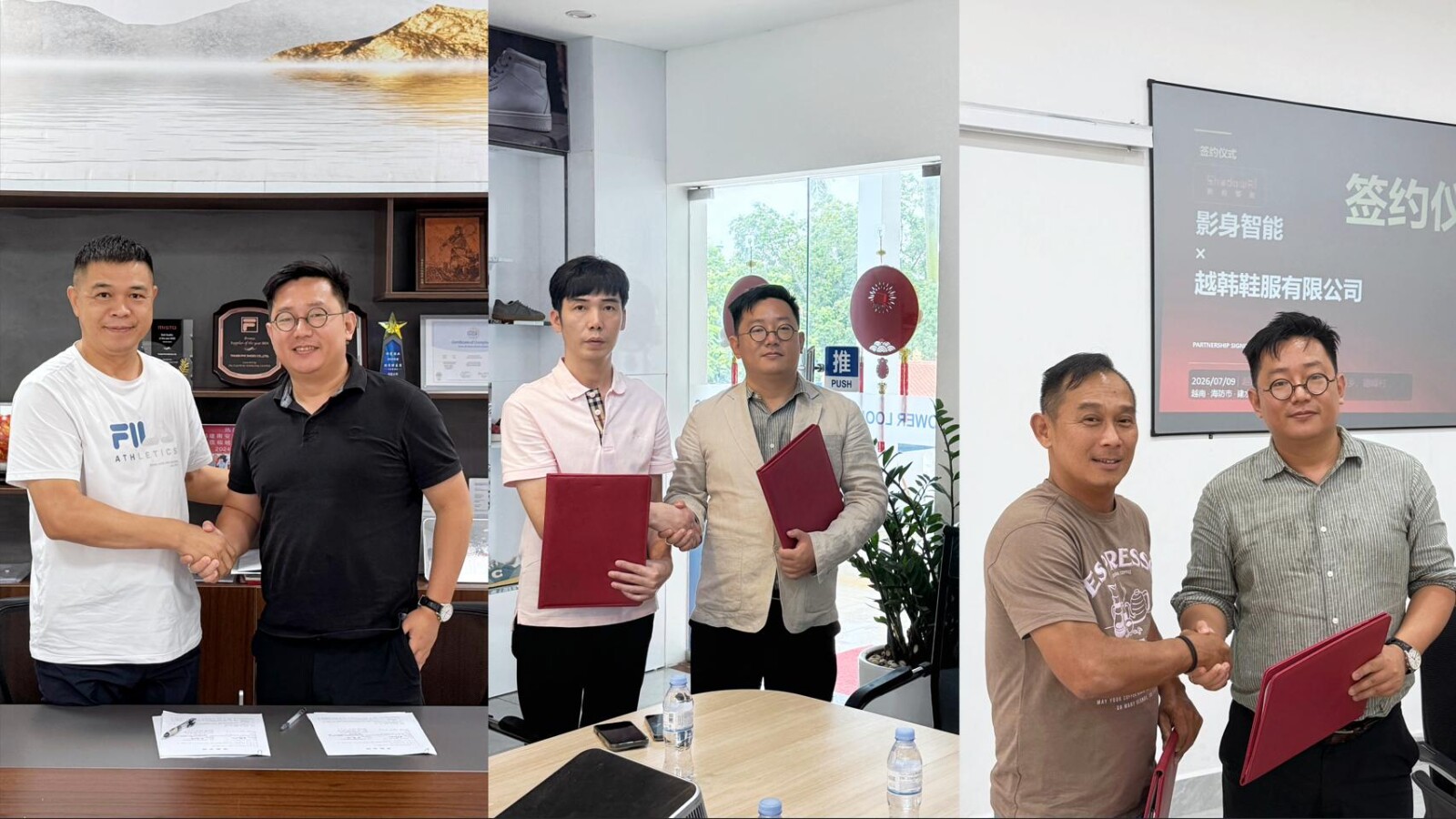
Under the agreements, Yingshen Intelligence will export hundreds of flexible embodied robots to footwear factories in Vietnam, with the combined order value reaching tens of millions of yuan. Powered by the company’s proprietary 4D world-model technology, embodied intelligence algorithms and robotic systems, the products will be used to support the flexible and intelligent upgrading of footwear production lines.
Notably, Yingshen Intelligence’s export of embodied robots to Vietnam also points to an emerging shift in the commercialisation of Chinese advanced technologies.
Unlike conventional robotics companies that rely primarily on one-off hardware sales, Yingshen Intelligence regards the robot itself as the physical platform through which its world model operates in real production environments. The product’s core value therefore lies not only in the hardware, but also in the model’s ability to perceive its surroundings, understand manufacturing processes, make real-time decisions and continuously improve through operational data.
Under this model, customers receive more than robotic equipment. They also gain access to ongoing model inference, algorithm updates and scenario-specific optimisation services. In effect, the business model is evolving from simply selling robots to providing model capabilities and usage-based, token-powered services.
Industry observers said this model-led approach, with robots serving as the physical carriers of algorithms and computing capabilities, could create greater long-term service value for embodied intelligence products and offer a new pathway for Chinese technological solutions to expand into overseas markets.
The participating manufacturers include Power Loong(Công Ty Tnhh Giày Bảo Long) , Thuan Phi(Công Ty Tnhh Giày Thuận Phi) and Vietnam Garment(CÔNG TY TNHH MAY VIỆT NAM), which plan to deploy Yingshen Intelligence’s robotic products and algorithmic capabilities at their footwear factories in Hai Phong.
Wu Xuewei, Vice-President of Yingshen Intelligence; Mao Zhenwu, General Manager of Thuan Phi; Lin Yonghui, General Manager of Power Loong; and Chen Zhixian, General Manager of Vietnam Garment signed the agreements on behalf of the four companies.
4D World Model Advances Flexible Manufacturing Applications for Chinese Embodied Intelligence
The flexible embodied robots being exported to Vietnam are powered by Yingshen Intelligence’s latest 4D world model.
World models are widely regarded as an important technological pathway towards general-purpose physical intelligence. They are designed to help artificial intelligence understand spatial relationships, object states and dynamic changes in the real world, while predicting the possible outcomes of different actions. In this way, AI systems can gradually learn how the physical world operates.
For embodied robots, this capability enables continuous environmental perception and real-time decision-making during operation. On footwear production lines, for example, the robots can identify differences in shoe styles, sizes, material conditions and adhesive states, and adjust their motion trajectories and operating strategies in response to actual production conditions.
Unlike conventional automation systems that repeatedly execute predefined programmes, world-model-powered robots are designed to respond more flexibly to changing environments. Their operating process more closely resembles that of skilled workers, who assess conditions on site and adjust their actions accordingly.
Yingshen Intelligence attributes this adaptability to its native 4D technological approach.
The company collects and generates 4D data at scale, representing both the three-dimensional structure of objects and their continuous changes over time within a unified framework. The data is then used to train world models with spatiotemporal understanding, reasoning and prediction capabilities.
Compared with approaches that rely mainly on two-dimensional images, videos or static three-dimensional data, 4D data can more comprehensively capture the positions, shapes, movement trajectories and interaction processes of objects in real environments.
Two-dimensional images and videos can record visual changes, but provide relatively limited information about spatial structure. Static three-dimensional data can reconstruct spatial relationships, but cannot fully describe how objects and environments evolve over time. By combining three-dimensional space with continuous temporal changes, 4D data provides a richer foundation for models to learn physical processes.
“Language is the native language of humans, while the native language of machines exists in the three-dimensional physical world,” said Min Wei, founder of Yingshen Intelligence.
According to Min, language, images and videos are all compressed representations of the real world. When physical reality is reduced to lower-dimensional forms, some information is inevitably lost, potentially limiting a model’s ability to understand and predict complex physical interactions.
Real-world interactions involve not only the shape, position and movement of objects, but also contact, force, friction and material deformation. These processes can be more completely observed and modelled when three-dimensional spatial information is combined with continuous changes over time.
A unified spatiotemporal representation based on 4D data can therefore help models learn the relationships among actions, environments and outcomes, and predict how the state of an object may change at the next moment.
Supported by this technological approach, Yingshen Intelligence’s robots can adjust their motion trajectories and operating strategies when faced with material deformation, deviations in incoming components, or changes in shoe styles, sizes and production processes.
These capabilities have enabled the company’s flexible embodied robots to move beyond laboratory testing and enter real footwear production lines. Their export to Vietnam will further test the technology’s reliability, adaptability and scalability in overseas industrial environments.
Phased deployment across key footwear processes
Cooperation will be implemented in phases. Yingshen Intelligence will initially supply its two flagship footwear-manufacturing robots, ShadowGlue and ShadowPress, for deployment across multiple production lines.
The robots will first be used in gluing and sole pressing, two critical processes that have traditionally depended heavily on skilled manual labour. Their introduction is expected to help the participating factories improve production flexibility, operating consistency and automation levels.
The partners also plan to extend embodied intelligence technologies to additional processes, including sewing, finished-product packaging and automated shoelace threading. The aim is to move gradually from isolated robotic workstations towards coordinated, multi-process production.
In the longer term, the partners intend to build a benchmark factory for embodied intelligence-enabled footwear manufacturing in Vietnam, promoting the transition of entire production lines towards more autonomous and intelligent operations.
Why footwear manufacturing in Vietnam?
Why are embodied robots entering factories and flexible manufacturing taking shape first in Vietnam’s footwear industry?
Industry experts point to two closely related factors. Footwear manufacturing is both highly labour-intensive and one of the most technically challenging sectors for flexible automation. Introducing embodied intelligence into this industry therefore responds to the practical needs of Vietnamese manufacturers while also providing Chinese robotics companies with demanding real-world environments in which to test technological reliability, adaptability and large-scale delivery capabilities.
For manufacturers in Vietnam, the technology can help improve efficiency, stabilise product quality and ease labour shortages. For embodied intelligence companies, footwear production offers an opportunity to move beyond laboratory demonstrations and validate their systems under complex, continuously changing industrial conditions.
The partnership therefore reflects both the demand for more advanced manufacturing capabilities in Vietnam and the broader effort to bring embodied intelligence technologies into international, large-scale industrial applications.
Footwear production presents particularly high technical barriers to automation.
Shoe materials are flexible and easily deformed, while significant differences exist among styles, sizes and material combinations. Processes such as gluing and sole pressing require workers to respond to subtle variations in shape, positioning and material condition, and have therefore long relied on the experience and dexterity of skilled operators.
At the same time, consumer demand for more personalised and diversified footwear products is requiring factories to process a growing number of styles and stock-keeping units, often in smaller batches and with shorter production cycles. Production lines must consequently switch between products more frequently and adjust more rapidly.
Conventional industrial automation systems generally follow predefined programmes and fixed motion paths. When styles, materials or production requirements change, the equipment may need to be reprogrammed, recalibrated or physically reconfigured. This can lead to lengthy deployment cycles and higher production-line modification costs, making traditional systems less suited to multi-product, small-batch and high-frequency manufacturing.
Yingshen Intelligence’s embodied robots combine visual perception, world models and motion-control algorithms to identify production environments, material conditions and process requirements in real time. The systems can then adjust their operating strategies according to differences in shoe styles, sizes, incoming-material positions and other production variables.
Rather than merely repeating preset movements, the robots are designed to interpret the relationships among materials, space, actions and manufacturing processes, allowing them to adapt more effectively to complex and flexible production environments.
ShadowPress is designed primarily for the sole-pressing process. Using visual recognition and algorithmic compensation, the robot can dynamically adjust its gripper posture and movement path in response to differences in material position, placement angle and shoe shape.
Its compact design enables it to be integrated into existing semi-automated production lines. This allows manufacturers to introduce intelligent systems gradually, without carrying out extensive reconstruction of their existing factories.
ShadowGlue is designed for footwear gluing. According to Yingshen Intelligence, the system uses a 4D world model and vision–action coordination technology to learn manufacturing processes by observing videos of skilled workers.
It can respond dynamically to changes in shoe-material deformation, edge paths and adhesive conditions, helping to improve the stability and consistency of gluing operations. The technology is intended to enable robots not only to reproduce a worker’s actions, but also to learn the underlying process logic and adjust their operations when production conditions change.
This adaptability is particularly important in footwear manufacturing, where frequent changes in styles, sizes and materials make it difficult for fixed-path equipment to maintain consistent performance.
Vietnam’s manufacturing sector seeks greater flexibility
Vietnam has become one of the world’s leading footwear production and export centres as global footwear and apparel supply chains have continued to expand across Southeast Asia.
However, the competitive priorities of the industry are changing. International brands are placing greater emphasis on shorter delivery cycles, stable quality and the ability to respond quickly to small-batch, multi-product orders.
As a result, Vietnam’s manufacturing sector is gradually moving beyond a development model based primarily on labour, land and production scale. Manufacturers are increasingly seeking to improve efficiency, product quality, technological capabilities and production flexibility.
The introduction of Chinese embodied intelligence technologies by several footwear manufacturers in Vietnam therefore represents more than an equipment upgrade. It reflects local manufacturers’ growing demand for a new generation of intelligent production capabilities.
By deploying robots in technically demanding flexible processes, factories may be able to reduce their dependence on scarce skilled labour, improve production consistency and respond more effectively to frequent product changes and diversified orders.
Industry observers said the move could provide a practical example of how embodied intelligence can be introduced into traditional manufacturing. It may also help Vietnamese footwear producers transition from primarily undertaking large-scale production towards building more efficient, technology-intensive and responsive manufacturing capabilities.
Under the agreements, Yingshen Intelligence will provide integrated services covering equipment delivery, on-site installation and commissioning, personnel training, quality assurance and after-sales support.
The company will also adapt its products to the actual production environments and process requirements of the participating factories in Vietnam, with the aim of ensuring that the systems can operate reliably under real manufacturing conditions.
ShadowGlue and ShadowPress have completed product development and production-line validation. The two products were previously presented at the Jinjiang International Footwear and Sports Industry Expo in China.
The agreement involving hundreds of robots and orders worth tens of millions of yuan marks the formal entry of Yingshen Intelligence’s footwear robotics solutions into the Southeast Asian manufacturing market.
A new link between Chinese technology and Southeast Asian manufacturing
The partnership highlights a growing connection between China’s intelligent manufacturing technologies and Southeast Asia’s industrial transformation.
Chinese companies are accelerating the industrial deployment of world models, embodied intelligence and robotic systems. At the same time, manufacturers in Vietnam and other Southeast Asian economies are seeking more efficient, flexible and intelligent approaches to industrial upgrading.
The intersection of these trends lies in the practical needs of traditional manufacturing industries. Footwear factories provide a particularly valuable application environment because they combine large-scale production demand with complex materials, variable processes and frequent product changes.
Starting with footwear production lines in Hai Phong, the cooperation between Yingshen Intelligence and manufacturers in Vietnam will test how embodied intelligence can be applied across real industrial processes and scaled to multiple factories.
Rather than replacing workers in only one repetitive task, the broader objective is to build flexible production capabilities that can perceive changing conditions, learn manufacturing processes and adjust operations accordingly.
The cooperation offers a new example of Chinese intelligent manufacturing technology participating in Southeast Asia’s industrial upgrading, while signalling the footwear industry’s gradual transition from scale-driven production towards a new stage of flexible and intelligent manufacturing.
Hashtag: #HangzhouYingshenIntelligentTechnology
The issuer is solely responsible for the content of this announcement.




