General
ECOWAS Signs Pact to Fast-Track African Atlantic Gas Pipeline
By Adedapo Adesanya
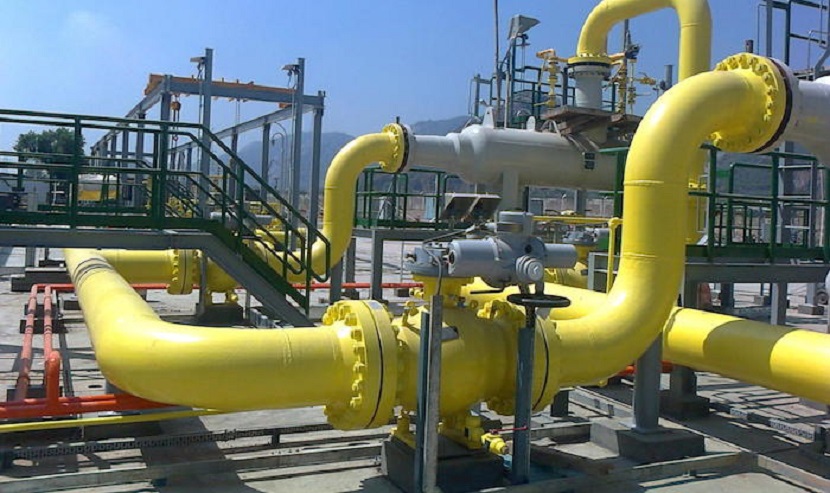
The African Atlantic Gas Pipeline (AAGP) project recorded a major milestone after Heads of State of the Economic Community of West African States (ECOWAS) signed the Intergovernmental Agreement (IGA) for the multibillion-dollar regional energy initiative at the ECOWAS Summit in Freetown, Sierra Leone.
The development was announced in a statement on Monday by the Chief Corporate Communications Officer of the Nigerian National Petroleum Company (NNPC) Limited, Mr Andy Odeh.
According to the statement, the agreement provides the legal and institutional framework required to accelerate the implementation of the pipeline project, which is expected to strengthen regional energy security, drive industrialisation and deepen economic integration across West Africa.
The AAGP is designed to transport about 30 billion cubic metres of natural gas annually through a nearly 6,900-kilometre pipeline stretching from Nigeria to Morocco along the Atlantic coast, with interconnections to landlocked Sahel countries and onward linkage to the Maghreb-Europe Gas Pipeline.
The project is jointly being developed by NNPC and its Moroccan equivalent – Office National des Hydrocarbures et des Mines (ONHYM), with sovereign backing from Nigeria, Morocco, Mauritania and ECOWAS member states.
NNPC said the latest signing gives practical effect to the approval granted during the 66th Ordinary Session of the ECOWAS Authority of Heads of State and Government held in Abuja in December 2024 and concludes the institutional process initiated after the 2022 Memorandum of Understanding between Nigeria and Morocco.
The company added that Morocco and Mauritania are expected to sign the agreement in a subsequent ceremony to complete the intergovernmental framework for the project.
The statement noted that the pipeline, conceived under the shared vision of the late former President Muhammadu Buhari and King Mohammed VI of Morocco, continues to enjoy the support of President Bola Tinubu.
It also disclosed that significant preparatory work had already been completed, including Front-End Engineering Design (FEED) studies, route reconnaissance surveys, environmental and social impact assessments, as well as the development of legal, regulatory and commercial frameworks required to move the project towards implementation.
The pipeline is expected to enhance gas supply across the region, support electricity generation, promote industrial development, encourage value addition to natural resources and create employment opportunities across West Africa.
Commenting on the development, the chief executive of the state-oil-owned company, Mr Bayo Ojulari, described the signing of the agreement by West African leaders as a critical step towards the project’s implementation.
“This milestone reflects the clear mandate of His Excellency President Bola Ahmed Tinubu GCFR. The AAGP is central to delivering that mandate by providing the infrastructure required to bring about 3 bcf/d of Nigerian gas to market. NNPC Limited is proud to co-lead this endeavour with ONHYM.”
Also speaking, the Director General of ONHYM, Mrs Amina Benkhadra, described the signing as another major achievement in the realisation of the transcontinental energy project.
According to her, “The Project fully reflects His Majesty’s vision for an integrated Atlantic Africa.”
NNPC said the next phase of the project would include the establishment of the Pipeline Higher Authority (PHA) in Abuja and the African Atlantic Gas Pipeline Project Company in Casablanca to oversee implementation and prepare for the Final Investment Decision (FID).
The company reaffirmed its commitment, alongside ONHYM, to delivering the project in line with international standards of technical excellence, environmental sustainability and good governance.
General
Navy Conducts 580 Operations in Three Months, Recovers 4.7m Litres of Stolen Crude Oil
By Adedapo Adesanya
The Nigerian Navy said it has intensified a crackdown on crude oil theft and other forms of economic sabotage in the Niger Delta, recovering more than 4.698 million litres of stolen crude oil and illegally refined petroleum products during the second quarter of Operation Delta Sentinel.
The Navy disclosed that the renewed offensive, conducted between April and June 2026, also led to the arrest of over 91 suspects, the dismantling of more than 48 illegal refining sites, and the interception of several vessels linked to crude oil theft.
The Director of Naval Information, Navy Captain Abiodun Folorunsho, said the intensified operations followed the successful completion of the first quarter of the operation and were aimed at consolidating gains in the fight against crude oil theft, illegal refining, pipeline vandalism, militancy and other forms of economic sabotage.
According to him, naval forces carried out over 580 intelligence-driven operations across Rivers, Bayelsa, Delta, Cross River and Lagos States, significantly disrupting the activities of criminal syndicates operating within the Niger Delta.
Among the notable achievements recorded during the period was the arrest of the motor tankers MKPODU, WESTAF and STELIOS K, which were allegedly involved in the theft of more than 900 metric tonnes of suspected stolen crude oil.
The Navy also recovered over 708,000 litres of illegally refined petroleum products and 310,000 litres of stolen crude oil from a single illegal refining site in Ndoni, Rivers State.
Captain Folorunsho said several intelligence-led operations further dismantled reactivated illegal refining camps, intercepted illicit petroleum consignments and prevented criminal networks from restoring illegal production capacity across the region.
He noted that coordinated riverine operations resulted in the destruction of numerous illegal refining sites, reservoirs, dugout pits, storage facilities, warehouses, concealed fuel dumps, illegal pipeline connections and militant hideouts.
According to him, the Navy also uncovered a growing pattern of criminal groups attempting to reactivate previously dismantled refining camps.
He said sustained follow-up operations successfully prevented the regeneration of the illegal refining ecosystem and further weakened the economic viability of crude oil theft networks.
The Navy attributed the operational successes to sustained intelligence-led operations and enhanced collaboration with other security agencies.
It noted that the achievements coincided with the recent announcement by the Nigerian Upstream Petroleum Regulatory Commission (NUPRC) that Nigeria’s crude oil production rose to 1.735 million barrels per day in June 2026, representing 104 per cent of the country’s production quota by the Organisation of the Petroleum Exporting Countries (OPEC) and the highest production level recorded since April 2020.
The service said the improved production figures reflected enhanced security around critical oil and gas infrastructure and the collective efforts of security agencies in tackling crude oil theft.
It added that the persistent naval presence across the Niger Delta waterways had denied economic saboteurs freedom of operation, disrupted illicit petroleum supply chains and strengthened the protection of strategic national assets.
Reaffirming its commitment to safeguarding Nigeria’s maritime domain, the Navy pledged to sustain intelligence-driven operations and deepen inter-agency cooperation to further dismantle oil theft networks.
The Service also said it remains committed to supporting the federal government’s target of increasing Nigeria’s crude oil production to 2.5 million barrels per day by 2027, in line with the vision of the Chief of the Naval Staff, Vice Admiral Idi Abbas.
General
Afia Media to Brainstorm on Trading Ideas for Development in South East
By Modupe Gbadeyanka
A platform to bring together critical stakeholders for the development of the South East region of Nigeria has been created by Afia Media, Nigeria’s only broadcaster dedicated to the South-East on DStv and GOtv.
The company, established by a foremost media and communications practitioner, Mr Emeka Mba, launched the Afia Annual Lecture and Awards for this purpose.
It is to bring together leaders from government, business, academia, culture and civil society to discuss the future of the South-East and celebrate excellence across the geo-political zone.
The initiative is expected to become an annual gathering focused on thought leadership, policy dialogue, regional development and the recognition of outstanding contributions to society.
The inaugural edition, themed Uwa Bu Afia: Trading Ideas for Development, is fixed for the fourth quarter of 2026 in Enugu.
Uwa Bu Afia was derived from the Igbo expression meaning the world is a marketplace. It was chosen to reflect the entrepreneurial spirit, resilience and innovative capacity that have long defined the people of the South-East.
The event will be broadcast live on Afia TV (DStv Channel 263 and GOtv), Afia 99.3 FM Enugu, and streamed digitally to audiences across Nigeria and the diaspora.
According to the organisers, the Annual Lecture and Awards are designed as a platform that will convene policymakers, business leaders, academics, innovators, creatives, development partners and other stakeholders to examine opportunities and challenges facing the South-East.
Mr Mba said the platform reflects the organisation’s commitment to amplifying the voices, aspirations and development priorities of the region, noting that, “The South East is one of Nigeria’s most entrepreneurial and culturally vibrant regions. The Afia Annual Lecture and Awards is designed to provide a credible platform for dialogue, recognition and collective action towards the region’s future.”
The programme will feature two major segments: the Afia Annual Lecture, bringing together public and private sector leaders, policymakers and development stakeholders for high-level conversations on the future of the region, and the Afia Awards Gala, celebrating individuals and institutions making significant contributions to society.
Organisers said the event is expected to attract more than 1,000 participants physically, while millions more are projected to follow proceedings through television, radio and online broadcasts.
A director at Afia Media, Mrs Ijeoma Ezeasor, said the region must take ownership of its narrative in an increasingly digital and AI-driven world.
“If we do not tell our own story, others will tell it for us. We are entering an era where artificial intelligence is shaping conversations, interpreting history and influencing decisions based on the information available to it.
“If the South-East does not deliberately document its achievements, define its aspirations and contribute its perspective to global conversations, others will define us on our behalf.
“Uwa Bu Afia is therefore a call to think critically about our future, confront our challenges honestly and shape the narrative of our region in a rapidly changing world,” she stated.
The platform will serve as an annual opportunity to evaluate regional progress, stimulate policy conversations, encourage investment, promote innovation and strengthen collaboration between the public and private sectors.
The Afia Awards will recognise individuals and institutions making outstanding contributions to regional development, across categories including Governance, Business Leadership, Technology and Innovation, Cultural Excellence, Diaspora Impact, Civic and Humanitarian, Leadership in Education, and Youth.
Nominations, partnership opportunities and additional programme details will be announced in the coming months.
Afia Media said it intends for the initiative to evolve into a lasting institution that promotes regional storytelling, celebrates achievement and contributes to the long-term development of the South-East.
General
EFCC Debunks Claims of Probe Into Immigration Boss Kemi Nandap
By Adedapo Adesanya
The Economic and Financial Crimes Commission (EFCC) has dismissed reports linking the Comptroller General of the Nigeria Immigration Service (NIS), Mrs Kemi Nandap, to an ongoing investigation into alleged visa racketeering involving some immigration officers.
The anti-graft agency said Mrs Nandap was not under investigation and had no connection whatsoever with the cases currently being handled by the commission.
The clarification was contained in a statement posted on the EFCC’s official X handle, noting that the clarification became necessary to address media reports and insinuations suggesting that the NIS Comptroller General was being investigated over the alleged visa fraud.
“The commission wishes to state unequivocally that it has no case with the Immigration CG,” the EFCC said.
However, the agency confirmed that it’s prosecuting some immigration officers over alleged visa fraud, adding that investigations remain ongoing.
“There are subsisting cases of alleged visa fraud against some immigration officers at the Federal High Court. Further investigations are ongoing with the possibility that more NIS officers could be arraigned for alleged fraudulent practices in the near future,” the statement read.
The EFCC stressed that despite the ongoing investigations and court cases involving some officers of the Nigeria Immigration Service, the Comptroller General was not linked to the matter.
“However, the Immigration CG is not remotely connected to these investigations,” the organisation stated.
The anti-corruption agency also urged journalists and media organisations to verify information relating to its activities before publication to prevent the dissemination of inaccurate reports, appealing to the media “to always seek clarifications on the activities of the EFCC to avoid misrepresentation of facts.”