General
17 States on Flood Alert as NiHSA Predicts Rising Water Levels
By Adedapo Adesanya
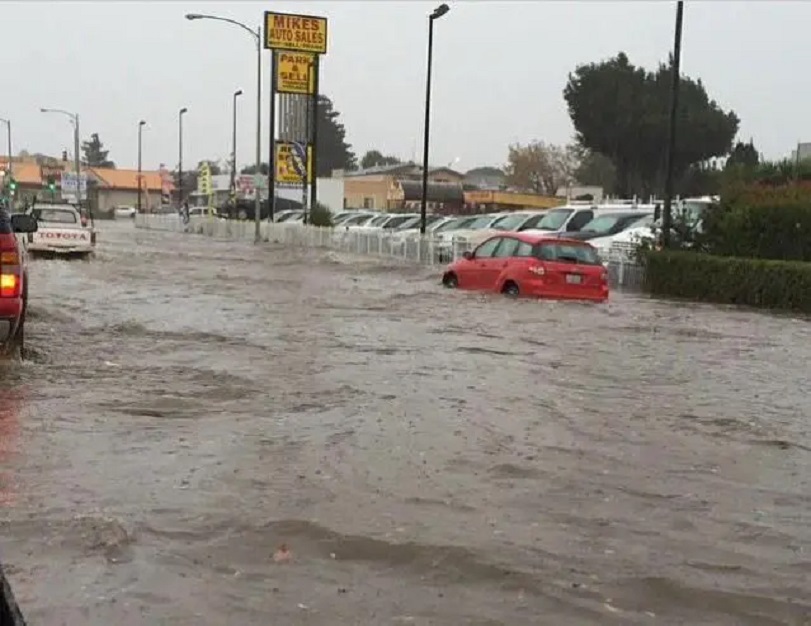
The Nigeria Hydrological Services Agency (NiHSA) has warned that 17 states across the country face a medium flood risk between July 21 and July 27, 2026, urging governments, emergency agencies and residents in vulnerable communities to take immediate precautionary measures to minimise potential loss of lives and property.
The warning was contained in the agency’s National Flood Advisory (Alert No. NFA-2026-200) issued on Tuesday, following hydrological assessments indicating rising water levels in several rivers and critical monitoring stations nationwide.
Director-General and Chief Executive Officer of NiHSA, Mr Umar Mohammed, said the forecast identified Bauchi, Edo, Imo, Kaduna, Plateau and Benue among the states expected to experience flooding during the period, alongside 11 others.
According to Mohammed, the latest hydrological data revealed that water levels at key monitoring stations, including Saminara on the Karam River, Waya Dam Site on the Waya River and Amber on the Amber River, have exceeded established watch and warning thresholds, increasing the likelihood of localised flooding along major river channels and adjoining floodplains.
He disclosed that 16 hydrological gauging stations across the country have recorded elevated river stages, placing several communities at heightened risk of inundation.
“Our hydrological monitoring network indicates that river stages at critical monitoring stations have exceeded watch and warning thresholds. Communities located along these river channels face imminent localised flooding, and we strongly advise state governments, local authorities and residents in flood-prone areas to take immediate preventive action,” Mohammed said.
NiHSA’s impact assessment showed that Bauchi State has the highest level of exposure, with 1,841 communities, 145 schools, 101 health facilities and eight markets identified within areas vulnerable to flooding.
In Edo State, the agency identified 148 communities, 131 schools, 123 health facilities, four markets, seven religious centres and approximately seven hectares of farmland as being at risk.
The advisory also listed 415 communities, 423 schools, 198 health facilities, 49 markets, 111 religious centres and 75 hectares of farmland in Imo State as vulnerable to flooding, while Kaduna State has 168 communities, 16 schools, three health facilities and three religious centres within areas likely to be affected.
For Plateau State, NiHSA identified 205 communities, 137 schools, 44 health facilities, 16 markets, 81 religious centres and 64 hectares of farmland as susceptible to flooding, while Benue State has five communities, eight schools, two health facilities and four religious centres within the projected flood-risk zone.
The agency urged the National Emergency Management Agency, NEMA, State Emergency Management Agencies, SEMAs, local government authorities and community leaders to activate emergency response measures without delay.
Among its recommendations, NiHSA advised the immediate evacuation of residents, livestock and valuables from flood-prone communities to designated safe locations, while emergency agencies were urged to pre-position food supplies, medical equipment, potable water and other relief materials in vulnerable areas.
The agency also called for the activation of community-based early warning systems, continuous public sensitisation, regular clearing of blocked drainage channels and strict adherence to safety guidelines, warning residents against attempting to walk, drive or ride through flooded roads or fast-flowing water.
NiHSA further advised state governments and the public to monitor its daily flood forecasts and advisories to support timely decision-making and reduce the impact of anticipated flooding during the forecast period.
General
Sahara Group Triggers New Thinking on Energy, Investment, Journalism at Asharami Square 3.0
By Dipo Olowookere
The need for new thinking on energy transition, infrastructure financing and energy journalism has been emphasised by a leading energy company, Sahara Group.
The organisation, at the 2026 Asharami Square held in Lagos on Wednesday, July 22, stressed the need for solution-based journalism for better results.
At the event themed Energising Africa’s Future: Legacy, Impact and Transformation, the Director of Governance and Sustainability at Sahara Group, Ms Ejiro Gray, in her opening remarks, noted that Africa’s energy future must be shaped by local realities, calling for more balanced, evidence-based journalism capable of interrogating the complexities of energy transition, development and sustainability.
“Effective journalism should not only tell us what happened; it should help us understand why it matters, whose interests are affected and what perspectives are missing from the conversation,” she posited.
The Special Adviser to the President on Power Infrastructure, Mr Sadiq Wanka, in his keynote address, highlighted the opportunities emerging within Nigeria’s electricity sector as reforms continue to open new pathways for investment.
He stated that reforms across the sector were creating opportunities in embedded generation, mini-grids, renewable energy, transmission infrastructure and industrial power solutions, while urging journalists to delve deeper into policy reforms, investment opportunities and implementation outcomes.
“The issue is no longer technology. The real challenge is mobilising capital at scale, structuring bankable opportunities and creating an ecosystem that attracts long-term financing,” Mr Wanka said.
At a panel session featuring the Director of Institute of Continuing Education of the University of Lagos, Prof. Abigail Ogwezzy-Ndisika; the chief executive of the Lagos State Electricity Regulatory Commission (LASERC), Ms Temitope George; and the Managing Director of Chapel Hill Denham, Ms Kemi Awodein, it was echoed that Africa possesses significant pools of capital capable of supporting infrastructure development, but that unlocking investment requires stronger governance, investor confidence and better project preparation.
“Energy reporting must go beyond headline events and announcements. Journalists need to ask deeper questions, examine the evidence and connect policy decisions to their impact on communities and everyday lives,” Prof Ogwezzy-Ndisika stated at the panel moderated by the Associate Editor for Africa at Argus Media, Mr Adebiyi Olusolape.
Ms Awodein, during the panel which explored the question: Who is financing Africa’s energy future? Pointed out that “Nigeria has demonstrated that domestic capital can finance transformational infrastructure at scale. The real differentiator is governance, transparency and a clear pathway to value creation.”
Business Post reports that one of the major highlights of the programme was the unveiling of the Asharami Square Energy Reporting Fellowship, which the Head of Corporate Communications at Sahara Group, Mr Bethel Obioma, said was designed to deepen journalists’ understanding of the technical, commercial, environmental and policy issues shaping the energy sector.
He disclosed that this aligns with Sahara Group’s Beyond XXX vision of investing in people and platforms that will help shape Africa’s future, adding that Prof Ogwezzy-Ndisika will serve as the lead assessor for the programme.
“Through the Asharami Square Energy Reporting Fellowship, we are investing in the capacity of journalists to tell more solutions and evidence-based stories that reflect the realities, opportunities and challenges of Africa’s energy transition,” he stated.
Since its launch in 2024, Asharami Square has continued to advance informed dialogue, strategic partnerships and practical solutions that support Africa’s evolving energy landscape and reinforce Sahara Group’s commitment to delivering impact beyond its first three decades.

General
Three Suspects in Oyo Abduction Get Life Imprisonment
By Adedapo Adesanya
The Federal High Court in Abuja has sentenced three suspects in the abduction of students and teachers in Oriire Local Government Area of Oyo State to life imprisonment.
According to the court, the sentencing of Mr Abdulrazak Umar, known under the alias Abu Khalifa/Abu Khalid; Mr Yunusa Musa, alias Yunusa Bin Musa; and Mr Shamsu Adamu Sani, alias Abu Itisar, will start from the date of their arrest.
Before the sentencing by Justice Salim Ibrahim, counsel for the defendants pleaded with the court to sentence them on liberal terms, adding that they were first-time offenders and had pleaded guilty.
Justice Ibrahim pointed out that this showed that they were remorseful of their actions, and all the counts they were charged with are not related to the kidnapping.
He added that the convicts were married men who have children and have aged parents who are dependent on them. He pleaded with the court to give them a second chance at life and sentence them on liberal terms.
Counsel for the prosecution, however, pointed out that the convicts were aware of the people on the battlefield, and as true Nigerians, they should have reported it to the authorities.
After the charges were read to them, they pleaded guilty to membership of a proscribed terrorist group.
At their arraignment on alleged terrorism at the Federal High Court, Abuja, the three defendants also pleaded guilty to concealing information on the planning and execution of the abduction.
However, only the first accused person, Abdulrazak Umar, alias Abu Khalifa/Abu Khalid, pleaded guilty to counts 7, 8, 9 and 10, which bordered on training and passing instructions and inciting terror group members on a particular religious ideology.
The three accused persons were on trial by DSS on a 10-count charge bordering on kidnapping, concealment of information, and terrorism-related offences.
According to the charges, the defendants, all from Niger State, are accused of knowingly withholding information about individuals linked to terrorist activities, participating in kidnapping, and using a messaging platform to facilitate terrorist training.
The federal government had, last week, charged the suspects for the recent kidnapping of children and teachers of a school in the Oriire Local Government Area (LGA) of Oyo State. The 10-count charges filed before the Abuja court bordered on terrorism, kidnapping, concealment, incitement and illegal mining.
General
Pathway Advisors Launches Pivot’s N100bn Series 1 Commercial Paper Issuance
By Adedapo Adesanya
Pathway Advisors Limited (PAL) and Pivot Integrated Energy Services Limited have launched a N100 billion Series 1 Commercial Paper (CP) issuance under Pivot’s N300 billion Commercial Paper Programme, opening a new funding window aimed at strengthening the downstream energy company’s working capital.
The offer, for which Pathway Advisors is serving as Lead Arranger and Issuing House, is now open for subscription and will close on July 31, 2026.
The transaction underscores Pathway Advisors’ role in facilitating capital market access for Nigerian corporates while supporting the expansion plans of one of the country’s indigenous downstream energy companies.
Under the transaction, Pivot is seeking to raise up to N100 billion through three tranches with varying tenors and returns. Series 1 Tranche A has a tenor of 180 days, offering a discount rate of 17.5 per cent and a yield of 19.15 per cent. Tranche B has a tenor of 270 days, with a 19.5 per cent discount rate and a yield of 22.79 per cent, while Tranche C has a 364-day tenor, carrying a 19.69 per cent discount rate and a yield of 24.50 per cent.
The minimum subscription is N5 million, representing 5,000 units at N1,000 per unit, with additional subscriptions accepted in multiples of N1,000 thereafter.
The commercial paper programme has received investment-grade short-term ratings from leading rating agencies, earning an A3 rating from Agusto & Co., an A3 rating from Global Credit Ratings (GCR), and an A1 rating from DataPro Limited.
According to the transaction details, proceeds from the issuance will be deployed towards working capital financing to support Pivot’s operations in the importation, trading, storage, distribution and supply of refined petroleum products across Nigeria and selected African markets.
The company said the offer presents investors with an opportunity to participate in the growth of a leading indigenous downstream energy company supported by strong revenue growth, robust off-take arrangements and improving profitability.
Pivot Integrated Energy Services Limited is an indigenous integrated downstream energy company engaged in the importation, trading, storage, distribution and supply of Premium Motor Spirit (PMS), Automotive Gas Oil (AGO) and Aviation Turbine Kerosene (ATK).
The company serves a broad customer base that includes bulk buyers, distributors, industrial users, logistics operators, manufacturers and retail-linked channels across key commercial centres such as Lagos, Calabar and Port Harcourt.
It is also one of the 20 approved off-takers under the Dangote Refinery PMS Consortium, with an allocated target volume of 300 million litres of Premium Motor Spirit per quarter, positioning it among the key distributors in Nigeria’s evolving downstream petroleum market.
For Pathway Advisors Limited, the transaction further reinforces its position in Nigeria’s debt capital market as a financial advisory and capital-raising firm. Registered and regulated by the Securities and Exchange Commission (SEC), the firm provides transaction advisory, capital raising, project finance, mergers and acquisitions advisory, and strategic financial solutions to corporate and institutional clients.
The firm said it remains committed to facilitating access to capital for businesses while supporting sustainable economic growth across key sectors of the Nigerian economy through innovative financing solutions.