Brands/Products
Lagos Grocery Startup GoLemon Winds Down After Funding Struggles
By Adedapo Adesanya
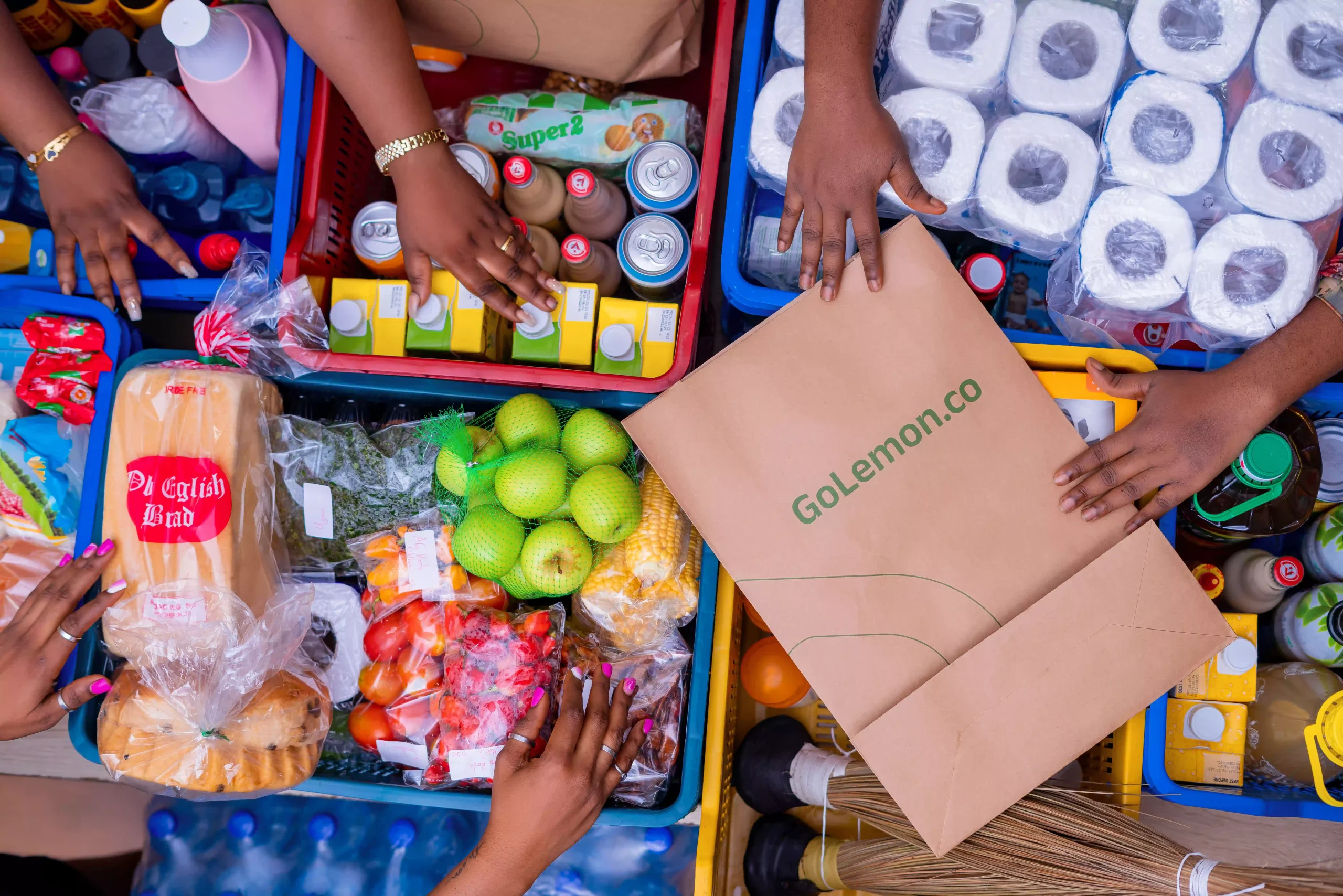
GoLemon, a Lagos-based grocery delivery startup known for offering bulk household shopping at prices below those of traditional supermarkets, has announced it is shutting down after failing to secure additional funding.
The company has stopped accepting new orders and will permanently close its customer support channels on August 2, bringing an end to a business that sought to make grocery shopping more affordable and convenient for Lagos residents.
In a farewell blog post titled Thank You, Lagos, the startup expressed gratitude to its customers, employees, investors and partners for supporting its journey.
“We set out to help Lagosians save money on groceries without sacrificing convenience, and every order, referral and message of encouragement made that mission worthwhile,” the company said in the statement.
GoLemon, which was founded in 2024, said it would honour outstanding customer obligations, including refunds where applicable, as it winds down operations.
The company added that the decision was not made lightly but followed months of efforts to secure fresh capital to sustain and grow the business.
Founded to tackle the high cost of grocery shopping in Nigeria, GoLemon differentiated itself by sourcing products in bulk and passing cost savings on to consumers while offering home delivery across Lagos.
The startup gained traction among households seeking an alternative to traditional supermarkets amid rising food inflation.
Despite attracting a loyal customer base, GoLemon said the increasingly difficult fundraising environment made it impossible to continue operating.
The closure underscores the growing challenges facing African startups as venture capital funding remains subdued and investors become more selective.
Several technology companies across the continent have been forced to scale back operations, merge with rivals or shut down entirely as they struggle to achieve profitability and raise follow-on funding. Recently, FoodCourt temporarily stopped operations as it couldn’t fulfil its debt obligations.
Before announcing its shutdown, GoLemon had continued expanding its services, including introducing next-day grocery delivery and promotional discounts aimed at growing its customer base. However, those efforts proved insufficient to overcome the funding constraints that ultimately led to the company’s closure.
Brands/Products
Rafa Corporation Accelerates Growth with Investment in Nigeria’s Largest Continuous Soap Manufacturing Facility Lagos
Rafa Corporation, manufacturer of the rapidly growing Rafa Detergent brand, has announced a landmark investment in world-class soap manufacturing technology, marking a major milestone in its ambition to build one of Africa’s leading home and personal care manufacturing enterprises. The investment significantly expands Rafa’s production capabilities while reinforcing its commitment to innovation, industrial excellence and long-term value creation across Nigeria and West Africa.
The company has signed contracts for the construction and installation of a state-of-the-art Continuous Saponification Plant integrated with a Continuous Vacuum Soap Cooling and Drying Plant, with a 10-tonnes-per-hour production capacity. Once commissioned, the expanded production capacity is expected to position Rafa as the largest single-line continuous saponification plant in Nigeria, Nigeria’s largest powder detergent manufacturer by installed production capacity, and reinforce its long-term commitment to industrial excellence.
Designed with flexibility and efficiency at its core, the integrated production system will produce a wide range of multipurpose soap bars and premium-quality soap noodles. This versatility will enable Rafa Corporation to respond swiftly to evolving consumer preferences and expanding market opportunities across the home and personal care sectors.
In a further demonstration of its growth strategy, the company has also signed contracts for the construction and installation of two state-of-the-art Toilet Soap Finishing Lines, each with a 4-tonnes-per-hour production capacity. Equipped with advanced soap noodle conveying systems and modern automation technologies, the new finishing lines will deliver greater production efficiency, superior product consistency, and enhanced manufacturing reliability, while supporting the company’s expanding portfolio of personal care products.
Together, these investments represent one of the most significant expansions of soap manufacturing capacity currently underway in Nigeria, underscoring Rafa Corporation’s determination to build one of Africa’s most modern consumer goods manufacturing platforms. They also reflect the company’s long-term confidence in Nigeria’s manufacturing sector and its belief that world-class consumer goods can be designed, manufactured and exported from Africa.
Speaking on the development, the General Manager of Starium Detergents FZE, Mr Muhammed Midan Rabiu, described the investment as another defining milestone in the company’s growth journey. He stated that the company remains committed to supporting local value creation, strengthening industrial capacity and contributing to the development of globally competitive African manufacturing.
“This investment represents another defining milestone in Rafa Corporation’s journey to build one of Africa’s leading home and personal care manufacturing enterprises. We are investing in world-class technology, advanced manufacturing capabilities, and the people who will shape our future because we believe Africa deserves consumer products manufactured to the very highest global standards.
These projects significantly strengthen our capacity to innovate, expand our product portfolio and respond to the evolving needs of consumers across Nigeria and West Africa. Beyond increasing production capacity, we are building an integrated manufacturing platform that will drive industrial development, create sustainable employment and contribute meaningfully to the growth of Africa’s consumer goods industry.
At Rafa Corporation, our vision is clear: to build trusted brands, world-class manufacturing capabilities, and a proudly African company that competes with the very best in the world,” he said.
Rafa Detergents has rapidly emerged as one of Nigeria’s leading detergent manufacturers. The company currently operates an 80,000-tonne-per-annum powder detergent manufacturing facility in Alaro City, Epe, Lagos. It is on course to commission a second production line before the end of the year, increasing installed production capacity to approximately 200,000 tonnes per annum.
These additions are an important milestone in Rafa Corporation’s long-term strategy of building one of Africa’s leading home and personal care manufacturing enterprises. By expanding beyond detergents into large-scale soap production, the company is creating an integrated manufacturing platform capable of serving rapidly growing consumer markets across Nigeria and West Africa.
Driven by continuous investment in technology, innovation and world-class manufacturing, Rafa Corporation remains committed to delivering trusted, high-quality products while creating employment opportunities, strengthening local industrial capacity and contributing meaningfully to Africa’s consumer goods manufacturing landscape.

Brands/Products
M-KOPA Reaches 10 million Customers Across Africa, Nigeria Emerges Fastest-Growing Market
By Adedapo Adesanya
Pan-African fintech company, M-KOPA, has reached a major milestone, serving 10 million customers across its five African markets, underscoring the rapid adoption of its financial inclusion model designed for underserved informal workers.
The achievement marks a dramatic acceleration in the company’s growth trajectory. While it took M-KOPA eight years to reach its first one million customers after launching with solar financing in 2012, it has added the remaining nine million customers in just six years following its expansion into smartphone financing in 2020.
The company attributed the growth to rising demand for its More than a Phone platform, which combines smartphone financing with embedded insurance, credit and device protection at the point of purchase.
Speaking on the milestone, M-KOPA Co-Founder and Chief Executive Officer, Mr Jesse Moore, said the company was proving that informal sector workers have always been viable borrowers when offered products designed around their earning patterns.
“Every Day Earners have always been creditworthy. What they needed was credit built around how they really make a living, not a payslip. Informal has never meant unviable. 10 million customers on, that’s no longer a belief. It’s proven,” he said.
M-KOPA said its business is built around what it describes as “Every Day Earners”—including traders, boda riders, tailors and shopkeepers—who generate income daily but have traditionally been excluded from formal financial services.
According to the company in a statement shared with Business Post, independent surveys show that nine out of every 10 customers believe its products have improved their lives. The firm also noted that the market opportunity remains substantial, with nearly nine in 10 workers in sub-Saharan Africa earning their livelihoods in the informal economy.
It added that Africa is expected to have one of the world’s largest populations of non-salaried, economically active adults by 2040, making the segment central to its long-term growth strategy.
Beyond its customer base, M-KOPA highlighted its manufacturing and market expansion efforts. In Kenya, the company established what it describes as Africa’s largest smartphone assembly factory in 2023. The facility employs more than 400 people, has attained global ISO certification, and has produced over 3.3 million devices.
Nigeria has also emerged as a key growth market, becoming the fastest country in M-KOPA’s history to surpass one million customers. The company’s operations are supported by a direct sales network of more than 40,000 agents spread across its five African markets.
Financially, M-KOPA said its revenue has expanded at an average annual rate of 50 per cent since 2020. The company has also earned international recognition, appearing on the Financial Times’ list of Africa’s Fastest Growing Companies for five consecutive years and being named among CNBC’s World’s Top Fintech Companies for the second straight year.
On his part, the Chief Financial Officer of M-KOPA, Mr Faraimose Kutadzaushe, said the latest milestone reflects both the resilience of the company’s business model and the growing demand for financial products tailored to Africa’s informal workforce.
“Every Day Earners are why we do this. From our very first customer to this year’s ten millionth, this is proof that a model built for Africa’s Every Day Earners doesn’t just work, it scales and endures. It’s a proud moment for our team, and we’re already looking to the next 10 million,” he said.
Brands/Products
NAFDAC Deploys Teams Nationwide to Seize Prohibited Sachet Alcoholic Drinks
By Adedapo Adesanya
The National Agency for Food and Drug Administration and Control (NAFDAC) has commenced a nationwide enforcement exercise to seize alcoholic beverages packaged in sachets and polyethylene terephthalate (PET) bottles below 200 millilitres.
The operation, which is being carried out simultaneously across the six geopolitical zones, follows the closure of manufacturing facilities found to be violating the ban.
Enforcement teams have been deployed to markets, motor parks, retail outlets, bars and other distribution channels to identify, seize and destroy the banned products, reinforcing the federal government’s ban on the production, importation, distribution and sale of such products across Nigeria.
NAFDAC warned that manufacturers, importers, distributors, wholesalers, retailers, hawkers and transporters found producing, stocking or selling the prohibited alcoholic beverages risk regulatory sanctions, seizure of products and possible prosecution.
It advised all stakeholders still in possession of the affected products to voluntarily surrender their remaining stock to the agency, stressing that continued sale or distribution of the banned items is illegal.
According to NAFDAC, the exercise is part of a sustained nationwide enforcement and public awareness campaign designed to eliminate harmful alcohol products, reduce underage drinking and promote responsible alcohol consumption among adults.
The agency said the crackdown is intended to protect public health, particularly by curbing harmful alcohol consumption and substance abuse among children and young people.
NAFDAC clarified that the enforcement is not targeted at manufacturers who comply with approved packaging requirements but is focused on removing products packaged in sachets and PET bottles below the approved 200ml threshold, which have been categorised as illegal and unsafe.
The agency called on Nigerians to support the exercise by reporting individuals or businesses producing, storing or selling the banned alcoholic beverages, avoiding patronage of such products and working collectively to safeguard communities from the dangers associated with their consumption.
It also urged members of the public to report any suspicious activities related to the banned products to the nearest NAFDAC office.