

Feature/OPED
Northern Nigeria is Digging Itself to Death

By Sani Abdulrazak, PhD
The deaths of 37 suspected illegal miners should force Northern leaders to confront a failure much larger than illegal mining: the failure to protect the people and the land from which their wealth is extracted. The earth is patient. It keeps its secrets beneath granite, schist and laterite, beneath the roots of crops and the beds of rivers. Gold sleeps in its geological matrix. Lithium waits in pegmatites. Tantalite, iron ore, copper and other minerals lie in subterranean silence, indifferent to the ambitions of men. The earth can become both benefactor and graveyard if desperation for mineral wealth consumes its inhabitant.
On September 17, 37 suspected illegal miners died in the custody of the Nigeria Security and Civil Defence Corps in Minna, Niger State. The circumstances of their deaths remain under investigation. President Bola Tinubu ordered a comprehensive investigation, while the Federal Government has constituted a 10-member independent committee and suspended officers connected with the incident. That investigation must establish the facts. Nothing less will suffice, and Nigeria must resist the temptation to treat the tragedy as an isolated incident. This tragedy sits at the intersection of poverty, illegal mining, environmental degradation, weak regulation, institutional failure and a disturbing failure of leadership. And nowhere should that conversation be more urgent than in Northern Nigeria.
As an environmental chemist, I find another dimension of this tragedy particularly unsettling. Mining is not about digging soil and removing valuable stones. It is a chemical intervention in an ecosystem. When geological materials are excavated, crushed, washed and processed, elements previously immobilised within mineral structures can become mobile. Changes in pH, oxidation-reduction conditions, particle size, sediment disturbance and water chemistry can determine whether potentially toxic elements remain bound in soil or migrate into water, crops and biological tissues. This is not academic palaver.
Lead does not need a political party before it can cause neurotoxicity. Cadmium does not ask whether its victim is rich or poor. Chromium does not recognise the boundary between a mining site and a village. Contaminants obey chemistry, not political geography. This should chill every Northern leader who speaks of mineral wealth without speaking of environmental stewardship.
For decades, Northern political discourse has been dominated by insecurity, poverty, appointments, elections, federal allocations and the perpetual contest for political relevance. But stewardship has essentially been missing.
Where are the Northern leaders when our soil is being ravaged? Where are the governors when mining communities become ecological sacrifice zones? Where are the senators and members of the House when abandoned pits become death traps? Where are the traditional institutions when rivers become repositories of sediment and contaminants? Where are the influential businessmen who can mobilise millions for politics but cannot mobilise serious capital for lawful mineral processing? Where are the intellectuals who should be converting the North’s mineral endowment into a serious development philosophy? And where are the political panjandrums when young Northerners, confronted by unemployment and penury, descend into dangerous pits because the alternative is another day of economic irrelevance? These questions are not an excoriation of every Northern leader. The North must therefore confront an uncomfortable anagnorisis. We have become extraordinarily sophisticated at the political bricolage of influence, appointments and alliances, yet strangely jejune about the environmental foundations of prosperity. We can be truculent in political argument and shilly shally in environmental action. That is an untenable aporia.
Niger State, for instance, possesses a remarkable mineral endowment, including gold, lithium, coal, iron ore and other resources. Its own investment agency describes the state as richly endowed with solid minerals. The opportunity is enormous, but so is the responsibility. A serious mineral economy requires geological mapping, licensing, environmental impact assessment, occupational safety, water quality surveillance, mine reclamation, local processing, value addition and transparent revenue systems. It requires laboratories capable of detecting contaminants before communities become case studies. It requires scientists at the table, not politicians at the podium, and it requires Northern leaders to understand that the soil is not an inexhaustible treasury. It is an inheritance.
This tragedy must not become another number. There is a lachrymose tendency in Nigeria to mourn loudly, investigate briefly and forget completely. We cannot afford that desuetude here. The 37 deserve justice. Their families deserve truth. The investigation must determine what happened inside that detention facility and whether negligence, misconduct or any other unlawful conduct contributed to their deaths. The Federal Government has said the committee will examine the arrests, detention conditions, medical attention, cause of death and responsibility. But justice for the dead must not become an oubliette for the living.
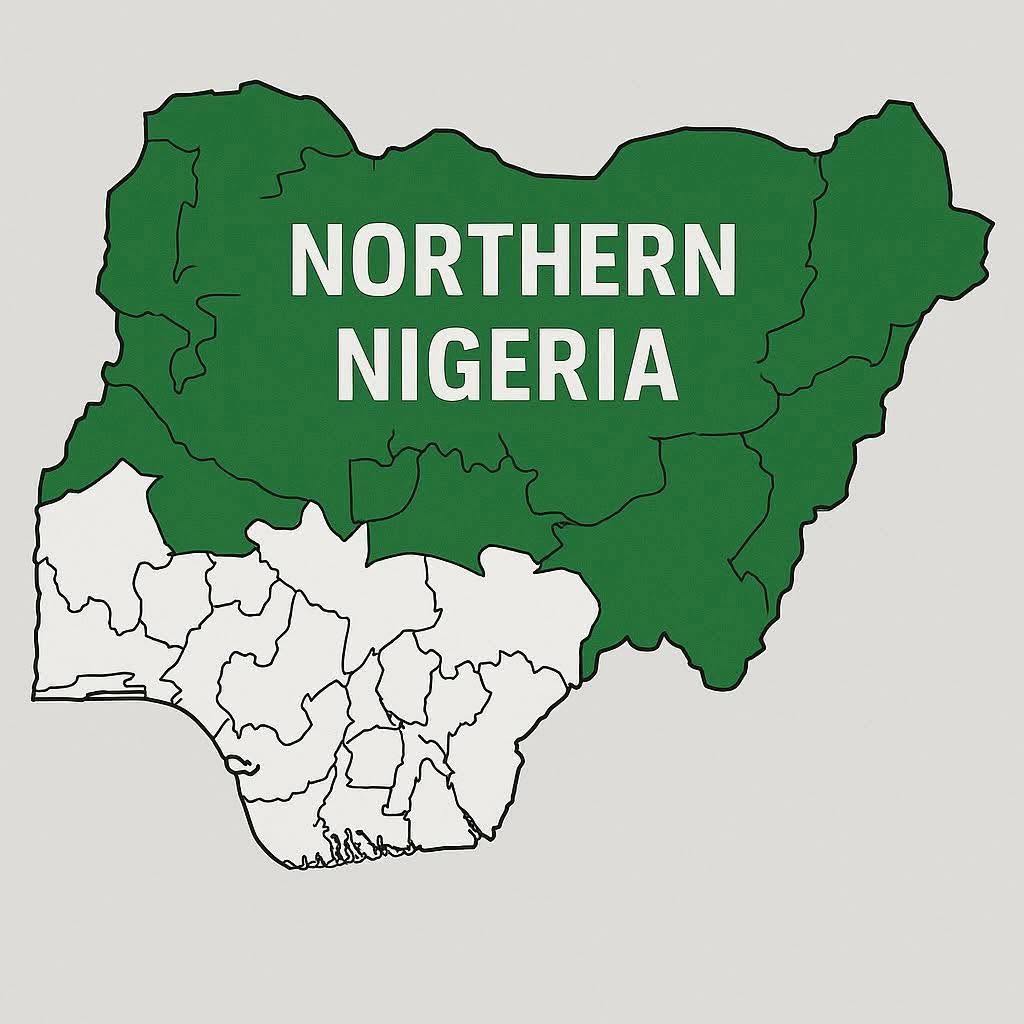
But the deeper questions remain. Why are young Nigerians risking their lives in illegal mines? Why does illicit mineral commerce remain attractive? Why are communities willing to tolerate environmental destruction? Why do some leaders become vocal only after calamity? Why has Northern political leadership not developed a more fecund philosophy around its natural resources? These are not questions for Abuja alone. They belong in Kaduna, Kano, Katsina, Zamfara, Niger, Nasarawa, Plateau, Kogi, Bauchi, Gombe, Sokoto and every Northern community where the earth is being opened without adequate regard for what follows. We must stop treating the environment as scenery. The North cannot continue to demand development while permitting the ecological foundations of development to be degraded. The time has come for a different kind of leadership, one that understands that political power without stewardship is an elaborate chiaroscuro, all shadow and little substance.
The 37 men may have entered the earth searching for wealth. They should not leave behind a nation still searching for responsibility. Nigeria has spent decades digging for riches. It is time we began digging for wisdom.
Dr Sani Abdulrazak, PhD, is an Environmental Chemist, Writer and Public Commentator based in Zaria, Kaduna State



