Feature/OPED
Kaduna Central and the Senator Who Became Distant

By Sani Abdulrazak, PhD
They say, when the people lift a man onto the horse, he should not ride so far that he forgets the road back to the people. For the tree may grow tall, but it must never forget the earth that gave it root. In Kaduna Central, however, there is a curious political tale unfolding: a man carried to the Senate on the shoulders of his people now appears to have travelled so far from those same people that the road back to them has become a matter of public conjecture.
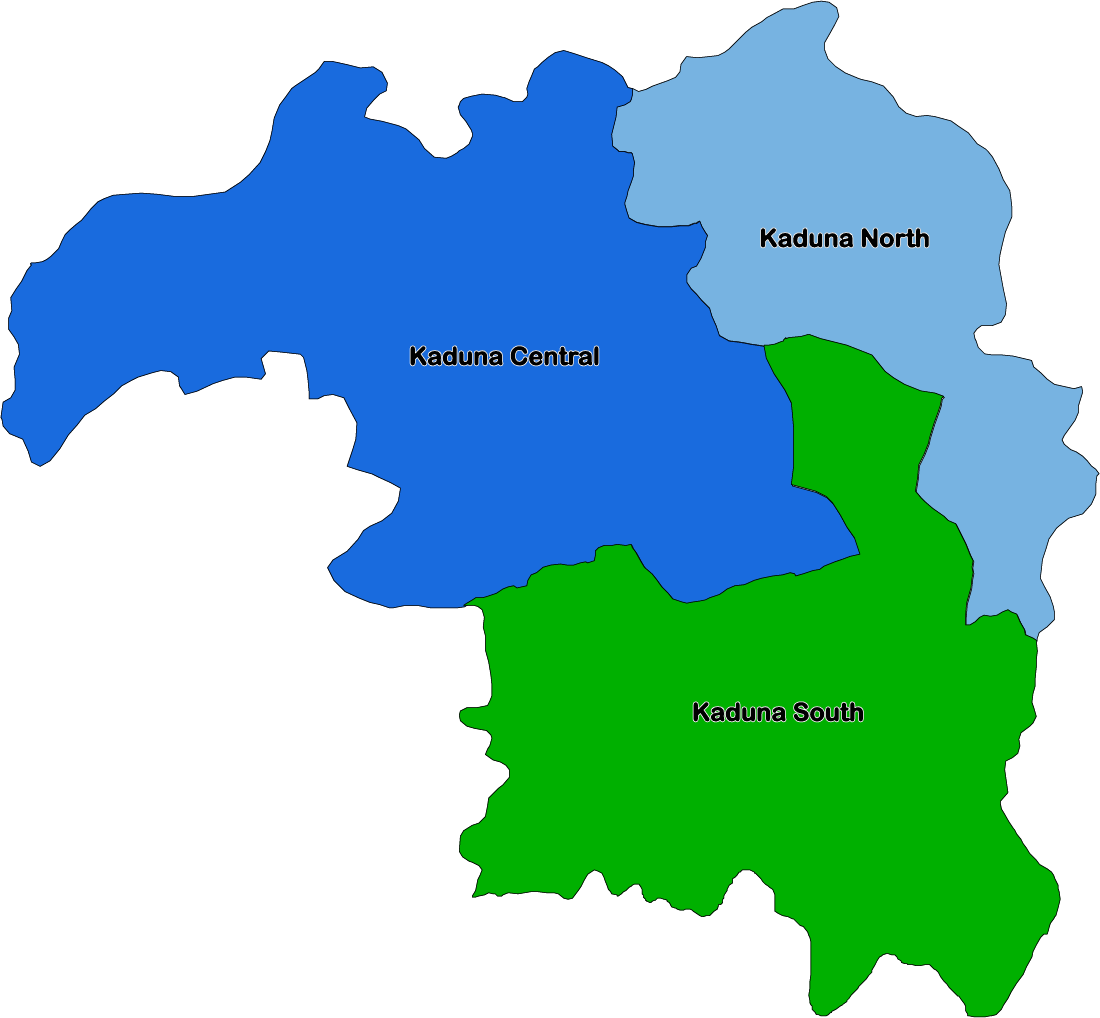
Kaduna Central has a senator; that much is not in doubt. His name is Lawal Adamu Usman, popularly known as Senator LA. He sits in the red chamber, occupies committee positions, issues statements, rebukes his critics and has enough projects to fill a small almanack, if we could go by the catalogue released by his media office. But the reality in his constituency says otherwise; representation in Kaduna Central has been at its lowest ebb since our return to democracy in 1999. So low that his constituency is planning to send a “missing” notice on him because people barely remember when last they saw him in his constituency.
In January 2025, the Kaduna Elders Forum accused Senator Lawal Adamu Usman of poor representation, describing him as “mute and inaccessible” to his constituents and demanding his recall. In January 2026, concerned constituents again complained about inadequate engagement, while another elders’ forum alleged that the senator had become more visible on social media than in the communities he represents. These are allegations, not judicial findings, and Senator Lawal Adamu Usman has vigorously rejected them. But their recurrence deserves more than a wave of the hand. Isn’t repetition sometimes an invitation to investigate?
When critics questioned his performance, his responses were hardly monosyllabic. His media office described some critics as “mischief-makers” and “jobless hirelings”; elsewhere, critics were accused of political motives. In one response, the senator’s camp insisted that his record spoke for itself. One could almost imagine Kaduna Central being represented by two senators: one who speaks magnificently about his achievements and another whom constituents say they struggle to see. And this is where the Senator’s defenders may have inadvertently walked into the very argument they seek to escape. If the answer to every complaint is another barrage of insults and name-calling, then the question remains: where is the senator? Where are the projects?
In February 2026, the Kaduna-Central Elders Forum alleged that several communities had not had direct engagement with the senator through town halls, constituency visits or consultations. It also called for an account of his legislative contributions and constituency projects. One does not need to agree with every accusation to recognise the democratic importance of the question. A senator is not a distributor of constituency largesse to his kitchen cabinet at the detriment of his people; He is a representative. The former can be measured in lavishing on his cronies and inner circle. The latter is measured, at least partly, in trust. And trust is a stubborn commodity. It cannot be procured with insults and absenteeism.
There is another curious feature of this saga: Senator LA appears remarkably ready to prosecute the inadequacies of his critics. That is understandable. Politicians are human beings, and nobody enjoys being told that the emperor’s robe has developed a tear. But when criticism arrives, the first obligation of a public officer is not to interrogate the critic’s ancestry, sponsor or political affiliation. It is to interrogate the substance of the criticism. How often has the senator physically engaged the communities? What has he said about the insecurity of his people on the floor of the Senate when his people are looking up to him? These are not partisan questions. They are the elementary arithmetic of representation.
Kaduna Central does not deserve propaganda; it deserves facts. If Senator LA has transformed the constituency as his office asserts, then let the evidence be assembled in one public, accessible account: project locations, contractors, dates, costs, beneficiaries, legislative records and measurable outcomes. Let the people walk through the ledger with him. If the critics are wrong, the facts will bury the criticism. But if the complaints have substance, no amount of verbal artillery will make them disappear. This is the great political mistake of our age: confusing publicity with proximity. May I remind the senator that Facebook is not, and will not be, his constituency office, and a critic’s political affiliation does not automatically invalidate his criticism. Kaduna Central is not asking for a panjandrum. It is asking for a representative, and we will continuously demand that from whoever occupies that office, no matter his political affiliation. That distinction is not semantic. It is the difference between being seen in office and being felt in a constituency.
The senator has, with remarkable consistency, found the social media space a convenient pulpit from which to criticise his political opponents, dissect their shortcomings and pronounce upon the affairs of others. One might almost imagine that the business of Kaduna Central has been so thoroughly settled that there remains little else to do but inspect the specks in other men’s eyes. And there is another saying from our elders: the man whose own granary is leaking should not spend the morning pointing at the neighbour’s broken roof. Before a man counts the holes in another man’s mat, he should first sit upon his own and see whether the ground is showing through. That, too, is a curious lesson for Kaduna Central: when questions are being asked about a man’s own stewardship, probably the first duty is to answer those questions before wielding the gavel of judgment against everyone else.
It is germane to etch clearly to the senator that in a democracy, the most dangerous distance is not Kaduna to Abuja. It is the distance between a representative and the people who gave him their mandate. Kaduna Central has a senator. What its people appear to be asking is something simpler, and much harder: Do they still have a representative they can reach, question, challenge and recognise as their own?
Dr Sani Abdulrazak, PhD, is an Analytical Chemist, Writer and Public Commentator. A resident of Kaduna Central, he writes on governance, public affairs, society and the environment.