

General
Nigeria Records First Grid Collapse Under Joseph Tegbe as Power Minister

By Adedapo Adesanya
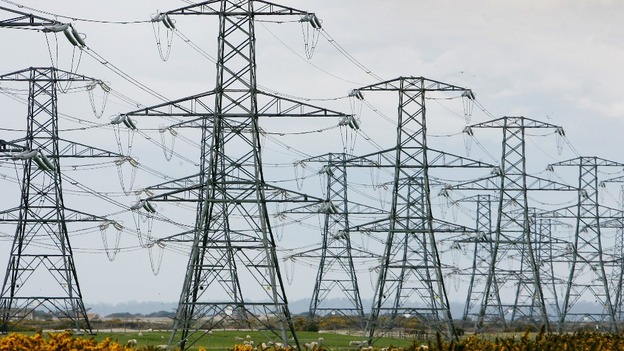
Nigeria’s national electricity grid has suffered a collapse, potentially marking the first such incident since Mr Joseph Tegbe assumed office as Minister of Power.
Business Post gathered that residents in Lagos, Oyo, Osun, and other parts of the country experienced a power trip-off around 12 noon on Monday.
This will be the first under Minister Tegbe, who promised to make the disruption a thing of the past after he took office in May 2026.
His predecessor, Mr Adebayo Adelabu, had stepped down from office to pursue elective office in Oyo State in April 2026. His administration was marred by electricity challenges.
The collapse also comes after the country recorded no system disturbance on the national grid between April and June 2026, according to the latest data from the Nigerian Electricity Regulatory Commission (NERC).
The development raises fresh concerns about the stability of the country’s electricity infrastructure, which has suffered repeated total and partial collapses over the years, disrupting power supply to homes, businesses and industries.
NERC, in its report on the second quarter of 2026, said the national grid recorded no disturbance during the three-month period.
The commission explained that the grid operates within defined stability limits, including a voltage of 330 kilovolts, with a tolerance of 5 per cent, and a frequency of 50 hertz, with a tolerance of 0.5 per cent.
Deviations from these limits can affect power quality and, in severe cases, trigger outages ranging from disruptions in parts of the network to a total blackout.
The Nigerian Independent System Operator (NISO) monitors grid parameters, with frequency serving as a key indicator for detecting and preventing disturbances. In a move to strengthen grid reliability, the federal government on September 30, 2026, commenced construction of a modern National Control Centre for NISO in Osogbo, Osun State.
The existing facility, which has served for 64 years, has been described as outdated and inadequate for managing the demands of the modern electricity network.
The new control centre is expected to feature integrated Supervisory Control and Data Acquisition systems, large display screens and analytics tools to help operators monitor grid operations, identify emerging faults and respond more quickly to disruptions.
Speaking at the groundbreaking ceremony, Mr Tegbe said the project would improve NISO’s ability to monitor developments across the national grid and respond promptly to potential problems.
He described the initiative as evidence of President Bola Tinubu’s commitment to addressing the underlying weaknesses in Nigeria’s electricity supply system.
Grid collapses have remained a major challenge for Nigeria’s power sector, with incidents involving sudden generation losses, gas supply constraints, transmission line faults and ageing infrastructure.
The consequences often extend beyond households, as interruptions to electricity supply affect industrial production, small businesses, healthcare delivery and other essential services.