

Economy
Dangote Acquires 25% Stake in Kenya Pipeline Company

By Adedapo Adesanya
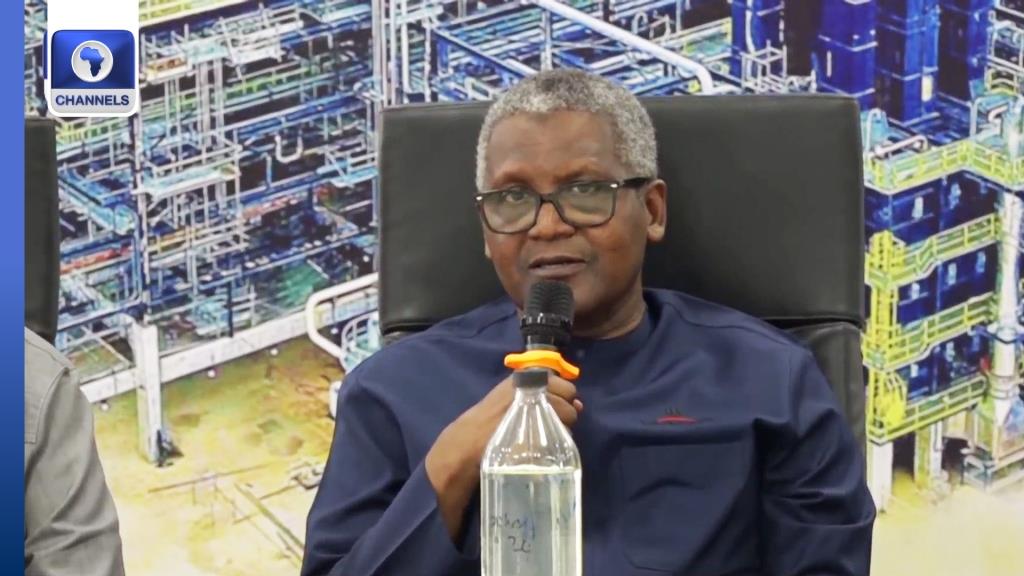
Mr Aliko Dangote, Africa’s richest man, has acquired a 25 per cent stake in Kenya Pipeline Company as he expands his energy investments across the continent.
Mr Dangote, founder of Dangote Industries Limited, disclosed the investment at an event in London on Wednesday, although he did not identify the company through which the stake was acquired.
“We bought 25 per cent of their pipeline network for the distribution of petroleum products,” he said, which Bloomberg reported was Kenya Pipeline Company.
The development follows a block trade involving 4.5 billion shares in Kenya Pipeline Company, valued at 42.5 billion Kenyan shillings ($327.4 million), according to a report by the Nairobi Securities Exchange on Monday.
The company, whose pipeline network forms the backbone of Kenya’s fuel distribution system, was wholly state-owned until the Kenyan government sold 65 per cent of its shares through an initial public offering (IPO) earlier this year.
Kenya Pipeline Company has a market capitalisation of 163.9 billion shillings.
Dangote is also planning to build a 700,000-barrel-per-day refinery in Kenya’s Lamu archipelago at an estimated cost of $16 billion, replicating the capacity of his refinery in Lagos, Nigeria.
The proposed refinery forms part of a multibillion-dollar infrastructure development plan associated with the Lamu Port-South Sudan-Ethiopia Transport Corridor, which includes railways, pipelines, a power plant, roads and airports.
The project is expected to strengthen regional energy infrastructure and reduce East Africa’s reliance on petroleum supplies from the Middle East.
The push for alternative supply sources has gained urgency following the outbreak of the Iran war, which has disrupted oil production and supply chains, raising concerns about energy security across importing countries.
Speaking at the groundbreaking of the refinery last month, Mr Dangote said the project will create energy self-sufficiency in a region stretching from Ethiopia to Mozambique by replacing imports of refined products.
“We are breaking ground for a new chapter in Africa’s industrial journey to a brighter future,” he said.